April 22, 2012
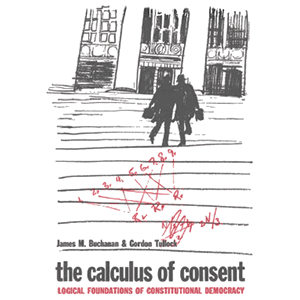
Rational ignorance occurs when the cost of educating oneself on an issue exceeds the potential benefit that the knowledge would provide. Ignorance about an issue is said to be ‘rational’ when the cost of educating oneself about the issue sufficiently to make an informed decision can outweigh any potential benefit one could reasonably expect to gain from that decision, and so it would be irrational to waste time doing so.
This has consequences for the quality of decisions made by large numbers of people, such as general elections, where the probability of any one vote changing the outcome is very small. The term is most often found in economics, particularly public choice theory, but also used in other disciplines which study rationality and choice, including philosophy (epistemology) and game theory. The term was coined by Anthony Downs in ‘An Economic Theory of Democracy’ (1957).
read more »
Posted in Money, Philosophy, Politics |
1 Comment »
April 22, 2012

The Pebble E-Paper Watch, known now as the Pebble Classic, is an American smartwatch developed by Pebble Technology Corporation, and is the first generation of the Pebble watch lineup. The smartwatch was pledged from a Kickstarter campaign, proving massively successful, collecting around $10 million for development of the smartwatch.
Pebble connects to both Android and iOS phones, so they can display notifications from the phone, control music, view calendar events, and create reminders. An online app store makes the Pebble compatible with apps tailored for them from many third party sellers, for many purposes especially sports. In 2015, Pebble Technology released its second-generation Time, with a color e-paper display, microphone, and updated design.
Posted in Money, Technology |
Leave a Comment »
April 22, 2012

Liquid funk is a sub-genre of drum and bass. While it uses similar basslines and bar layouts to other styles, it contains fewer bar-oriented samples and more instrumental layers (both synthesized and natural), harmonies, and ambience, producing a calmer atmosphere directed at both home listeners and nightclub audiences. In 2000, Fabio began championing a new form of drum and bass he called ‘Liquid funk,’ with a compilation release of the same name on his Creative Source label. This was characterized by influences from disco and house music, and widespread use of vocals. Although slow to catch on at first, the style grew massively in popularity around 2003–2004, and by 2005 it was established as one of the biggest-selling subgenres in drum and bass.
Liquid funk is very similar to intelligent drum and bass, but has subtle differences. Liquid funk has stronger influences from soca, latin, disco, jazz, and funk music, while IDB creates a calmer yet more synthetic sound, using smooth synth lines and samples in place of the organic element achieved by use of real instruments.
Posted in Art |
Leave a Comment »
April 21, 2012

Noisia, stylized as NOISIΛ (‘VISION’ rotated 180°), is a Dutch electronic music trio consisting of Nik Roos, Martijn van Sonderen, and Thijs de Vlieger from The Netherlands. They produce drum and bass, dubstep, breakbeat, and house music.
For a time between 2005 and 2009, NOISIΛ also released tracks under the name ‘Drifter,’ encompassing the lighter side of Drum and Bass known as ‘Liquid Funk,’ as well as releasing a EP under the name ‘Hustle Athletics.’ They later decided to go back to releasing all their music under the name ‘NOISIΛ’ so as to not confuse the audience and to avoid being pigeonholed into different genres with different names.
Posted in Art |
Leave a Comment »
April 20, 2012


A demo (demonstration) is a non-interactive multimedia presentation made within the computer subculture known as the demoscene. Demogroups create demos to demonstrate their abilities in programming, music, drawing, and 3D modeling.
The key difference between a classical animation and a demo is that the display of a demo is computed in real time, making computing power considerations the biggest challenge. Demos are mostly composed of 3D animations mixed with 2D effects and full screen effects.
read more »
Posted in Art, Games, Technology |
Leave a Comment »
April 19, 2012

A double clutch is a driving procedure primarily used for vehicles with an unsynchronized manual transmission. The double clutching technique involves the following steps:
1) The throttle (accelerator) is released, the clutch pedal is pressed, and the gearbox is shifted into neutral. 2) The clutch pedal is then released, the driver matches the engine RPM to the gear RPM either using the throttle (accelerator) (when changing down) or waiting for RPM to decrease (when changing up) until they are at a level suitable for shifting into the next gear. 3) At the moment when the revs between engine and gear are closely matched, the driver then instantly presses the clutch again to shift into the next gear. The whole maneuver can, with practice, take no more than a fraction of a second, and the result is a very smooth gear change.
read more »
Posted in Games, Technology |
Leave a Comment »
April 19, 2012

The Beatnik Bandit is a custom car created in 1961 by ‘Big Daddy’ Ed Roth, originally as a project for ‘Rod & Custom magazine’; instead of a steering wheel, it was controlled by a joystick.
A Hot Wheels car was made based on the Beatnik Bandit. The car is a representation of ‘Kustom Kulture,’ a neologism used to describe the oeuvre of those who drove and built custom cars and motorcycles in the US from the 1950s through today.
Posted in Art, Technology |
Leave a Comment »
April 19, 2012


Beatmatching is a disc jockey technique of pitch shifting or timestretching a track to match its tempo to that of the currently playing track e.g. the kicks and snares in two house records hit at the same time when both records are played simultaneously. Beatmatching is a component of mixing which employs beatmatching combined with equalization, attention to phrasing, and track selection in an attempt to make a single mix that flows together and has a good structure.
The technique was developed to keep people from leaving the dancefloor at the end of a song. Currently, it is considered basic among DJs in electronic dance music genres, and it is standard practice in clubs to keep the constant beat through the night, even if DJs change in the middle. Beatmatching is no longer considered a novelty, and new digital mixers have made the technique much easier to master.
read more »
Posted in Art |
Leave a Comment »
April 19, 2012

Rubyfruit Jungle is the first novel (1973) by Rita Mae Brown, remarkable, in its day, for its explicit lesbianism. The novel is a semi-autobiographical (some have suggested picaresque) account of Brown’s youth and emergence as a lesbian author. The term ‘ruby fruit jungle’ is slang for the female genitals. The novel focuses on Molly Bolt, the adopted daughter of a poor family, who possesses remarkable beauty and who is aware of her lesbianism from early childhood. The work is notable for being an early literary lesbian novel, as well as for Brown’s own activism in lesbian and feminist causes. Many lesbian readers have found in it a reflection of their own experiences and observations. While some now refer to it as ‘just another lesbian coming of age novel’ (Bildungsroman), its success is part of why the genre is now often considered a cliché.
In 1955, when Brown was 11 years old, her family moved to Fort Lauderdale where she attended high school and experimented sexually with boys and girls. When Brown was 16, her girlfriend’s father found her love letters, and Brown was dismissed from the student council. In the 1960s, Brown attended Broward Community College and the University of Florida, but she was expelled from UF for participating in a civil rights rally. She later moved to New York City, attended New York University, and received a degree in Classics and English. Later, she received another degree in Cinematography from the New York School of Visual Arts, and, in 1976, she received a doctorate in political science.
Posted in Language, Politics, Sex |
Leave a Comment »
April 19, 2012

Dykes to Watch Out For (sometimes DTWOF) was a comic strip by Alison Bechdel, which ran from 1983 to 2008, and was one of the earliest ongoing representations of lesbians in popular culture and has been called ‘as important to new generations of lesbians as landmark novels like Rita Mae Brown’s ‘Rubyfruit Jungle’ (1973) and Lisa Alther’s ‘Kinflicks’ (1976) were to an earlier one.’
DTWOF chronicled the lives, loves, and politics of a fairly diverse group of characters (most of them lesbians) living in a medium-sized city in the United States, featuring both humorous soap opera storylines and biting topical commentary. The strip was carried in ‘Funny Times’ and a number of gay and lesbian newspapers. According to Bechdel, her strip was ‘half op-ed column and half endless, serialized Victorian novel.’ Characters reacted to contemporary events, including going to the Michigan Womyn’s Festival, Gay Pride parades, and protest marches and having heated discussions about day-to-day events, political issues and the way lesbian culture was changing.
Posted in Humor, Politics, Sex |
Leave a Comment »
April 19, 2012

Pornochanchada is the name given to a genre of sexploitation films produced in Brazil that was popular during the 1970s and early 1980s. ‘Chanchada’ means ‘light comedy’ in Portuguese. Pornochanchadas were initially produced in the downtown quarter of São Paulo that was nicknamed ‘Boca do Lixo’ (‘Garbage Mouth’). The genre was usually seen as a part of low-budget films produced there, collectively known as ‘cinema da Boca’ (‘movies of the Mouth’).
Later, there were productions in Rio de Janeiro as well, creating the sub-genre ‘pornochanchada carioca,’ which was to find its star in Alba Valeria during early 1980s. Pornochanchadas were generally in line with ‘sex comedies’ produced in other countries, but also featured some Brazilian peculiarities. Despite conditions of strict censorship in Brazil in that era, the state-run film company Embrafilme was generally eager to support pornochanchadas, because they weren’t critical of the government and did not depict explicit sex.
Posted in Humor, Sex, World |
Leave a Comment »
April 19, 2012

Bavarian porn is a campy subgenre of softcore porn comedy. The apogee of the genre was the late 1960s and early 1970s, corresponding roughly to the chancellorship of Willy Brandt, but these films continued to be produced up to about 1980. Today they live on as staples of late night European cable and satellite channels. Alois Brummer was the producer of many of these films.
After some ‘Report’ movies (so-called documentaries about ‘German housewifes’ or ‘schools for girls,’ as a reaction to serious documentaries about sexual items in Germany’s late 60’s) he became produced a number of films, which were mainly situated in the Alpes. Director Franz Marischka got the idea from a newspaper article in 1972 about wealthy female tourists in Bavaria who tried to seduce local young men or the landlord of the inn where they were staying.
read more »
Posted in Humor, Sex, World |
Leave a Comment »



 The Daily Omnivore