April 17, 2012

The Second Summer of Love is a name given to the period in 1988-89 in Britain, during the rise of acid house music and the euphoric explosion of unlicensed MDMA (‘Ecstasy’)-fuelled rave parties. The term generally refers to the summers of both 1988 and 1989, when electronic dance music and MDMA exploded in popularity, culminating in mass free parties and the era of the rave.
LSD was also widely available and popular again. The music of this era fused dance beats with a psychedelic, 1960s flavor, and the dance culture drew parallels with the hedonism and freedom of the ‘Summer of Love’ in San Francisco two decades earlier. Similarities with the Sixties included fashions such as Tie-dye. The smiley logo is synonymous with this period in the UK.
Posted in Drugs, Love, World |
Leave a Comment »
April 17, 2012

Madchester was a music scene that developed in Manchester, England, towards the end of the 1980s and into the early 1990s. The music that emerged from the scene mixed alternative rock, psychedelic rock, and dance music. Artists associated with the scene included New Order, The Stone Roses, Happy Mondays, Inspiral Carpets, Northside, 808 State, James, The Charlatans, The Fall, and A Guy Called Gerald.
At that time, the Haçienda nightclub was a major catalyst for the distinctive musical ethos in the city that was called the ‘Second Summer of Love.’ The music scene in Manchester immediately before the Madchester era had been dominated by bands such as The Smiths, New Order, The Fall and James. These bands were to become a significant influence on the Madchester scene.
read more »
Posted in Art, Drugs, World |
Leave a Comment »
April 17, 2012

Paisley Underground is an early genre of alternative rock, based primarily in Los Angeles, which was at its most popular in the mid-1980s. The term refers to a comment made by Michael Quercio of the band The Three O’Clock during a radio interview. Paisley Underground bands incorporated psychedelia, rich vocal harmonies, and guitar interplay in a folk rock style that owed a particular debt to The Byrds, but more generally referenced the whole range of 1960s West Coast pop and garage rock, from the Seeds to the Beach Boys.
The Dream Syndicate channeled Crazy Horse and Creedence Clearwater Revival via The Velvet Underground, while The Bangles recalled The Mamas & the Papas, Green on Red came on as a cousin to The Doors, The Long Ryders honored Gram Parsons and Buffalo Springfield, The Three O’Clock owed debt to the Bee Gees and The Monkees, and so on. The 1970s Memphis cult band Big Star, whose ‘eptember Gurls’ was covered by The Bangles, was also influential, as were Britain’s Soft Boys. Although there were accomplished musicians among them, it was also rooted—as was the punk rock that preceded it—in an inspired amateurism.
read more »
Posted in Art |
Leave a Comment »
April 17, 2012
Neo-psychedelia is music that emulates or is heavily influenced by the psychedelic music of the 1960s. It began to be revived among British post-punk bands of the later 1970s and early 1980s and was taken up by groups including bands of the Paisley Underground and Madchester scenes, as well as occasional interest from mainstream artists and bands into the new millennium.
Neo-psychedelic acts borrowed a variety of elements from 1960s psychedelic music. Some emulated the psychedelic pop of bands like The Beatles and early Pink Floyd, others adopted the jangly guitars of folk rock bands like the Byrds-influenced guitar rock, or distorted free-form jams and sonic experimentalism of late 1960s acid rock. Some neo-psychedelia has been explicitly focused on drug use and experiences, while other bands have used it to accompany surreal or political lyrics.
read more »
Posted in Art, Drugs, World |
Leave a Comment »
April 16, 2012

The Residents are an American art collective best known for avant-garde music and multimedia works. The first official release under the name of The Residents was in 1972, and the group has since released over sixty albums, numerous music videos and short films, three CD-ROM projects and ten DVDs. They have undertaken seven major world tours and scored multiple films. Throughout the group’s existence, the individual members have ostensibly attempted to operate under anonymity, preferring instead to have attention focused on their art output.
Much outside speculation and rumor has focused on this aspect of the group. In public, the group appears silent and costumed, often wearing eyeball helmets, top hats and tuxedos – a long-lasting costume now recognized as their signature iconography. Their albums generally fall into two categories: deconstructions of Western popular music, or complex conceptual pieces, composed around a theme, theory or plot. They are noted for surrealistic lyrics and sound, disregard for conventional music composition, and the over the top, theatrical spectacle of their live performances.
read more »
Posted in Art, Humor |
Leave a Comment »
April 16, 2012
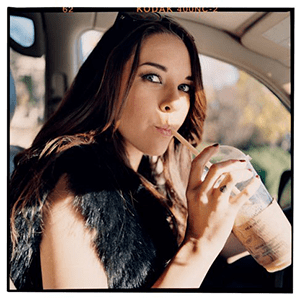
The Bling Ring, sometimes called the ‘Hollywood Hills Burglar Bunch,’ were a group, mostly of teenagers based in and around Calabasas, California, who burglarized the homes of several celebrities in 2008 – 2009. In total, their activities resulted in the theft of about $3 million in cash and belongings, most of it from Paris Hilton, whom they robbed several times. However, over 50 homes were reportedly targeted for potential burglary.
The alleged ringleader of the group, Rachel Lee is the daughter of divorced Korean immigrants. Both parents own successful businesses. Lee lived in Calabasas with her mother, who owns a franchise of Kumon, a tutoring company. Her father is based in Las Vegas. Lee and her older sister Candace had a privileged upbringing, and she drove an Audi A4 to school, where she was named ‘Best Dressed’ in the 2007 yearbook. A year after graduation, she was fined and put on probation for a petty theft incident in which she and a friend, Diana Tamayo, stole $85 of merchandise from a Sephora cosmetics store.
read more »
Posted in Money |
Leave a Comment »
April 14, 2012

Chironomia is the art of using gesticulations or hand gestures to good effect in traditional rhetoric or oratory. Effective use of the hands, with or without the use of the voice, is a practice of great antiquity, which was developed and systematized by the Greeks and the Romans. Various gestures had conventionalized meanings which were commonly understood, either within certain class or professional groups, or broadly among dramatic and oratorical audiences.
Gilbert Austin was a well-known author on chironomia, in the preface to his book on the subject, Austin writes: ‘…it is a fact, that we do not possess from the ancients, nor yet from the labors of our own countrymen, any sufficiently detailed and precise precepts for the fifth division of the art of rhetoric, namely rhetorical delivery, called by the ancients ‘actio’ and ‘pronuntiatio.”
read more »
Posted in Language, Philosophy, Science |
Leave a Comment »
April 13, 2012
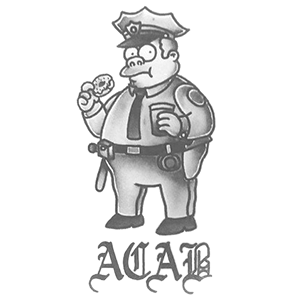
A.C.A.B. stands for ‘All Cop[per]s Are Bastards.’ Dating from at least the 1940s, and used as a slogan during the UK miners’ strike, A.C.A.B. is an abbreviation often integrated into prison tattoos in the United Kingdom, it is most commonly rendered with one letter between the knuckle and first joint of each finger, alternatively sometimes seen as symbolic small dots across each knuckle.
The British Oi! punk band, the 4-Skins, popularized the acronym in their 1980s song of the same name. It is currently in common usage as a phrase and tattoo amongst some ultras ( a type of sports fans renowned for their fanatical and elaborate displays of ‘support’) groups in Europe, particularly in Eastern Europe where most groups are more akin to hooligans than ultras.
Posted in Language, Politics, World |
Leave a Comment »
April 13, 2012
HWDP [ha-voo-de-pe] is a frequently used acronym of a Polish vulgar phrase ‘chuj w dupę policji,’ meaning literally ‘a dick up the police’s ass.’ It can be best compared to the English-language phrase ACAB (‘All Cops Are Bastards’), known in western English-language countries, painted on walls by aggressive football fans already in the 1960s. It is also commonly used as a tattoo among some of the Latino prisoners in the United States of America, who claim it stands for ‘Always Carry A Bible,’ when asked about it by the authorities. Another English counterpart of this Polish vulgar phrase is FTP, an acronym of the phrase ‘fuck the police.’
This vulgar slogan, often written on walls, is used by a part of the youth as a form of provocation against the police, but also one of its ‘trademarks.’ Writing of the HWDP characters, visible from far, is a de facto form of aggressive vandalism, which reasonably lowers the value of the flats near the marked objects. The habit of using the HWDP slogan is particularly popular amongst aggressive football fans, called pseudokibice, of the beginning of the 21st century. It is a specific expression of protest against the authorities and the entire surrounding system, although it isn’t an ideological rebellion, but instead, a characteristic sign of the additude to the surrounding reality.
Posted in Language, Politics, World |
Leave a Comment »
April 13, 2012

Sager Midern Computer, Inc., is an American OEM (original equipment manufacturer) computer manufacturer specializing in laptop computers. Sager laptops are manufactured by Clevo which are also sold under many other brand names. Sager is the biggest Clevo retailer. In addition to selling physical hardware, Sager also offers support and repair services for all Clevo based Laptops. This service is offered even if the laptop was not ordered through Sager, although in that case the user must pay in full for all services provided.
The company was founded in 1985 by Shung Song Yuan in City of Industry, California. While ‘A-brands’ such as Dell, Toshiba, IBM, or HP are manufactured on a contract basis where so-called contract manufacturers assemble laptop computers as specified by the brand, Sager instead purchases finished and generic chassis designed and built by Original Design Manufacturers or ODMs (such as Clevo). Sager then assembles the laptop with parts chosen by the final customer, puts its logo on the chassis and sells them under the brand Sager. Sager then provides support to these computers.
Posted in Games, Money, Technology |
Leave a Comment »
April 13, 2012

Clevo is a Taiwanese OEM/ODM (original equipment and design manufacturer) computer manufacturer which exclusively produces laptop computers. They manufacture and sell complete laptops under their own brand; they also sell laptop chassis to other OEMs who build laptops on the chassis, often customized for each customer.
Companies which rebrand Clevo chassis or have in the past include Sager, iBuypower, and OriginPC. Alienware also used to sell rebranded Clevo notebooks, although it is unclear whether they still do.
Posted in Money, Technology, World |
Leave a Comment »
April 13, 2012

Miso [mee-soh] is a traditional Japanese seasoning produced by fermenting rice, barley and/or soybeans, with salt and the fungus kōjikin, the most typical miso being made with soy. The result is a thick paste used for sauces and spreads, pickling vegetables or meats, and mixing with dashi soup stock to serve as miso soup called ‘misoshiru,’ a Japanese culinary staple. High in protein and rich in vitamins and minerals, miso played an important nutritional role in feudal Japan.
Miso is still very widely used in Japan, both in traditional and modern cooking, and has been gaining world-wide interest. Miso is typically salty, but its flavor and aroma depend on various factors in the ingredients and fermentation process. There is a very wide variety of miso available. Different varieties of miso have been described as salty, sweet, earthy, fruity, and savory. The traditional Chinese analogue of miso is known as dòujiàng.
read more »
Posted in Food, Health, World |
1 Comment »



 The Daily Omnivore