July 5, 2012
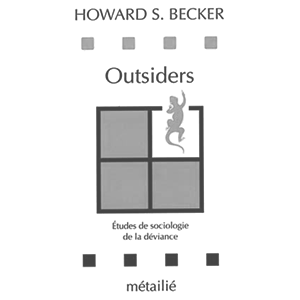
Labeling theory holds that deviance is not inherent to an act, but instead focuses on the tendency of majorities to negatively label minorities or those seen as deviant from standard cultural norms. It was developed by sociologists during the 1960s; Howard Saul Becker’s book ‘Outsiders’ was particularly influential. The theory is concerned with how the self-identity and behavior of individuals may be determined or influenced by the terms used to describe or classify them.
It is associated with the concepts of self-fulfilling prophecy and stereotyping. Unwanted descriptors or categorizations – including terms related to deviance, disability, or diagnosis of a mental disorder – may be rejected on the basis that they are merely ‘labels,’ often with attempts to adopt a more constructive language in its place. A stigma is defined as a powerfully negative label that changes a person’s self-concept and social identity.
read more »
Posted in Health, Language, Politics |
Leave a Comment »
July 5, 2012
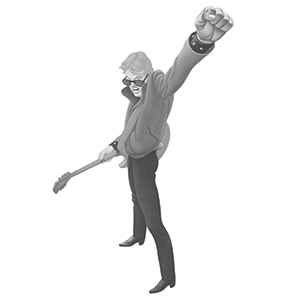
American Pop is a 1981 American animated musical drama film produced and directed by Ralph Bakshi. The film tells the story of four generations of a Russian Jewish immigrant family of musicians whose careers parallel the history of American popular music. The majority of the film’s animation was completed through rotoscoping, a process in which live actors are filmed and the subsequent footage is used for animators to draw over.
However, the film also uses a variety of other mixed media including water colors, computer graphics, live-action shots, and archival footage. Michael Barrier, an animation historian, described ‘American Pop’ as one of two films that demonstrated ‘that Bakshi was utterly lacking in the artistic self-discipline that might have permitted him to outgrow his limitations.’
read more »
Posted in Art |
Leave a Comment »
July 4, 2012

The Show With No Name was a long-running and highly popular Public-access television cable TV show in Austin, Texas, hosted by Charlie Sotelo and the mysterious ‘Cinco.’ Each show featured clips of TV, film and music ephemera along with commentary by the hosts and calls from a predictably unruly Public-access television audience.
The clips were usually video snippets that captured a crazy moment of ephemeral history, such as Ed McMahon drunk on ‘The Tonight Show,’ an early live TV appearance by Frank Zappa playing the bicycle and other found instruments, or the famously disastrous Andy Kaufman appearance on ‘Fridays’ (ABC’s weekly late-night live comedy show). Often they were obscure cult favorites only circulated underground, such as ‘Heavy Metal Parking Lot,’ the profane bloopers of an actor in a Winnebago sales video, or Corey Haim’s ‘Me, Myself, and I.’ Many other clips simply presented a zeitgeist gone by: a trailer for an Akira Kurosawa or Sam Peckinpah film, a Bill Hicks comedy set, or Bob Dylan appearing on the Johnny Cash show.
read more »
Posted in Art, Humor |
Leave a Comment »
July 4, 2012

The Found Footage Festival is a live comedy event and screening featuring unusual and humorous clips from VHS videotapes gathered from thrift stores, garage sales, warehouses, estate sales, and dumpsters throughout the United States. Founded in 2004, the Festival originated in Wisconsin and Minnesota by Joe Pickett, Nick Prueher and Geoff Haas, childhood friends from Wisconsin. While still in high school, Pickett and Prueher began collecting videos from garage sales, training videos from odd jobs, and copies of tapes from a video production house. The friends would then play selections from this collection for entertainment at parties.
In 2004, Pickett and Prueher quit their day jobs to focus on production of their first feature documentary, ‘Dirty Country.’ They started the touring ‘Found Footage Festival’ show to fund the production of the documentary. In addition to its regular touring schedule, the Festival has appeared at the HBO ‘US Comedy Arts Festival,’ ‘Just For Laughs’ (the Montreal comedy festival), the ‘New York Comedy Festival,’ the Impakt Festival in the Netherlands, and the ‘Central Standard Film Festival’ in Minneapolis. The Festival is currently based out of New York City.
read more »
Posted in Art, Humor, Money |
Leave a Comment »
July 3, 2012
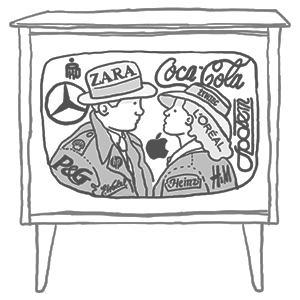
‘Four Arguments for the Elimination of Television‘ is a 1978 book written by liberal activist Jerry Mander which argues that there are a number of problems with the medium of television. Mander argues that many of the problems with television are inherent in the medium and technology itself, and thus cannot be reformed. Mander spent 15 years in the advertising business, including five as president and partner of Freeman, Mander & Gossage, San Francisco, a nationally-known advertising agency.
‘Four Arguments for the Elimination of Television’ argues that the technology of television is not a neutral or benign instrument or tool. The author argues that in varied technologies and institutions such as militaries, automobiles, nuclear power plants, mass production, and advertising, the basic form of the institution and the technology determines its interaction with the world, the way it will be used, the kind of people who use it, and to what ends.
read more »
Posted in Language, Politics, Technology |
2 Comments »
July 3, 2012

‘The medium is the message‘ is a phrase coined by Marshall McLuhan meaning that the form of a medium embeds itself in the message, creating a symbiotic relationship by which the medium influences how the message is perceived. The phrase was introduced in his most widely known book, ‘Understanding Media: The Extensions of Man,’ published in 1964.
McLuhan proposes that a medium itself, not the content it carries, should be the focus of study. He said that a medium affects the society in which it plays a role not only by the content delivered over the medium, but also by the characteristics of the medium itself. McLuhan frequently punned on the word ‘message’ changing it to ‘mass age,’ ‘mess age,’ and ‘massage’; a later book, ‘The Medium is the Massage’ was originally to be titled ‘The Medium is the Message,’ but McLuhan preferred the new title which is said to have been a printing error.
read more »
Posted in Language, Politics, Technology |
1 Comment »
July 3, 2012
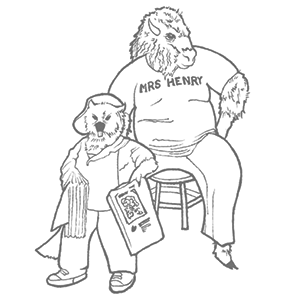
The Basement Tapes is a 1975 studio album by Bob Dylan and The Band. The songs featuring Dylan’s vocals were recorded in 1967, eight years before the album’s release, at houses in and around Woodstock, NY, where Dylan and the Band lived. Although most of the Dylan songs had appeared on bootleg records, ‘The Basement Tapes’ marked their first official release.
When Columbia Records prepared the album, eight songs recorded solely by the Band were added to sixteen songs taped by Dylan and the Band. Subsequently, the format of the 1975 album has led critics to question the omission of some of Dylan’s best-known 1967 compositions and the inclusion of material by the Band that was not recorded in Woodstock.
read more »
Posted in Art, Money |
Leave a Comment »
July 3, 2012
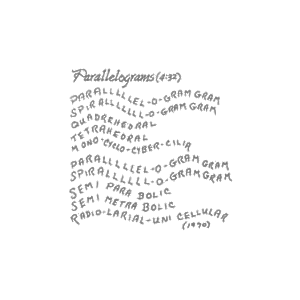
Linda Perhacs is an American psychedelic folk singer, who released her only album ‘Parallelograms’ in 1970 to scant notice or sales. The album was rediscovered by record enthusiasts and grew in popularity with the rise of the New Weird America movement (a subgenre of psychedelic and indie music) and the Internet. Her songs have been featured in soundtracks to many films, most recently and notably in Daft Punk’s ‘Electroma.’
Perhacs also sang backing vocals on ‘Freely’ from Devendra Banhart’s ‘Smokey Rolls Down Thunder Canyon’ and features in Prefuse 73’s track ‘Rain Edit (Interlude)’ from the album ‘Surrounded by Silence.’ Encouraged by the newfound attention to her work, she has reportedly recorded two new albums with Ben Watt (British producer and half of Everything but the Girl) as of 2007.
Posted in Art |
Leave a Comment »
July 3, 2012
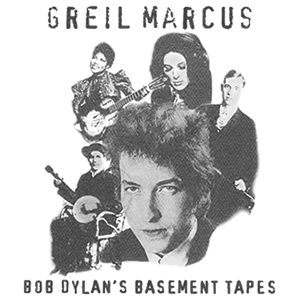
‘Invisible Republic: Bob Dylan’s Basement Tapes’ is a 1997 book by music critic Greil Marcus about the creation and cultural importance of ‘The Basement Tapes,’ a series of recordings made by Bob Dylan in 1967 in collaboration with The Hawks, who would subsequently become known as The Band.
When subsequently published in paperback, the book was re-titled ‘The Old, Weird America,’ a term coined by Marcus to describe the often eerie country, blues, and folk music featured on the ‘Anthology of American Folk Music.’ The term has been revived via the musical genre called New Weird America (a subgenre of psychedelic and indie music).
read more »
Posted in Art, Language |
Leave a Comment »
July 3, 2012

New Weird America describes a subgenre of psychedelic and indie music, often psych folk, of the late 20th and early 21st centuries. The term is generally believed to have been coined by David Keenan in a 2003 issue of ‘The Wire,’ following the Brattleboro Free Folk Festival organized by Matt Valentine and Ron J. Schneiderman. It is a play on Greil Marcus’s phrase ‘Old Weird America’ as described in his book ‘Invisible Republic,’ which deals with the lineage connecting the pre-World War II folk performers on Harry Smith’s Anthology of American Folk Music to Bob Dylan and his milieu.
The musical style described as New Weird America is derived mainly from psychedelic rock and folk groups of the 1960s and 1970s, including American performers Holy Modal Rounders and English and Scottish groups, such as Pentangle, The Incredible String Band, Donovan, and Comus. It also finds inspiration in such disparate sources as heavy metal, free jazz, electronic music, noise music, ethnic musics, musique concrète, tropicália, and early- and mid-20th century American folk music. Another primary inspiration is outsider music, often played by technically naïve and/or socially estranged musicians, such as The Shaggs, Roky Erickson, and Jandek. Other genre classifications with similar aesthetics are psychedelic rock, psych folk, freakbeat, and freak folk.
Posted in Art |
Leave a Comment »
July 3, 2012

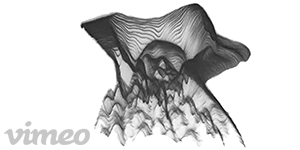
A Video Synthesizer is a device that electronically creates a video signal. A video synthesizer is able to generate a variety of visual material without camera input through the use of internal video pattern generators. It can also accept and ‘clean up and enhance’ or ‘distort’ live television. Video pattern generators may produce static or moving or evolving imagery. Examples include geometric patterns ( in 2D or 3D ), subtitle text characters in a particular font, or weather maps.
The history of video synthesis is tied in to a ‘real time performance’ ethic. The equipment is usually expected to function on input camera signals the machine has never seen before, delivering a processed signal continuously and with a minimum of delay in response to the ever changing live video inputs.
read more »
Posted in Art, Technology |
Leave a Comment »
July 3, 2012

Allegro Non Troppo is a 1976 Italian animated film directed by Bruno Bozzetto. Featuring six pieces of classical music, the film is a parody of Disney’s ‘Fantasia,’ two of its episodes being arguably derived from the earlier film. The classical pieces are set to color animation, ranging from comedy to deep tragedy. At the beginning, in between the animation, and at the end are black and white live-action sequences, displaying the fictional animator, orchestra, conductor and filmmaker, with many humorous scenes about the fictional production of the film.
Some of these sections mix animation and live action. In music, an instruction of ‘allegro ma non troppo’ means to play ‘fast, but not overly so.’ In the context of this film, and without the ‘ma,’ it means ‘Not So Fast!’, an interjection meaning ‘slow down’ or ‘think before you act.’ The common meaning of ‘allegro’ in Italian is ‘joyful.’ The title reveals therefore a catch with the dual meaning of ‘allegro,’ and can also be read as ‘joyful, but not so much’ or ‘not overly joyful.’
read more »
Posted in Art, Humor, World |
Leave a Comment »


 The Daily Omnivore