February 15, 2013

A hi-top fade is a style of haircut where hair on the sides is cut off or kept very short and hair on the top of the head is very long (in contrast, a low fade is when hair on the top is kept shorter). The hi-top has been a trend symbolizing the Golden Era of hip hop and urban contemporary music during the late 1980s and the early 1990s. The hi-top fade was common among young African Americans between 1986 to 1993 and to a lesser extent in the mid-1990s (1994-1996).
The style fell completely out of fashion by 1997, though it has slowly made a return in the public eye in the late 2000s. In the hip hop community throughout the mid-1980s, young African-Americans leaned towards Jheri curls or simple haircuts without tapers or fades of any sort.
read more »
Posted in Art, Humor |
Leave a Comment »
February 15, 2013

The Zeitgeist [tsahyt-gahyst] (spirit of the age or spirit of the time) is the intellectual fashion or dominant school of thought that typifies and influences the culture of a particular period in time. For example, the Zeitgeist of modernism typified and influenced architecture, art, and fashion during much of the 20th century. The German word ‘Zeitgeist’ is often attributed to the philosopher Georg Hegel, but he never actually used the word. In his works such as ‘Lectures on the Philosophy of History,’ he uses the phrase ‘der Geist seiner Zeit’ (‘the spirit of his time’)—for example, ‘no man can surpass his own time, for the spirit of his time is also his own spirit.’
Other philosophers who were associated with such ideas include Herder and Spencer and Voltaire. The concept counters the ‘Great Man theory’ popularized by Thomas Carlyle which sees history as the result of the actions of heroes and geniuses.
read more »
Posted in Art, Philosophy, Politics |
Leave a Comment »
February 14, 2013

In science and philosophy, a just-so story, also called an ad hoc fallacy, is an unverifiable and unfalsifiable narrative explanation for a cultural practice, a biological trait, or behavior of humans or other animals. The pejorative nature of the expression is an implicit criticism that reminds the hearer of the essentially fictional and unprovable nature of such an explanation. Such tales are common in folklore and mythology (where they are known as ‘origin’ or ‘etiological’ myths).
Published in 1902, Rudyard Kipling’s ‘Just So Stories,’ is a collection of fictional and deliberately fanciful tales for children in which the stories pretend to explain animal characteristics, such as the origin of the spots on the leopard.
read more »
Posted in Philosophy, Science |
Leave a Comment »
February 14, 2013
‘The Rebel Sell: Why the culture can’t be jammed’ (published in the US as ‘Nation of Rebels: Why Counterculture Became Consumer Culture’) is a non-fiction book written by University of Toronto philosopher Joseph Heath and Canadian journalist Andrew Potter in 2004. Their central claim is that counter-cultural movements have failed, and that they all share a common fatal error in the way they understand society; thus counter-culture is not a threat to ‘the system.’
Following their claim that conformity isn’t something perpetuated by mainstream media, Potter and Heath identify other sources of conformity using work from Hobbes, Rousseau, and Freud. They describe conformity as often the byproduct of simple market preferences or, alternatively, as an attempt to resolve a collective action problem. For instance, they claim that school uniforms curb the fashion ‘arms race’ created between students when no restrictions are in place, and that they are not intended merely to stamp out individualism, as many counter-cultural figures have suggested.
read more »
Posted in Language, Money, Politics |
Leave a Comment »
February 13, 2013

Chet Helms (1942 – 2005), often called the father of San Francisco’s 1967 ‘Summer of Love,’ was a music promoter and a cultural figure in San Francisco during its hippie period in the late Sixties. Helms was the founder and manager of Big Brother and the Holding Company and recruited Janis Joplin as its lead singer.
He was a producer and organizer, helping to stage free concerts and other cultural events at Golden Gate Park, the backdrop of San Francisco’s Summer of Love in 1967, as well as at other venues, including the Avalon Ballroom. He was the first producer of psychedelic light-show concerts at the Fillmore and the Avalon Ballroom and was instrumental in helping to develop bands that had the distinctive San Francisco Sound.
read more »
Posted in Art, Money |
Leave a Comment »
February 13, 2013
A head shop is a retail outlet specializing in drug paraphernalia, as well as counterculture art, magazines, music, clothing, and home decor.
Products available in these outlets typically include pipes; pipe screens; bongs (often called water pipes in countries with drug paraphernalia laws); roach clips; vaporizers; rolling papers; rolling machines; scales or balances; blacklight-responsive posters; incense; cigarette lighters; legal drugs such as whipped-cream chargers (which contain nitrous oxide) and Salvia divinorum (illegal in some countries and US states); and products such as the Whizzinator claiming to give false negative results for drug urinalysis tests.
read more »
Posted in Drugs, Money |
Leave a Comment »
February 13, 2013

A breastaurant is a restaurant that has sexual undertones, most commonly in the form of large-breasted, skimpily dressed waitresses and barmaids. The term dates from at least the early 1990s and has since been applied to other restaurants that offer similar services, such as Tilted Kilt (dubbed ‘Hooters goes to Scotland’), Mugs N Jugs, Twin Peaks, Bikinis Sports Bar and Grill, Heart Attack Grill, and the much older Hooters.
The restaurants often offer specific themes, both in decoration and menu, and the operators of the restaurants hope that customers will come just for the food, or that for the customer the sexual nature is secondary to the good food. The restaurants offer numerous perks for customers, including alcohol and flirty servers.
Posted in Food, Money, Sex |
Leave a Comment »
February 13, 2013

The Heart Attack Grill is an American hamburger restaurant in Las Vegas (formerly located in Chandler, Arizona). It has courted controversy by serving high-calorie menu items with deliberately provocative names coupled with waitresses in sexually provocative clothing. The establishment is a hospital theme restaurant: waitresses (‘nurses’) take orders (‘prescriptions’) from the customers (‘patients’).
A tag is wrapped on the patient’s wrist showing which foods they order and a ‘doctor’ examines the ‘patients’ with a stethoscope. The menu includes ‘Single,’ ‘Double,’ ‘Triple,’ and ‘Quadruple Bypass’ hamburgers, ranging from a half pound to two pounds of beef (up to about 8,000 calories), all-you-can-eat ‘Flatliner Fries’ (cooked in pure lard), beer and tequila (shots are served in four ounce novelty syringes.), ‘butter-fat Shakes,’ and soft drinks such as Jolt and Mexican-bottled Coca-Cola made with real sugar. Customers over 350 lb in weight eat for free if they weigh in with a doctor or nurse before each burger. Beverages and to-go orders are excluded and sharing food is also not allowed for the free food deal.
Posted in Food, Health, Humor |
1 Comment »
February 13, 2013

An anechoic [an-e-koh-ik] (echo-free) chamber is a room designed to completely absorb reflections of either sound or electromagnetic waves. They are also insulated from exterior sources of noise. The combination of both aspects means they simulate a quiet open-space of infinite dimension, which is useful when exterior influences would otherwise give false results.
Anechoic chambers, a term coined by American acoustics expert Leo Beranek, were originally used in the context of acoustics (sound waves) to minimize the reflections of a room. More recently, rooms designed to reduce reflection and external noise in radio frequencies have been used to test antennas, radars, or electromagnetic interference. Anechoic chambers range from small compartments the size of household microwave ovens to ones as large as aircraft hangars. The size of the chamber depends on the size of the objects to be tested and the frequency range of the signals used, although scale models can sometimes be used by testing at shorter wavelengths.
read more »
Posted in Technology |
Leave a Comment »
February 12, 2013
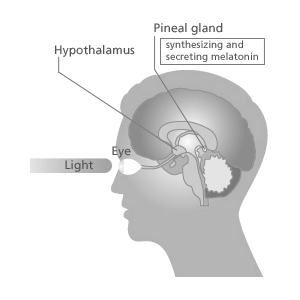
Melatonin [mel-uh-toh-nin] is a naturally occurring hormone found in animals, plants, and microbes. In animals, circulating levels of melatonin vary in a daily cycle, thereby allowing the entrainment of the circadian rhythms of several biological functions.
Many biological effects of melatonin are produced through activation of melatonin receptors, while others are due to its role as a pervasive and powerful antioxidant (a molecule that neutralizes free radicals), with a particular role in the protection of nuclear and mitochondrial DNA. Products containing melatonin have been available over-the-counter in the United States since the mid-1990s. In many other countries, the sale of this neurohormone is not permitted or requires a prescription.
read more »
Posted in Drugs, Health, Science |
3 Comments »
February 12, 2013
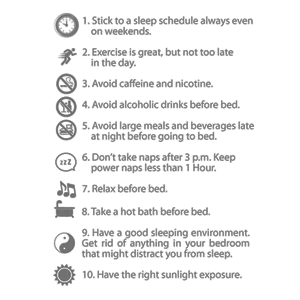
Dark therapy is an experimental treatment which involves eliminating all light in the subject’s environment, for a period of six to sixteen hours per day, in combination with a regular sleep schedule. Dark therapy manipulates circadian rhythms acting on hormones and neurotransmitters. It has been proposed recently (2005) to combine the chronobiological manipulations of light/dark and/or sleep/wake therapies with psychopharmacological medication.
In the words of Swiss neuroscientist Anna Wirz-Justice: ‘Light therapy has undergone widespread controlled randomized clinical trials, and wake therapy has been so widely studied over decades that the efficacy data are strong. These nonpharmaceutical, biologically based therapies are not only powerful adjuvants, but also antidepressants in their own right… [P]ilot studies suggest that the simple measure of promoting long nights (more rest, more sleep, no light) can stop rapid cycling in bipolar patients, or diminish manic symptoms — intriguing findings that require replication.
read more »
Posted in Health |
Leave a Comment »
February 12, 2013
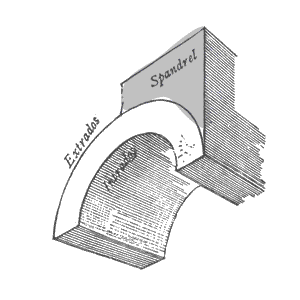
In evolutionary biology, a spandrel [span-druhl] is a a characteristic that did not originate by the direct action of natural selection, that was later co-opted for a current use. The term was coined by the Harvard paleontologist Stephen Jay Gould and population geneticist Richard Lewontin in their influential paper ‘The Spandrels of San Marco and the Panglossian Paradigm: A Critique of the Adaptationist Program’ (1979).
In their paper Gould and Lewontin employed the analogy of spandrels in Renaissance architecture: curved areas of masonry between arches supporting a dome that arise as a consequence of decisions about the shape of the arches and the base of the dome, rather than being designed for the artistic purposes for which they were often employed. The authors singled out properties like the necessary number of four and their specific three-dimensional shape.
read more »
Posted in Language, Science |
1 Comment »


 The Daily Omnivore