February 12, 2013

Segmented sleep, also known as divided sleep, bimodal sleep pattern, or interrupted sleep, is a polyphasic or biphasic sleep pattern where two or more periods of sleep are punctuated by a period of wakefulness. Along with a nap (siesta) in the day, it has been argued that this is the natural pattern of human sleep. A case has been made that maintaining such a sleep pattern may be important in regulating stress.
Historian A. Roger Ekirch argues that before the Industrial Revolution, segmented sleep was the dominant form of human slumber in Western civilization. He draws evidence from documents from the ancient, medieval, and modern world, which he discovered over the course of fifteen years of research. Other historians, such as Craig Koslofsky, have endorsed Ekirch’s discovery and analysis.
read more »
Posted in Health, Science |
Leave a Comment »
February 11, 2013
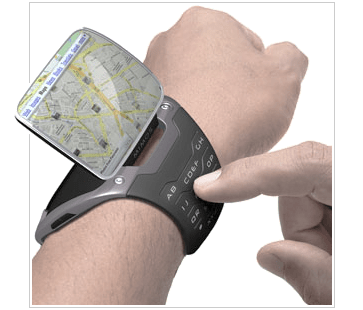
Wearable computers, also known as body-borne computers, are miniature electronic devices that are worn by the bearer under, with or on top of clothing. One of the main advantages of a wearable computer is consistency: there is a constant interaction between the computer and user, i.e. there is no need to turn the device on or off. Another useful feature is the ability to multi-task: it is not necessary to stop what you are doing to use the device; it is augmented into all other actions.
These devices can be incorporated by the user to act like a prosthetic. It can therefore be an extension of the user’s mind and/or body. Many issues are common to the wearables as with mobile computing, ambient intelligence (electronic environments that are sensitive and responsive to the presence of people), and ubiquitous computing research communities, including power management and heat dissipation, software architectures, wireless and personal area networks.
read more »
Posted in Technology |
Leave a Comment »
February 11, 2013
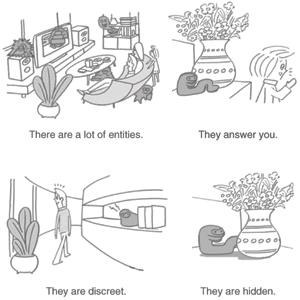
In computing, ambient intelligence (AmI) refers to electronic environments that are sensitive and responsive to the presence of people. Ambient intelligence is a vision on the future of consumer electronics, telecommunications and computing that was originally developed in the late 1990s for the time frame 2010–2020. In an ambient intelligence world, devices work in concert to support people in carrying out their everyday life activities, tasks and rituals in easy, natural way that uses information and intelligence that is hidden in the network connecting these devices (an Internet of Things).
As these devices grow smaller, more connected and more integrated into the world, the technology disappears into our surroundings until only the user interface remains perceivable by users. The ambient intelligence paradigm builds upon ubiquitous computing (ever-present, always on), profiling practices (the use of algorithms to discover patterns or correlations in large quantities of data, aggregated in databases), context awareness (complementary to location awareness), and user-centered design (in which the needs, wants, and limitations of end users of a product are given extensive attention at each stage of the design process).
read more »
Posted in Technology |
Leave a Comment »
February 11, 2013


The term Experience Economy was first described in an article published in 1998 by B. Joseph Pine II and James H. Gilmore. In it they described the experience economy as the next economy following the agrarian economy, the industrial economy, and the most recent service economy. This concept had been previously researched by many other authors.
Pine and Gilmore argue that businesses must orchestrate memorable events for their customers, and that memory itself becomes the product – the ‘experience.’ More advanced experience businesses can begin charging for the value of the ‘transformation’ that an experience offers, e.g., as education offerings might do if they were able to participate in the value that is created by the educated individual. This, they argue, is a natural progression in the value added by the business over and above its inputs.
read more »
Posted in Money, Technology |
Leave a Comment »
February 11, 2013

Commodification (or commoditization) is the transformation of goods, ideas, or other entities that may not normally be regarded as goods into a commodity. American author and feminist bell hooks refers to cultural commodification [kuh-mod-uh-fi-key-shuhn] as ‘eating the other.’ By this she means that cultural expressions, revolutionary, or post modern, can be sold to the dominant culture. Any messages of social change are not marketed for their messages but used as a mechanism to acquire a piece of the ‘primitive.’ Any interests in past historical culture almost always have a modern twist.
According to Mariana Torgovnick, ‘What is clear now is that the West’s fascination with the primitive has to do with its own crises in identity, with its own need to clearly demarcate subject and object even while flirting with other ways of experiencing the universe.’ Hooks states that marginalized groups are seduced by this concept because of ‘the promise of recognition and reconciliation.’ ‘When the dominant culture demands that the Other be offered as sign that progressive political change is taking place, that the American Dream can indeed be inclusive of difference, it invites a resurgence of essentialist cultural nationalism.’
read more »
Posted in Money, Politics, World |
1 Comment »
February 11, 2013
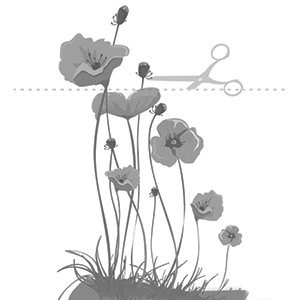
Tall poppy syndrome (TPS) is a pejorative term primarily used in the UK, Canada, New Zealand, and other Anglosphere nations to describe a social phenomenon in which people of genuine merit are resented, attacked, cut down, or criticized because their talents or achievements elevate them above or distinguish them from their peers.
Australia’s usage of the term has evolved and is not uniformly negative. In Australia, a long history of ‘underdog’ culture and profound respect for humility in contrast to that of Australia’s English feudal heritage results in a different understanding of the concept.
read more »
Posted in Language, War, World |
Leave a Comment »
February 10, 2013

Naked Lunch is the 1991 film adaptation written and directed by David Cronenberg, of William S. Burroughs’ novel of the same name. Rather than attempting a straight adaptation, Cronenberg took a few elements from the book and combined them with elements of Burroughs’ life, creating a hybrid film about the writing of the book rather than the book itself. Peter Weller starred as William Lee, the pseudonym Burroughs used when he wrote ‘Junkie.’
Lee is an exterminator who finds that his wife Joan is stealing his insecticide (pyrethrum) to use as a drug. When Lee is arrested by the police, he begins hallucinating because of ‘bug powder’ exposure. He believes he is a secret agent whose controller (a giant bug) assigns him the mission of killing Joan, who is an agent of an organization called Interzone Incorporated. Lee dismisses the bug and its instructions and kills it. He returns home to find Joan sleeping with Hank, one of his writer friends. Shortly afterwards, he accidentally kills her while attempting to shoot a drinking glass off her head in imitation of William Tell.
read more »
Posted in Art, Drugs, Language |
Leave a Comment »
February 10, 2013

Naked Lunch is a novel by William S. Burroughs originally published in 1959. The book is structured as a series of loosely-connected vignettes. Burroughs stated that the chapters are intended to be read in any order.
The reader follows the narration of junkie William Lee, who takes on various aliases, from the US to Mexico, eventually to Tangier and the dreamlike Interzone (international zone, a type of extraterritoriality governed by international law). The vignettes (called ‘routines’) are drawn from Burroughs’ own experience in these places, and his addiction to drugs (heroin, morphine, and while in Tangier, ‘Majoun’—a strong marijuana confection—as well as a German opioid, brand name Eukodol, of which he wrote frequently).
read more »
Posted in Drugs, Language, Politics |
Leave a Comment »
February 9, 2013
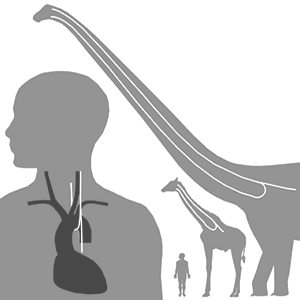
The recurrent [ri-kur-uhnt] laryngeal [luh-rin-jee-uhl] nerve is a branch of the vagus nerve (tenth cranial nerve) that supplies motor function and sensation to the larynx (voice box). It is referred to as ‘recurrent’ because the branches of the nerve innervate the laryngeal muscles in the neck through a rather circuitous route: it descends into the thorax before rising up between the trachea and esophagus to reach the neck.
The extreme detour of this nerve (about 15 feet in the case of giraffes) is cited as evidence of evolution as opposed to intelligent design. The nerve’s route would have been direct in the fish-like ancestors of modern tetrapods, traveling from the brain, past the heart, to the gills (as it does in modern fish). Over the course of evolution, as the neck extended and the heart became lower in the body, the laryngeal nerve was caught on the wrong side of the heart. Natural selection gradually lengthened the nerve by tiny increments to accommodate, resulting in the circuitous route now observed.
Posted in Science |
Leave a Comment »
February 8, 2013

‘A Study of History‘ is the 12-volume magnum opus of British historian Arnold J. Toynbee, finished in 1961, in which the author traces the development and decay of all of the major world civilizations in the historical record. Toynbee applies his model to each of these civilizations, detailing the stages through which they all pass: genesis, growth, time of troubles, universal state, and disintegration.
The major civilizations, as Toynbee sees them, are: Egyptian, Andean, Sinic, Minoan, Sumerian, Mayan, Indic, Hittite, Hellenic, Western, Orthodox Christian (Russia), Far Eastern, Orthodox Christian (main body), Persian, Arabic, Hindu, Mexican, Yucatec, and Babylonic. There are four ‘abortive civilizations’ (Abortive Far Western Christian, Abortive Far Eastern Christian, Abortive Scandinavian, Abortive Syriac) and five ‘arrested civilizations’ (Polynesian, Eskimo, Nomadic, Ottoman, Spartan).
read more »
Posted in Language, Politics, World |
1 Comment »
February 8, 2013
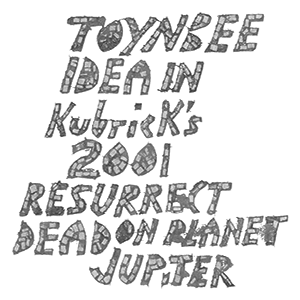
The Toynbee tiles are messages of unknown origin found embedded in asphalt of streets in about two dozen major cities in the United States and four South American capitals. Since the 1980s, several hundred tiles have been discovered. They are generally about the size of an American license plate (roughly 30 cm by 15 cm), but sometimes considerably larger. They contain some variation on the following inscription: ‘TOYNBEE IDEA, IN MOViE `2001, RESURRECT DEAD, ON PLANET JUPITER.’
Some of the more elaborate tiles also feature cryptic political statements or exhort readers to create and install similar tiles of their own. The material used for making the tiles was long a mystery, but evidence has emerged that they may be primarily made of layers of linoleum and asphalt crack-filling compound. Toynbee-tile enthusiasts believe that a native Philadelphian created the tiles because of the large number that appear in the city, their apparent age, and the variety of carving styles.
read more »
Posted in Humor |
Leave a Comment »
February 8, 2013

A claw crane or skill crane is a type of arcade game known as a ‘merchandiser,’ commonly found in video arcades, supermarkets, restaurants, movie theaters, shopping malls, and bowling alleys. A claw vending machine consists of prizes, usually plush toys or alternatives such as jewelry, capsuled toys, hats, balls, dolls, shirts, candy and electronics.
Higher end and more expensive prizes are sometimes placed in a plastic bag so the toy is harder to pick up. The player inserts coins into the machine, which then allows the player to manipulate a joystick that controls the claw for a variable time (controlled by the operator) usually 15 to 30 seconds (in some cases, a claw vending machine might offer a minute of time).
read more »
Posted in Games |
Leave a Comment »


 The Daily Omnivore