May 12, 2013

The word ‘tomato‘ may refer to the plant (Solanum lycopersicum) or the edible, typically red, fruit that it bears. Having originated in America, the tomato was spread around the world following the Spanish colonization of the Americas, and its many varieties are now widely grown, often in greenhouses in cooler climates.
The tomato is consumed in diverse ways, including raw, as an ingredient in many dishes and sauces, and in drinks. While it is botanically a fruit (a plant structure that contains its seeds), it is considered a vegetable for culinary purposes. The fruit is rich in lycopene (a carotene), which may have beneficial health effects.
read more »
Posted in Food, Language, World |
Leave a Comment »
May 10, 2013
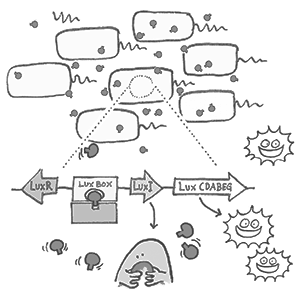
Quorum [kwawr-uhm] sensing is a chemical messaging system employed by bacteria to determine the presence of other bacteria. It is part of a system of stimulus and response correlated to population density (e.g. some bioluminescent bacteria will not produce light unless in sufficient concentration).
Many species of bacteria use quorum sensing to coordinate gene expression according to the density of their local population. In similar fashion, some social insects use a form of quorum sensing to determine where to nest. In addition to its function in biological systems, quorum sensing has several useful applications for computing and robotics.
read more »
Posted in Health, Science, Technology |
Leave a Comment »
May 9, 2013
The bias blind spot is the cognitive bias of failing to compensate for one’s own cognitive biases. The term was created by Emily Pronin, a social psychologist from Princeton University’s Department of Psychology, with colleagues Daniel Lin and Lee Ross. Pronin and her co-authors explained to subjects the better-than-average effect (illusory superiority), the halo effect, self-serving bias, and many other cognitive biases.
According to the better-than-average bias, specifically, people are likely to see themselves as inaccurately ‘better than average’ for possible positive traits and ‘less than average’ for negative traits. When subsequently asked how biased they themselves were, subjects rated themselves as being much less vulnerable to those biases than the average person.
read more »
Posted in Health, Science |
Leave a Comment »
May 9, 2013

The introspection illusion is a cognitive bias in which people wrongly think they have direct insight into the origins of their mental states, while treating others’ introspections as unreliable. In certain situations, this illusion leads people to make confident but false explanations of their own behavior (Causal theories’) or inaccurate predictions of their future mental states.
The illusion has been examined in psychological experiments, and suggested as a basis for biases in how people compare themselves to others. These experiments have been interpreted as suggesting that, rather than offering direct access to the processes underlying mental states, introspection is a process of construction and inference, much as people indirectly infer others’ mental states from their behavior.
read more »
Posted in Health, Science |
1 Comment »
May 9, 2013

Lilith is a female demon in Jewish legends, found first in the Dead Sea scrolls (the earliest known copy of the old testament, discovered in 1947 and written between 408 BCE and 318 CE). The legend is related both to a Hebrew language term ‘lilith’ which appears in a list of wilderness animals and birds in the ‘Book of Isaiah,’ and also is linked to beliefs about demons called ‘lili’ (‘spirit,’ associated with the night, wind, and owls.) in ancient Babylon.
Evidence in later Jewish materials is plentiful, but little information has been found relating to the original Akkadian and Babylonian view of these demons. The relevance of two sources previously used to connect the Jewish ‘Lilith’ to an Akkadian ‘Lilitu’ – the ‘Gilgamesh’ appendix and the Arslan Tash amulets – are now both disputed by recent scholarship.
read more »
Posted in Philosophy |
Leave a Comment »
May 8, 2013

‘Colorless green ideas sleep furiously‘ is a sentence composed by linguist Noam Chomsky in his 1957 book ‘Syntactic Structures’ as an example of a sentence that is grammatically correct, but semantically nonsensical. The term was originally used in his 1955 thesis ‘Logical Structures of Linguistic Theory.’
Although the sentence is grammatically correct, no obvious understandable meaning can be derived from it, and thus it demonstrates the distinction between syntax (linguistic rules) and semantics (symbolic meaning). As an example of a category mistake (a property is ascribed to a thing that could not possibly have that property), it was used to show inadequacy of the then-popular probabilistic models of grammar, and the need for more structured models.
read more »
Posted in Games, Language, Philosophy |
1 Comment »
May 8, 2013

Borg is a collective proper noun for a fictional alien race that appears as recurring antagonists in various incarnations of the ‘Star Trek’ franchise. The Borg are a collection of species that have been turned into cybernetic organisms functioning as drones of the Collective, or the hive. A pseudo-race, dwelling in the Star Trek universe, the Borg force other species into their collective and connect them to ‘the hive mind’; the act is called assimilation and entails violence, abductions, and injections of cybernetic implants. The Borg’s ultimate goal is ‘achieving perfection.’
Aside from being the main threat in ‘Star Trek: First Contact,’ the Borg play major roles in ‘The Next Generation’ and ‘Voyager’ television series, primarily as an invasion threat to the United Federation of Planets, but also of some use to the Voyager. The Borg have become a symbol in popular culture for any juggernaut against which ‘resistance is futile.’
read more »
Posted in Art, Technology |
Leave a Comment »
May 7, 2013
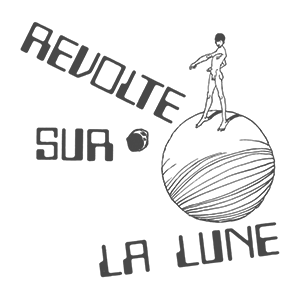
Libertarian science fiction is a sub-genre of science fiction that focuses on the politics and social order implied by libertarian philosophies with an emphasis on individualism and a limited state—and in some cases, no state whatsoever.
As a category, libertarian fiction is unusual because the vast majority of its authors are self-identified as science fiction authors. This contrasts with the authors of much other social criticism who are largely academic or mainstream novelists who tend to dismiss any genre classification.
read more »
Posted in Language, Politics, Science |
Leave a Comment »
May 7, 2013

Social science fiction is a subgenre of science fiction concerned less with technology and space opera and more with sociological speculation about human society. In other words, it ‘absorbs and discusses anthropology,’ and speculates about human behavior and interactions.
Exploration of fictional societies is a significant aspect of science fiction, allowing it to perform predictive (H. G. Wells, ‘The Final Circle of Paradise’) and precautionary (Ray Bradbury, ‘Fahrenheit 451’) functions, to criticize the contemporary world (Russian author Alexander Gromov’s ‘Antarctica-online’ ) and to present solutions (B.F. Skinner’s ‘Walden Two’), to portray alternative societies (World of the Noon, a fictional future setting for a number of hard science fiction novels written by Arkady and Boris Strugatsky) and to examine the implications of ethical principles (the works of Russian science fiction author Sergei Lukyanenko).
read more »
Posted in Politics, Science |
1 Comment »
May 7, 2013

Walden Two is a utopian novel written by behavioral psychologist B. F. Skinner, first published in 1948. In its time, it could have been considered to be science fiction, since science-based methods for altering people’s behavior did not yet exist. (Such methods exist now and are known as applied behavior analysis, formerly behavior modification).
‘Walden Two’ is controversial because it includes a rejection of free will, the proposition that human behavior is controlled by a non-corporeal entity, such as a spirit or a soul. The book embraces the proposition that the behavior of organisms, including humans, is determined by genetic and environmental variables, and that systematically altering environmental variables can generate a sociocultural system that very closely approximates utopia.
read more »
Posted in Language, Politics, Science |
Leave a Comment »
May 7, 2013

The term Dumbing down describes the deliberate diminishment of the intellectual level of the content of schooling and education, of literature and cinema, and of news and culture. The idea of and the term dumbing down originated in 1933 as slang, used by motion picture screenplay writers, to mean: ‘revise so as to appeal to those of little education or intelligence.’ Sociologist Pierre Bourdieu noted cultural capital as a means of social mobility, which is diminished by the processes of dumbing down.
The occurrences of dumbing down vary in nature, according to the subject matter under discussion and the purpose of the simplifier, but the dumbing-down usually involves the over-simplification of critical thought to the degree of conceptually undermining the intellectual standards of language and of learning of a society; by such simplistic means the writer and the speaker justifies the trivialization of cultural, artistic, and academic standards, as in the case of popular culture.
read more »
Posted in Education, Language, Politics |
Leave a Comment »
May 7, 2013

The subject of the damsel in distress, or persecuted maiden, is a classic theme in world literature, art, film and video games. She is usually a beautiful young woman placed in a dire predicament by a villain or monster and who requires a hero to achieve her rescue. She has become a stock character of fiction, particularly of melodrama.
Though she is usually human, she can also be of any other species, including fictional or folkloric species; and even divine figures such as an angel or deity. The word ‘damsel’ derives from the French ‘demoiselle,’ meaning ‘young lady,’ and the term ‘damsel in distress’ in turn is a translation of the French ‘demoiselle en détresse.’
read more »
Posted in Language, Politics, Sex |
1 Comment »


 The Daily Omnivore