April 25, 2011

Spencer Tunick (b. 1967) is an American artist. He is best known for his installations that feature large numbers of nude people posed in artistic formations. In his own words, ‘A body is a living entity. It represents life, freedom, sensuality, and it is a mechanism to carry out our thoughts. A body is always beautiful to me.’ These installations are often situated in urban locations throughout the world, although he has also done some woodland and beach installations and still does individuals and small groups occasionally. His models are unpaid volunteers who receive a limited edition photo as compensation.
In May 2007, approximately 18,000 people posed for Tunick in Mexico City’s principal square, the Zócalo, setting a new record, and more than doubling his previous high, 7,000 in Barcelona in 2003. Male and female volunteers of different ages stood and saluted, laid down on the ground, crouched in the fetal position, and otherwise posed for Tunick’s lens in the city’s massive central plaza, the Plaza de la Constitución.
Posted in Art, Sex |
7 Comments »
April 25, 2011
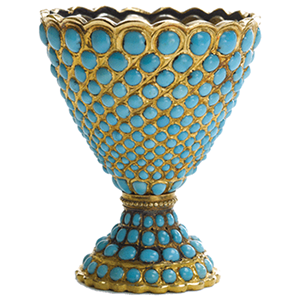

A zarf is a holder, usually of ornamental metal, for a coffee cup without a handle. Although coffee was probably discovered in Ethiopia, it was in Turkey at around the thirteenth century that it became popular as a beverage. As with the serving of tea in China and Japan, the serving of coffee in Turkey was a complex, ritualized process.
It was served in small cups without handles (known as fincan), which were placed in holders known as zarf to protect the cup and also the fingers of the drinker from the hot fluid. Cups were typically made of porcelain, but also of glass and wood.
Posted in Art, Food, Language |
Leave a Comment »
April 24, 2011

Adolphe Millot [me-low] (1857 – 1921) was a French naturalist illustrator. He worked for the Grand Larousse encyclopédique (a French encyclopedic dictionary).
Posted in Art, Language, Science |
3 Comments »
April 23, 2011

Ribbon diagrams, also known as Richardson Diagrams, are 3D schematic representations of protein structure and are one of the most common methods of protein depiction used today. Ribbon diagrams are generated by interpolating a smooth curve through the polypeptide backbone. Ribbon diagrams are simple, yet powerful, in expressing the visual basics of a molecular structure (twist, fold and unfold). This method has successfully portrayed the overall organization of the protein structure, reflecting its 3-dimensional information, and allowing for better understanding of a complex object both by the expert structural biologists and also by other scientists, students, and the general public.
Originally conceived by Jane S. Richardson in 1980, her hand-drawn ribbon diagrams were the first schematics of 3D protein structure to be produced systematically. They are generated by interpolating a smooth curve through the polypeptide backbone. Alpha-helices are shown as coiled ribbons or thick tubes, Beta-strands as arrows, and lines or thin tubes for random coils. The direction of the polypeptide chain may be indicated by a color ramp along the length of the ribbon.
Posted in Art, Science |
Leave a Comment »
April 23, 2011
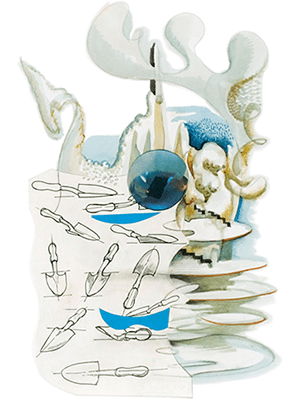
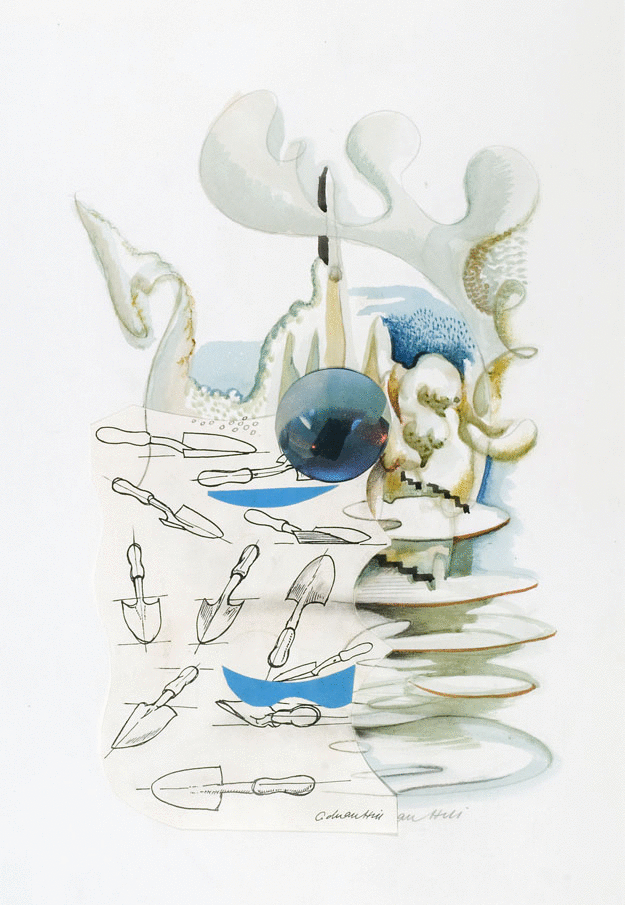
Adrian Hill (1895–1977) was a British artist and pioneering Art Therapist. He wrote many best-selling books about painting and drawing, and in the 1950s and early 1960s presented a BBC children’s television program called ‘Sketch Club.’
His own work combined elements of impressionism and surrealism as well as more conventional representations, and was widely displayed at major art galleries during his lifetime, both in Britain and abroad.
read more »
Posted in Art, Health, Science |
Leave a Comment »
April 18, 2011

A 3D printer is a machine that prints solid copies of objects from computer drawings. Some use powder. Some use liquid plastic. They all make the object by building it up layer by layer in an additive process.
In some industries these printers are called rapid prototyping machines. Car makers use 3D printers to try out new shapes for things like door handles; designers use try new shapes for consumer electronics; artists create sculptures; and jewelry designers can try out new ideas and make molds for rings.
read more »
Posted in Art, Money, Technology |
Leave a Comment »
April 13, 2011

Mod (from modernist) is a subculture that originated in London in the late 1950s and peaked in the early-to-mid 1960s. Significant elements include: fashion (often tailor-made suits), pop music (including African American soul, Jamaican ska, and British beat music and R&B), and Italian motor scooters.
The original scene was also associated with amphetamine-fueled all-night dancing at clubs. From the mid-to-late 1960s onwards, the mass media often used the term in a wider sense to describe anything that was believed to be popular, fashionable, or modern. There was a mod revival in the United Kingdom in the late 1970s, which was followed by a mod revival in North America in the early 1980s, particularly in Southern California.
read more »
Posted in Art, Drugs, Language |
Leave a Comment »
April 13, 2011

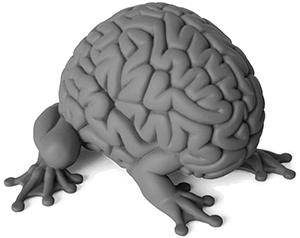
Designer toys are collectibles that are produced in limited editions (as few as 10 or as many as 2000 pieces) and created by artists and designers. Designer toys are made of variety of materials; ABS plastic and vinyl are most common, although wood, metal, and resin are occasionally used. The term also encompasses plush, cloth and latex dolls.
read more »
Posted in Art, Games, Money |
Leave a Comment »
April 13, 2011

The 27 Club is a group of influential rock and blues musicians who all died at the age of 27, including Blues musician Robert Johnson, Brian Jones of the Rolling Stones, Jimi Hendrix, Janis Joplin, Jim Morrison, Kurt Cobain, and Amy Winehouse. Most members of the ‘club’ died as a result of drug and alcohol abuse, or other violent means such as homicide or suicide.
read more »
Posted in Art, Death, Drugs |
Leave a Comment »
April 13, 2011

Club 57 was a nightclub located at 57 St. Mark’s Place in the East Village, New York City during the late 1970s and early 1980s. It was a hangout and venue for performance- and visual-artists and musicians, including Keith Haring, Klaus Nomi, and to a lesser extent, Jean-Michel Basquiat.
read more »
Posted in Art, Games, Money |
Leave a Comment »
April 13, 2011

Leslie Conway ‘Lester’ Bangs (1948 – 1982) was an American music journalist and musician. He wrote for ‘Creem’ and ‘Rolling Stone’ magazines and has been called one of the ‘most influential’ voices in rock criticism. In 1969, Bangs began writing freelance after reading an ad in ‘Rolling Stone’ soliciting readers’ reviews.
His first piece was a negative review of the MC5 album ‘Kick Out The Jams,’ which he sent to ‘Rolling Stone’ with a note detailing that should the magazine decide not to publish the review, then they would have to contact Lester and tell him why. They published it.
read more »
Posted in Art, Humor, Money |
Leave a Comment »
April 13, 2011

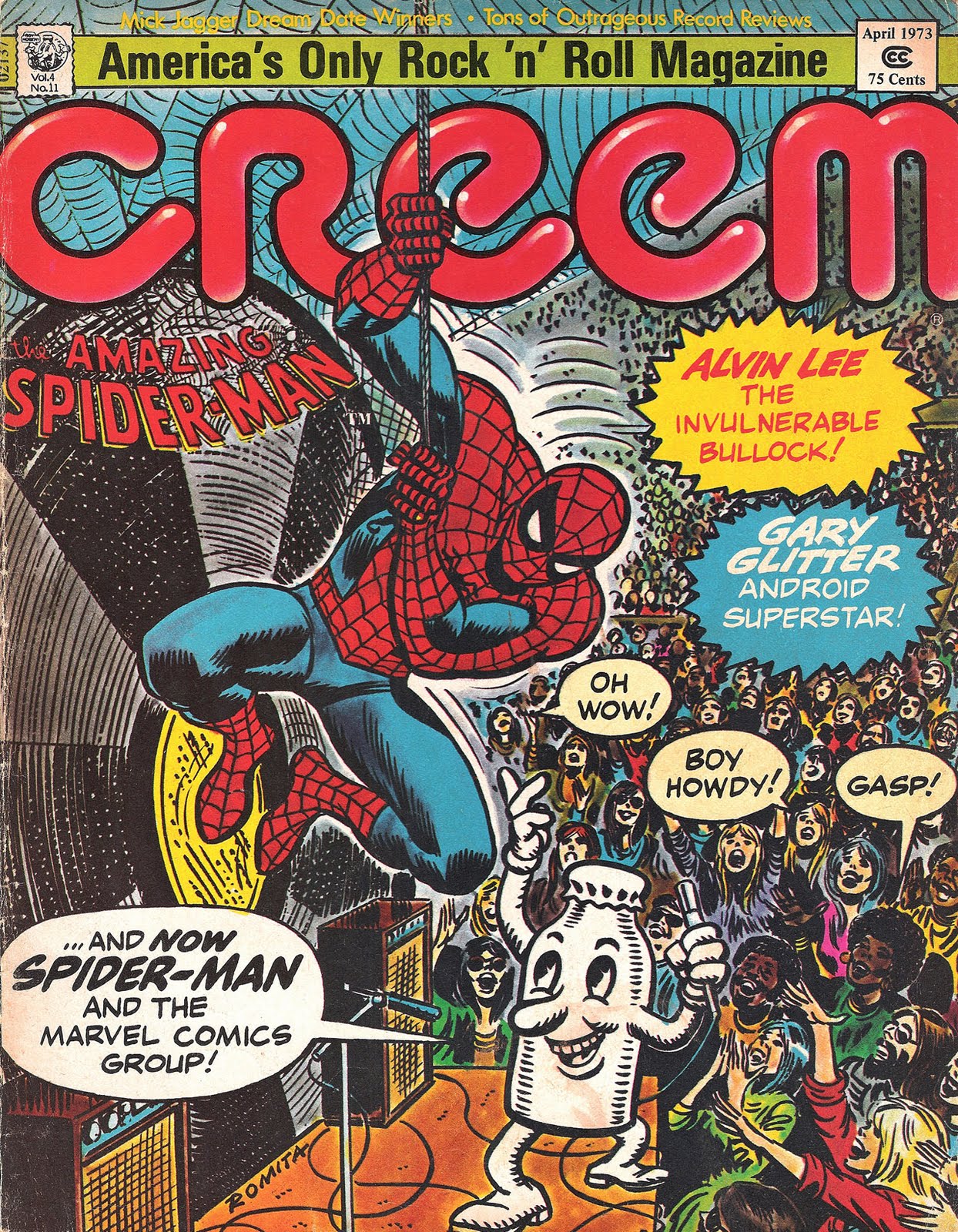
Creem was a monthly rock ‘n’ roll publication first published in March 1969 by Barry Kramer and founding editor Tony Reay. It suspended production in 1989 but received a short-lived renaissance in the early 1990s as a glossy tabloid.
Lester Bangs, often cited as ‘America’s Greatest Rock Critic,’ became editor in 1971. The term ‘punk rock’ was said to have been coined by the magazine in 1971, and the term ‘heavy metal’ was also first used in its pages.
read more »
Posted in Art, Humor, Money |
Leave a Comment »





 The Daily Omnivore