July 7, 2016
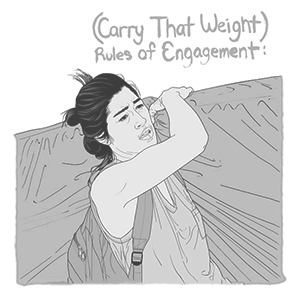
‘Mattress Performance (Carry That Weight)’ was a work of endurance performance art by Emma Sulkowicz, conducted as her senior thesis during the final year of her visual arts degree at Columbia University in New York City.
Begun in September 2014, the piece involved her carrying a 50-lb mattress – of the kind Columbia uses in its dorms – wherever she went on campus. She said the piece would end when a student she alleges raped her in her dorm room in 2012 was expelled from or otherwise left the university. Sulkowicz carried the mattress until the end of the Spring semester as well as to her graduating ceremony in May 2015.
read more »
Posted in Art, Politics, Sex |
1 Comment »
July 4, 2016


Flat design is a minimalist user interface design genre, or design language, commonly used in graphical user interfaces (such as web applications and mobile apps), and in graphical materials such as posters, arts, guide documents, and publishing products.
Flat design is a style of interface design emphasizing minimum use of stylistic elements that give the illusion of three dimensions (such as the use of drop shadows, gradients or textures) and is focused on simple elements, typography and flat colors. Designers may prefer flat design because it allows interface designs to be more streamlined and efficient. It is easier to quickly convey information while still looking visually appealing and approachable.
read more »
Posted in Art, Language, Technology |
Leave a Comment »
May 31, 2016
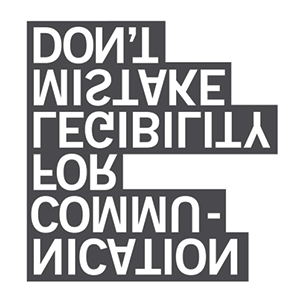
Typography is the art and technique of arranging type to make written language legible, readable, and appealing when displayed. The arrangement of type involves selecting typefaces, point size, line length, line-spacing (leading), letter-spacing (tracking), and adjusting the space within letters pairs (kerning). The term ‘typography’ is also applied to the style, arrangement, and appearance of the letters, numbers, and symbols created by the process.
In contemporary use, the practice and study of typography is very broad, covering all aspects of letter design and application, both mechanical (typesetting and typefaces) and manual (handwriting and calligraphy). Type design is a closely related craft, sometimes considered part of typography; most typographers do not design typefaces, and some type designers do not consider themselves typographers. Typography also may be used as a decorative device, unrelated to communication of information.
read more »
Posted in Art, Language, Technology |
Leave a Comment »
May 29, 2016
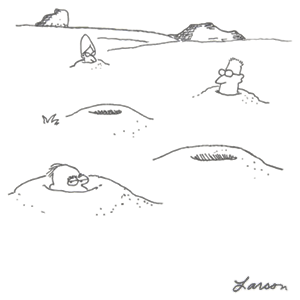
‘The Far Side‘ is a single-panel comic created by Gary Larson and syndicated by Universal Press Syndicate, which ran from January 1, 1980, to January 1, 1995. Its surrealistic humor is often based on uncomfortable social situations, improbable events, an anthropomorphic view of the world, logical fallacies, impending bizarre disasters, (often twisted) references to proverbs, or the search for meaning in life. Larson’s frequent use of animals and nature in the comic is popularly attributed to his background in biology. The series was preceded by a similar panel called ‘Nature’s Way,’ also by Larson.
Most of Larson’s comics relied on some combination of a visual and verbal gag, rather than just one or the other. Some recurring themes in the comic include people being stranded on desert islands, aliens, heaven, hell, and the life of cavemen. Many cartoons focused on animals, especially cows, bears, dogs, flies, and ducks. Notably, virtually all characters portrayed in the comic were overweight or obese, and usually wearing glasses. In addition, unless needed for a facial or comic expression, eyes are almost never drawn and characters usually show only a brow ridge.
Posted in Art, Humor, Language |
1 Comment »
May 4, 2016
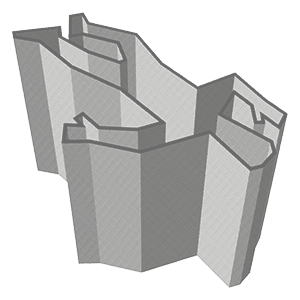
‘The Demolished Man,’ by Alfred Bester, is an American science fiction novel and inverted detective story, that was the first Hugo Award winner in 1953. The story is a police procedural set in a future where telepathy is common, although much of its effectiveness is derived from one individual having greater telepathic skill than another. In the 24th century, telepaths—’Espers’ (short for Extrasensory perception), colloquially known as ‘peepers’—are completely integrated into all levels of a class-based society.
Class 3 Espers, the most common, can detect only conscious thoughts at the time they are formed and are often employed as secretaries or administrators; Class 2 Espers can dig more deeply, to the pre-conscious level, detecting subliminal patterns, epiphanies and tenuous associations, and they are employed in the professional middle class—lawyers, managers, psychologists, etc. Class 1 Espers can detect all of the foregoing plus sub-conscious primitive urges, and they occupy only the highest levels of power in fields such as the police, government and medicine (such as psychiatry).
Posted in Art, Philosophy, Technology |
Leave a Comment »
May 3, 2016
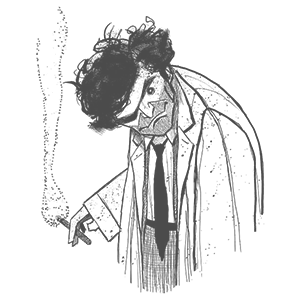
An inverted detective story, also known as a ‘howcatchem,’ is a murder mystery fiction structure in which the commission of the crime is shown or described at the beginning, usually including the identity of the perpetrator.
The story then describes the detective’s attempt to solve the mystery. There may also be subsidiary puzzles, such as why the crime was committed, but those are cleared up along the way. This format is the opposite of the more typical ‘whodunit,’ where all of the details of the crime and the perpetrator are not revealed until the story’s climax.
read more »
Posted in Art |
1 Comment »
April 25, 2016

Prince Rogers Nelson (1958 – 2016), known as Prince, was an American singer, songwriter, multi-instrumentalist, record producer, and actor. He was a musical innovator and known for his eclectic work, flamboyant stage presence, extravagant dress and makeup, and wide vocal range. His music integrates a wide variety of styles, including funk, rock, R&B, soul, psychedelia, and pop.
Prince was born in Minneapolis and developed an interest in music as a young child. He secured a recording contract with Warner Bros at the age of 18, and released his album ‘For You’ in 1978. His 1979 album ‘Prince’ went platinum, and his next three records—’Dirty Mind’ (1980), ‘Controversy’ (1981), and ‘1999’ (1982)—continued his success, showcasing Prince’s trademark of prominently sexual lyrics and blending of funk, dance, and rock music. In 1984, he began referring to his backup band as ‘The Revolution’ and released ‘Purple Rain,’ which served as the soundtrack to his film debut of the same name and was met with widespread acclaim.
read more »
Posted in Art |
Leave a Comment »
March 26, 2016
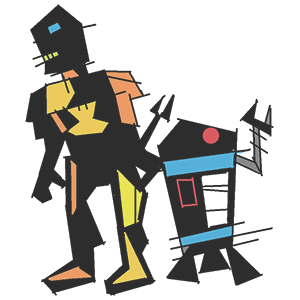
A shared universe is a set of creative works where more than one writer (or other artist) independently contributes a work that can stand alone but fits into the joint development of the storyline, characters, or world of the overall project. It is common in genres like science fiction. It differs from ‘collaborative writing’ where multiple artists are working together on the same work, and from ‘crossovers’ where the works and characters are independent except for a single meeting.
The term shared universe is also used within comics to reflect the overall milieu created by the comic book publisher in which characters, events, and premises from one product line appear in other product lines in a media franchise. The term has also been used in a wider, non-literary sense to convey interdisciplinary or social commonality, often in the context of a ‘shared universe of discourse.’
read more »
Posted in Art, Money |
Leave a Comment »
March 25, 2016

The Wolfpack is a 2015 American documentary film about a family who homeschooled and raised their seven children in the confinement of their apartment in the Lower East Side of New York City. The film, directed by Crystal Moselle, premiered at the 2015 Sundance Film Festival, where it won the US Documentary Grand Jury Prize.
Locked away for fourteen years, the Angulo family’s seven children—six brothers named Mukunda, Narayana, Govinda, Bhagavan, Krisna (Glenn), and Jagadesh (Eddie), and their sister Visnu—learned about the world through watching films. They also re-enact scenes from their favorite movies. Their father, Oscar, had the only door key and prohibited the kids and their mother from leaving the apartment except for a few strictly-monitored trips on the ‘nefarious’ streets.
read more »
Posted in Art |
Leave a Comment »
March 15, 2016
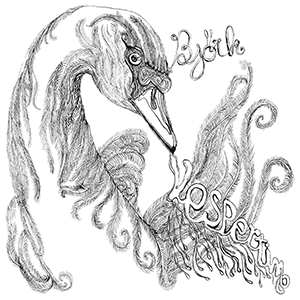
The swan dress is an iconic dress resembling a white swan worn by the Icelandic artist Björk in 2001 at the 73rd Academy Awards. Created by Macedonian fashion designer Marjan Pejoski, the dress is modeled after a swan and at the ceremony Björk mimicked laying an egg on the red carpet. She later said: “I was very aware when I went to the Academy Awards that it would probably be my first and last time. So I thought my input should really be about fertility, and I thought I’d bring some eggs.”
It was described by film critic Emanuel Levy as ‘A giant swan dress, a full-body stocking that was covered with a giant swan whose neck wrapped around her with its head and beak resting on her breasts.’ She had two copies of the dress produced, given that it could not be taken to the dry cleaners. She later wore that dress on the cover of her 2001 record album ‘Vespertine’ and variations of it many times on the ‘Vespertine World Tour.’
read more »
Posted in Art, Humor |
1 Comment »
March 2, 2016
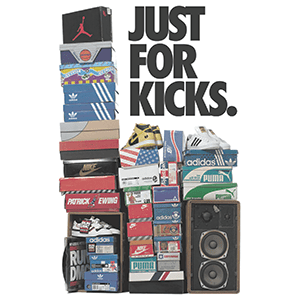
A sneakerhead is a person who collects, trades or admires sneakers as a hobby. The birth of sneakerhead culture in the United States came in the 1980s and can be attributed to two major sources: basketball, specifically the emergence of Michael Jordan and his eponymous Air Jordan line of shoes released in 1985, and the growth of hip hop music. The boom of signature basketball shoes during this era provided the sheer variety necessary for a collecting subculture, while the Hip-Hop movement gave the sneakers their street credibility as status symbols.
Several popular brands and styles of sneakers have emerged as collectors items in the sneakerhead subculture, including Air Jordans, Air Force Ones, Nike Dunks, Nike Skateboarding (SB), Nike Foamposites, Nike Air Max, and in the past few years, the Nike Air Yeezy. Shoes that have the most value are usually exclusive or limited editions. Also certain color schemes may be rarer relative to others in the same sneaker, inflating desirability and value. Recently, sneaker customs, or one-of-a-kind sneakers that have been hand-painted, have become popular as well.
Posted in Art, Games, Money |
Leave a Comment »
February 23, 2016
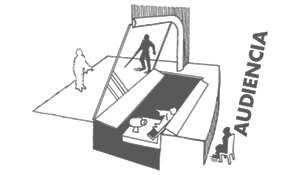
Pepper’s ghost is an illusion technique used in theater, amusement parks, museums, television, and concerts. It is named after John Henry Pepper, a scientist who popularized the effect in a famed demonstration in 1862. It has a long history, dating into the 16th century, and remains widely performed today.
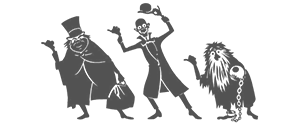
Notable examples of the illusion are the ‘Girl-to-Gorilla’ trick found in old carnival sideshows and the appearance of ‘ghosts’ at the ‘Haunted Mansion’ at Disneyland. Teleprompters are a modern implementation of Pepper’s ghost. They reflect a speech or script and are commonly used for live broadcasts such as news programs. Examples of concert illusions based on Pepper’s ghost are the appearance of Tupac Shakur onstage with Dr. Dre and Snoop Dogg at the 2012 Coachella Music and Arts Festival and Michael Jackson at the 2014 Billboard Music Awards.
read more »
Posted in Art, Technology |
Leave a Comment »



