February 10, 2011


The Buddha Machine is a small musical loop player released by FM3, a China-based music duo. The name and idea derived from a popular Chinese music player that intones repeating loops of Buddhist chanting. The Buddha Machine continuously plays one of 9 ambient sound loops (drones) that range in length from 5 to 40 seconds. Resembling a small transistor radio, the device has a volume control that doubles as an on/off switch; a headphone jack; a 4.5V AC adapter jack; and a switch that, when moved, selects the next of 9 ambient loops. In 2008, the second edition (version 2.0) was released commercially; it replaces the original nine loops with nine new ones (totaling approximately 300 seconds of sound), and includes a new control that allows the user to alter the pitch of the sound.
In 2009, FM3 Productions Ltd released an iPhone app that has similar functionality to the real device. It has the option to select from version 1.0 or version 2.0 of the device and a single button that selects the loop to play. Also that year, Throbbing Gristle & Industrial Records released their version of the Buddha Machine, ‘Gristleism,’ with more loops and almost twice the frequency range of the Buddha Machine. In 2010, FM3 released the third generation Buddha Machine, titled Chan Fang. The music is divided into four loops which were composed and performed on the Gu Qin, an ancient Chinese classical instrument.
Posted in Art, Philosophy, Technology |
Leave a Comment »
February 10, 2011

Disco Demolition Night was a promotional event that took place on Thursday, July 12, 1979, at Comiskey Park in Chicago, Illinois, during which a crate filled with records was blown up on the field. It was held during the doubleheader baseball game between the Chicago White Sox and the Detroit Tigers. During the climax of the event, rowdy fans surged onto the field, and a near riot ensued. It would ultimately prove to be one of the most notable promotional ideas and one of the most infamous since ‘Ten Cent Beer Night’ in Cleveland in 1974. The event was the culmination of a popular backlash against disco music.
Posted in Art, Humor |
Leave a Comment »
February 10, 2011

FM-2030 (1930 – 2000) was a transhumanist author, born Fereidoun M. Esfandiary in Brussels to an Iranian diplomat. He became notable in 1989 with the book ‘Are You a Transhuman?: Monitoring and Stimulating Your Personal Rate of Growth in a Rapidly Changing World.’ He also wrote a number of works of fiction under his original name. He changed his name to FM-2030 to reflect the hope and belief that he would live to celebrate his 100th birthday in 2030, and more importantly, to break free of the widespread practice of naming conventions that he saw as rooted in a collectivist mentality, and existing only as a relic of humankind’s tribalistic past. He viewed traditional names as almost always stamping a label of collective identity – varying from gender, to nationality – on the individual.
Many of FM-2030’s predictions about social trends from the 1970s through the early 21st century proved remarkably prescient. He argued that the inherent dynamic of the modern globalizing civilization would bring such changes about despite the best efforts of conservative elites to enforce traditional beliefs. He predicted in vitro fertilization and correcting genetic flaws in 1977; in 1980, he predicted teleconferencing, telemedicine, and teleshopping. He taught at The New School, UCLA, and Florida International University. He worked as a corporate consultant for Lockheed and J.C. Penney. He was a lifelong vegetarian and said he would not eat anything that had a mother. He died from pancreatic cancer and was placed in cryonic suspension at the Alcor Life Extension Foundation in Arizona, where his body remains today.
Posted in Art, Philosophy, Technology |
Leave a Comment »
February 10, 2011


In American cinema, the magical negro is a supporting stock character who, by use of special insight or powers, helps the white protagonist. The word negro, now considered by many as archaic and sometimes offensive, is used intentionally to suggest that the archetype is a racial throwback, an update of the ‘Sambo’ and ‘Noble savage’ stereotypes.
African-American filmmaker Spike Lee popularized the term in 2001 while discussing films with students at Washington State University and at Yale University. The magical negro is a subset of the more generic ‘numinous negro,’ a term coined by Richard Brookhiser in National Review for saintly, respected or heroic black protagonists or mentors.
Posted in Art, Politics |
Leave a Comment »
February 10, 2011

Sacred geometry ascribes symbolic and sacred meanings to certain geometric shapes and certain geometric proportions. It is associated with the belief that a god is the geometer (geometry mathematician) of the world. The geometry used in the design and construction of religious structures such as churches, temples, mosques, religious monuments, altars, and tabernacles has sometimes been considered sacred. The concept applies also to sacred spaces such as temenoi, sacred groves, village greens, and holy wells, and the creation of religious art.
The belief that a god created the universe according to a geometric plan has ancient origins. Plutarch attributed the belief to Plato, writing that ‘Plato said God geometrizes continually’ In modern times, the mathematician Carl Friedrich Gauss adapted this quote, saying ‘God arithmetizes.’ As late as Johannes Kepler (1571–1630), a belief in the geometric underpinnings of the cosmos persisted among some scientists.
read more »
Posted in Art, Philosophy, Technology |
Leave a Comment »
February 9, 2011

Patricia Piccinini (born in 1965 in Freetown, Sierra Leone) is an Australian artist and hyperrealist sculptor. Her art work came to prominence in Australia in the late 1990s.
Her major artworks often reflect her interests in issues such as bioethics, biotechnologies and the environment. Other Australian artists who work in a similar idiom are Martine Corompt, Sam Jinks and Ron Mueck.
Posted in Art, Money, Politics |
Leave a Comment »
February 9, 2011

Between Two Ferns With Zach Galifianakis is an interview series on Funny or Die hosted by Zach Galifianakis. Zach conducts interviews with popular celebrities between two potted ferns. The show is filmed to resemble a low-budget amateur production fit for public access television. He maintains an awkward and sometimes antagonistic demeanor with his guests, asking them bizarre and inappropriate questions mixed with off-handed non sequiturs.
Posted in Art, Humor |
Leave a Comment »
February 9, 2011

A bat phone, in business jargon, is a private telephone number that is handled at a higher priority than a public line. The name derives from Commissioner Gordon’s secure line to the ‘Batphone’ in the Batman television show of 1966–68. Bat phones are common in many industries. The phone numbers are typically given to key customers so that they may reach important individuals in case of emergencies or critical situations. Bat phones can also provide direct access to politicians or notable people.
Another example of their use is for Internet service providers offering a selection of Internet services that range from dial-up access to secure web server hosting. Customers using the secure web hosting facility would be given access to a 24-hour bat phone for prompt resolution of technical issues, while dialup customers seeking technical support would be required to wait on hold and/or call only during business hours.
Posted in Art, Language, Technology |
Leave a Comment »
February 8, 2011

Joe Cool could refer to: Snoopy of Peanuts fame, whose aliases included Joe Cool, generally while wearing dark sunglasses and hanging around the student union. Joe Montana, a former NFL quarterback who earned the nickname for his undaunted poise in adverse, high-pressure game situations. Or, a New-York-based jazz-fusion band of the 1980’s featuring Rob Mounsey, Jeff Mironov, Will Lee, and Christopher Parker.
Posted in Art, Humor, Language |
Leave a Comment »
February 8, 2011
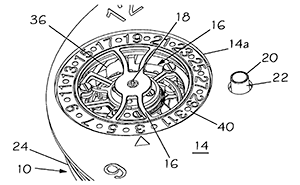

A tourbillon [tor-bee-yon] (French for ‘whirlwind’) is an addition to the mechanics of a watch escapement (the device which converts continuous rotational motion into an oscillating or back and forth motion; the source of the ‘ticking’ sound produced by watches and clocks).
Developed around 1795 by the French – Swiss watchmaker Abraham-Louis Breguet from an earlier idea by the English chronometer maker John Arnold a tourbillon counters the effects of gravity by mounting the escapement and balance wheel in a rotating cage. Originally an attempt to improve accuracy, tourbillons are still included in some expensive modern watches as a novelty and demonstration of watchmaking virtuosity. The mechanism is usually exposed for display on the watch’s face.
Posted in Art, Money, Technology |
Leave a Comment »
February 8, 2011

Bo Burnham (b. 1990) is an American comedian and musician. He performs satirical songs with a politically incorrect slant, and rose to fame on YouTube.
Posted in Art, Humor |
1 Comment »
February 8, 2011
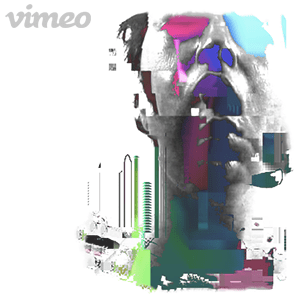
Compression artifacts may intentionally be used as a visual style, sometimes known as glitch art. In still images, an example is Jpegs, by German photographer Thomas Ruff, which intentionally uses JPEG artifacts.
In video art, one technique is datamoshing – mixing two videos sources, or exploiting the way different video codecs process motion and color information. The technique was pioneered by artists Sven König, Takeshi Murata and Paul B. Davis in collaboration with an American art collective called Paperrad.
Posted in Art, Language, Technology |
Leave a Comment »





 The Daily Omnivore