May 30, 2014
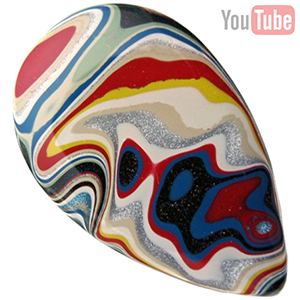
Fordite, also known as ‘Detroit agate,’ is old automobile paint which has hardened sufficiently to be cut and polished.
It was formed from the built up of layers of enamel paint slag on tracks and skids on which cars were hand spray-painted (a now automated process), which have been baked numerous times. In recent times the material has been recycled as eco-friendly jewelry.
Posted in Art, Technology |
Leave a Comment »
April 24, 2014

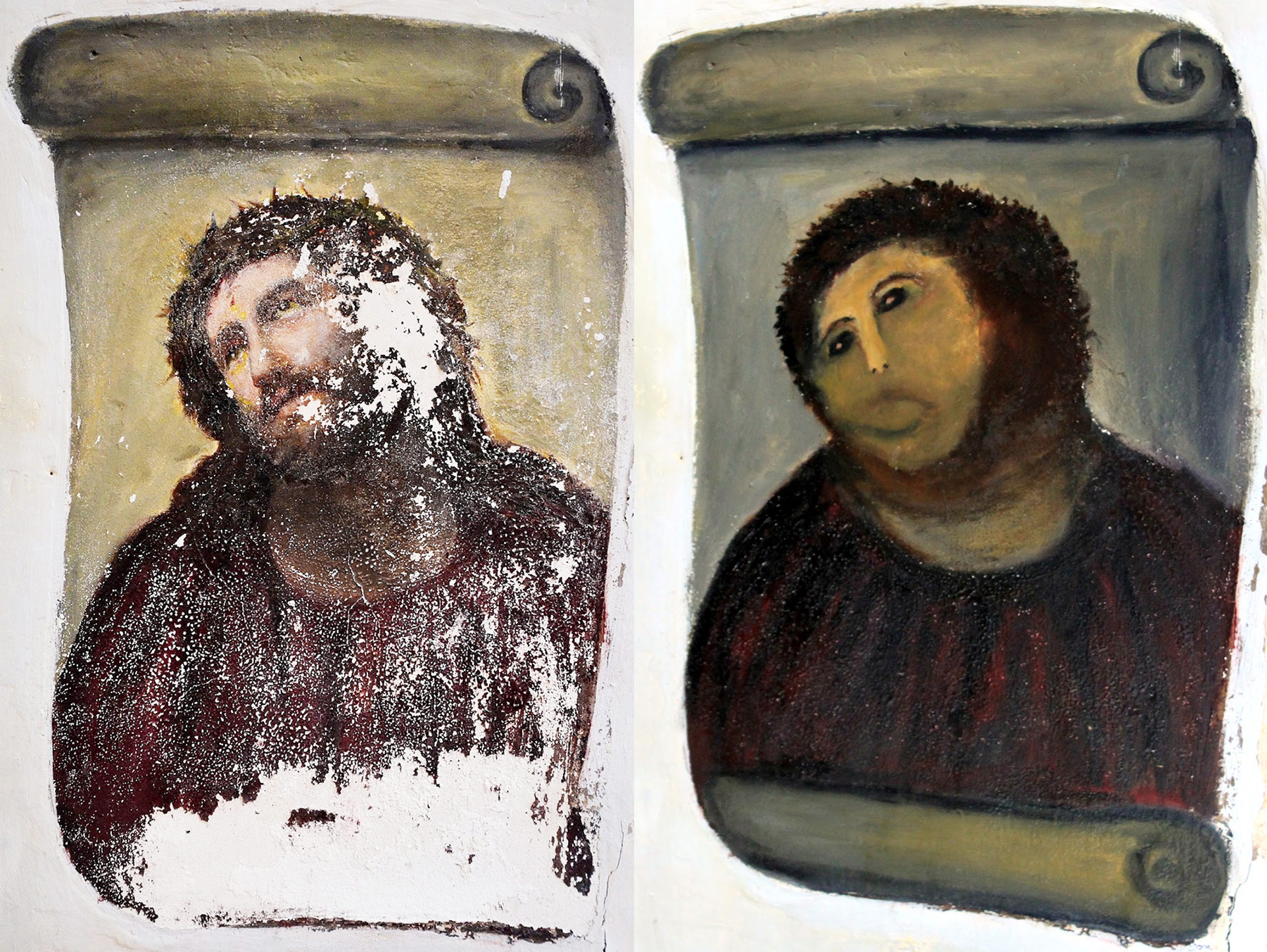
The ‘Ecce Homo‘ [ech-ey hoh-moh] (‘Behold the Man’) in the Sanctuary of Mercy church of Borja, Zaragoza is a fresco of about 1930 by the Spanish painter Elías García Martínez depicting Jesus crowned with thorns. Both the subject and style are typical of traditional Catholic art.
Press accounts agree that the original painting was of little artistic importance, and its fame derives from a botched attempt at restoration.
read more »
Posted in Art, Humor, Philosophy |
Leave a Comment »
April 23, 2014
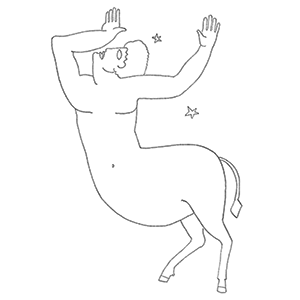
‘The Metamorphoses’ by Apuleius (Lucius Apuleius Madaurensis, a Roman writer) which St. Augustine referred to as ‘The Golden Ass‘ (Asinus aureus), is the only Ancient Roman novel in Latin to survive in its entirety. The protagonist of the novel is called Lucius, like the author. At the end of the novel, he is revealed to be from Madaurus (present day Algeria), the hometown of Apuleius himself.
The plot revolves around the protagonist’s curiosity (curiositas) and insatiable desire to see and practice magic. While trying to perform a spell to transform into a bird, he is accidentally transformed into an ass. This leads to a long journey, literal and metaphorical, filled with inset tales (short stories told by characters encountered by the protagonist; some act as independent narratives, while others interlock with plot developments). He finally finds salvation through the intervention of the goddess Isis, whose cult he joins.
read more »
Posted in Art, Language |
Leave a Comment »
April 22, 2014
Religious satire is a form of satire (humor that points out the shortcomings of institutions of power) targeted at religious beliefs. From the earliest times, at least since the plays of Aristophanes in the fourth century BCE, religion has been one of the three primary topics of literary satire, along with politics and sex.
Satire which targets the clergy is a type of political satire, while religious satire is that which targets religious beliefs. It can be the result of agnosticism or atheism, but it can also have its roots in belief itself. According to religious theorist Robert Kantra, in religious satire, man attempts to violate the divine—it is an effort to play God, in whole or in part—whether under the banner of religion or of humanity. Religious satire surfaced during the Renaissance, with works by Chaucer, Erasmus, and Durer.
read more »
Posted in Art, Humor, Philosophy |
Leave a Comment »
April 22, 2014
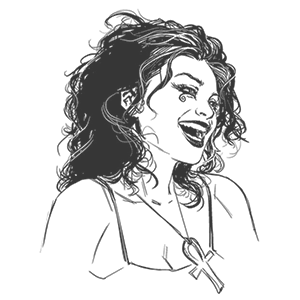
Neil Gaiman (b. 1960) is an English author of short fiction, novels, comic books, graphic novels, audio theatre and films. His notable works include the comic book series ‘The Sandman’ and novels ‘Stardust,’ ‘American Gods,’ ‘Coraline,’ and ‘The Graveyard Book.’
Though his work is frequently seen as exemplifying the monomyth structure laid out by mythologist Joseph Campbell, Gaiman says that he started reading Campbell’s book on the common structure of myths but refused to finish it: ‘I think I got about halfway through ‘The Hero with a Thousand Faces’ and found myself thinking if this is true – I don’t want to know. I really would rather not know this stuff. I’d rather do it because it’s true and because I accidentally wind up creating something that falls into this pattern than be told what the pattern is.’
read more »
Posted in Art, Language |
1 Comment »
April 12, 2014

FriendsWithYou (FWY) is an art collaborative based in LA, founded in Miami in 2002, by Samuel Albert Borkson (b.1979) and Arturo Sandoval III (b. 1976), which seeks to redesign spirituality, rituals, and religious acts for modern day usage and connectivity. Their mission coincides with their motto: ‘Magic, Luck, and Friendship.’
The collaborative began by creating soft sculptures as a means to spread more accessible art like plush and wood toys, as well as immersive art installations, fine art works including sculpture and painting, and are best known for their public art spectacles such as large-scale installations, playgrounds, and performance pieces. They have described the creation of their art as a healing process intended to increase relatability and connection to each other and the world around them.
Posted in Art |
Leave a Comment »
April 11, 2014
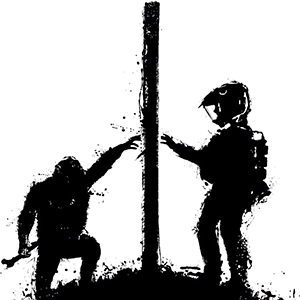
Monoliths [mon-uh-liths] are fictional advanced machines built by an unseen extraterrestrial species that appear in Arthur C. Clarke’s ‘Space Odyssey’ series of novels and films. During the series, three monoliths are discovered by humans and it is revealed that thousands if not more were created throughout the solar system, although none are seen. The subsequent response of the characters to their discovery drives the plot of the series. It also influences the fictional history of the series, particularly by encouraging humankind to progress with technological development and space travel.
The first monolith appears in the beginning of the story, set in prehistoric times. It is discovered by a group of hominids (apes), and somehow triggers a considerable shift in evolution, starting with the ability to use tools and weaponry.
read more »
Posted in Art |
Leave a Comment »
April 8, 2014

Max Richter [rik-ter] (b. 1966) is a British composer. He studied composition and piano at the University of Edinburgh, the Royal Academy of Music, and with Italian composer Luciano Berio in Florence. After finishing his studies, Richter co-founded the contemporary classical ensemble Piano Circus. He stayed with the group for ten years, commissioning and performing works by Arvo Pärt, Brian Eno, Philip Glass, Julia Wolfe, and Steve Reich. The ensemble was signed to Decca/Argo, producing five albums.
In 1996, Richter collaborated with Future Sound of London on their album ‘Dead Cities,’ beginning as a pianist, but ultimately working on several tracks, as well as co-writing one track (titled ‘Max’). He subsequently worked with the band over a period of two years, also contributing to the albums ‘The Isness’ and ‘The Peppermint Tree and Seeds of Superconsciousness.’ In 2000, he worked with Mercury Prize winner Roni Size on the Reprazent album ‘In the Møde.’ Richter produced English singer-songwriter Vashti Bunyan’s 2005 album ‘Lookaftering’ and Sneaker Pimps lead singer Kelli Ali’s 2008 album ‘Rocking Horse.’
read more »
Posted in Art |
Leave a Comment »
April 3, 2014
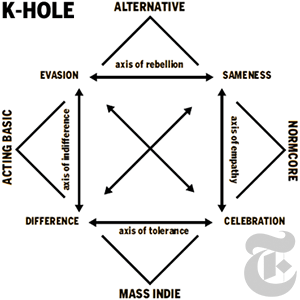
Normcore is an emerging cultural trend focusing on ‘coolness that opts into sameness.’ It is in response to hipster subculture. Jeremy Lewis, the founder of fashion website ‘Garmento’ calls normcore ‘one facet of a growing anti-fashion sentiment.’
K-hole, a creative trend forecasting collective based in New York City is cited as coining the phrase. Normcore is an anti-trendy trend.
Posted in Art, Humor |
Leave a Comment »
March 30, 2014
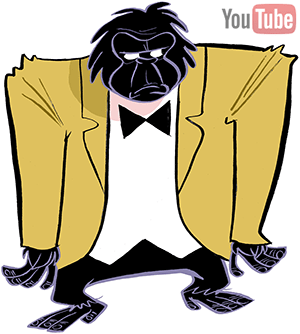
The Rock-afire Explosion is an animatronic robot band that played in Showbiz Pizza Place from 1980 to 1990, and in various Showbiz Pizza locations between 1990 and 1992 as Showbiz rebranded and the band was steadily replaced by Chuck E. Cheese characters. The characters in The Rock-afire Explosion were various animals ranging from a dog to a gorilla. They would perform medleys of classic rock, pop, and country music, as well as original compositions.
The show was a pioneer in commercial animatronics in the 1980s, featuring life-sized characters capable of facial expression; some were even programmed in such a way that they could actually play simple melodies on musical instruments. The show was created and manufactured by noted inventor Aaron Fechter, through his company Creative Engineering, Inc. in Orlando, Florida; in addition to overseeing the production of the animatronics, Fechter also provided the voices for several characters.
read more »
Posted in Art, Humor |
Leave a Comment »
March 18, 2014

The Mule is a fictional character from Isaac Asimov’s ‘Foundation’ series (first appearing in 1955 under the title ‘The 1,000-Year Plan,’ it is the story of scientist Hari Seldon’s effort to preserve knowledge as the civilizations around him begin to regress). One of the greatest conquerors the galaxy has ever seen, the Mule is a mentalic, a psychic mutant, who has the ability to reach into the minds of others and ‘adjust’ their emotions, individually or en masse, using this capability to conscript followers for his cause.
Mentalics are not capable of direct mind-control, but can subtly influence other’s subconscious; individuals under the Mule’s influence behave otherwise normally – logic, memories, and personality intact. This gives the Mule the capacity to disrupt Seldon’s plan by invalidating the assumption that no single individual could have a measurable effect on galactic socio-historical trends on their own. Seldon’s discipline, called psychohistory, relied on the predictability of the actions of very large numbers of people.
read more »
Posted in Art |
Leave a Comment »
March 11, 2014

Florentijn Hofman (b. 1977) is a Dutch artist known for playful urban installations such as the ‘Rubber Duck’ (a giant floating sculpture). They were built in various sizes, including one created in 2007 that is the largest rubber duck in the world at 105 feet long. Hofman’s tour was named ‘Spreading joy around the world.’ He aimed to recall everyone’s childhood memories by exhibiting the duck in 14 cities. The ducks are constructed with more than 200 pieces of PVC. There is an opening at the back of the body so that staff can perform maintenance. In addition, there is an electric fan in its body so that it can be inflated at any time, in either good or bad weather.
Since 2007, the ducks have been on display in Amsterdam, Belgium, Osaka, Sydney, Sao Paulo, Hong Kong, and Pittsburg. In 2009, while it was on display in Belgium, vandals stabbed the duck 42 times. The duck on display in Hong Kong was damaged and deflated in Taiwan after an earthquake, before bursting a few weeks later. In 2013, Sina Weibo, China’s most popular microblog, blocked the terms ‘Big Yellow Duck.’ The censorship occurred because a photoshopped version of ‘Tank Man’ (the Tiananmen Square protester), which swapped all tanks with this sculpture, had been circulating.
Posted in Art, Humor, World |
Leave a Comment »