March 29, 2013
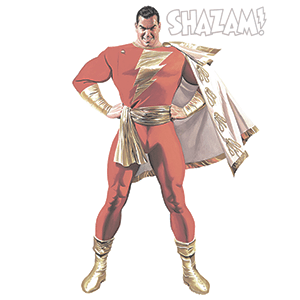
Captain Marvel, also known as ‘Shazam,’ is a fictional comic book superhero, originally published by Fawcett Comics and later by DC. Created in 1939 by artist C. C. Beck and writer Bill Parker, the character first appeared in 1940 in ‘Whiz Comics’ #2. With a premise that taps adolescent fantasy, Captain Marvel is the alter ego of Billy Batson, a youth who works as a radio news reporter and was chosen to be a champion of good by the wizard Shazam.
Whenever Billy speaks the wizard’s name, he is struck by a magic lightning bolt that transforms him into an adult superhero empowered with the abilities of six archetypal, historical figures. Several friends and family members, most notably Marvel Family cohorts Mary Marvel and Captain Marvel Jr., can share Billy’s power and become ‘Marvels’ themselves.
read more »
Posted in Art, Money |
1 Comment »
March 29, 2013
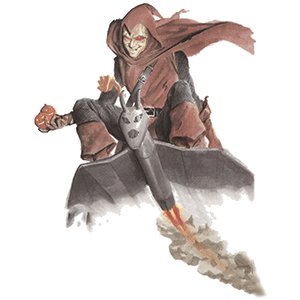
Marvels is a four-issue limited series comic book written by Kurt Busiek, painted by Alex Ross and edited by Marcus McLaurin, and published by Marvel Comics in 1994. Set from 1939 to 1974; the series examines the Marvel Universe, the collective setting of most of Marvel’s superhero series, from the perspective of an Everyman character: news photographer Phil Sheldon.
The street-level series portrayed ordinary life in a world full of costumed supermen, with each issue featuring events well known to readers of Marvel comics as well as a variety of minute details and retelling the most famous events in the Marvel universe. Busiek and Ross returned to the ‘everyday life in a superhero universe’ theme in the Homage Comics series ‘Astro City.’
read more »
Posted in Art, Language |
1 Comment »
March 27, 2013

Rick Berry (b. 1952) is a contemporary American expressionistic figurative artist based in the Boston area. Berry creates art for galleries, illustration, and paintings for theatrical performances. Berry’s work has appeared in many science fiction, fantasy and comic books, including Neil Gaiman’s ‘Sandman,’ ‘Magic: The Gathering’ cards, and Stephen King novels. In 1985, Berry created the first digitally painted book cover worldwide for William Gibson’s ‘Neuromancer.’
Berry was born in San Bernardino, California. His father, an air force fighter pilot, was frequently stationed in China. Berry’s childhood home was populated with Asian art which fascinated Berry and later found its way into his works.
read more »
Posted in Art |
Leave a Comment »
March 27, 2013

Phil Hale (b. 1963) is an American figurative painter who currently resides in London, England. Prior to turning to fine arts he worked as an illustrator, doing mostly figurative work. He was apprenticed to/ partnered with American painter Rick Berry. His current work focuses on figure as well, in depictions of slightly surreal scenes with strange characters performing various physical feats, usually in a confrontation of some sort. He seems to take keen interest in tension and emphasis of angular and dynamic aspects of the figure, almost always incorporating slight anatomical distortions to great effect.
A portrait of former UK Prime Minister, Tony Blair by the artist was unveiled in Westminster in 2008. Mr Blair sat for the portrait during his final months in office in 2007. Hale recently formed the movie production company ‘unprofessional.com’ with his son Callum Hale Thomson. It specializes in bespoke analogue filmmaking.
Posted in Art |
Leave a Comment »
March 23, 2013
Numerous studies have demonstrated correlations between creative occupations and mental illnesses, including bipolar disorder and schizophrenia. The association between bipolar disorder and creativity first appeared in literature in the 1970s, but the idea of a link between ‘madness’ and ‘genius’ is much older, dating back at least to the time of Aristotle. The Ancient Greeks believed that creativity came from the gods, and in particular the Muses, the goddesses of arts and sciences, and the nine daughters of Zeus, the king of the gods.
The idea of a complete work of art emerging without conscious thought or effort was reinforced by the views of the Romantic era. It has been proposed that there is a particular link between creativity and bipolar disorder, whereas major depressive disorder appears to be significantly more common among playwrights, novelists, biographers, and artists. Psychotic individuals are said to display a capacity to see the world in a novel and original way, literally, to see things that others cannot.
read more »
Posted in Art, Health |
Leave a Comment »
March 23, 2013

Confessional poetry is a style of poetry that emerged in the United States during the 1950s and 1960s that has been describe as poetry ‘of the personal.’ The content of confessional poems is autobiographical and marked by its exploration of subject matter that was considered taboo at the time. This subject matter included topics like mental illness, sexuality, and suicide.
The school of poetry that became known as ‘Confessional Poetry’ was associated with several poets who redefined American poetry in the generation following World War II, including Robert Lowell, Sylvia Plath, John Berryman, Anne Sexton, Allen Ginsberg, and W. D. Snodgrass.
read more »
Posted in Art, Language |
Leave a Comment »
March 22, 2013

‘Xavier: Renegade Angel‘ is a 2007 American CGI fantasy-comedy television series created by John Lee, Vernon Chatman, Jim Tozzi and Alyson Levy. Lee and Chatman are also the creators of ‘Wonder Showzen.’ The show was produced by PFFR, with animation by Cinematico. It premiered on Adult Swim on the Cartoon Network. ‘Xavier’ features a style characterized by a nonlinear, incoherent plot following the humorous musings of an itinerant humanoid pseudo-shaman and spiritual seeker named Xavier.
The show is known for its ubiquitous use of ideologically-critical black comedy, surrealist and absurdist humor presented through a psychedelic, New Age lens. The program is also normally rated TV-MA for intense, graphic, often bloody violence (V), as well as strong sexual content, use of racially/ethnically offensive language, grotesque depictions and content that is considered ‘too morbid and too incomprehensible for young viewers.’
read more »
Posted in Art, Humor, Philosophy |
Leave a Comment »
March 18, 2013

Kung Faux is a 2003 critically acclaimed action comedy television series and audio visual art assemblage created by postmodern revisionist Michael ‘Mic’ Neumann that remixes classic kung fu movies with popular music, comic book style editing with video game style special effects, and new storylines with voice-overs dubbed by contemporary art stars, hip hop personalities, and pop culture icons. ‘Revisionist Mic Neumann has an offering worthy of the Postmodernism canon, alongside Jean-Luc Godard’s ‘Weekend’ and Luis Bunuel’s ‘Chien Andalou,” reported Steve Johnston of ‘The Film Cynics.’
Notable visuals, music and voice-over work was performed by the likes of hip-hop artists De La Soul, Guru, Masta Ace, and Queen Latifah, while other ‘Kung Faux’ artists and performers range from underground to legendary, and contemporary, including Dave Kinsey, KAWS, Steve Powers, break dancer Crazy Legs, Elephant Man, Afrika Bambaataa, Biz Markie, Jean Grae, Roc Raida, Sadat X, Ron van Clief and Harold Hunter.
Posted in Art, Humor |
Leave a Comment »
March 18, 2013

Nina Paley (b. 1968) is an American cartoonist, animator and free culture activist. She directed the animated feature film ‘Sita Sings the Blues.’ She was the artist and often the writer of comic strips ‘Nina’s Adventures’ and ‘Fluff,’ but most of her recent work has been in animation. Her early short films include ‘Fetch!,’ ‘The Stork,’ and ‘The Wit & Wisdom of Cancer.’ Paley was born in Urbana, Illinois, to Hiram and Jean Paley in an American Jewish family.
Her father was a mathematics professor at the University of Illinois and was mayor of Urbana, where they resided, for a term in the early 1970s. She attended local elementary and high schools, illustrating a ‘History of the North Pole’ comic in collaboration with University High School history teacher Chris Butler, and attended the University of Illinois, studying art for two years.
read more »
Posted in Art, Money, Politics |
Leave a Comment »
March 18, 2013
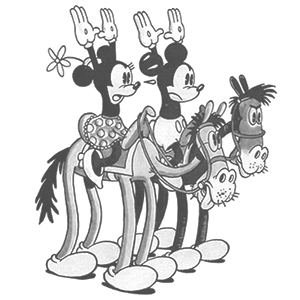
The Air Pirates were a group of cartoonists who created two issues of an underground comic called ‘Air Pirates Funnies’ in 1971, leading to a famous lawsuit by The Walt Disney Company. Founded by Dan O’Neill, the group also included Shary Flenniken, Bobby London, Gary Hallgren, and Ted Richards. The collective shared a common interest in the styles of past masters of the comic strip, and in creating their stories for the collective each set out to imitate the style of an old time cartoonist.
Flenniken emulated Clare Briggs and H. T. Webster in her ‘Trots and Bonnie’ comics, London’s strip ‘Dirty Duck’ paid homage to the style of George Herriman’s ‘Krazy Kat,’ Richards’ ‘Dopin’ Dan’ was supposed to be influenced by Bud Fisher but showed more similarity to Mort Walker’s ‘Beetle Bailey,’ and Gary Hallgren drew a strip called ‘Pollyanna Pals’ in the style of Cliff Sterrett’s ‘Polly and Her Pals.’ The original Air Pirates were a gang of Mickey Mouse antagonists of the 1930s; O’Neill regarded Mickey Mouse as a symbol of conformist hypocrisy in American culture, and therefore a ripe target for satire.
read more »
Posted in Art, Humor, Politics |
Leave a Comment »
March 18, 2013
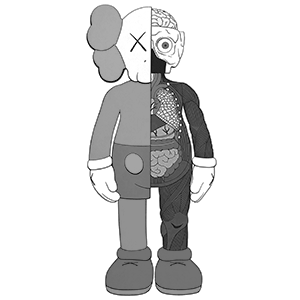
Brian Donnelly (b. 1974), professionally known as KAWS, is a New York-based artist and designer of limited edition toys and clothing. Donnelly graduated from the School of Visual Arts in New York with a Bachelor of Fine Arts in illustration in 1996. After graduation, KAWS briefly worked for Disney as a freelance animator painting backgrounds. He also contributed to the animated series ‘101 Dalmatians,’ ‘Daria,’ and ‘Doug.’ He began his career as a graffiti artist growing up in Jersey City.
Later moving to New York City in the 1990s, KAWS started subverting imagery on billboards, bus shelters and phone booth advertisements. These reworked advertisements were at first left alone, lasting for up to several months, but as KAWS’ popularity skyrocketed, the ads became increasingly sought after. In addition to New York, KAWS has done work in Paris, London, Berlin and Tokyo. KAWS’s ‘Companion,’ a grayscale figure based on Mickey Mouse with his face obscured by both hands, was adapted into a balloon for the 2012 ‘Macy’s Thanksgiving Day Parade’ as part of the parade’s ‘Blue Sky Gallery’ feature.
read more »
Posted in Art, Money |
Leave a Comment »
March 18, 2013
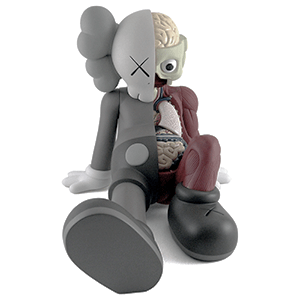
Urban vinyl is a type of designer toy, featuring action figures in particular which are usually made of vinyl. Although the term is sometimes used interchangeably with the term designer toy, it is more accurately used as a modifier: not all designer toys can be considered urban vinyl, while urban vinyl figures are necessarily designer toys, by virtue of the way in which they are produced.
Like designer toys in general, urban vinyl figures feature original designs, small production numbers, and are marketed to collectors, predominantly adults. The urban vinyl trend was initiated by artist Michael Lau, who first created urban vinyl figures in Hong Kong in the late 1990s. Other creators of urban vinyl figures are Japanese artist and designer Takashi Murakami, Australian designer Nathan Jurevicius’s ‘Scarygirl,’ based on characters from his comic of the same name, and produced in conjunction with Hong Kong company Flyingcat, and former graffiti artist KAWS.
read more »
Posted in Art, Games |
Leave a Comment »


 The Daily Omnivore