June 10, 2012

Josef Albers (1888 – 1976) was a German-born American artist and educator whose work formed the basis of some of the most influential and far-reaching art education programs of the 20th century. Accomplished as a designer, photographer, typographer, printmaker, and poet, Albers is best remembered for his work as an abstract painter and theorist. He favored a very disciplined approach to composition. Most famous of all are the hundreds of paintings and prints that make up the series ‘Homage to the Square.’ In this rigorous series, begun in 1949, Albers explored chromatic interactions with nested squares.
Painting usually on Masonite (an engineered wood product), he used a palette knife with oil colors and often recorded colors used on the back of his works. Albers’s work represents a transition between traditional European art and the new American art. It incorporated European influences from the constructivists and the Bauhaus movement, and its intensity and smallness of scale were typically European. But his influence fell heavily on American artists of the late 1950s and the 1960s. ‘Hard-edge’ abstract painters drew on his use of patterns and intense colors, while Op artists and conceptual artists further explored his interest in perception.
read more »
Posted in Art, Education |
Leave a Comment »
June 10, 2012

Richard Anuszkiewicz [an-uhskey-vich] (b. 1930) is an American painter, printmaker, and sculptor. He trained at the Cleveland Institute of Art, and with German artist Josef Albers, at the Yale University School of Art and Architecture where he earned his Masters of Fine Arts. He was one of the founders and foremost exponents of Op Art, a movement during the late 1960s and early 1970s which explore optical illusions. Victor Vasarely in France and Bridget Riley in England were his primary international counterparts.
In 1964, ‘Life’ magazine called him ‘one of the new wizards of Op.’ More recently, while reflecting on a New York City gallery show of Anuszkiewicz’s from 2000, the ‘New York Times’ art critic Holland Cotter described Anuszkiewicz’s paintings by stating, ‘The drama — and that feels like the right word — is in the subtle chemistry of complementary colors, which makes the geometry glow as if light were leaking out from behind it.’
Posted in Art |
Leave a Comment »
June 5, 2012

Matt Mullican (b. 1951) is a American artist and son of abstract painter Lee Mullican. He received his BFA from CalArts in 1974, and rose to prominence as a member of the ‘Pictures Generation,’ a group of artists know for their appropriation of images from the consumer and media saturated age in which they grew to maturity.
Mullican’s work is concerned with systems of knowledge, meaning, language, and signification. Mullican also works with the relationship between perception and reality, between the ability to see something and the ability to represent it. Mullican has taught and lectured at Columbia University, The Rijksakademie (Amsterdam), The London Institute, Chelsea College of Art and Design, and The School of Visual Arts (NY).
Posted in Art, Money |
Leave a Comment »
June 5, 2012

Jim Woodring (b. 1952) is an American cartoonist, fine artist, writer, and toy designer. He is best known for the dream-based comics he published in his magazine ‘Jim,’ and as the creator of the cartoon character Frank, a bipedal, bucktoothed animal of uncertain species with a short tail, described by Woodring as a ‘generic anthropomorph’ and ‘naive but not innocent,’ ‘capable of sinning by virtue of not knowing what he’s really about.’ The character design is reminiscent those of old American animated shorts from the 1920s and 1930s, such as from Fleischer Studios.
Since he was a child, Woodring has experienced hallucinatory ‘apparitions,’ which have inspired much of his surreal work. He keeps an ‘autojournal’ of his dreams, which have formed the basis of some of his comics. His most famous creation is fictional—the pantomime comics set in the universe he calls the Unifactor, usually featuring Frank.
read more »
Posted in Art |
Leave a Comment »
June 5, 2012

assume vivid astro focus (avaf) is both an alias of Brazilian-born New York-based artist Eli Sudbrack, and the name of an international group of visual and performance artists, with French multimedia artist Christophe Hamaide-Pierson as a main collaborators. Sudbrack was born in 1968 and moved to New York in 1998.
He exhibited there in 2000, at which time he used the name Superastrolab, switching to assume vivid astro focus in 2001, the name always rendered in lowercase. The name derives from two musical sources: Throbbing Gristle’s album ‘Assume Power Focus,’ and the band Ultra Vivid Scene. avaf’s work includes painting, drawing, photography, film, and digital technology.
Posted in Art |
Leave a Comment »
June 5, 2012

DEARRAINDROP is a Brooklyn-based artist collective formed in Virginia Beach that incorporates diverse disciplines to create multifaceted sculptures and installations. Their work includes painting, collage, video art, large-scale, interactive installation pieces, and hand-fabricated musical instruments.
Part of the collective’s operating philosophy is modeled on the ideal that the greatest human capability is the ability to work together to achieve a larger goal. Joe Grillo and Laura Grant founded DEARRAINDROP in 1998 as a clothing line, Billy Grant joined subsequently. They have also worked with digital artists Owen Osborn and Chris Kuscinski, as well as painter Alika Herreshoff.
Posted in Art |
Leave a Comment »
June 5, 2012
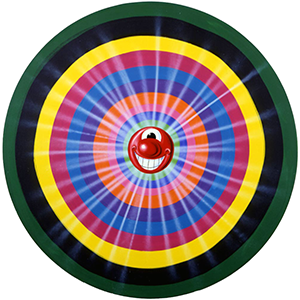
Kenny Scharf (b. 1958) is an American painter who lives in Brooklyn, whose works consist of popular culture based art with made up science-related backgrounds.
Scharf came to prominence in the 80s interdisciplinary art scene making sparkly, pop-ed, and monstrous paintings and installations.
read more »
Posted in Art, Humor, Money |
Leave a Comment »
June 4, 2012

Retro-futurism is a trend in the creative arts showing the influence of depictions of the future produced prior to about 1960. Characterized by a blend of old-fashioned ‘retro’ styles with futuristic technology, retro-futurism explores the themes of tension between past and future, and between the alienating and empowering effects of technology.
Primarily reflected in artistic creations and modified technologies that realize the imagined artifacts of its parallel reality, retro-futurism has also manifested in the worlds of fashion, architecture, literature and film.
read more »
Posted in Art, Language, Technology |
2 Comments »
June 4, 2012
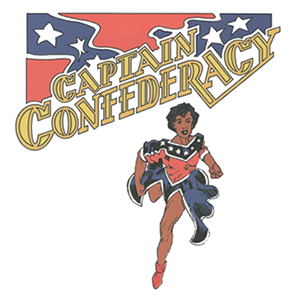
Alternate history is a genre of fiction consisting of stories that are set in worlds in which history has diverged from the actual history of the world. It can be variously seen as a sub-genre of literary fiction, science fiction, and historical fiction.
Since the 1950s, this type of fiction has to a large extent merged with science fictional tropes involving cross-time travel between alternate histories or psychic awareness of the existence of ‘our’ universe by the people in another; or ordinary voyaging uptime (into the past) or downtime (into the future) that results in history splitting into two or more time-lines. Cross-time, time-splitting, and alternate history themes have become so closely interwoven that it is impossible to discuss them fully apart from one another.
read more »
Posted in Art, Language, War |
Leave a Comment »
June 4, 2012
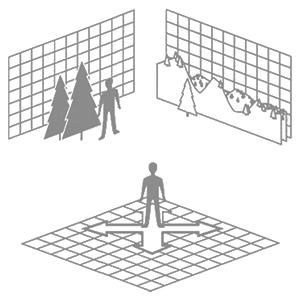
‘Ship in a Bottle‘ is a ‘Star Trek: The Next Generation’ episode (season six) where a sentient holodeck character, Professor James Moriarty, puts the Enterprise in jeopardy in his quest to be freed from confines of holographic environments.
Data and La Forge are enjoying a Sherlock Holmes holodeck program when the two notice that a character programmed to be left-handed was actually right-handed. They call Lt. Barclay to repair the holodeck, but as he checks the status of the Sherlock Holmes programs, he encounters an area of protected memory. He activates it to find the artificial sentient Professor James Moriarty character projected into the Holodeck, who appears to have memory since his creation (‘Elementary, Dear Data’ in season three: Geordi asks the holodeck to make a Sherlock Holmes villain that can defeat Data, creating a foe more powerful than originally planned).
read more »
Posted in Art, Games, Technology |
Leave a Comment »
June 3, 2012

Alva Noto is a stage name of sound artist Carsten Nicolai who uses art and music as complementary tools to create microscopic views of creative processes.
He is a member of the music groups Signal (with Frank Bretschneider and Olaf Bender aka Byetone) and Cyclo (with Ryoji Ikeda).
read more »
Posted in Art, Technology, World |
Leave a Comment »
May 30, 2012

James Bolivar DiGriz, alias ‘Slippery Jim’ and ‘The Stainless Steel Rat,’ is the fictional hero of a series of humorous science fiction novels written by Harry Harrison. He is a futuristic con man, thief and all-round rascal. He is charming and quick-witted, a master of disguise and martial arts, an accomplished bank robber, an expert on breaking and entering, and (perhaps most usefully) a skilled liar. A master of self-rationalization, the Rat frequently justifies his crimes by arguing that he is providing society with entertainment; and besides which, he only steals from institutions which have insurance coverage. He displays a strong morality, albeit in a much more restricted sense than is traditional. (For example, he will happily steal, but deplores killing.)
The character was introduced in Harrison’s short story, ‘The Stainless Steel Rat,’ which was first published in 1957 in ‘Astounding’ magazine. Like other characters created by Harrison, the Rat is a speaker of Esperanto and advocates atheism. From the original publisher’s blurb: ‘…We must be as stealthy as rats in the wainscoting of their society. It was easier in the old days, of course, and society had more rats when the rules were looser, just as old wooden buildings have more rats than concrete buildings. But there are rats in the building now as well. Now that society is all ferrocrete and stainless steel there are fewer gaps in the joints. It takes a very smart rat indeed to find these openings. Only a stainless steel rat can be at home in this environment…’
Posted in Art, Humor, Language |
Leave a Comment »



