May 30, 2012
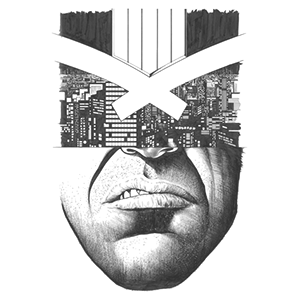
‘Judge Dredd’ is a comics character whose strip in the British science fiction anthology ‘2000 AD’ is the magazine’s longest running, having been featured there since its second issue in 1977.
Dredd is an American law enforcement officer in a violent city of the future where uniformed Judges combine the powers of police, judge, jury, and executioner. Dredd and his fellow Judges are empowered to arrest, sentence, and even execute criminals on the spot. The character was created by writer John Wagner and artist Carlos Ezquerra, although editor Pat Mills also deserves some credit for early development. The series explores issues such as the police state, authoritarianism and the rule of law.
read more »
Posted in Art, Humor, Politics |
Leave a Comment »
May 30, 2012

The Mighty Tharg is a recurrent character in science fiction comic ‘2000 AD,’ one of only two characters to appear in nearly every issue of the comic (the other being Judge Dredd). The main Tharg-free period in ‘2000 AD’ was when the men from Vector 13 staged a takeover (in prog [issue] 1014), while Tharg was away dealing with a crisis. Other than a spate of strips in the early 1980s, Tharg rarely appears in stories, but instead purports to be the comic’s editor.
Tharg is an alien from the fictional planet ‘Quaxxann,’ supposedly in orbit around the real-life star Betelgeuse (but he works in a British publisher’s office), with green skin and a ‘rosette of Sirius’ on his forehead. His favorite food is said to be polystyrene cups. Tharg writes the comic’s introduction, answers letters, and doles out prizes to readers (for artwork or story suggestions) – winners could choose payment either in pounds sterling or in ‘galactic groats.’ Tharg speaks mostly in English, but with various pithy Betelgusian aphorisms thrown in for color. In one episode, a Tharg suit in the comic’s office was explained as a skin that Tharg had shed.
Posted in Art, Humor |
Leave a Comment »
May 30, 2012
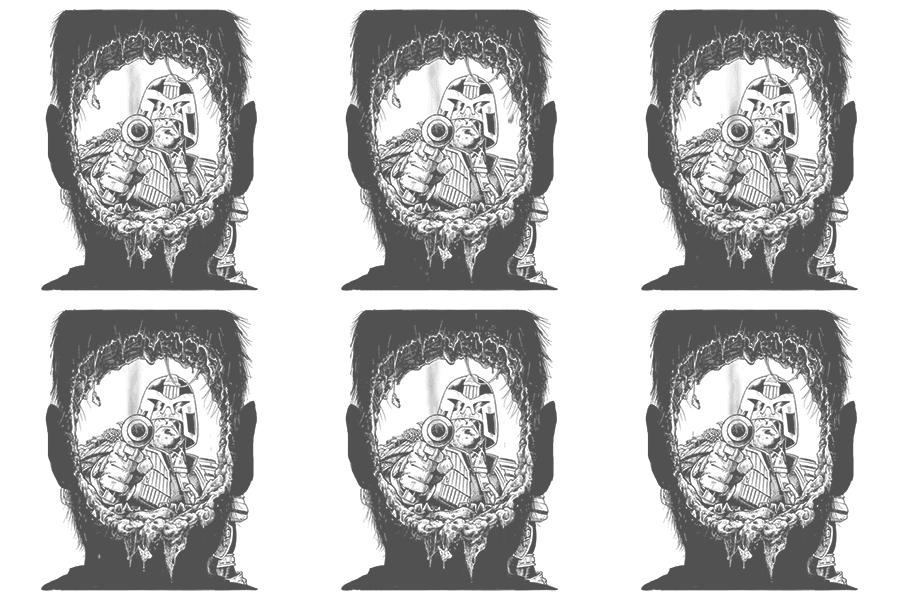
2000 AD is a weekly British science fiction-oriented comic. As a comics anthology it serializes a number of separate stories each issue (known as ‘progs’) and was first published by IPC Magazines in 1977. It has changed hands a number of times over the years; in 2000 it was bought by Rebellion Developments.
It is most noted for its Judge Dredd stories, and has been contributed to by a number of artists and writers who became renowned in the field internationally, such as Alan Moore, Neil Gaiman, Grant Morrison, Bryan Talbot, Brian Bolland, and Mike McMahon. ‘2000 AD’ has been successful launchpad for UK talent into the larger American comics market, and has also been the source of a number of film licences. Unlike earlier weekly titles, ‘2000 AD’ was based on a 6 page strip format. This gave the writers greater opportunity to develop character and meant that the artists had greater scope in designing the layout.
read more »
Posted in Art, Humor, Language |
1 Comment »
May 29, 2012

Glass Candy is an American electronic music duo from Portland, Oregon, formed in 1996. The band consists of Ida No (vocals) and producer Johnny Jewel (synthesizers, guitar, production). While the band’s early catalog blends elements of No Wave and glam rock, their later work incorporates Italo disco. The band is known for evolving through the years since their original collaboration, and experimenting with various musical genres. No’s vocals have been likened to ’60s German singer Nico and ‘a frightened Debbie Harry or a pissed-off Lene Lovich in a haunted disco.’
Jewel has cited Marilyn Monroe films, 1980s cop show soundtracks, ‘Goblin,’ and John Carpenter soundtracks as inspirational. All music tracks are produced by basic analog equipment, without computers. The group has also said that stores could appropriately file their music ‘between Olivia Newton-John, Suicide, and Schoolly D.’ No describes their early work as ‘droney and weird.’
Posted in Art |
Leave a Comment »
May 29, 2012

Record Store Day is an internationally celebrated day observed the third Saturday of April each year. Its purpose, as conceived by independent record store employee Chris Brown, is to celebrate the art of music. The day brings together fans, artists, and thousands of independent record stores across the world.
Record Store Day was officially founded in 2007 by Eric Levin, Michael Kurtz, Carrie Colliton, Amy Dorfman, Don Van Cleave, and Brian Poehner and is now celebrated globally with hundreds of recording and other artists participating in the day by making special appearances, performances, meet and greets with their fans, the holding of art exhibits, and the issuing of special vinyl and CD releases, along with other promotional products to mark the occasion. Past Record Store Day ‘Ambassadors’ include: Metallica (2008), Jesse Hughes of Eagles of Death Metal (2009), Josh Homme of Queens of the Stone Age (2010), Ozzy Osbourne (2011), and Iggy Pop (2012).
Posted in Art, Money |
Leave a Comment »
May 29, 2012
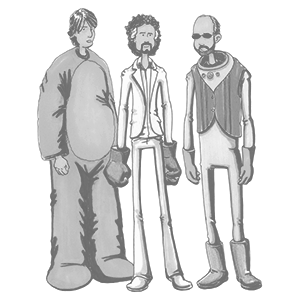
The Flaming Lips and Heady Fwends is a collaborative studio album by The Flaming Lips. Recorded throughout 2011 and 2012, the album was released as a limited edition on vinyl for Record Store Day on April 21, 2012. Four songs from the album were previously released on collaborative EPs in 2011. Following their last full-length album, 2009’s ‘Embryonic,’ the band produced several EPs with other artists including Neon Indian, Lightning Bolt, Prefuse 73, and Yoko Ono. Four tracks from these sessions appear on the album. The remaining seven songs were recorded at different times and locations, and are exclusive to the LP.
Mainstream artists such as Kesha and Coldplay’s Chris Martin share space with more experimental artists such as Lightning Bolt and Prefuse 73. The band released the double LP in vinyl form in a 10,000 unit run. Each disc has a unique pattern. Coyne has stated that he has requested and been given blood samples from some of the album’s collaborators. Coyne claims to have blood from Kesha and Neon Indian’s Alan Palomo. He plans to place small amounts of the blood sandwiched into the vinyl of limited editions of the records, and make these available to ‘interested rich Flaming Lips people.’
Posted in Art |
Leave a Comment »
May 27, 2012

GPS Drawing combines art, travelling (walking, flying, and driving) and technology and is a method of drawing that uses GPS to create large-scale artwork. Global Positioning System receivers determine one’s position on the surface of the Earth by trilateration of microwave signals from satellites orbiting at an altitude of 20,200 km. Tracks of a journey can automatically be recorded into the GPS receiver’s memory and can be downloaded onto a computer as a basis for drawing, sculpture or animation. This journey may be on the surface (e.g. walking) or taken in 3D (e.g. while flying).
The idea was first implemented by artists Hugh Pryor and Jeremy Wood, who have drawn a 13-mile wide fish in Oxfordshire and spiders whose legs reach across cities. They have also provided an answer to the question ‘What is the world’s biggest ‘IF’? It happens to be a pair of letters, ‘I,’ which goes from Iffley in Oxford to Southampton and back, and ‘F” which traverses through the Ifield Road in London down to Iford in East Sussex, through Iford and back up through Ifold in West Sussex. The total length is 537 km, and the height of the drawing in typographic units is 319,334,400 points.
Posted in Art, Technology, World |
Leave a Comment »
May 26, 2012
Glitch is a term used to describe a style of electronic music that emerged in the mid to late 1990s that adheres to an ‘aesthetic of failure,’ where the deliberate use of glitch based audio media, and other sonic artifacts, is a central concern.
Sources of glitch sound material are usually malfunctioning or abused audio recording devices or digital technology, such as CD skipping, electric hum, digital or analog distortion, bit rate reduction, hardware noise, computer bugs, crashes, vinyl record hiss or scratches, and system errors. In a ‘Computer Music Journal’ article published in 2000, composer and writer Kim Cascone classifies glitch as a sub-genre of electronica, and used the term ‘post-digital’ to describe the glitch aesthetic.
read more »
Posted in Art, Language, Technology |
Leave a Comment »
May 26, 2012
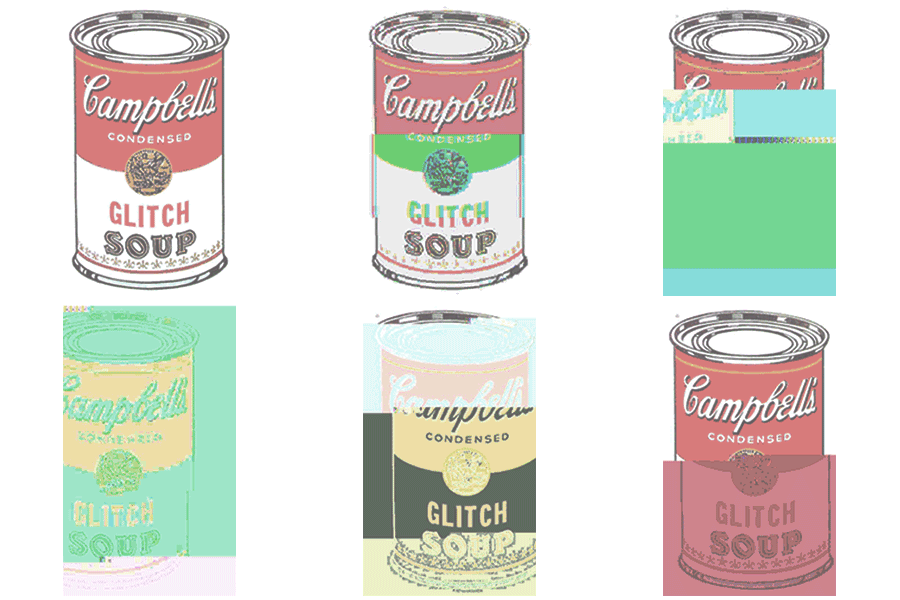
Glitch art is the aestheticization of digital or analog errors, such as artifacts and other ‘bugs,’ by either corrupting digital code/data or by physically manipulating electronic devices, for example by circuit bending (the intentional short-circuiting of low power electronic devices to create new musical devices). In a technical sense a glitch is the unexpected result of a malfunction. The term is thought to derive from the German ‘glitschig,’ meaning ‘slippery.’ It was first recorded in English in 1962 during the American space program by John Glenn when describing problems they were having, Glenn explained, ‘Literally, a glitch is a spike or change in voltage in an electrical current.’
Glitch is used to describe these kinds of bugs as they occur in software, video games, images, videos, audio, and other forms of data. The term glitch came to be associated with music in the mid 90s to describe a genre of experimental/noise/electronica (see glitch music). Shortly after, as VJs and other visual artist like Tony (Ant) Scott began to embrace the glitch as an aesthetic of the digital age, glitch art came to refer to a whole assembly of visual arts.
Posted in Art, Language, Technology |
3 Comments »
May 25, 2012
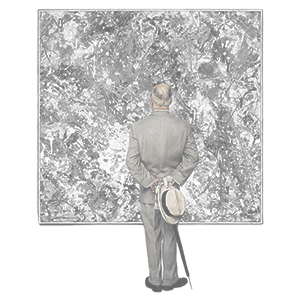
A connoisseur [kon-uh-sur] (meaning ‘to be acquainted with’ or ‘to know somebody/something’) is a person who has a great deal of knowledge about the arts and is an expert judge in matters of taste.
Internationally, the term is also used in gastronomy (in connection with fine food, beer, wine, tea, and many other products whose consumption can be pleasing to the senses). The ability to tell almost instinctively who painted a picture is defined as connoisseurship. Modern connoisseurship must be seen in context with museums, art galleries, and ‘the cult of originality.’
read more »
Posted in Art, Language |
Leave a Comment »
May 24, 2012

Cornershop is a British indie rock band formed in 1991 by Tjinder Singh, his brother Avtar, David Chambers, and Ben Ayres. The band name originated from a stereotype referring to British Asians often owning street corner stores. Their music is a fusion of Indian music, Britpop, and electronic dance music.
Their debut release, the ‘In The Days of Ford Cortina’ EP, pressed on ‘curry-colored vinyl,’ contained a blend of Indian-tinged noise pop. The sound mellowed somewhat with the release of debut album ‘Hold On It Hurts’ in 1994. The album impressed David Byrne sufficiently for him to sign the band to his Luaka Bop label. Although David Chambers left, replaced by Nick Simms, the band re-emerged in 1995.
read more »
Posted in Art, World |
1 Comment »
May 24, 2012

CFCF is the stage name of Canadian electronic musician Michael Silver. Based in Montreal, Silver took the name CFCF from the call sign of the city’s CFCF-TV.
Silver has released an album and several EPs, independently and on Paper Bag Records, and Rvng Intl.
Posted in Art |
Leave a Comment »



