April 10, 2012
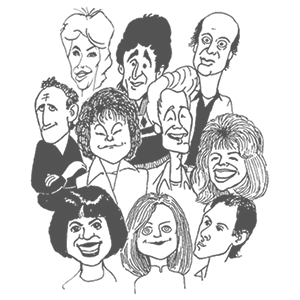
Viola Spolin (1906 — 1994) was an important innovator of the American theater in the 20th century. She created directorial techniques to help actors to be focused in the present moment and to find choices improvisationally, as if in real life. These acting exercises she later called ‘Theater Games’ and formed the first body of work that enabled other directors and actors to create improvisational theater.
Her book, ‘Improvisation for the Theater,’ which published these techniques, includes her philosophy, as well as her teaching and coaching methods and is considered the ‘bible of improvisational theater.’ Spolin’s contributions were seminal to the improvisational theater movement in the U.S. She is considered to be the mother of Improvisational theater. Her work has influenced American theater, television and film by providing new tools and techniques that are now used by actors, directors and writers.
read more »
Posted in Art, Games, Humor |
Leave a Comment »
April 10, 2012


The Groundlings are an improvisational comedy troupe based in Los Angeles formed by Gary Austin in 1974. It uses an improv format influenced by Viola Spolin to produce sketches and improvised scenes. Its name is taken from ‘Hamlet’: ‘…to split the ears of the groundlings, who for the most part are capable of nothing but inexplicable dumbshows and noise.’ The Groundlings School holds new sessions every six weeks with over 300 students per session, with over 2,000 students per year going through the program. The competitive program consists of 4 levels (Basic, Intermediate, Writing Lab and Advanced).
Participants must be successfully advanced from each level by the instructor. After completing the Advanced level, one may be voted into the Sunday Company, which performs every Sunday at 7:30pm. Members of the Main Company are selected from members of the Sunday Company. The Main Company (now capped at no more than 30 members at any time) collectively acts as the organization’s artistic director, democratically making business and creative decisions as a group. Notable alumni include: Adam Carolla, Abby Elliott, Jimmy Fallon, Will Ferrell, Will Forte, Ana Gasteyer, Kathy Griffin, Rachael Harris, Phil Hartman, Cheryl Hines, Chris Kattan, Lisa Kudrow, Jon Lovitz, Pat Morita, Conan O’Brien, Cheri Oteri, Paul Reubens, Maya Rudolph, Dax Shepard, and Kristen Wiig.
Posted in Art, Humor, Language |
Leave a Comment »
April 9, 2012

Aubrey Beardsley (1872 – 1898) was an English illustrator and author. His drawings in black ink, influenced by the style of Japanese woodcuts, emphasized the grotesque, the decadent, and the erotic.
He was a leading figure in the Aesthetic movement which also included Oscar Wilde and James A. McNeill Whistler. Beardsley’s contribution to the development of the Art Nouveau and poster styles was significant, despite the brevity of his career before his early death from tuberculosis.
read more »
Posted in Art, Sex |
Leave a Comment »
April 9, 2012

Romain de Tirtoff (1892 – 1990) was a Russian-born French artist and designer known by the pseudonym Erté [er-tey], the French pronunciation of his initials, R.T. He was a diversely talented 20th-century artist and designer who flourished in an array of fields, including fashion, jewellery, graphic arts, costume and set design for film, theater, and opera, and interior decor.
Tirtoff was born in Saint Petersburg, to a distinguished family with roots tracing back to 1548. In 1910, Romain moved to Paris to pursue a career as a designer. He made this decision despite strong objections from his father, who wanted him to continue the family tradition and become a naval officer. Romain assumed his pseudonym to avoid disgracing the family.
read more »
Posted in Art, World |
Leave a Comment »
April 9, 2012


Tarsem Singh Dhandwar (b. 1961), known professionally as Tarsem, is an Indian film director. He began his career directing music videos, including those of ‘Hold On’ by En Vogue, ‘Sweet Lullaby’ by Deep Forest, and R.E.M.’s smash hit ‘Losing My Religion,’ the latter of which won Best Video of the Year at the 1991 MTV Video Music Awards. He has directed dozens of commercials for brands such as Nike and Coca-Cola.
Tarsem’s feature film directorial debut was ‘The Cell’ (2000), starring Jennifer Lopez. His second film, ‘The Fall,’ debuted at the 2006 Toronto International Film Festival and was released theatrically in the United States in 2008. His third film was 2011’s ‘Immortals.’ He directed an adaptation of the Brothers Grimm story of Snow White, called ‘Mirror Mirror’ in 2012.
Posted in Art, Money |
Leave a Comment »
April 9, 2012
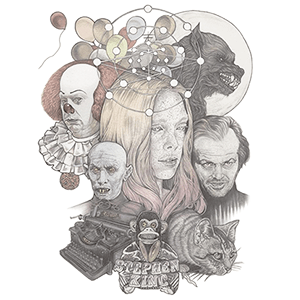
‘On Writing: A Memoir of the Craft’ by Stephen King, published in 2000, is a memoir of the prolific author’s experiences as a writer, and also serves as a guide book for those who choose to enter the craft. The first section of the book is an Autobiography mainly about King’s early exposure to writing, and his childhood attempts at writing. King talks about his early attempts to get published, and his first novel ‘Carrie.’ He also talks about his fame as a writer, and what it took to get there. This includes his relationship with his wife, the death of his mother and his history of drug and alcohol abuse.
The second section is practical advice on writing, including tips on grammar and ideas about developing plot and character. King himself describes it as a guide for how ‘a competent writer can become a good one.’ This includes his beliefs that a writer should edit out unnecessary details and avoid the use of unnecessary adverbs. He also uses quotes from other books and authors to illustrate his points. The third section is also autobiographical, in which he discusses the 1999 automobile accident in which he was struck by a vehicle while walking down an isolated country road. He describes serious injuries, his painful recovery and his struggle to start writing again.
Posted in Art, Language, Money |
1 Comment »
April 7, 2012

Geoffrey Barrow (b. 1971) is an English producer, composer, disc jockey, and is the instrumentalist for the band Portishead. Portishead—formed in 1991—was named after the small town near Bristol where Barrow grew up. On his intentions in forming Portishead, he has stated, ‘I just wanted to make interesting music, proper songs with a proper life span and a decent place in people’s record collections.’ After being involved in many local rock bands, playing drums and DJing in hip hop groups, Barrow got his first job at the Coach House Studios as a tape operator soon after it opened in 1989.
In 1991, while he was assisting on Massive Attack’s breakthrough album ‘Blue Lines,’ the band allowed him spare studio time to get his own ideas on tape. A few years later, when the Portishead project had been assembled, the group came back to record ‘Sour Times’ in that same studio. At the dawn of the ’90s, Barrow was making a name for himself as a remixer, working with such artists as Primal Scream, Paul Weller, Gabrielle, and Depeche Mode. In addition, Barrow had produced a track for Tricky and written songs for Neneh Cherry.
Posted in Art |
Leave a Comment »
April 6, 2012

Squidward Tentacles is a fictional character on the television cartoon series ‘SpongeBob SquarePants.’ He is voiced by Rodger Bumpass. Squidward appears in 270 episodes of the series, second only to SpongeBob’s 305. Unlike most characters in the series, Squidward is generally grumpy, tactless, short-tempered, sarcastic, and narcissistic. He dislikes many things, including his consistently annoying neighbors SpongeBob and Patrick, his job at the Krusty Krab, and is constantly aloof towards the citizens of Bikini Bottom. He is very open about his dissatisfaction with his job, and has frequently displayed unprofessional behavior such as sleeping at his counter, failing to clean his workplace, and reading art magazines instead of attending to customers.
Squidward enjoys playing his clarinet (at an elementary level with frequent missed notes and poor intonation, though Squidward considers himself a brilliant musical prodigy), modern dance, abstract art, relaxing, public radio, select television programs, and just about anything else that he considers ‘fancy.’ He does not like anyone, except his mother. Although Squidward likes to consider himself as above the mundane and often immature activities of his peers, he has constantly exhibited an unhealthy obsession with and dedication to such activities when exposed to them.
Posted in Art, Humor |
Leave a Comment »
April 6, 2012

Artists and repertoire (A&R) is the division of a record label that is responsible for talent scouting and overseeing the artistic development of recording artists. It also acts as a liaison between artists and the record label; every activity involving artists to the point of album release is generally considered under the purview of, and responsibility of, A&R. The A&R division is responsible for discovering new recording artists and bringing them to the record company.
They are expected to understand the current tastes of the market and to be able to find artists that will be commercially successful. For this reason, A&R people are often young and many are musicians, music journalists or record producers. An A&R executive is authorized to offer a record contract, often in the form of a ‘deal memo’: a short informal document that establishes a business relationship between the recording artist and the record company. The actual contract negotiations will typically be carried out by rival entertainment lawyers hired by the musician’s manager and the record company.
read more »
Posted in Art, Money |
Leave a Comment »
April 6, 2012
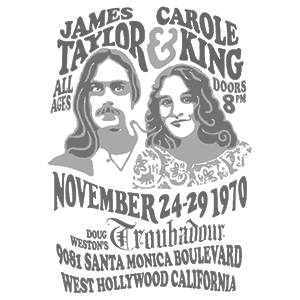
The Troubadour is a nightclub located in West Hollywood, founded in 1957 by Doug Weston. It was a major center for folk music in the 1960s, and subsequently for singer-songwriters and rock.
The Troubadour played an important role in the careers of Elton John, Linda Ronstadt, Hoyt Axton, the Eagles, The Byrds, Joni Mitchell, James Taylor, Carole King, Bonnie Raitt, J.D. Souther, Jackson Browne, Van Morrison, Buffalo Springfield and other prominent and successful performers, who played performances there establishing their future fame.
read more »
Posted in Art, Humor, Money |
Leave a Comment »
April 6, 2012

‘Minnie the Moocher‘ is a jazz song first recorded in 1931 by Cab Calloway and His Orchestra, famous for its nonsensical ad libbed (‘scat’) lyrics. In performances, Calloway would have the audience participate by repeating each scat phrase in a form of call and response. Eventually Calloway’s phrases would become so long and complex that the audience would laugh at their own failed attempts to repeat them. The song is based both musically and lyrically on Frankie ‘Half-Pint’ Jaxon’s 1927 ‘Willie the Weeper’ (Bette Davis sings this version in ‘The Cabin in the Cotton’).
The lyrics are heavily laden with drug references. The character ‘Smokey’ is described as ‘cokey’ meaning a user of cocaine; the phrase ‘kicking the gong around’ was a slang reference to smoking opium. It was followed two years later by Lonnie Johnson’s ‘Winnie the Wailer.’
read more »
Posted in Art, Drugs |
Leave a Comment »
April 4, 2012


Gun fu, a portmanteau of ‘gun’ and ‘kung fu,’ is the style of sophisticated close-quarters gunplay seen in Hong Kong action cinema and in Western films influenced by it. It often resembles a martial arts battle played out with firearms instead of traditional weapons. It may also be described by other terms such as ‘bullet ballet,’ ‘gun kata,’ or ‘gymnastic gunplay.’
The focus of gun fu is both style and the usage of firearms in ways that they were not designed to be used. Shooting a gun from each hand, shots from behind the back, as well as the use of guns as melee weapons are all common. Other moves can involve shotguns, Uzis, rocket launchers, and just about anything else that can be worked into a cinematic shot. It is often mixed with hand-to-hand combat maneuvers. Gun fu has become a staple factor in modern action films due to its visually appealing nature (regardless of its actual practicality in a real-life combat situation). This is a contrast to American action movies of the 1980s which focused more on heavy weaponry and outright brute-force in firearm-based combat.
read more »
Posted in Art, Death |
Leave a Comment »


 The Daily Omnivore