November 30, 2011
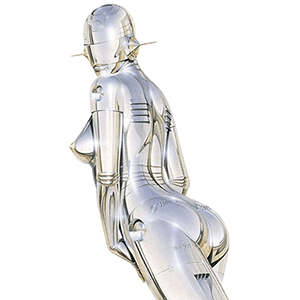
Hajime Sorayama (b.1947) is a Japanese illustrator, known for his precisely detailed, erotic airbrush portrayals of women and feminine robots. Sorayama’s work ‘Sexy Robot,’ published by Genko-sha in 1983, made his organic robotic forms famous around the world.
For the work, he used ideas from pin-up art, which in the book then appear as chrome-plated gynoids in suggestive poses. His next book, ‘Pin-up’ (1984), continues in the same line. A number of his other works similarly revolve around figures in suggestive poses, including highly realistic depictions in latex and leather. His pinups appeared frequently in the pages of ‘Penthouse’ magazine.
Posted in Art, Language, Technology |
1 Comment »
November 30, 2011
Nobukazu Takemura (b. 1968) is a Japanese musician whose style has run from jazz to house to drum and bass to chamber music to electronic glitch within less than a decade. Born in Osaka he became interested in punk and New Wave music when young. At high school, after a record store job that exposed him to Jazz and Hip hop, he had regular gigs as a battle DJ. In 1990, Takemura founded Audio Sports with Yamatsuka Eye (of The Boredoms) and Aki Onda. Their first album, ‘Era of Glittering Gas,’ was released in 1992 (after which Onda subsequently took control of the project), the same year as Takemura’s first solo album, under the name DJ Takemura. He has also released material with Spiritual Vibes (since 1993) and as Child’s View (since 1994). He is currently paired with Childisc vocalist/composer Aki Tsuyuko under the touring name of Assembler.
He founded the Lollop and Childisc labels; his voluminous releases, remixes, and collaborations make a comprehensive discography difficult, and his music often defies any easy categorization. He emerged in the US after the release of ‘Scope’ on the Thrill Jockey label in 1999, an album that features delicate melodies blossoming from oceans of white noise and staccato electronics. His unique and complex approach to melody and instrumentation has generated a catalog of collaborations with critically acclaimed artists including Issey Miyake, Zu, Steve Reich, DJ Spooky, Yo La Tengo, and Tortoise. Takemura was responsible for the sound design of Sony’s robotic dog AIBO.
Posted in Art, Technology, World |
Leave a Comment »
November 30, 2011
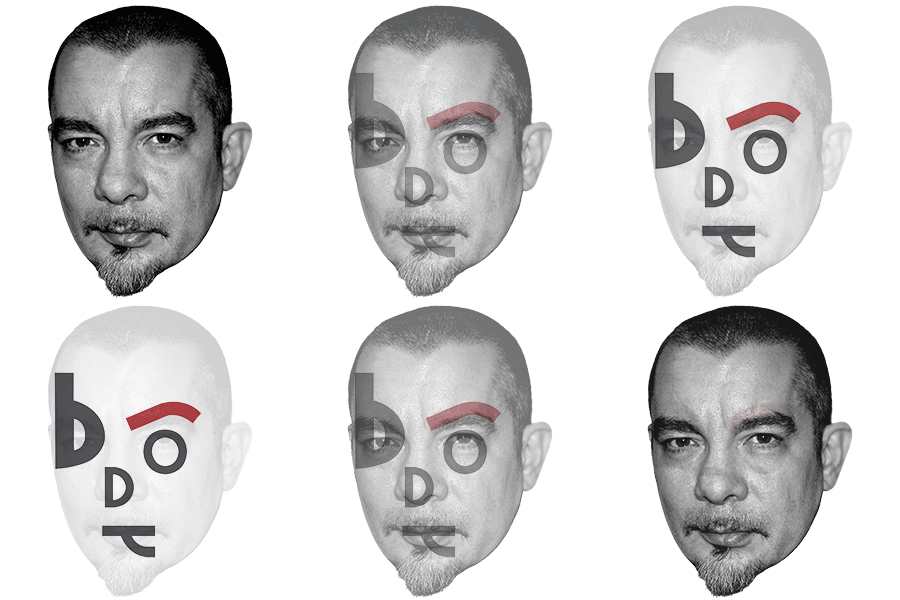
Neville Brody (b. 1957) is an English graphic designer and typographer. He is an alumnus of the London College of Printing and Hornsey College of Art, and is known for his work on ‘The Face’ magazine (1981–1986) and ‘Arena’ magazine (1987–1990), as well as for designing record covers for artists such as Cabaret Voltaire and Depeche Mode. He created the company Research Studios in 1994 and is a founding member of Fontworks. In 2011 he headed the Communication Art & Design department at the Royal College of Art.
As an undergraduate, his tutors often condemned his work as ‘Uncommercial,’ often putting a heavy emphasis on safe and tested economic strategies, as opposed to experimentation. By 1977 punk rock was beginning to have a major effect upon London life and Brody’s work and motivation, which was not well received by his tutors. At one point he was almost thrown out of the college for putting the Queen’s head sideways on a postage stamp design. He did, however, get the chance to design posters for student concerts at the college, most notably for Pere Ubu, supported by The Human League. His first-year thesis had been based around a comparison between Dadaism and pop art.
Posted in Art, Money |
1 Comment »
November 30, 2011

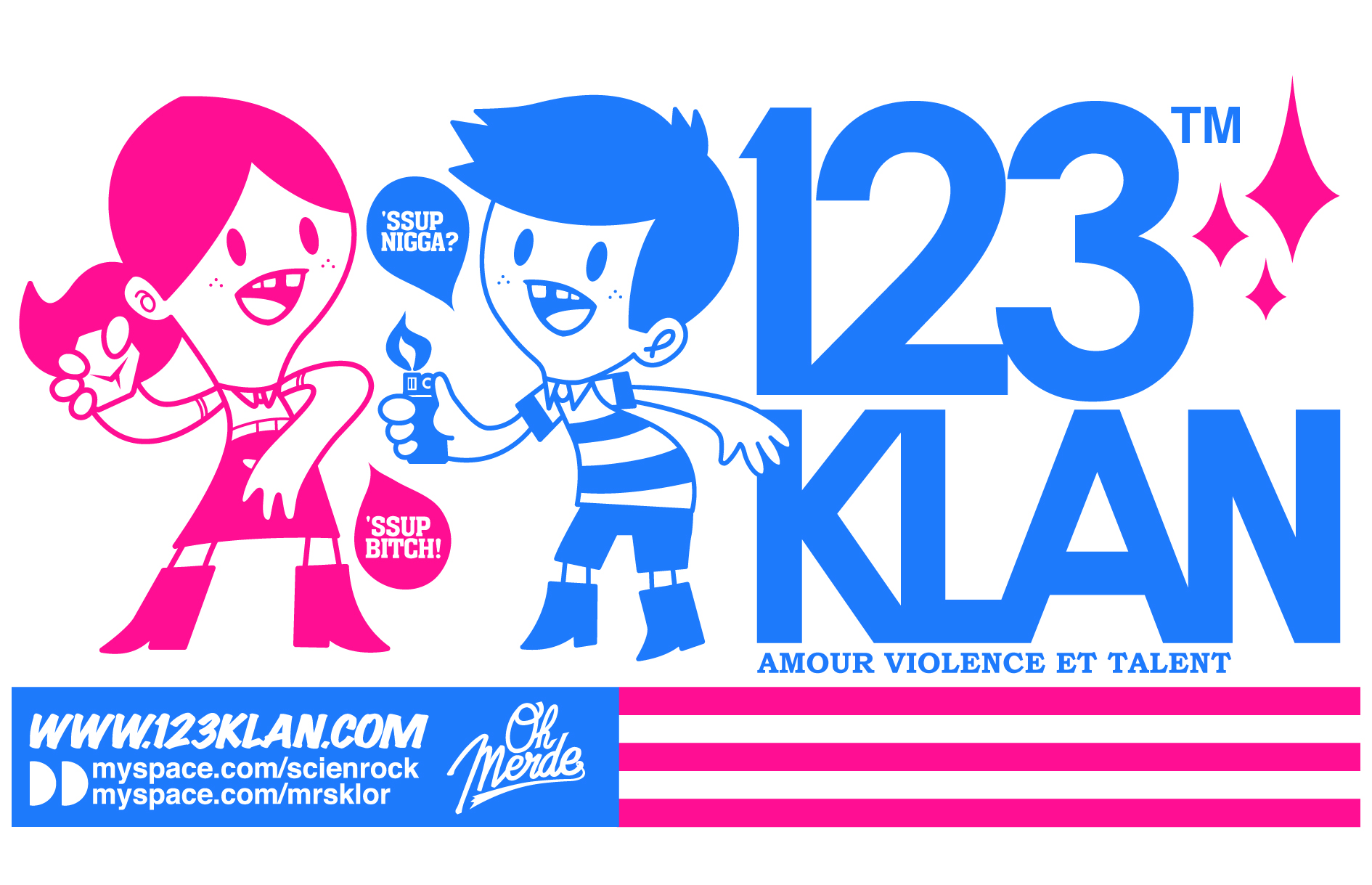
123Klan is a French graffiti crew, founded in 1992 by husband and wife Scien and Klor. Since 1994 the crew have also worked in graphic design, inspired by the work of English graphic designer Neville Brody, and started to apply it to their graffiti (and vice versa). They describe their art as ‘when street knowledge meets technology and graffiti melds with graphic design.’
Scien has said, ‘The great thing about graffiti is its impact on the streets. But most of people don’t like graffiti, simply because they don’t understand it. In a city you have probably less graffiti than advertising, and most of it is certainly uglier than certain graffiti pieces – so to come up with something that gets an impact on people in this visual jungle, it is a real challenge.’
Posted in Art, Money, Politics |
Leave a Comment »
November 29, 2011
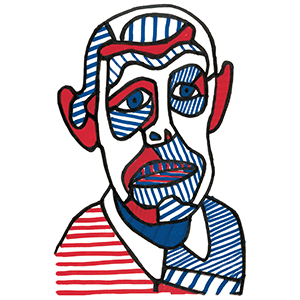
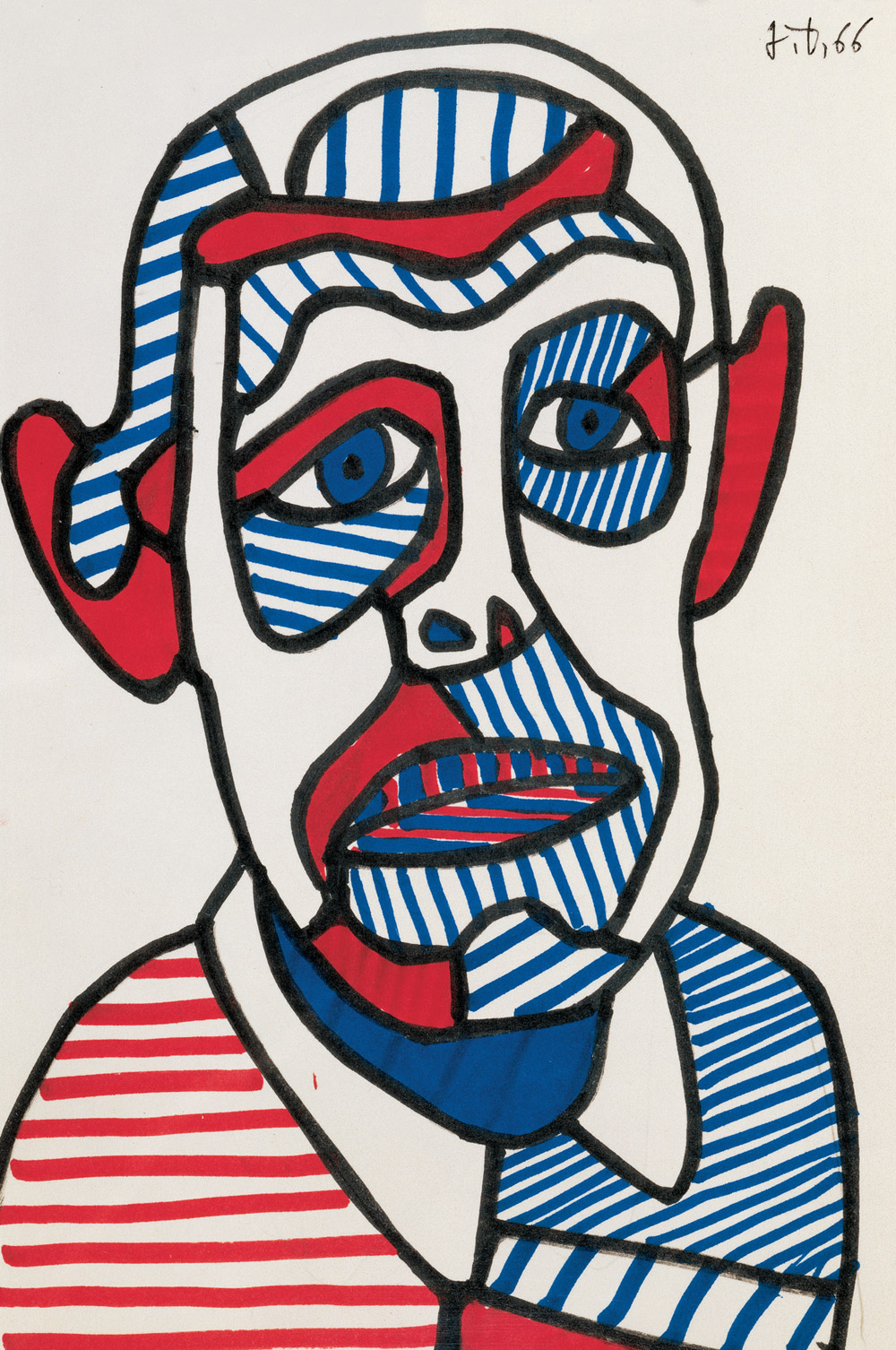
Jean Dubuffet [doo-buh-fey] (1901 – 1985) was a French painter and sculptor. His idealistic approach to aesthetics embraced so called ‘low art’ and eschewed traditional standards of beauty in favor of what he believed to be a more authentic and humanistic approach to image-making.
After a break of several years, he took up painting again in the 1930s, when he made a large series of portraits in which he emphasized the vogues in art history. But again stopped, only turning to art for good in 1942 when he started to paint figures of nude women in a impersonal and primitive way, in strong and unbroken colors. Also he chose as subjects people in the commonplace of everyday life, such as people sitting in the underground, or just walking in the country.
read more »
Posted in Art |
Leave a Comment »
November 29, 2011
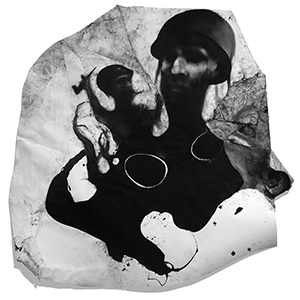
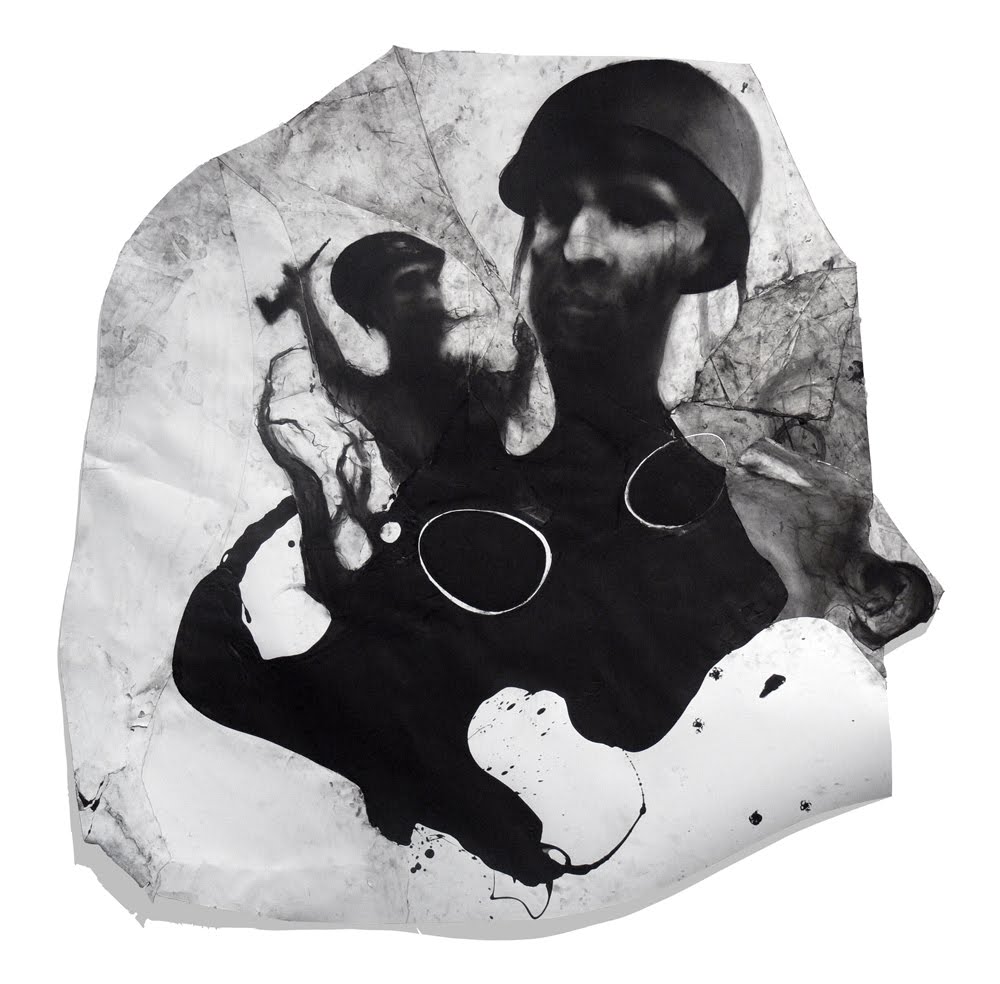
Wesley Kimler (b. 1953) is an American artist based in Chicago known for his colossal paintings, up to 15 feet high and 27 feet wide. According to critic Kevin Nance, he paints ‘expressive, gestural, hybrid paintings that combine abstract and figurative elements in a way that’s theatrical and beautiful, sometimes grotesque and surreal, and always powerfully evocative.’
Kimler has given outspoken interviews in which he champions painting, attacks what he views as the Neo-Conceptual academy and the artworld hierarchy, advocating independence and self-reliance on the part of creators. He is also known in the contemporary Chicago artworld for his work rallying for a new art scene. Nicknamed ‘the Shark’ due to his fierceness in discussions, he organized a website and e-zine Sharkforum with fellow artist David Roth, which includes such well-known figures as Museum of Contemporary Art curator Lynne Warren, photographer and film critic Ray Pride and artist and theorist Mark Staff Brandl. The artists active on his site also exhibit together under the name the Sharkpack.
Posted in Art |
Leave a Comment »
November 29, 2011
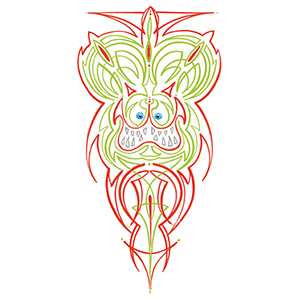
Pin striping is the application of a very thin line of paint or other material called a pin stripe, and is generally used for decoration. Freehand pin stripers use a specialty brush known as a pinstriping brush. Fine lines in textiles are also called pin stripes. Automotive, bike shops, and do-it-yourself car and motorcycle mechanics use paint pin striping to create their own custom look on the automotive bodies and parts. Pin striping can commonly be seen exhibited on custom motorcycles, such as those built by Choppers Inc., Indian Larry, and West Coast Choppers.
The decorative use of pin striping on motorcycles as it is commonly seen today was pioneered by artists Kenny Howard (aka Von Dutch), and Dean Jeffries, Dennis ‘Gibb’ Gibbish, and Ed ‘Big Daddy’ Roth, are considered pioneers of the Kustom Kulture lifestyle that spawned in the early 1950s, and are widely recognized as the ‘originators of modern pin striping.’
read more »
Posted in Art, Technology |
1 Comment »
November 28, 2011
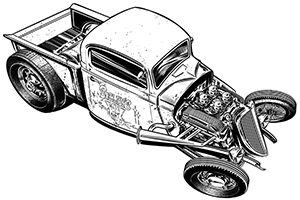

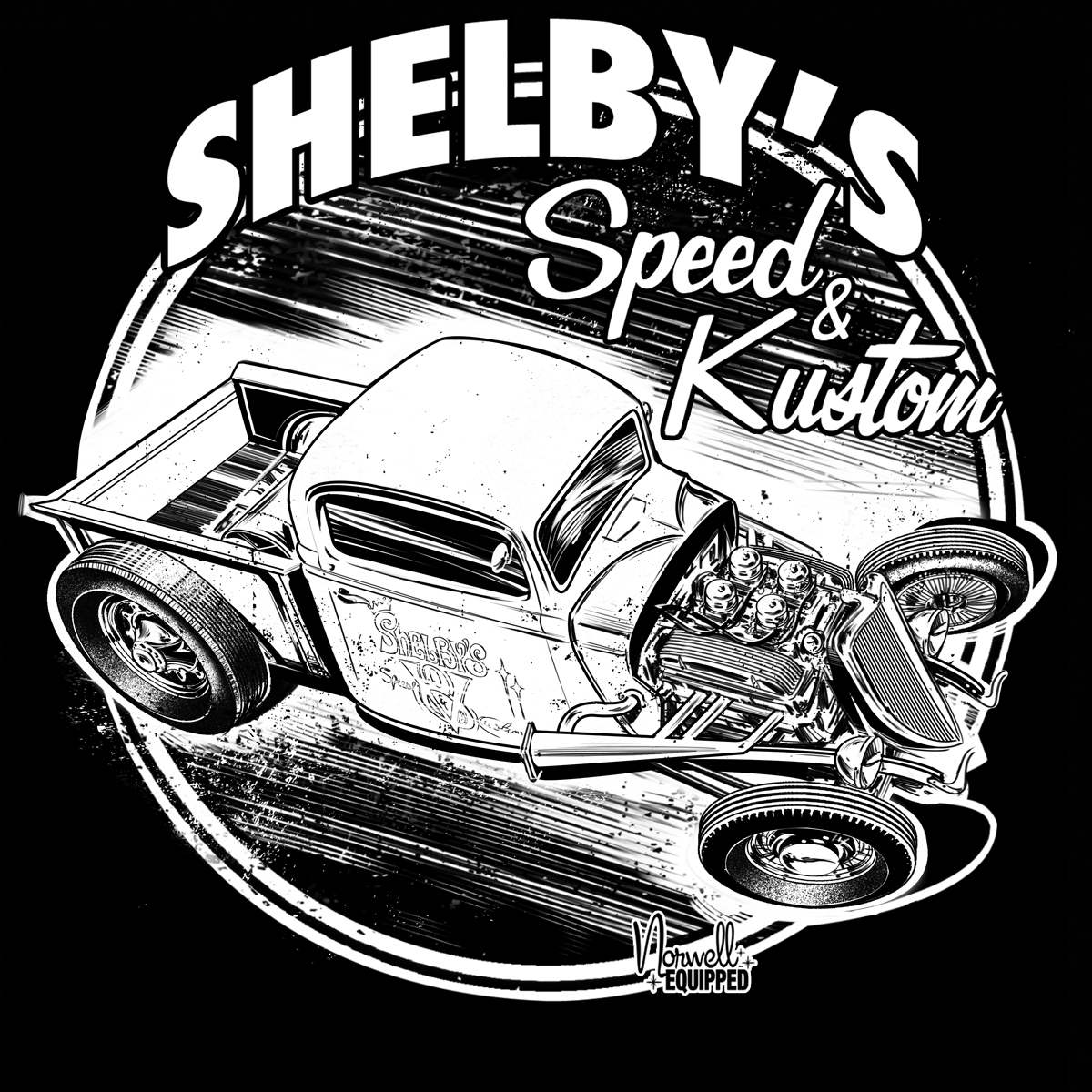
Kustoms are modified cars from the 1930s to the early 1960s, done in the customizing styles of that time period. The usage of a ‘K’ rather than a ‘C,’ is believed to have originated with car designer George Barris.
This style generally consists of, but it not limited to starting with a 2-door coupe; lowering the suspension; chopping down the roof line (usually chopped more in the rear to give a ‘raked back’ look, with B-pillars also commonly leaned to enhance this look); sectioning and/or channeling the body (removing a section from the center); certain pieces of side trim are usually removed or ‘shaved’ to make the car look longer, lower and smoother; often bits and pieces of trim from other model cars, are cut, spliced and added to give the car a totally new and interesting ‘line’ to lead the eye in the direction that the Kustomizer wishes it to go; door handles are also ‘shaved’ as well (electric solenoids or cables are installed); buttons are installed in hidden locations and used to open the doors; trunk lids and other pieces of the body can also be altered in this matter.
read more »
Posted in Art, Technology |
Leave a Comment »
November 28, 2011

Novelty architecture is a type of architecture in which buildings and other structures are given unusual shapes as a novelty, such as advertising, notoriety as a landmark, or simple eccentricity of the owner or architect. Many examples of novelty architecture take the form of buildings that resemble the products sold inside to attract drive-by customers.
Others are attractions all by themselves, such as giant animals, fruits, and vegetables, or replicas of famous buildings. And others are merely unusual shapes or made of unusual building materials.
read more »
Posted in Art, Humor, Money |
1 Comment »
November 28, 2011

A plug (sometimes earplug or earspool), in the context of body modification, is a short, cylindrical piece of jewellery commonly worn in larger-gauge body piercings.
Because of their size—which is often substantially thicker than a standard wire earring—plugs can be made out of almost any material (e.g. acrylic glass, metal, wood, bone, stone, horn, glass, silicone, and porcelain).
read more »
Posted in Art, World |
Leave a Comment »
November 28, 2011

A flesh tunnel is a type of body piercing jewelry. It is also sometimes referred to as a spool, fleshy, earlet, expander or eyelet. They are hollow tunnels, usually used in stretched or scalpelled piercings. Some choose to wear them instead of solid flesh plugs because they weigh less. Flesh tunnels may be worn with a captive bead ring or other object passed through them. Flesh tunnels can be made from many materials, including surgical steel, titanium, Pyrex, silicone, acrylic, and a variety of natural materials, including bone, horn, amber, bamboo, stone, and wood.
Flesh tunnels are often worn in the earlobe, but other soft-tissue areas that are pierced can be used such as the nasal septum and nipples. In these cases the length of the tunnel might be different. The actual origin of flesh tunnels, plug piercings, and body plates derived from the many tribal groups of the world. The flesh tunnels symbolize different roles in their societies, for different groups, however, during the ancient Egyptian New Kingdom, both sexes wore a variety of jewelry, including earplugs/tunnels.
Posted in Art, World |
1 Comment »
November 26, 2011
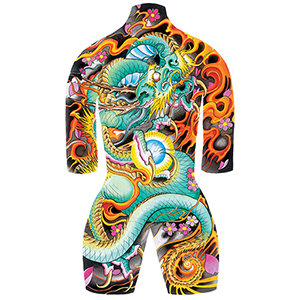
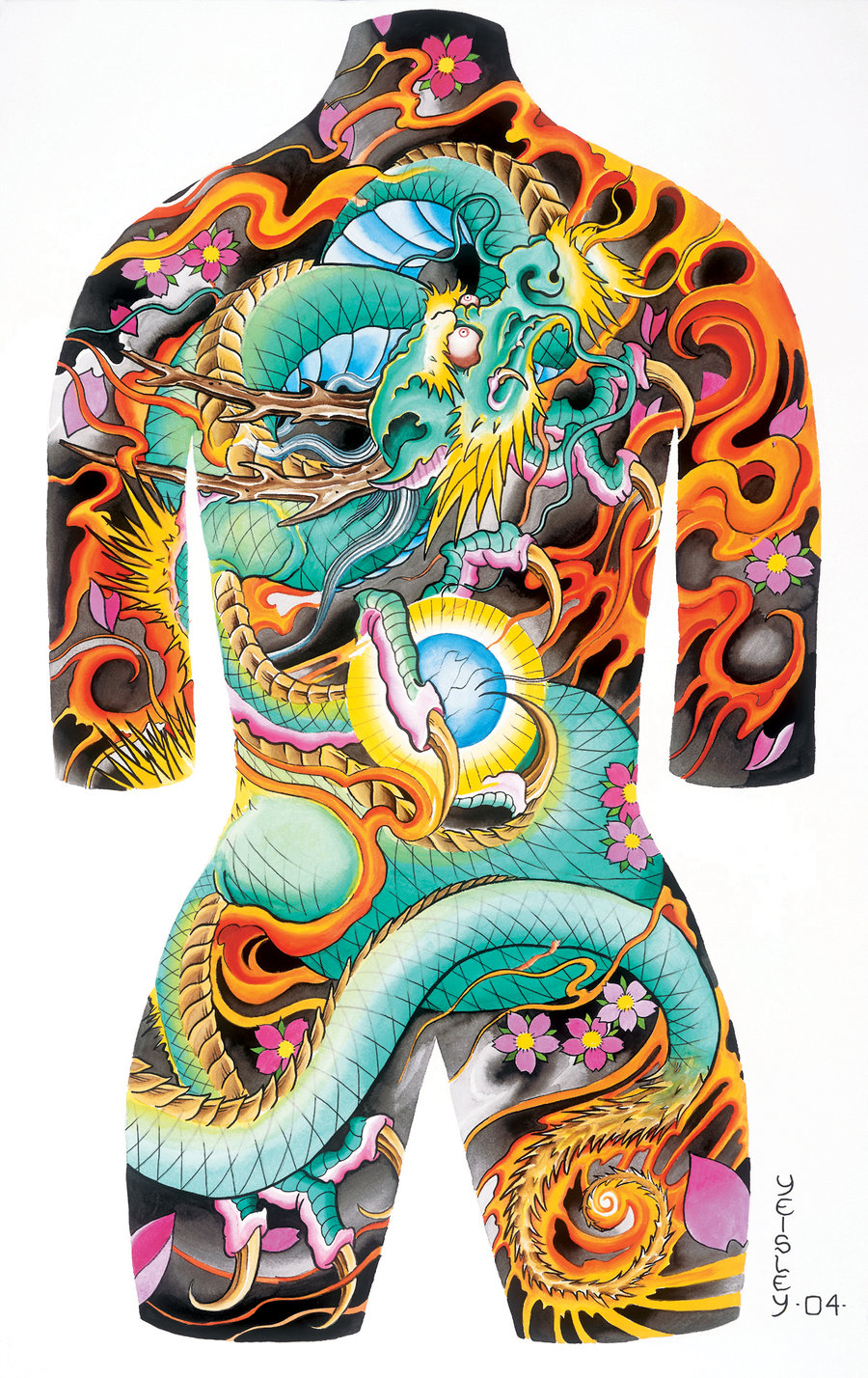
A body suit is an extensive tattoo, usually of a similar pattern, style or theme that covers the entire torso or the entire body. They are associated with freak show and circus performers, as well as with traditional Japanese tattooing.
Such suits are of significant cultural meaning in some traditional cultures, representing a rite of passage, marriage or a social designation.
Posted in Art |
Leave a Comment »



 The Daily Omnivore