July 4, 2011

Enter the Void is a 2009 French film written and directed by Gaspar Noé, labeled by Noé as a ‘psychedelic melodrama. The story is set in Tokyo and focuses on Oscar, a young American drug dealer who gets shot by the police, but continues to watch over his sister Linda and the events which follow during an out-of-body experience, floating above Tokyo’s streets. The film is shot from a first-person view, and occasionally features Oscar staring over his own shoulder as he recalls moments from his past.
Having been Noé’s dream project for many years, the production of ‘Enter the Void’ was made possible due to the commercial success of ‘Irréversible,’ the director’s previous feature film. The film makes heavy use of imagery inspired by experimental cinema and psychedelic drug experiences. Principal photography took place on location in Tokyo and involved many complicated crane shots.
read more »
Posted in Art, Drugs, World |
1 Comment »
July 3, 2011

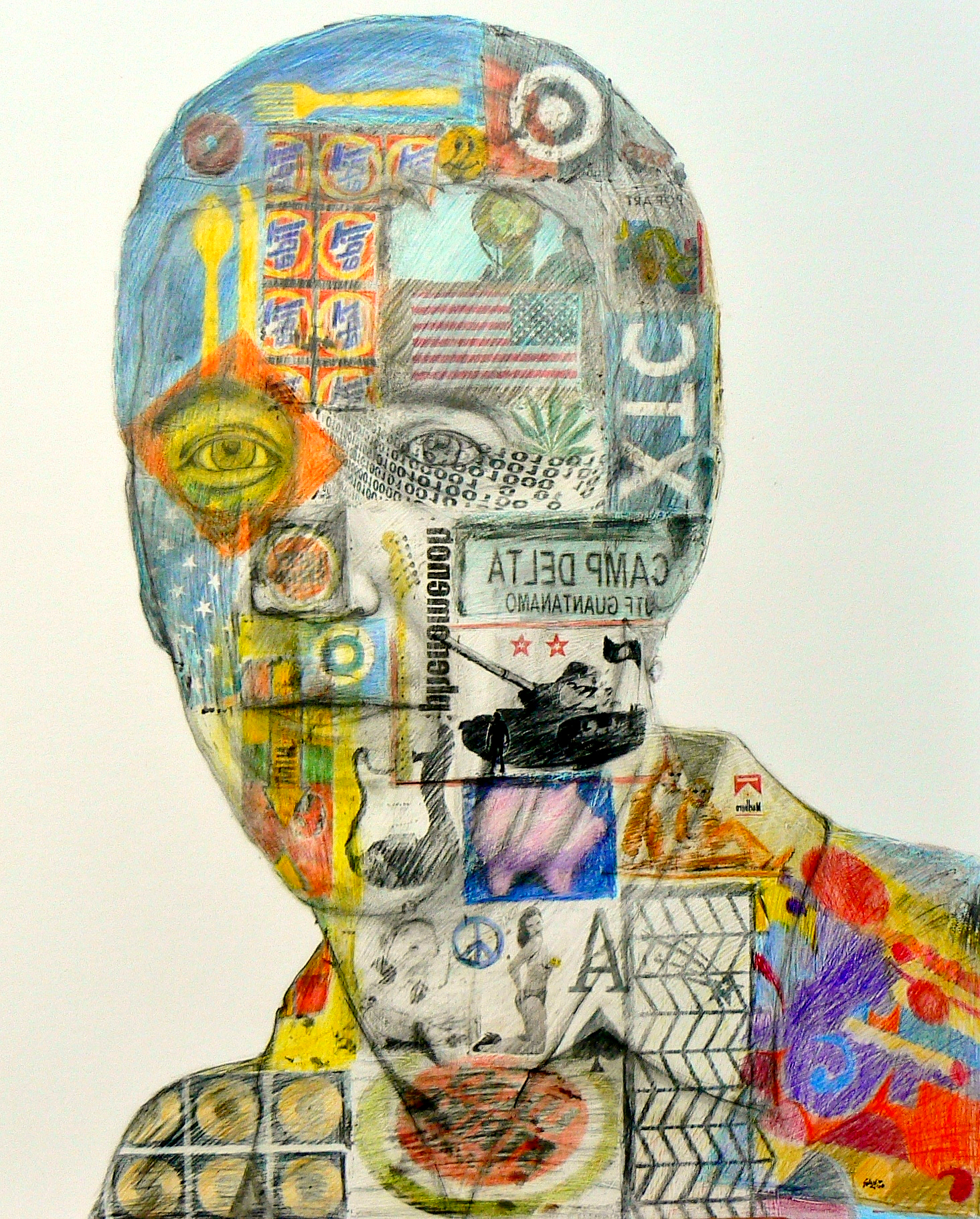
Monoprinting is a form of printmaking that has images or lines that can only be made once, unlike most printmaking, where there are multiple originals. There are many techniques of monoprinting, including lithography, woodcut, and etching. A monoprint is a single impression of an image made from a reprintable block, such as a metal plate used for etching, a litho stone or wood block. Rather than printing an edition of multiple copies of a single image, only one impression may be produced, either by painting or making a collage on the block. Etching plates may also be inked in a way that is expressive and unique in the strict sense, in that the image cannot be reproduced exactly.
Monoprints may also involve elements that change, where the artist reworks the image in between impressions or after printing so that no two prints are aboslutely identical. Monoprints may include collage, hand-painted additions, and a form of tracing by which thick ink is laid down on a table, paper is placed on top and is then drawn on, transferring the ink onto the paper. Monoprints can also be made by altering the type, color, and pressure of the ink used to create different prints. Monoprints are known as the most painterly method among the printmaking techniques; it is essentially a printed painting. The characteristic of this method is that no two prints are alike. The beauty of this medium is also in its spontaneity and its combination of printmaking, painting and drawing media.
Posted in Art, Technology |
Leave a Comment »
July 3, 2011

Ted McCarty (1910 – 2001) was a pioneer of electric guitar design and production. This began when he was chosen as vice president of the of Gibson Guitar Corporation in 1949, then later as president from 1950 to 1966. This period became known as Gibson’s golden age of electric guitars. During his tenure, Les Paul’s electric guitar design, the first solid-body guitar produced by Gibson, came to fruition. The Gibson Les Paul later became the company’s flagship solid body.
Never satisfied, McCarty sought to create a hybrid design that would combine the sustain of a solid-body electric with the mellow warmth of a hollow-body. The ES-335 was created as a ‘semi-hollow,’ with both a central block running the length of the guitar and hollow wings. McCarty was also responsible for the development of the Tune-o-matic bridge system, the humbucking pickup, and the Explorer, Flying V, Moderne, SG and Firebird guitars. Like Leo Fender, McCarty never played the guitar. He instead talked with every guitarist he could in order to find out what guitar players were interested in.
Posted in Art, Money, Technology |
Leave a Comment »
July 3, 2011
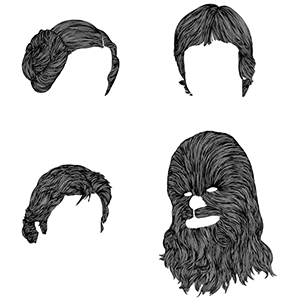
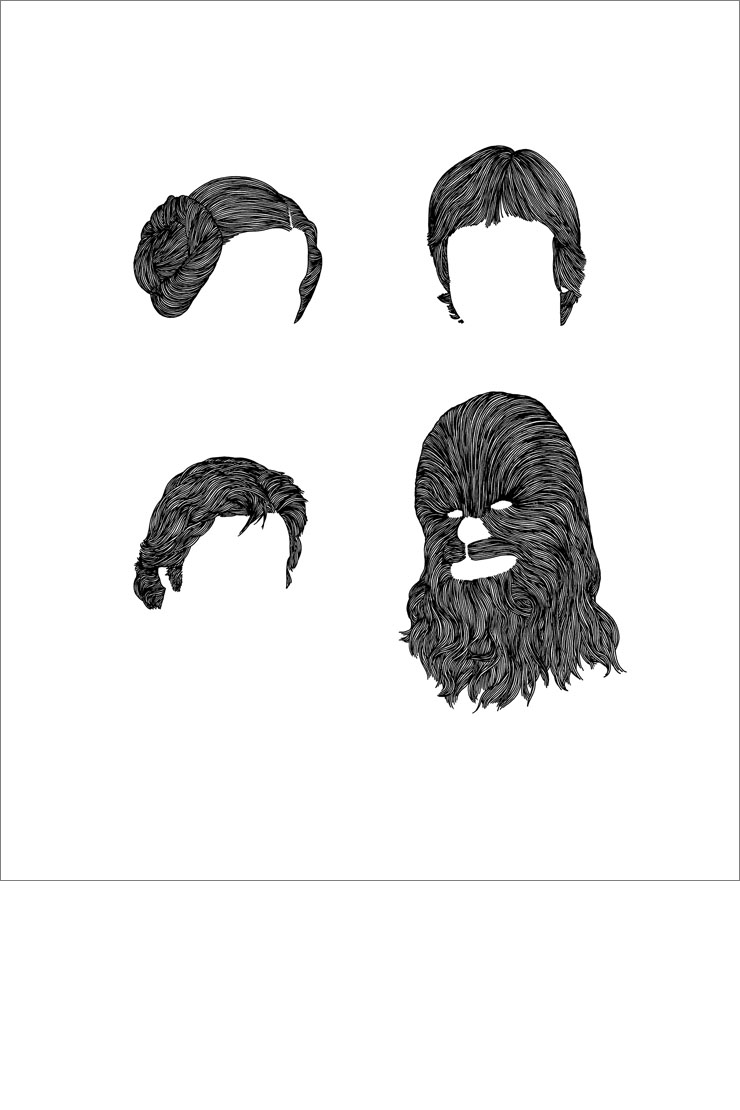
Mr Bingo (b. 1979) is an illustrator living and working in London. He describes himself as having a ‘slightly smaller than average’ head and ‘girl’s arms,’ plus ‘the same haircut as his mum.’ He includes amongst his influences ‘[the] local ASDA supermarket, thick humans, fat humans, dogs who wear clothes, the British abroad, overheard conversations and juvenile graffiti.’
A selection of his work can be found on his website, and he has created a number of limited edition silkscreen prints which can be viewed online, and (so far) consist of ‘Hair portraits’ – famous ‘faces,’ illustrated only by their hair.
Posted in Art, Humor |
Leave a Comment »
July 3, 2011
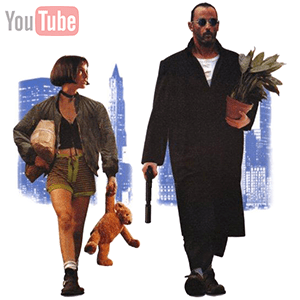
‘Léon‘ (also known as ‘The Professional’) is a 1994 thriller film written and directed by French director Luc Besson. It stars Jean Reno as a mob hitman, Gary Oldman as a corrupt DEA agent, and a young Natalie Portman, in her feature film debut, as a 12-year-old girl who is taken in by the hitman after her family is murdered by corrupt police agents.
Léon is a hitman (or ‘cleaner,’ as he refers to himself) living a solitary life in New York City’s Little Italy. His work comes from a mafioso who operates from the ‘Supreme Macaroni Company’ restaurant. Léon spends his idle time engaging in calisthenics, nurturing a houseplant that early on he describes as his ‘best friend,’ and (in one scene) watching old Gene Kelly musicals. Léon is to some extent an expansion of an idea in Besson’s earlier 1990 film, ‘La Femme Nikita,’ in which Jean Reno plays a similar character named Victor. Besson described Léon as ‘Now maybe Jean is playing the American cousin of Victor. This time he’s more human.’
Posted in Art |
Leave a Comment »
July 3, 2011
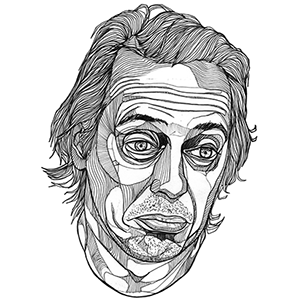
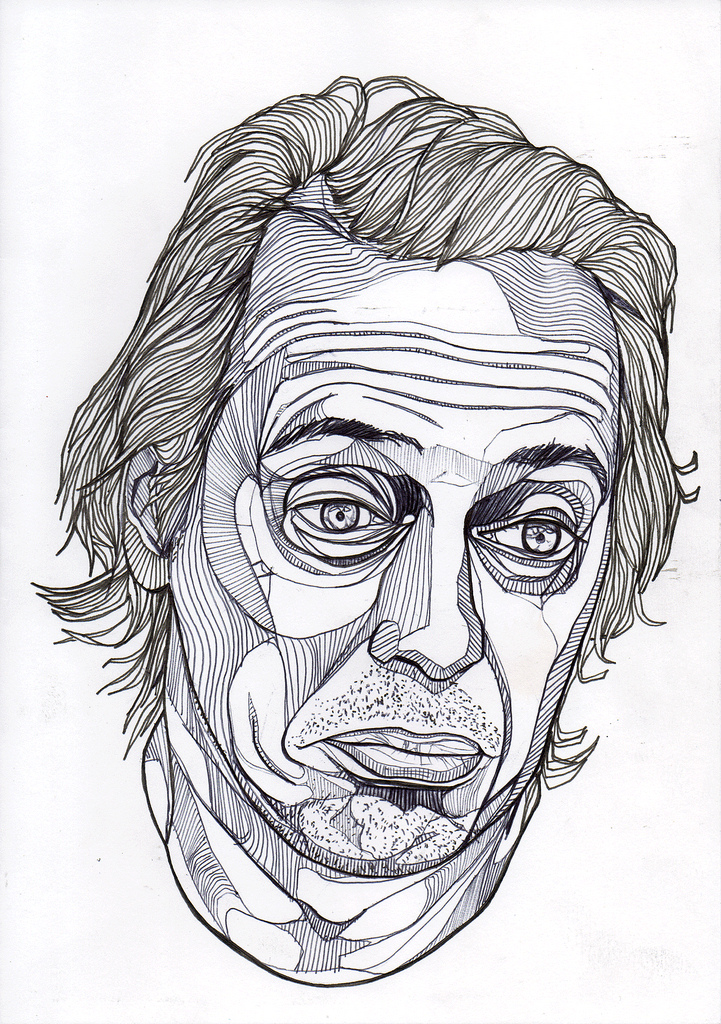
Steve Buscemi (b. 1957) is an American actor, writer and film director. An associate member of the renowned experimental theater company The Wooster Group, Buscemi has starred in successful Hollywood and indie films including ‘Reservoir Dogs,’ ‘Fargo,’ ‘The Big Lebowski,’ ‘Armageddon,’ and’ Big Fish. Buscemi was born in Brooklyn, New York, the son of Dorothy, who worked as a hostess at Howard Johnson’s, and John Buscemi, a sanitation worker and Korean War veteran. Buscemi’s father was of Sicilian descent, his ancestors from Menfi, and his mother was of part Irish ancestry. He has three brothers: Jon, Ken, and Michael, and was raised Roman Catholic.
Buscemi often plays characters that are neurotic and paranoid. He has appeared in a number of films by the Coen Brothers, in which he tends to die in a grisly, prolonged or unexpected manner. He frequently provides comic relief in Adam Sandler films such as ‘Airheads,’ ‘Billy Madison,’ ‘The Wedding Singer,’ and ‘Big Daddy.’
Posted in Art |
3 Comments »
July 3, 2011

‘Eminence Front‘ is a song written and sung by Pete Townshend of The Who. It appears as the sixth track on the group’s 1982 studio album, ‘It’s Hard.’ It is the only song from the album that the band has opted to play live after the initial post-release tours. Lead singer Roger Daltrey, vocally critical of the album, described ‘Eminence Front’ as the only song on it that he felt was worthy of being released.
In the song, Townshend sings about the delusions and drug use of the wealthy and hedonistic. The lyrics describe a party in which people hide from their problems behind a facade. Townshend has introduced the song in live performances with: ‘This song is about what happens when you take too much white powder; it’s called Eminence Front.’
Posted in Art, Drugs, Money |
1 Comment »
July 3, 2011
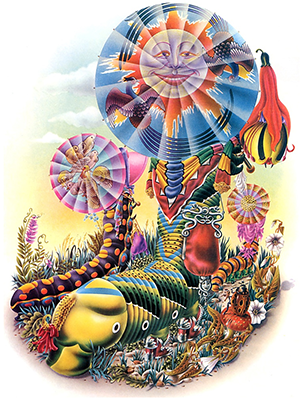
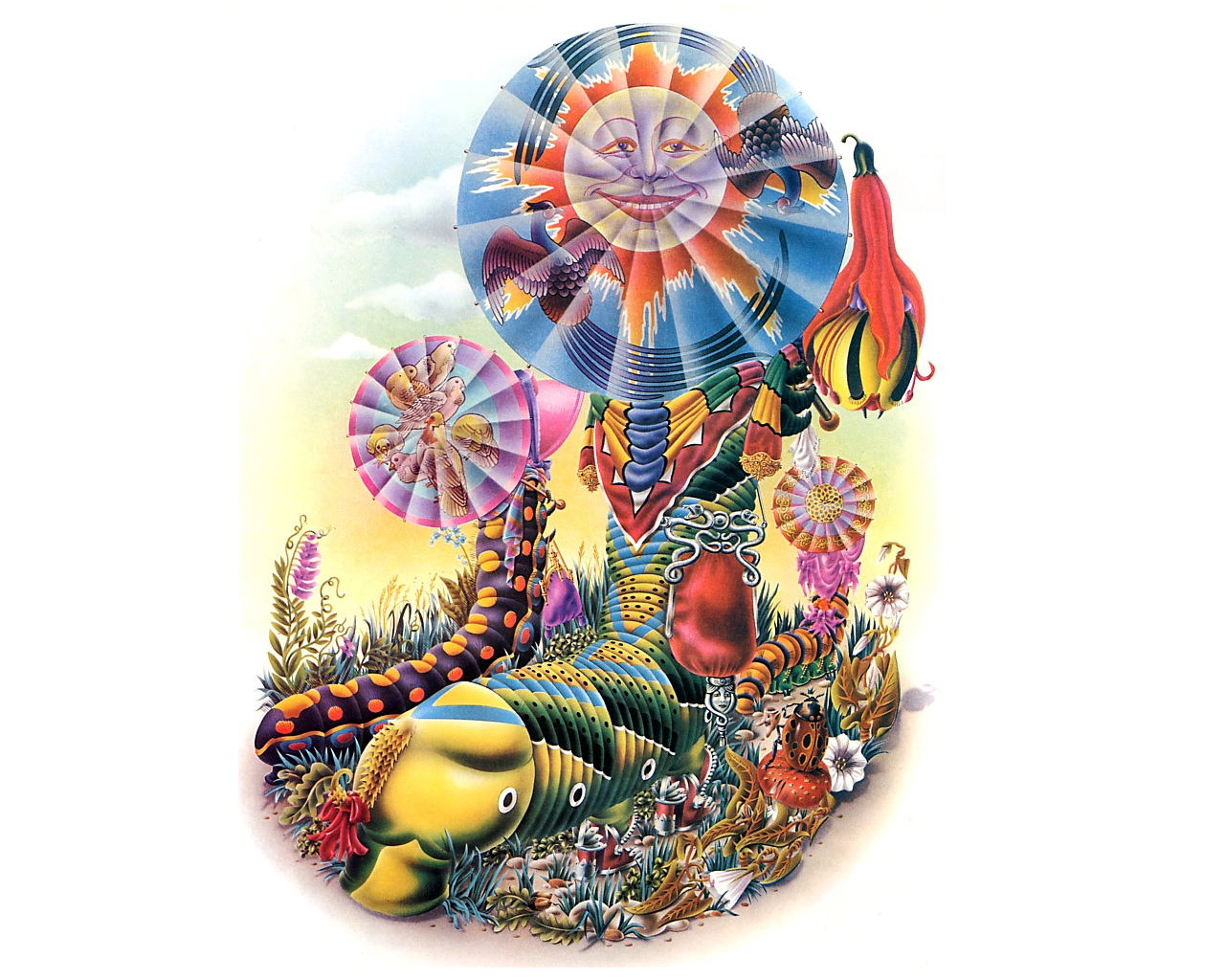
Alan Aldridge is a UK artist and illustrator based out of Los Angeles. Aldridge first worked as an illustrator at ‘The Sunday Times Magazine.’ He was hired in 1965 by Penguin’s chief editor Tony Godwin to become the art director of Penguin Books. Over the next two years as art director, he especially focused on science fiction book covers and introduced his style which resonated with the mood of the time. In 1968 he moved to his own graphic-design firm, INK, which became closely involved with graphic images for the Beatles and Apple Corps.
His work is characterized by a flowing, cartoony style and soft airbrushing – very much in step with the psychedelic styles of the times. In the theater, in 1969 he designed the graphics for controversial Jane Arden play ‘Vagina Rex and the Gas Oven.’ He is possibly best known, however, for the picture book ‘The Butterfly Ball and the Grasshopper Feast’ (1973), a series of illustrations of anthropomorphic insects and other creatures, which he created in collaboration with William Plomer, who wrote the accompanying verses. This was based on William Roscoe’s poem of the same name, but was inspired when Aldridge read that John Tenniel had told Lewis Carroll it was impossible to draw a ‘wasp in a wig’.
Posted in Art |
Leave a Comment »
June 30, 2011
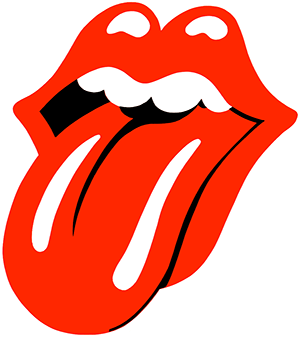
John Pasche is an art designer, most famous for designing the ‘Tongue and Lip Design’ logo for the popular band The Rolling Stones. He designed four tour posters for the Rolling Stones between 1970 and 1974, and also worked for other reputed artists, such as Paul McCartney, The Who, The Stranglers and Dr Feelgood. He works as a freelance designer in Surrey, UK, and he still remains a fan of the band.
Pasche designed the ‘Tongue and Lip Design’ logo in 1971, which was originally reproduced on the ‘Sticky Fingers’ album. In what was perhaps one of the first cases of rock brand marketing, Jagger reportedly approached the Royal College of Art in 1969 looking to commission images for the band. Pasche designed the logo and ended up working for the Stones. ‘Face to face with him, the first thing you were aware of was the size of his lips and his mouth,’ Pasche said.
Posted in Art, Money |
Leave a Comment »
June 30, 2011


The Royal Society for the encouragement of Arts, Manufactures and Commerce (RSA) is a British multi-disciplinary institution, based in London. The name Royal Society of Arts is frequently used for brevity. It was founded in 1754 and was granted a Royal Charter in 1847. Notable members have included Benjamin Franklin, Karl Marx, Adam Smith, Stephen Hawking and Charles Dickens. Its founding charter expressed the purpose of the society as being to ’embolden enterprise, enlarge science, refine art, improve our manufactures and extend our commerce,’ but also of the need to alleviate poverty and secure full employment.
In its early years, the Society offered prizes — which it called ‘premiums’ — for people who could successfully achieve one of a number of published challenges. Captain William Bligh suffered the ‘Mutiny on the Bounty’ while attempting to win a premium for shipping breadfruit from the East to the West Indies. He subsequently repeated the voyage and this time succeeded, and the Society awarded him the prize. The Society offered premiums for a very wide range of challenges including devising new forms of machinery and agricultural improvements (which included seeking ways to improve the cultivation of opium poppies).
Posted in Art, Money, World |
Leave a Comment »
June 30, 2011


Action origami is origami that can be animated. The original traditional action model is the flapping bird. Typically models where the final assembly involves some special action, for instance blowing up a waterbomb, are also classed as action origami., More rarely models like paper plane and spinners which have no moving parts are included. Some traditional action origami involved cuts but modern models typically are built with no cuts.
Action toys include birds or butterflies with flapping wings, beaks that peck, and frogs that hop, as well as popular traditional models like the fortune teller. Bangers are models that make a nose when flicked down hard. Some models are far more complex than can be classed as toys. They are built to amaze and astonish. For instance Robert J. Lang’s ‘Bassist, Pianist, and Violinist’ is a set of action models where each one plays an instrument when pulled on appropriately.
Posted in Art, Games, Language |
Leave a Comment »
June 30, 2011
Liquid and digits is a type of gestural, interpretive, rave and urban street dance that sometimes involve aspects of pantomime. The term invokes the word ‘liquid’ to describe the fluid-like motion of the dancer’s body and appendages and ‘digits’ to refer to illusions constructed with the dancer’s fingers. Liquid dancing has many moves in common with popping and waving. While some argue that the dance evolved spontaneously in the 19902 rave culture, others contend it originated in the break dancing culture of the 1970s. With the decline of the original rave scene, liquid has become a standing part of a worldwide club culture and the underground street dancing movement.
B-boys and funk stylists generally contend that liquid dancing is a development of waving, a technique in popping. Liquid dancing covers many of the same fundamentals as popping and it is fully possible (and common) for dancers to combine the styles, further blurring the distinction between the two. The defining difference is liquid dancing concentrating on smooth movements while popping is characterized by jerky pops (hits) and contractions. Some liquid practitioners accentuate their dance with light emitting gear such as glowsticks, LED keychain lights, or white gloves under black light. When a dancer specializes in glowsticks, the dance often ceases to resemble liquid and is then referred to as glowsticking.
Posted in Art, Games |
Leave a Comment »



 The Daily Omnivore