December 10, 2010

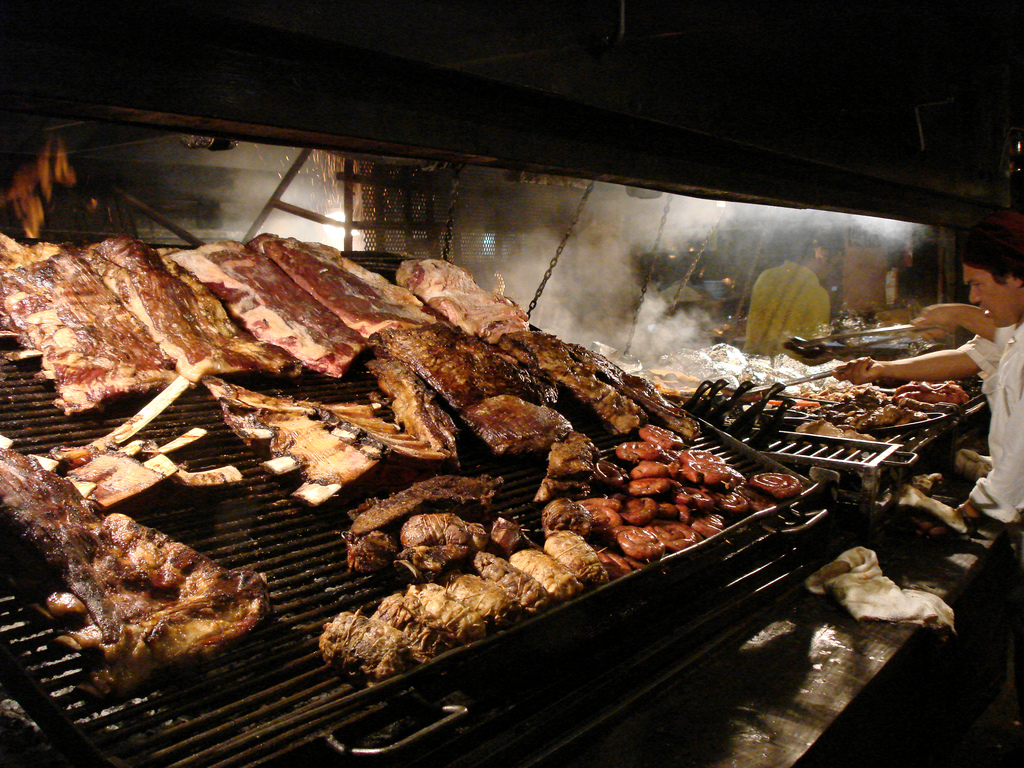
Asado [ah-sahdo] is a technique for cooking meat on a grill (parrilla) or open fire. It is considered the traditional dish of Argentina, Uruguay, Paraguay, and Chile. In southern Brazil it’s called ‘churrasco.’ An asado typically has a sequence: First are the chorizos, morcillas (black pudding), chinchulines (chitterlings), mollejas (sweetbread) and other organs, often accompanied by provoleta, a grilled cheese dish. Organs are sometimes these are served on a coal-heated brasero. Then costillas or asado de tira (ribs) are served. Finally, vacío (flank steak), matambre and possibly chicken and chivito (baby goat). Dishes such as the Uruguayan Pamplona, pork and Patagonian lamb are becoming more frequent, particularly in restaurants.
An asado also includes bread, a simple mixed salad of, for instance, lettuce, tomato and onions, or it could be accompanied with verdurajo (grilled vegetables), a mixture made of potatoes, corn, onion and eggplant cooked on the parrilla and seasoned with olive oil and salt. The meat for an asado is not marinated, the only preparation being the application of salt before and/or during the cooking period. Chimichurri, a sauce of chopped parsley, dried oregano, garlic, salt, pepper, onion, and paprika with olive oil, and salsa criolla, a sauce of tomato and onion in vinegar, are common accompaniments to an asado, where they are traditionally used on the offal, but not the steaks.
Posted in Food, World |
Leave a Comment »
December 7, 2010

(With) a grain of salt is a literal translation of a Latin phrase, ‘(cum) grano salis.’ It is often used to show that intelligence and personal judgment are needed, as in ‘I drink wine cum grano salis since I must drive’ (with care, moderately) or ‘please, repair this electric cable cum grano salis’ (aware of the dangers). ‘Cum grano salis’ also means, like in modern English, that something should not be taken too literally. In Italy ‘to have salt on your pumpkin’ (pumpkin being your head) means to have intelligence and reasoning capabilities.
The phrase comes from Pliny the Elder’s ‘Naturalis Historia,’ regarding the discovery of a recipe for an antidote to a poison. In the antidote, one of the ingredients was a grain of salt. Threats involving the poison were thus to be taken ‘with a grain of salt’ and therefore less seriously. An alternative account says that the Roman general Pompey believed he could make himself immune to poison by ingesting small amounts of various poisons, and he took this treatment with a grain of salt to help him swallow the poison. In this version, the salt is not the antidote, it was taken merely to assist in swallowing the poison.
Posted in Food, Humor, Language |
Leave a Comment »
December 7, 2010

Pruno, or prison wine, is an alcoholic liquid variously made from apples, oranges, fruit cocktail, ketchup, sugar, and possibly other ingredients, including bread. Pruno originated in (and remains largely confined to) prisons, where it can be produced cheaply, easily, and discreetly. The concoction can be made using only a plastic bag, hot running water, and a towel or sock to conceal the pulp during fermentation. The end result has been colorfully described as a ‘vomit-flavored wine-cooler.’ Depending on the time spent fermenting, the sugar content, and the quality of the ingredients and preparation, pruno’s alcohol content by volume can range from 2 – 14%.
Typically, the fermenting mass of fruit — called the motor in prison parlance (from ‘promoter’) – is retained from batch to batch to make the fermentation start faster. Increasing sugar results in more alcohol until the waste products of fermentation kill the motor. This also causes the taste of the end product to suffer. Ascorbic acid or Vitamin C powder is sometimes used to stop the fermentation, which, combined with the tartness of the added acid, counteracts the cloyingly sweet flavor. In an effort to eradicate pruno, some wardens have gone as far as banning all fresh fruit from prison cafeterias. In such cases, inmates often resort to using sauerkraut and orange juice.
Posted in Drugs, Food, Language |
2 Comments »
December 3, 2010
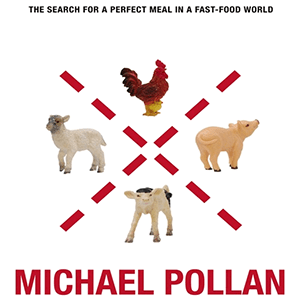
The Omnivore’s Dilemma: A Natural History of Four Meals is a nonfiction book by Michael Pollan published in 2006.
As omnivores – the most unselective eaters – humans are faced with a wide variety of food choices, resulting in a dilemma. Pollan investigates industrial food, organic food, and foraged food.
read more »
Posted in Food, Money, Politics |
Leave a Comment »
December 3, 2010

The Masters of Beef Advocacy (MBA) is an industry-funded program that trains college students to promote agribusiness. Since its launch in March 2009, the MBA has trained nearly 3,000 students and farmers to spread the ‘positive beef message.’ Daren Williams, the communications director for the National Cattlemen’s Beef Association, helped start the MBA with $240,000 from the Beef Checkoff program.
The MBA program is a self-directed online training program designed to equip beef producers and industry allies with the information they need to be everyday advocates for the beef industry. MBA candidates will be required to complete six courses in beef advocacy, including: Modern Beef Production, Animal Care, Beef Safety, Beef Nutrition, and Environmental Stewardship.
Posted in Food, Money, Politics |
Leave a Comment »
December 3, 2010

Checkoff organizations collect funds, sometimes called checkoff dollars, from producers of a particular agricultural commodity and uses these funds to promote and do research on the commodity. The organizations must promote their commodity in a generic way, without reference to a particular producer. These organizations are responsible for familiar American advertising campaigns, including ‘Milk Does a Body Good,’ ‘Got Milk?’, ‘Pork. The Other White Meat,’ ‘The Incredible, Edible Egg,’ and ‘Beef: It’s What’s for Dinner.’
read more »
Posted in Food, Money, Politics |
Leave a Comment »
December 1, 2010

The NatureMill is an automated, indoor composter. Powered by about 10 watts of electricity per month, it heats and mixes food scraps every four hours. Steady aeration and low heat accelerates the composting process; it takes two to the three weeks to convert waste into usable soil.
Natural compost cultures consume waste quickly, without odors. They produce a mild aroma like sourdough, mushrooms, or straw. Sawdust and baking soda reduce acidity, and a fan draws air into the machine, providing oxygen to the cultures. A powerful carbon filter removes any lingering odors. The NatureMill Pro costs $399. Maximum input is 120 lbs. per month. Bones and peach and avocado pits will not compost in a NatureMill, and acidic foods like citrus, tomatoes, and grapes will only compost in limited quantities.
Posted in Food, Technology |
Leave a Comment »
November 22, 2010

Ka’ak is the Arabic word for ‘cake,’ and can refer to several different types of baked goods produced throughout the Arab world and the Near East. A common type of ka’ak is a bread consumed throughout the Near East that is made in a large ring-shape and is covered with sesame seeds. Fermented chickpeas (known as hummus in Arabic and Hebrew) are used as a leavening agent. Widely sold by street vendors, it is usually eaten as a snack or for breakfast with za’atar. In East Jerusalem, it’s sometimes served alongside oven-baked eggs and falafel. Palestinians consider Jerusalem ka’ak to be a unique specialty good, and those from the city or visiting there often buy several loaves to give as gifts.
In Lebanon, ka’ak bread rings are made of sweet dough rolled into ropes and formed into rings and topped with sesame seeds. Instead of za’atar, after baking, it is glazed with milk and sugar and then dried. Tunisian Jews also make a slightly sweet-and-salty version of the pastry, but don’t use a yeast-based dough. In Egypt, usually at wedding parties, a variation made with almonds, known as kahk bi loz, is served.
Posted in Food, World |
Leave a Comment »
November 15, 2010

Lee’s Sandwiches is an American fast food restaurant chain specializing in Vietnamese cuisine. While originally famous for selling French baguette bánh mì (Vietnamese sandwiches), the chain has expanded its offering to many other goods, including packaged spring rolls, desserts, and other food to go items.
The first Lee’s opened in San Jose, California in 1980. There are now over three dozen locations in California, Arizona, Texas, and Oklahoma, as well as a new restaurant in Ho Chi Minh City, Vietnam. The company has plans to expand in the Pacific states of Nevada, Oregon, and Washington.
Posted in Food, Money, World |
Leave a Comment »
November 15, 2010
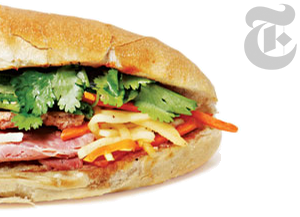
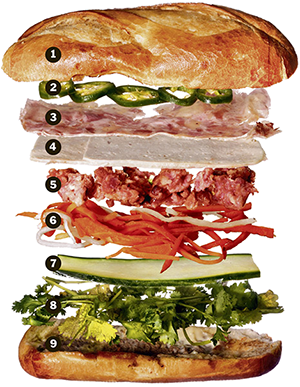
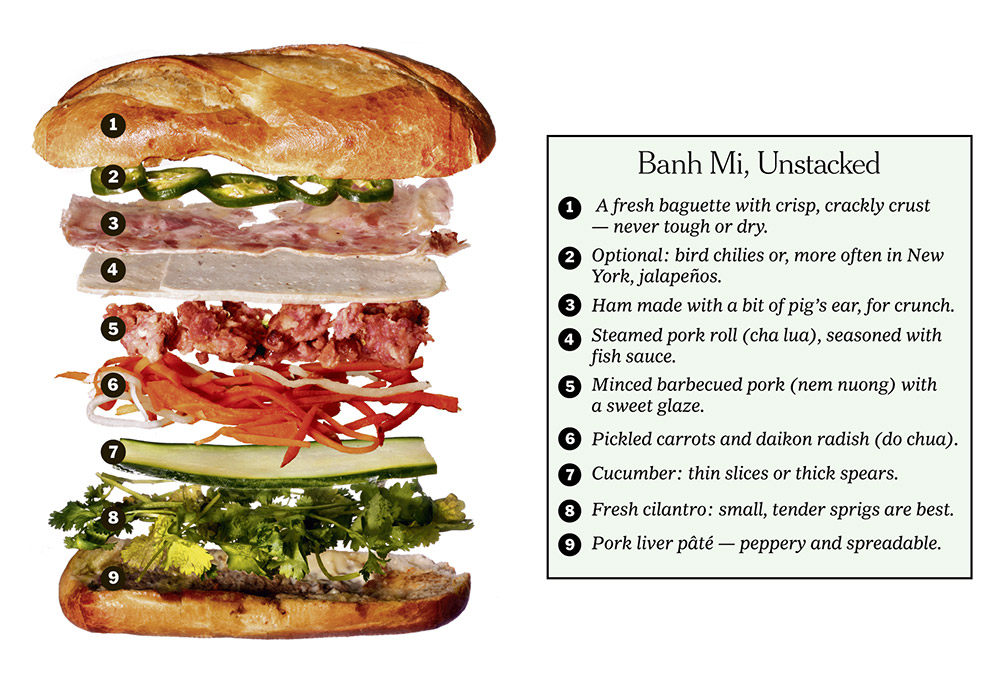
Bánh mì [ban-me] is a Vietnamese baguette made with both wheat and rice flour. The term also refers to what is sometimes called a ‘Vietnamese sandwich’ or a ‘Saigon sub,” which is made up of thinly sliced pickled carrots and daikon, cucumbers, cilantro, chili peppers, pâté, mayonnaise and various meat fillings or tofu. Popular fillings include roasted pork, steamed pork belly, Vietnamese sausage, chicken, head cheese and ham.
Posted in Food, World |
Leave a Comment »
November 8, 2010

A bialy [bee-ah-lee] is a small roll that is a traditional dish in Polish Ashkenazi cuisine. A traditional bialy has a diameter of up to 15 cm (6 inches) and is a chewy yeast roll similar to a bagel. Unlike a bagel, which is boiled before baking, a bialy is simply baked, and instead of a hole in the middle it has a depression. Before baking, this depression is filled with diced onions and other ingredients, including garlic, poppy seeds, or bread crumbs. The name bialy is Yiddish and short for ‘bialystoker kuchen’ (Bialystok Cake). Białystok is a city in Poland. The bialy was formerly little known outside of New York City, but has started to move into the larger market. They were originally brought into the United States by Ashkenazi Jewish immigrants during the late 19th and early 20th centuries.
The bialy was first marketed in the United States during the early 1900s in the state of New York by Harry Cohen, a proprietor of a bagel (and later bialy) establishment. In 2002, former New York Times food writer Mimi Sheraton wrote a book dedicated to the bialy, called The Bialy Eaters: The Story of a Bread and a Lost World. She examined bialy making and used Kossar’s Bialys as the background, and its long-time union bakers as key references for her research that took her to Poland in search of the original bialy bakers.
Posted in Food, World |
Leave a Comment »
November 8, 2010

A sporf is a single eating utensil combining the properties of a spoon, fork, and knife. It was invented by William McArthur in the 1940s in Australia and sold with the brand name ‘Splayd.’ A sporf typically has a spoon shape with fork tines in the middle and flat edges on one or both sides suitable for cutting through soft food.
Posted in Food, Technology |
1 Comment »



 The Daily Omnivore