February 25, 2014

Robert H. Lustig is an American pediatric endocrinologist at the University of California, San Francisco (UCSF) where he is a Professor of Clinical Pediatrics. He practices in the field of neuroendocrinology, with an emphasis on the regulation of energy balance by the central nervous system. He also has a special interest in childhood obesity.
Lustig came to public attention through his efforts to establish that fructose can have serious deleterious effects on human (especially children’s) health if consumed excessively. In 2009, he delivered a lecture called ‘Sugar: The Bitter Truth’ that spread virally on YouTube, in which he calls fructose a ‘poison’ and equates its metabolic effects with those of ethanol.
read more »
Posted in Food, Health |
Leave a Comment »
January 15, 2014
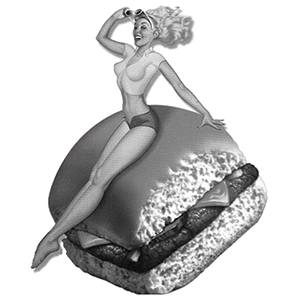
White Castle is a restaurant generally credited as the first fast food chain, known for its small, square hamburgers. Sometimes referred to as ‘sliders,’ the burgers were priced at five cents until the 1940s, and remained at ten cents for years thereafter. For several years, when the original burgers sold for five cents, White Castle periodically ran promotional ads in local newspapers which contained coupons offering five burgers for ten cents, takeout only.
White Castle was founded in 1921 in Wichita, Kansas by Cook Walt A. Anderson an insurance man Billy Ingram. At the time, Americans were hesitant to eat ground beef after Upton Sinclair’s 1906 novel ‘The Jungle’ publicized poor sanitation practices in the meatpacking industry. To invoke a feeling of cleanliness, their restaurants were small buildings with white porcelain enamel on steel exteriors, stainless steel interiors, and employees outfitted with spotless uniforms.
read more »
Posted in Food, Money |
1 Comment »
December 12, 2013

Macaroni and cheese, called ‘mac and cheese’ (US, Canada, Australia), ‘macaroni pie’ (Caribbean), or ‘macaroni cheese’ (UK, New Zealand) is a dish consisting of cooked macaroni (durum wheat pasta) and cheese, though it can also incorporate other ingredients, such as bread crumbs, Worcestershire sauce, and a roux (a thickening agent created by cooking wheat flour and fat) such as a bechamel (butter and flour cooked in milk).
It is possible to make the dish with actual cheese rather than a cheese sauce. It has been suggested that pasta rigati or some other small shell macaroni is an excellent choice for the pasta ingredient due to its ‘pocket’ to hold cheese.
read more »
Posted in Food, World |
Leave a Comment »
December 2, 2013

The tongue map or taste map is a common misconception that different sections of the tongue are exclusively responsible for different basic tastes. Although widely taught in schools, this was scientifically disproven by later research; all taste sensations come from all regions of the tongue, although parts may be more sensitive to certain flavors. The theory behind this map originated from a paper written by Harvard psychologist Edwin G. Boring, which was a translation of a 1901 German paper.
The paper showed minute differences in threshold detection levels across the tongue. These small differences were later taken out of context by textbooks in declaring discrete taste regions. So, while some parts of the tongue may be able to detect a taste before the others do, all parts are equally good at conveying the qualia of all tastes. Threshold sensitivity may differ across the tongue, but intensity of sensation does not.
Posted in Food, Health |
Leave a Comment »
November 23, 2013

Soju (lit. ‘burned liquor’) is a distilled beverage native to Korea, typically 20% alcohol by volume. Jinro and Lotte soju are the first and third top selling alcohol brands in the world. It is usually consumed neat. It is traditionally made from rice, wheat, barley, but modern producers of soju use supplements or even replace rice with other starches, such as potatoes, sweet potatoes, or tapioca.
Alcohol etiquette is tied to South Korea’s strict culture of respect, particular for elders. When accepting a glass from an older person, the recipient must hold the glass with two hands (left palm on the bottom, right hand holding the side) and bow the head slightly. When drinking the younger person must turn away from the elder and cover their mouth and glass with their hands. There are a few rules unique to Soju: never pour your own glass, and don’t refill your glass until it’s empty.
Posted in Drugs, Food, World |
Leave a Comment »
November 14, 2013
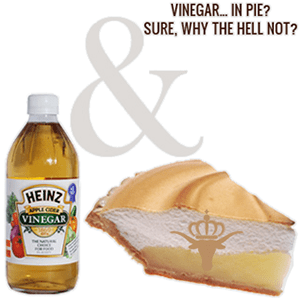
Chess pie is a dessert characteristic of Southern U.S. cuisine. According to James Beard’s ‘American Cookery’ (1972) the dish was brought from England originally, and was found in New England as well as Virginia. The origin of the name of chess pie may have come from the term ‘pie chest,’ another name for a pie safe (a cupboard designed to store pies). Recipes vary, but most include a filling composed of eggs, butter, granulated sugar, brown sugar, and vanilla.
Often, what sets chess pie apart from many other custard pies is the addition of cornmeal. Some recipes also call for corn syrup, which tends to create a more gelatinous consistency. The finished product is often consumed with coffee. Chess pie is closely related to vinegar pie, and the two terms are often used interchangeably. Vinegar pie adds a teaspoonful or tablespoonful of vinegar to reduce the sweetness. Some variations are called Jeff Davis or Jefferson Davis Pie, and Kentucky pie.
Posted in Food |
Leave a Comment »
November 13, 2013

Soylent is a food substitute intended to supply all of a human body’s daily nutritional needs, made from powdered starch, rice protein, olive oil, and raw chemical powders. It was designed by software engineer Rob Rhinehart as a low cost alternative to traditional food that can be prepared and consumed very quickly.
Lacking background in chemistry or nutrition, Rhinehart developed the formula through research and self-experimentation. He named it after a fictional food from the novel ‘Make Room! Make Room!’, on which the 1973 film ‘Soylent Green’ was loosely based.
read more »
Posted in Food, Health, Money |
Leave a Comment »
November 10, 2013
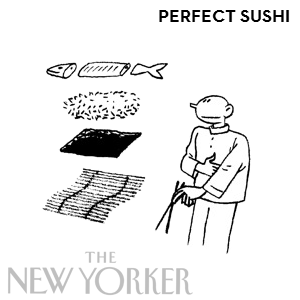
Jiro [jee-roh] Ono is an 85-year-old sushi master and owner of Sukiyabashi Jiro, a 3 Michelin star sushi restaurant in Tokyo. He was the subject of a 2011 documentary, ‘Jiro Dreams of Sushi.’ The film also profiles Jiro’s two sons, both of whom are also sushi chefs.
The younger son, Takashi, left Sukiyabashi Jiro to open a mirror image of his father’s restaurant in Roppongi Hills. The 50-year-old elder son, Yoshikazu, obligated to succeed his father, still works for Jiro and is faced with the prospect of one day taking over the flagship restaurant.
read more »
Posted in Food, World |
Leave a Comment »
October 14, 2013
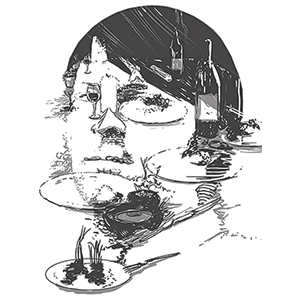
René Redzepi (b. 1977) is a Danish chef and co-owner of the two-Michelin star restaurant Noma in Copenhagen. Redzepi is noted for his work for the reinvention and refinement of a new Nordic cuisine and food that is characterized by inventiveness and clean flavors. He trained at Pierre André in Copenhagen, before visiting El Bulli in Spain as a guest in 1998 and subsequently working there during the following season.
Back in Copenhagen he started working at Kong Hans Kælder which had been one of the city’s leading gourmet restaurants since the mid-1970s. In 2001 he spent four months working at French Laundry in California but returned to Kong Hans Kælder. In 2002, Redzepi was contacted by Claus Meyer, who had been offered to operate a restaurant at the North Atlantic House, a former 18th century warehouse which was being turned into a cultural centre for the North Atlantic region. Noma was opened in 2004 with Redzepi as the head chef.
Posted in Food, World |
Leave a Comment »
October 12, 2013

The Gilroy Garlic Festival is one of the largest food festivals in the United States, held annually in the town of Gilroy outside San Francisco on the last full weekend in July. At the last event 108,526 people attended, sampling such diverse creations as garlic flavored ice cream and garlic french fries. Attendees also enjoy three stages full of musical entertainment, a Great Garlic Cook-off, celebrity cooking demonstrations, a garlic braiding workshop, a children’s area, arts and crafts, and many interactive displays.
A Miss Gilroy Garlic Festival Queen is also crowned yearly, chosen by a panel of five judges, based on her personal interview, talent, garlic speech and evening gown. Her court is also chosen, for the purpose of representing Gilroy at various festivities and ‘having a garlicy good time with fellow lovers of the pungent bulb.’ The festival was founded in 1979 by Dr. Rudy Melone, Don Christopher, and Val Filice, and has been a fundraiser for local charities.
Posted in Food |
Leave a Comment »
September 1, 2013

Swedish Fish is a fish-shaped wine gum (gum drop type) candy. In 1957, Malaco, a Swedish confectionery manufacturer, expanded its business by exporting a few of their products to North America. Various licorice ribbon and licorice lace candies were the first products to be exported. Malaco CEO Thor Fjørgerson called the move ‘a landmark day for Sweden/US relations.’
International trade experts hailed the move, as it allowed Malaco to extend its brand beyond the Scandinavian Peninsula. Malaco’s export trade grew and in the late 1960s and early 1970s, Swedish Fish and Swedish Berries were developed specifically for the North American market. Malaco was eventually acquired by Leaf International.
read more »
Posted in Food, World |
Leave a Comment »
August 17, 2013
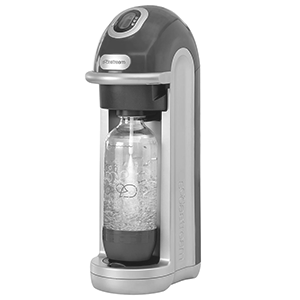
SodaStream is the maker of a consumer home carbonation product based on the principles of making a carbonated drink as originally invented by Guy Gilbey in 1903. The device allows users to take ordinary tap water and carbonate it to create soda water (or carbonated water) to drink.
With the addition of one of over 100 different types of concentrated syrups and flavorings produced by Sodastream, owners can create carbonated beverages. After the company merged with Soda-Club in 1998, it was relaunched with an emphasis on healthier drinks. It went public on the Nasdaq stock exchange in 2010. Sodastream is currently headquartered in Israel, and has 13 production plants.
read more »
Posted in Food, Money |
Leave a Comment »


 The Daily Omnivore