July 12, 2011

Garry Kasparov (b. 1963) is a Russian chess grandmaster, a former World Chess Champion, writer, political activist, and one of the greatest chess players of all time. Kasparov became the youngest ever undisputed World Chess Champion in 1985 at the age of 22. He held the official FIDE world title until 1993, when a dispute with FIDE led him to set up a rival organization, the Professional Chess Association. He continued to hold the ‘Classical’ World Chess Championship until his defeat by Vladimir Kramnik in 2000. He is also widely known for being the first world chess champion to lose a match to a computer under standard time controls, when he lost to IBM’s Deep Blue in 1997.
After his retirement from chess in 2005, Kasparov turned to politics and created the United Civil Front, a social movement whose main goal is to ‘work to preserve electoral democracy in Russia.’ He has vowed to ‘restore democracy’ to Russia by ousting Vladimir Putin, of whom he is an outspoken critic.
read more »
Posted in Games, Politics, World |
Leave a Comment »
July 12, 2011

Façade is a 2005 artificial-intelligence-based interactive story created by Michael Mateas and Andrew Stern, and exhibited at several international art shows. Façade puts the player in the role of a close friend of Grace and Trip, a couple who invited you over for cocktails.
This pleasant gathering, however, is somewhat damaged by the clear domestic confrontation between your hosts. Making full use of the incorporated language processing software, the game allows the player to type sentences to ‘speak’ with the couple, either supporting them through their troubles, driving them farther apart, or being thrown out of the apartment.
read more »
Posted in Games, Humor, Technology |
Leave a Comment »
July 12, 2011
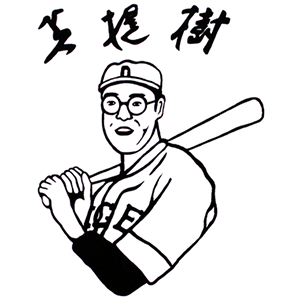
Kaoru Betto (b. 1920) was a former Nippon Professional Baseball player. After playing for the Ōsaka Tigers for two years, Betto played for the Mainichi Orions from 1950 to 1957. In his first season with the Orions, Betto won the NPB’s first Pacific League MVP Award and helped lead the team to victory in the first Japan Series.
Actor Jeff Bridges can be seen wearing a Kaoru Betto shirt in several of his films.
Posted in Games, World |
Leave a Comment »
July 11, 2011

The Tamagotchi [tom-uh-gotchee] is a handheld digital pet, created in Japan by Akihiro Yokoi of WiZ and Aki Maita of Bandai. It was first sold by Bandai in 1996 in Japan. As of 2010, over 76 million Tamagotchis have been sold world-wide. Most Tamagotchis are housed in a small egg-shaped computer with an interface usually consisting of three buttons, although the number of buttons may vary for different variations. According to Bandai, the name is a portmanteau combining the Japanese word ‘tamago,’ which means ‘egg,’ and the English word ‘watch.’
Upon removing the tag of a Tamagotchi unit, an egg will appear on the screen. After setting the Tamagotchi unit’s clock, the Tamagotchi will hatch, after which the player will be told of its gender and will be given the opportunity to give it a name. From then on, the player is given the task of raising the Tamagotchi to good health throughout its life and attending to its needs, such as feeding it, playing games to make it happy, and keep it at a healthy weight, cleaning up its excrement, punishing or praising the Tamagotchi based on its actions, returning it to proper health with medicine if it gets sick, and shutting off the lights when it goes to bed.
read more »
Posted in Games, Technology, World |
Leave a Comment »
July 11, 2011

Turntable.fm was a social media website that allowed users to interactively share music. The site was run by Billy Chasen, who started it in January 2011 using revenue generated by his previous start-up. The service allowed users to create ‘rooms,’ which other users could join. Designated users, so-called ‘DJs,’ chose songs to be played to everyone in that room, while all users were able to talk with one another through a text interface.
The service opened to the public in May 2011, and by late June had already reached 140,000 active users. The company used the Digital Millennium Copyright Act to license the music that was played on the website; because of this, only individuals from the US were allowed to use the service.
Posted in Games, Money, Technology |
Leave a Comment »
July 8, 2011
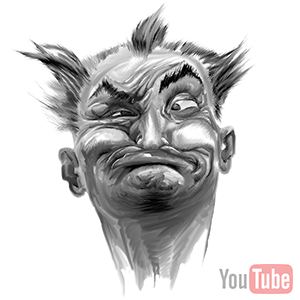
A gurn or chuck is a distorted facial expression, and a verb to describe the action. A typical gurn might involve projecting the lower jaw as far forward and up as possible, and covering the upper lip with the lower lip. Another common form of gurning is the ‘duck face’ which is characterized by outwardly splayed lips. Gurn has also been defined as ‘to snarl as a dog; to look savage; to distort the countenance.’ The derivation may originally be Scottish, related to ‘grin.’ In Northern Ireland, the verb ‘to gurn’ means ‘to cry,’ and crying is often referred to as ‘gurnin’.’
Gurning contests are a rural English tradition. By far the most notable is that held annually at the Egremont Crab Fair, which dates back to 1267 when King Henry III granted the fair a Royal Charter. The competitions are held regularly in some villages, with contestants traditionally framing their faces through a horse collar — known as ‘gurnin’ through a braffin’.’ The World Gurning Championship takes place annually at the same crab fair in Egremont, Cumbria. Those with the greatest gurn capabilities are often those with no teeth, as this provides greater room to move the jaw further up. In some cases, the elderly or otherwise toothless can be capable of spectacular gurns covering the entire nose.
Posted in Games, Humor, Language |
1 Comment »
July 5, 2011

Polara Golf is brand for a line of golf balls that correct hooks and slices, based on the physics of their design. The new design, released August 2010, utilizes state-of-the-art aerodynamics and a principle axis of inertia. The ball has shallow truncated dimples around its equator and has deep spherical and small spherical dimples on each of the ball’s poles. Officially sanctioned balls are designed to be as symmetrical as possible.
This symmetry is the result of a dispute that stemmed from the original Polara, that had six rows of normal dimples on its equator but very shallow dimples elsewhere. This asymmetrical design helped the ball self-adjust its spin-axis during the flight. The United States Golf Association refused to sanction it for tournament play and, in 1981, changed the rules to ban aerodynamic asymmetrical balls.
Posted in Games, Money, Technology |
Leave a Comment »
July 4, 2011

In endurance sports such as cycling and running, hitting the wall (or the bonk) describes a condition caused by the depletion of glycogen stores in the liver and muscles, which manifests itself by sudden fatigue and loss of energy. Milder instances can be remedied by brief rest and the ingestion of food or drinks containing carbohydrates. The condition can usually be avoided by ensuring that glycogen levels are high when the exercise begins, maintaining glycogen levels during exercise by eating or drinking carbohydrate-rich substances, or by reducing exercise intensity.
The term bonk for cycling fatigue is presumably derived from the original meaning ‘to hit,’ and dates back at least half a century. The term is used colloquially both as a noun (‘hitting the bonk’) and a verb (‘to bonk halfway through the race’). The British may refer to it as ‘hunger knock,’ while ‘hunger bonk’ or ‘bunger honk’ was used by South African cyclists in the 1960s.
Posted in Food, Games, Health |
Leave a Comment »
July 3, 2011
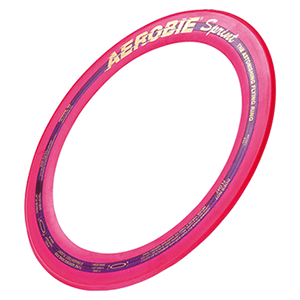
An Aerobie is a flying ring used in a manner similar to a flying disc (Frisbee) for recreational catches between two or more individuals. An Aerobie is lighter, and is more stable in flight than a Frisbee. It can be bent to tune it for straighter flight. Designed in 1984 by Stanford engineering lecturer Alan Adler, the Aerobie has a polycarbonate core with soft rubber bumpers molded onto the inner and outer rims. The outer rim has a spoiler designed to impart stability.
In the 1970s, Adler began attempting to improve the flying disc, considering its design characteristics. He tried streamlining the shape to reduce drag, but this resulted in a disc that was more unstable in flight. Eventually, he turned his attention to the ring shape. This led to the development of the predecessor of the Aerobie, which was called the ‘Skyro.’ About a million of this model were sold. In 1980, it was used to set a Guiness World Record throw of 261 meters. It lacked the spoiler rim of the Aerobie. It had low drag, but was only stable at a certain speed. The later introduction of the spoiler, which balanced the lift, made the ring stable ‘over a wide range of speeds.’
Posted in Games, Money |
Leave a Comment »
June 30, 2011
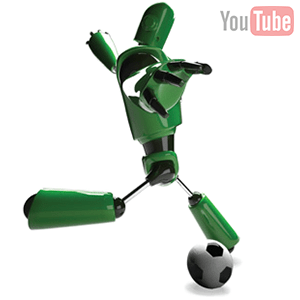
RoboCup is an international robotics competition founded in 1997. The aim is to develop autonomous soccer robots with the intention of promoting research and education in the field of artificial intelligence.
The name RoboCup is a contraction of the competition’s full name, “‘Robot Soccer World Cup,’ but there are many other stages of the competition such as ‘Search and Rescue’ and ‘Robot Dancing.’ The official goal of the project: ‘By mid-21st century, a team of fully autonomous humanoid robot soccer players shall win the soccer game, complying with the official rule of the FIFA, against the winner of the most recent World Cup.’
Posted in Games, Technology |
Leave a Comment »
June 30, 2011


Action origami is origami that can be animated. The original traditional action model is the flapping bird. Typically models where the final assembly involves some special action, for instance blowing up a waterbomb, are also classed as action origami., More rarely models like paper plane and spinners which have no moving parts are included. Some traditional action origami involved cuts but modern models typically are built with no cuts.
Action toys include birds or butterflies with flapping wings, beaks that peck, and frogs that hop, as well as popular traditional models like the fortune teller. Bangers are models that make a nose when flicked down hard. Some models are far more complex than can be classed as toys. They are built to amaze and astonish. For instance Robert J. Lang’s ‘Bassist, Pianist, and Violinist’ is a set of action models where each one plays an instrument when pulled on appropriately.
Posted in Art, Games, Language |
Leave a Comment »
June 30, 2011

Liquid and digits is a type of gestural, interpretive, rave and urban street dance that sometimes involve aspects of pantomime. The term invokes the word ‘liquid’ to describe the fluid-like motion of the dancer’s body and appendages and ‘digits’ to refer to illusions constructed with the dancer’s fingers. Liquid dancing has many moves in common with popping and waving. While some argue that the dance evolved spontaneously in the 19902 rave culture, others contend it originated in the break dancing culture of the 1970s. With the decline of the original rave scene, liquid has become a standing part of a worldwide club culture and the underground street dancing movement.
B-boys and funk stylists generally contend that liquid dancing is a development of waving, a technique in popping. Liquid dancing covers many of the same fundamentals as popping and it is fully possible (and common) for dancers to combine the styles, further blurring the distinction between the two. The defining difference is liquid dancing concentrating on smooth movements while popping is characterized by jerky pops (hits) and contractions. Some liquid practitioners accentuate their dance with light emitting gear such as glowsticks, LED keychain lights, or white gloves under black light. When a dancer specializes in glowsticks, the dance often ceases to resemble liquid and is then referred to as glowsticking.
Posted in Art, Games |
Leave a Comment »



 The Daily Omnivore