March 23, 2012

The Thatcher effect is a phenomenon characterized by difficulty detecting local feature changes in an upside down face, despite identical changes being obvious in an upright face. It is named after British former Prime Minister Margaret Thatcher on whose photograph the effect has been most famously demonstrated by Peter Thompson of the University of York (UK) in 1980. The effect is thought to be due to psychological processes involved in face perception which are tuned especially to upright faces. Faces seem unique despite the fact that they are very similar. It has been hypothesized that we develop processes to differentiate between faces that rely as much on the configuration (the structural relationship between individual features on the face) as the details of individual face features, such as the eyes, nose and mouth. When a face is upside down, the configural processing cannot take place, and so minor differences are more difficult to detect.
This effect is not present in people who have some forms of prosopagnosia, a disorder where face processing is impaired, usually acquired after brain injury or illness. This suggests that their specific brain injury may damage the process that analyses facial structures. Rhesus monkeys also show the Thatcher effect, raising the possibility that some brain mechanisms involved in processing faces may have evolved in a common ancestor 30+ million years ago. The basic principles of the Thatcher Effect in face perception have also been applied to biological motion. The local inversion of individual dots is hard, and in some cases, nearly impossible to recognize when the entire figure is inverted.
Posted in Health, Science |
Leave a Comment »
March 23, 2012

Perceptual adaptation is the means by which the brain accounts for the differences that the subject may witness, particularly alternations in the visual field. For example, if an individual’s visual field is altered forty five degrees left, the brain accounts for the difference allowing the individual to function normally. The brain plays a crucial role in the inner workings of vision. The world that one perceives is processed via the brain. Images sensed through the eyes is relayed to the visual cortex of the brain, and if vision is altered slightly, the brain accounts for the difference and will allow one to perceive the world as ‘normal.’ Over time, the brain processes even acute difference as normal.
Psychologist George M. Stratton was intrigued by the idea of perceptual adaptation. Because the retina receives images upside down, he was intrigued to see what happens when the brain receives an image that is right side up. Stratton conducted experiments in the 1890s in which he wore a reversing telescope for 21½ hours over three days. To his disappointment, his vision was unchanged. After removing the glasses, ‘normal vision was restored instantaneously and without any disturbance in the natural appearance or position of objects.’ Determined to find results, Stratton wore the telescoping glasses for eight days straight. By day four, his vision was upright (not inverted). However on day five, images appeared upright until he concentrated on them; then they became inverted again.
Posted in Health, Science, Technology |
Leave a Comment »
March 17, 2012

‘Boneless lean beef trimmings,’ occasionally referred to as pink slime, are made from meat trimmings passed through a centrifuge then squeezed through a tube the size of a pencil, during which time it is exposed to ammonia gas. The combination of the gas with water in the meat results in a reaction that increases the pH (lowering acidity) and killing any pathogens such as E. coli. At the end of the process, the beef is at least 90 percent lean.
The typical beef production process results in beef trimmings, consisting of fat and meat, that frequently had been cooked down to recover the oils from the trim because it was not profitable to otherwise separate the meat from the trimmings. However, today much of these beef trimmings are sent as USDA-approved cuts of meat to special separation plants, where centrifuges separate the beef from the fat. The production process was pioneered by Eldon Roth, who in the 1980s founded Beef Products Inc.
Posted in Food, Health, Money |
Leave a Comment »
March 14, 2012
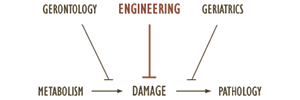

The Methuselah [muh-thoo-zuh-luh] Foundation studies methods of extending lifespan. It is a non-profit volunteer organization, co-founded by Aubrey de Grey and David Gobel, based in Virginia. Activities of the foundation include ‘My Bridge 4 Life,’ a community tool designed to help people deal with the different diseases of aging; the Mprize, a monetary prize given to anyone who efficiently rejuvenates and/or extends the healthy lifespan of mice, and various collaborative projects under the umbrella concept of MLife Sciences. The foundation takes it name from the Biblical character whose name is commonly used to refer to any living organism reaching great age.
In 2003, de Grey and Gobel cofounded The Mprize (known then as the ‘Methuselah Mouse Prize’), a prize designed to accelerate research into effective life extension interventions by awarding monetary prizes to researchers who extend the healthy lifespan of mice to unprecedented lengths. Regarding this, de Grey stated in 2005, ‘if we are to bring about real regenerative therapies that will benefit not just future generations, but those of us who are alive today, we must encourage scientists to work on the problem of aging.’ The prize is currently $4 million. The foundation believes that if reversing of aging can be exhibited in mice, an enormous amount of funding would be made available for similar research in humans, potentially including a massive government project similar to the Human Genome Project, or by private for-profit companies.
Posted in Death, Health, Money |
Leave a Comment »
March 13, 2012

Interpersonal perception is an area of research in social psychology which examines the beliefs that interacting people have about each other. This area differs from social cognition and person perception by being interpersonal rather than intrapersonal, and thus requiring the interaction of at least two actual people. People more accurately perceive extraversion and conscientiousness in strangers than they do the other personality domains. A 5-second interaction tells you as much as 15 minutes on these domains, and video tells you more than audio alone.
Viewing peoples’ personal websites or ‘online profiles’ (as on Facebook or a dating website) can make people as knowledgeable about their conscientiousness and open-mindedness as their long-term friends. The question of whether social-networking sites lead to accurate first-impressions has inspired Sam Gosling of the University of Texas at Austin and David Evans formerly of Classmates.com to launch an ambitious project to measure the accuracy of first-impressions worldwide (YouJustGetMe.com).
Posted in Health, Technology |
Leave a Comment »
March 12, 2012

The mosquito laser is a device invented by astrophysicist Lowell Wood to kill large numbers of mosquitoes to reduce the chance of people being infected with malaria. Although originally introduced in the early 1980s, the idea was not substantially researched until decades later.
In 2007, the Bill & Melinda Gates Foundation requested Intellectual Ventures LLC to find a way to fight and eventually end malaria. Intellectual Ventures resurrected the idea of using lasers to kill mosquitoes and now has a working prototype. The idea has been criticized because most areas where malaria runs rampant do not have reliable electrical power.
read more »
Posted in Health, Technology |
Leave a Comment »
March 12, 2012

A polyglot [pol-ee-glot] is someone with a high degree of proficiency in several languages. A bilingual person can speak two languages fluently, whereas a trilingual three; above that the term multilingual may be used. A hyperpolyglot is one who can speak six or more languages fluently. The term was coined by the linguist Richard Hudson in 2003. One notable hyperpolyglot was Emil Krebs (1867-1930) who mastered 68 languages in speech and writing.
There are several theories as to why some people learn many languages with relative ease, while others struggle learning even one foreign language. One theory is that a spike in testosterone levels in the womb can increase a brain’s asymmetry. Neuroscientist Katrin Amunts studied the brain of Emil Krebs and determined that the area of Krebs’ brain responsible for language—Broca’s area—was organized differently than in monolingual men. However, neurolinguist Loraine Obler has suggested a link with the Geschwind–Galaburda cluster, which shows a high coincidence of left-handedness, auto-immune disorders, learning disorders and talents in art, mathematics and, possibly, languages.
Posted in Health, Language, World |
Leave a Comment »
March 11, 2012

Synthetic Pleasures (1995) is a documentary film by Iara Lee that explores the implications of virtual reality, digital and biotechnology, plastic surgery and mood-altering drugs.
Posted in Drugs, Health, Technology |
Leave a Comment »
March 8, 2012

Obesogens are foreign chemical compounds that disrupt normal lipid metabolism, which can lead to obesity.
Obesogens are functionally defined as chemicals that inappropriately alter lipid homeostasis and fat storage, change metabolic setpoints, disrupt energy balance, or modify the regulation of appetite and satiety to promote fat accumulation and obesity. The term obesogen was coined by Bruce Blumberg of UC, Irvine. The topic of this proposed class of chemical compounds and how to counteract their effects is explored at length in the book ‘The New American Diet.’
Posted in Drugs, Food, Health |
1 Comment »
March 5, 2012
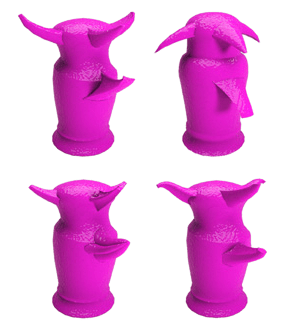
The Greebles refers to a category of novel objects used as stimuli in psychological studies of object and face recognition, created by Scott Yu at Yale University. They were named by the psychologist Robert Abelson. The greebles were created for Isabel Gauthier’s dissertation work at Yale, so as to share constraints with faces: they have a small number of parts in a common configuration.
This makes it difficult to distinguish any individual object on the basis of the presence of a feature, and this is thought to encourage the use of all features and the relationships between them. In other words, greebles, just like faces, can be processed configurally. Yu’s originals (both the symmetrical and asymmetrical sets) can be obtained from Michael Tarr.[1] Greebles appear in over 25 scientific articles.
Posted in Health, Science, Technology |
Leave a Comment »
February 28, 2012

Competitive eating is a sport in which participants compete against each other to consume large quantities of food in a short time period. Contests are typically less than 15 minutes in length, with the person consuming the most food being declared the winner. Competitive eating is most popular in the United States and Japan, where organized professional eating contests often offer $10,000 or more in prize money. Competitive eaters are sometimes known as ‘gurgitators,’ a word used by those close to the sport and an assumed opposite of regurgitation.
The chief criticism of competitive eating is the message the gluttonous sport sends in an age of rising obesity levels among Americans and the example it sets for today’s youth. Others contend that competitive eating is an example of Western gluttony at a time when others around the world are starving. Gastroparesis, also known as stomach paralysis, is also a concern among those who routinely stretch their stomachs beyond capacity. The condition may lead to the stomach’s inability to contract and lose its ability to empty itself.
read more »
Posted in Food, Games, Health |
Leave a Comment »
February 28, 2012
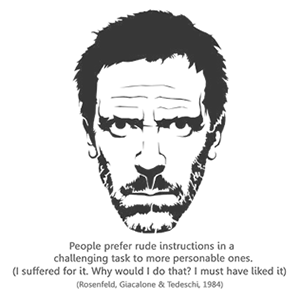
Effort Justification refers to the tendency to attribute greater value to outcomes that one put effort into achieving. It is an idea in social psychology stemming from psychologist Leon Festinger’s theory of ‘Cognitive Dissonance,’ which explains changes in people’s attitudes or beliefs as the result of an attempt to reduce a dissonance (discrepancy) between contradicting ideas or cognitions. In the case of effort justification, there is a dissonance between the amount of effort exerted into achieving a goal or completing a task (high effort – high ‘cost’) and the subjective reward for that effort (lower than was expected for such an effort). By adjusting and increasing one’s attitude or subjective value of the goal, this dissonance is resolved.
This theory is clearly implicated in the effect of rites of passage and hazing rituals on group solidarity and loyalty. The hazing rituals, prevalent in military units, sports teams and Academic fraternities and sororities, often include demanding and/or humiliating tasks which lead (according to dissonance theory) the new member to increase the subjective value of the group. This contributes to his/her loyalty and to the solidarity of the entire group.
Posted in Health, Science |
Leave a Comment »


 The Daily Omnivore