January 28, 2011

A Mickey Finn (or simply Mickey) is a slang term for a drink laced with a drug (especially chloral hydrate) given to someone without their knowledge in order to incapacitate them. Serving someone a Mickey Finn is most commonly referred to as ‘slipping a mickey.’ The practice is most likely named for the bartender of a Chicago establishment, the Lone Star Saloon and Palm Garden Restaurant.
In December 1903, several newspapers document that a Michael ‘Mickey’ Finn managed the Lone Star Saloon and was accused of using knockout drops to incapacitate and rob some of his customers. Moreover, the first known written example (according to the Oxford English Dictionary) of the use of the term Mickey Finn is in 1915, twelve years after his trial, lending credence to this theory of the origination of the phrase.
Posted in Drugs, Health, Language |
Leave a Comment »
January 28, 2011

In sports science theory, supercompensation [soo-per-kom-puhn-sey-shuhn] is the post training period during which the trained function/parameter has a higher performance capacity than it did prior to the training period. First put forth by Hungarian scientist Nikolai Jakowlew in 1976, this theory is a basic principle of athletic training.
read more »
Posted in Games, Health, Science |
Leave a Comment »
January 24, 2011

The term Large Group Awareness Training (LGAT) refers to self-help ‘training’ offered by certain groups sometimes linked with the human potential movement (a ‘new age’ philosophy founded in the 1960s) . The programs may involve several hundred people at a time for hours or days. It is common for the programs to feature an authoritarian demeanor by the trainer, and to cause physical strains on the participants from a long schedule followed by periods of release and encouragement.
By spending approximately half the time making a person feel bad and then suddenly reversing the feeling through effusive praise, the programs cause participants to experience a stress-reaction and an endorphin high. Over many hours and days the participants are physically exhausted, and made more susceptible to the trainer’s message, whether in the participants’ best interests or not. Examples of LGATs include: Lifespring, Erhard Seminars Training, The Forum, Newfield Consulting, Seres Naturales and Landmark Education.
Posted in Health, Money, Philosophy |
Leave a Comment »
January 21, 2011

An Urban chicken or backyard chicken is a chicken kept in a city. The primary reasons for keeping chickens are the food and income made by selling the eggs and meat. Other reasons include use in ceremonies and as gifts or even as pets. Keeping chickens in an urban environment is associated with the ‘Urban Agriculture Movement,’ which is the growing practice of cultivating, processing and distributing food in cities.
read more »
Posted in Food, Health, World |
Leave a Comment »
January 20, 2011
The French Paradox is the observation that French people suffer a relatively low incidence of coronary heart disease, despite having a diet relatively rich in saturated fats. The term French Paradox was coined by Dr. Serge Renaud, a scientist from Bordeaux University in France. It has been suggested that France’s high red wine consumption is a primary factor in the trend.
This hypothesis was expounded in a 60 Minutes broadcast in 1991. It is believed that one of the components of red wine potentially related to this effect is resveratrol. Statistics collected by the WHO from 1990–2000 show that the incidence of heart disease in France may have been underestimated, and may in fact be similar to that of neighboring countries.
Posted in Food, Health, World |
Leave a Comment »
January 20, 2011

Resveratrol is a chemical produced naturally by several plants when under attack by pathogens such as bacteria or fungi. It is found in the skin of red grapes and is a constituent of red wine, but apparently not in sufficient amounts to explain the French Paradox. Resveratrol is currently a topic of numerous animal and human studies into its effects.
Posted in Drugs, Food, Health |
Leave a Comment »
January 20, 2011
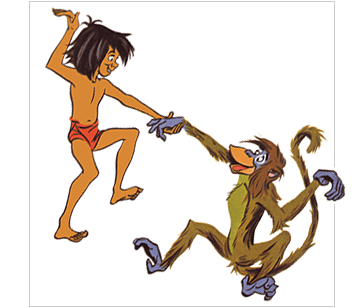
Mowgli syndrome is a term used by Wendy Doniger O’Flaherty in her 1995 book ‘Other Peoples’ Myths: The Cave of Echoes’ to describe mythological figures who succeed in bridging the animal and human worlds to become one with nature, a human animal, only to become trapped between the two worlds, not completely animal yet not entirely human.
It is also a rarely-used descriptive term for so-called feral children. The term originates from the character Mowgli, a fictional feral child from Rudyard Kipling’s ‘The Jungle Book.’
Posted in Art, Health, Language |
Leave a Comment »
January 19, 2011

Leprosy colony money was special money which circulated only in leprosy sanatoriums due to the fear that the leprosy bacteria would infect other people. Leprosy, however, is in fact not easily transmitted by casual contact, and such transmission as there is only happens through long term, constant and intimate contact with leprosy sufferers and not contact with everyday objects used by sufferers. The system of special colony money was used between 1901 and around 1955.
Posted in Health, Money |
Leave a Comment »
January 13, 2011

A toy library is a library from which toys, puzzles, and games are lent out, functioning like a lending library. Toy libraries offer play sessions for families and a wide range of toys appropriate for children at different stages in their development.
Toy libraries provide children with new toys every week or two, saving parents money and keeping children from getting bored. Popular in the French-speaking world, toy libraries are called ludothèques. A lekotek is a toy and play library with a specific focus on children with special needs.
Posted in Games, Health, Money |
Leave a Comment »
January 13, 2011

An itch is an unpleasant sensation that causes the desire or reflex to scratch. Itching has resisted many attempts to classify it as any one type of sensory experience. It has many similarities to pain and both are unpleasant, but their response patterns are different. Pain creates a withdrawal reflex while itch leads to a scratch reflex. The feeling of itchiness can be caused by a movement of hair or the release of a chemical (histamine) from cells under the skin. Itchiness is regarded as protective, as it helps creatures remove parasites that land on their skin.
Nerve fibers for itch and pain both originate in the skin; however, information for them is conveyed in two distinct systems on the same nerve bundle and tract. Many forms of pain inhibit itch, such as noxious heat, physical rubbing/scratching, noxious chemicals, and electric shock. A variety of over-the-counter and prescription anti-itch drugs are available. Non-chemical remedies include cooling, warming, soft stimulation. Sometimes scratching relieves isolated itches, hence the existence of devices such as the back scratcher. Often, however, scratching can intensify itching and even cause further damage to the skin, dubbed the ‘itch-scratch-itch cycle.’
Posted in Health, Science |
Leave a Comment »
January 12, 2011

A personality test aims to describe aspects of a person’s character that remain stable throughout their lifetime (patterns of behavior, thoughts, and feelings). The 20th century heralded a new interest in defining and identifying separate personality types, in close correlation with the emergence of the field of psychology. As such, several distinct tests emerged; some attempt to identify specific characteristics, while others attempt to identify personality as a whole. The Myers-Briggs Type Indicator describes categories of functioning where individuals differ, such as introverted or extroverted.
The Strength Deployment Inventory assesses motivation, or purpose, of behavior, rather than the behavior itself. The 5-factor test is popular a tool for career planning, and has been shown to predict job satisfaction and performance. However, it is easy for personality test participants to become complacent about their own personal uniqueness and instead become dependent on the description associated with them. This can be potentially dangerous with persons who are already suffering from a form of identity disorder or may be a catalyst to instigate particular behaviors in a person who was previously believed to be of sound mental health.
Posted in Health, Philosophy, Science |
Leave a Comment »
January 11, 2011

Coconut water is the clear liquid inside young coconuts. As the fruit matures, the coconut water gradually is replaced by the coconut meat and air. A very young coconut has very little meat, and the meat is very tender, almost a gel. Coconut water has long been a popular drink in the tropics, especially in Southeast Asia, the Pacific Islands, such as Hawaii, and the Caribbean, where it is available fresh, canned or bottled. It is naturally fat-free and low calorie.
read more »
Posted in Food, Health, World |
Leave a Comment »




 The Daily Omnivore