July 22, 2014
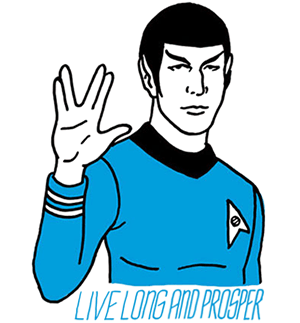
The Vulcan salute is a hand gesture consisting of a raised hand, palm forward with the fingers parted between the middle and ring finger, and the thumb extended. The salute was devised and popularized by Leonard Nimoy, who portrayed the half-Vulcan character Mr. Spock on the original ‘Star Trek’ television series in the late 1960s.
The gesture famously has a reputation for being difficult for some people to make without practice or the covert pre-positioning of the fingers, and actors on the original show reportedly had to position their fingers off-screen with the other hand before raising their hand into frame. This reputation may stem from variations in individuals’ manual dexterity. This reputation is parodied somewhat in the motion picture ‘Star Trek: First Contact’ when Zefram Cochrane, upon meeting a Vulcan for the first time in human history, is unable to return the Vulcan salute gesture and instead shakes the Vulcan’s hand.
read more »
Posted in Art, Humor |
Leave a Comment »
July 7, 2014


What happens on tour stays on tour is a notorious phrase or saying agreed to by men who get together and travel either interstate or overseas for sporting tours. In essence, the phrase means that all exploits during the tour must be kept strictly confidential, never to be discussed with anyone outside the group. In more recent years, the phrase has also been applied to men attending music gigs, going on business trips, and fishing holidays. The expression is also used in the US military when speaking of temporary duty assignment (‘what happens TDY stays TDY’)
The phrase has been described by Samantha Brett, a writer for the ‘Age,’ as an ‘unspoken male pact that for centuries can never be broken.’ In essence, if you were there you may discuss the events, but if you were not there, you get nothing. In contrast, ‘Rugby for Dummies’ describes the phrase as, particularly funny, embarrassing or debauched moments are for consumption only by the tourists themselves and not casual listeners back home.
read more »
Posted in Games, Humor, Sex |
Leave a Comment »
June 21, 2014
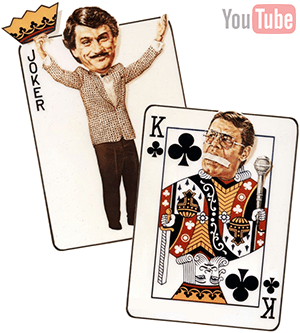
The King of Comedy is a 1983 American black comedy film starring Robert De Niro and Jerry Lewis, and directed by Martin Scorsese. The subject of the movie is celebrity worship and the American media culture.
DeNiro plays Rupert Pupkin, a stage-door autograph hound and aspiring stand-up comedian whose ambition far exceeds his talent. After meeting Jerry Langford (Lewis), a successful comedian and talk show host, Rupert believes his ‘big break’ has finally come. He attempts to get a place on the show but is continually rebuffed by Langford’s staff and, finally, by Langford himself.
read more »
Posted in Humor |
Leave a Comment »
June 12, 2014
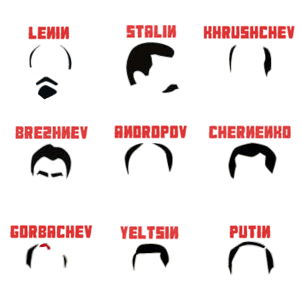
Bald–hairy is a common Russian joke that there is, apparently, a strict rule applying to the country’s politics for the latest two centuries: a bald (or balding) state leader is succeeded by a non-bald (‘hairy’) one, and vice versa. Whilst this pattern is most likely a coincidence, it has held true since 1825 (with the exception of Georgy Malenkov, who was Premier of the Soviet Union from 1953 to 1955), starting from Nicholas I. However, some videos of Joseph Stalin at the Potsdam Conference showed that he was balding.
Nicholas I’s son Alexander II formed the first ‘bald–hairy’ pair of the sequence with his father. The current pair of Russian rulers are the balding Vladimir Putin and the hairy Dmitry Medvedev. Putin was the president from 2000 until 2008, Medvedev held the post until 2012, and Putin became president again in 2012.
read more »
Posted in Humor, Politics, World |
1 Comment »
June 2, 2014

The genre of Menippean [meh-nip-pee-uhn] satire is a form of satire (ridicule of foolishness and moral failings), usually in prose, which has a length and structure similar to a novel and is characterized by attacking mental attitudes instead of specific individuals. Other features found in Menippean satire are different forms of parody and mythological burlesque (humorous caricatures of the gods), a critique of the myths inherited from traditional culture, a rhapsodic nature, a fragmented narrative, the combination of many different targets, and the rapid moving between styles and points of view.
The term is used by classical grammarians and by philologists mostly to refer to satires in prose. Typical mental attitudes attacked and ridiculed by Menippean satires are ‘pedants, bigots, cranks, parvenus, virtuosi, enthusiasts, rapacious and incompetent professional men of all kinds,’ which are treated as diseases of the intellect. The term Menippean satire distinguishes it from the earlier satire pioneered by Aristophanes, which was based on personal attacks.
read more »
Posted in Art, Humor, Language |
1 Comment »
May 29, 2014

A Beer mile is a drinking race combining running and speed drinking. Typically, the event takes place on a standard 400 meter or 1/4 mile running track. Each lap must be preceded by the drinking of a standard amount of beer, typically a 12-ounce can. Rules vary by region. One custom requires runners to prove they have finished their beer by inverting it over their heads before commencing a lap.
The standard rules published by BeerMile.com are based on the most common rules used in North America. They specify that any competitor who vomits prior to finishing the race must complete a penalty lap immediately following the fourth lap. The penalty lap does not require the drinking of an additional beer. The standard rules also dictate that the beer be consumed directly from the pour of the can (i.e. tampering with the cans, such as ‘shotgunning,’ is not allowed). The beer used for the competition must also be full-strength, or at least 5.0% ABV. Hard ciders and other alcoholic beverages are generally not allowed.
read more »
Posted in Drugs, Games, Humor |
Leave a Comment »
May 28, 2014

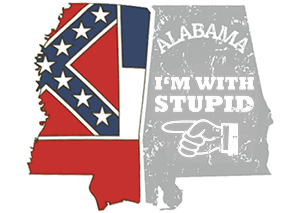
‘Thank God for Mississippi’ is a common adage in the US, particularly in the south, that is generally used when discussing rankings of states (e.g. educational achievement, overall health, poverty rate, quality of life). Since the state of Mississippi generally ranks at the bottom of such lists, residents of other states ranking near the bottom frequently proclaim, ‘Thank God for Mississippi,’ for sparing them from the shame of finishing in last place.
The saying has been attributed since before the induction of Alaska and Hawaii as states in 1959, and is especially common in Alabama, which shares significant cultural and historical ties with its neighbor and former Mississippi Territory co-constituent. Its use is also noted in nearby Arkansas and other frequently low-ranking states such as West Virginia and Texas.
Posted in Humor, Politics |
Leave a Comment »
April 24, 2014

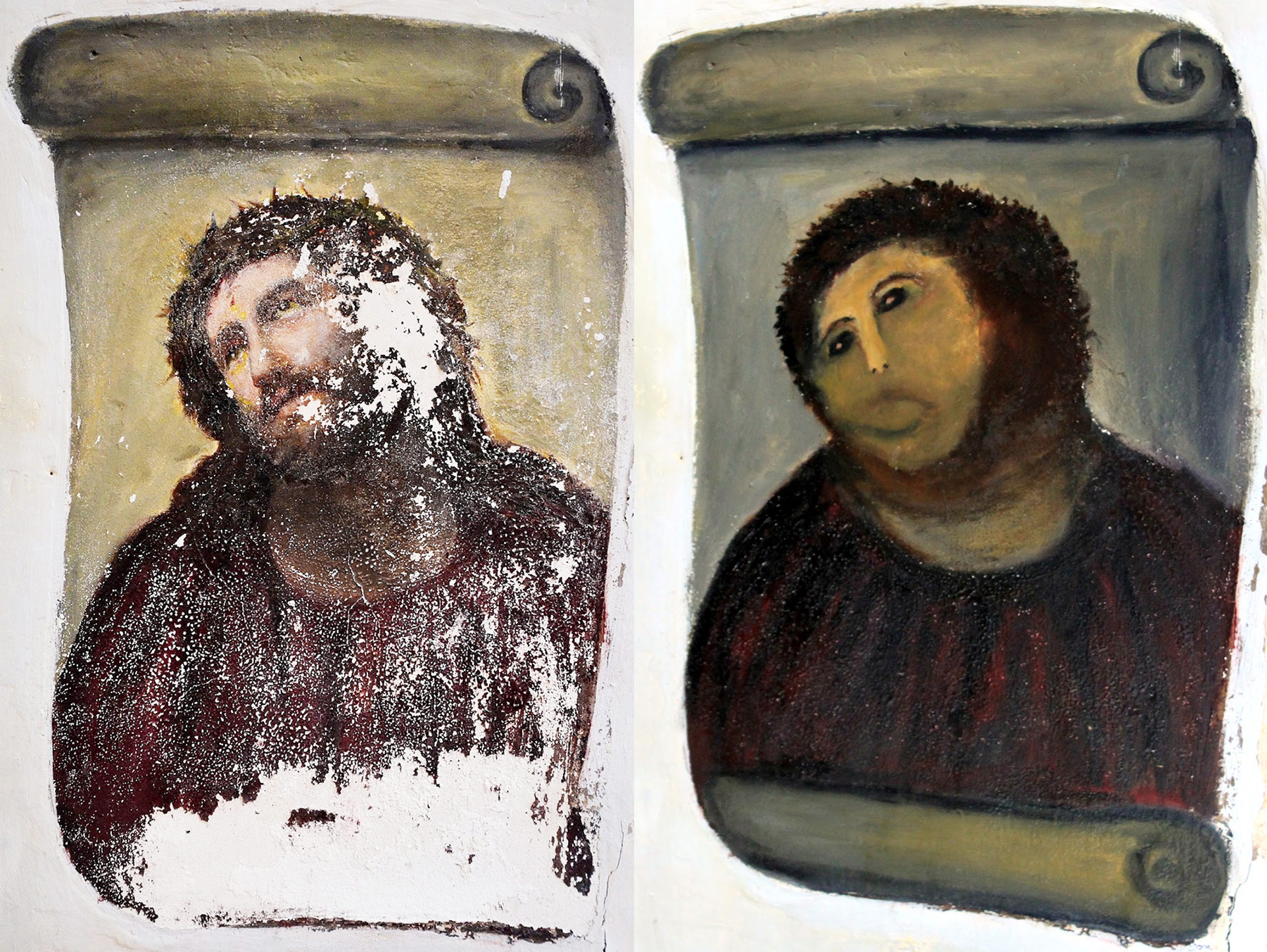
The ‘Ecce Homo‘ [ech-ey hoh-moh] (‘Behold the Man’) in the Sanctuary of Mercy church of Borja, Zaragoza is a fresco of about 1930 by the Spanish painter Elías García Martínez depicting Jesus crowned with thorns. Both the subject and style are typical of traditional Catholic art.
Press accounts agree that the original painting was of little artistic importance, and its fame derives from a botched attempt at restoration.
read more »
Posted in Art, Humor, Philosophy |
Leave a Comment »
April 22, 2014
Religious satire is a form of satire (humor that points out the shortcomings of institutions of power) targeted at religious beliefs. From the earliest times, at least since the plays of Aristophanes in the fourth century BCE, religion has been one of the three primary topics of literary satire, along with politics and sex.
Satire which targets the clergy is a type of political satire, while religious satire is that which targets religious beliefs. It can be the result of agnosticism or atheism, but it can also have its roots in belief itself. According to religious theorist Robert Kantra, in religious satire, man attempts to violate the divine—it is an effort to play God, in whole or in part—whether under the banner of religion or of humanity. Religious satire surfaced during the Renaissance, with works by Chaucer, Erasmus, and Durer.
read more »
Posted in Art, Humor, Philosophy |
Leave a Comment »
April 3, 2014

Normcore is an emerging cultural trend focusing on ‘coolness that opts into sameness.’ It is in response to hipster subculture. Jeremy Lewis, the founder of fashion website ‘Garmento’ calls normcore ‘one facet of a growing anti-fashion sentiment.’
K-hole, a creative trend forecasting collective based in New York City is cited as coining the phrase. Normcore is an anti-trendy trend.
Posted in Art, Humor |
Leave a Comment »
April 2, 2014
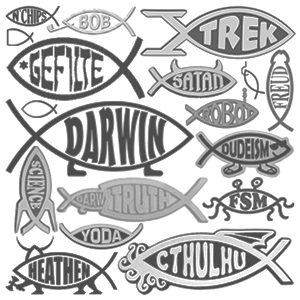
Ichthys [ik-thees], from the Koine Greek word for fish, is a symbol consisting of two intersecting arcs, the ends of the right side extending beyond the meeting point so as to resemble the profile of a fish, used by early Christians as a secret Christian symbol and now known colloquially as the ‘sign of the fish’ or the ‘Jesus fish.’
It is sometimes a subject of satire, especially when adorning the bumpers or trunks of automobiles. The most notable is the ‘Darwin Fish,’ an ichthys symbol with ‘evolved’ legs and feet attached. Rhetorical scholar Thomas Lessl conducted a survey of users of the Darwin fish emblem. Based on their responses, he interprets the symbol as scientific ‘blackface,’ a parody that is one part mockery and one part imitation. While users frequently explain the symbol as a rebuke against Creationism, Lessl suggests that the emblem represents a metaphor for cultural progress.
read more »
Posted in Humor, Philosophy |
1 Comment »
March 31, 2014

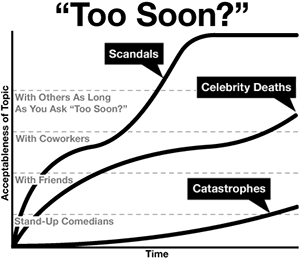
9/11 humor is black comedy or off-color humor that aims to make light of the September 11, 2001 terrorist attacks. A number of scholars have studied the ways in which humor has been used to deal with the trauma of the event. Researcher Bill Ellis found jokes about the attacks from Americans the day afterwards, and sociologist Giselinde Kuipers found jokes on Dutch websites a day later. Kuipers had collected around 850 online jokes about 9/11, Osama Bin Laden, and the Afghanistan war by 2005.
An early public attempt at 9/11 humor was made by Gilbert Gottfried just a few weeks after the attacks. During a comedy roast at the Friars Club his 9/11 gags ellicited angry shouts of ‘too soon.’ Gottfried improvised and performed ‘The Aristocrats’ routine (a famously vulgar joke), which got great applause from the crowd.
read more »
Posted in Death, Humor, War |
Leave a Comment »



 The Daily Omnivore