March 2, 2013

‘Fresh Off the Boat: A Memoir‘ is a 2013 autobiography by American food personality Eddie Huang. The book relates Huang’s early life and rise in the food celebrity scene in New York, and his relationship with his Asian background.
Huang, educated as a lawyer, became prominent in New York’s restaurant scene after the success of his BaoHaus, a purveyor of Chinese Cha siu bao, or pork buns. He developed a reputation as a food personality after hosting food-themed programs on the Food Network and Vice TV.
read more »
Posted in Food, Humor, Language |
1 Comment »
February 27, 2013
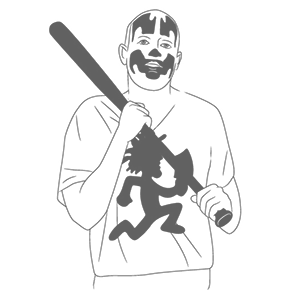
The Gathering of the Juggalos is an annual festival put on by Psychopathic Records, featuring performances by the entire label roster as well as numerous well-known musical groups and underground artists. It was founded by Robert Bruce, Insane Clown Posse (Joseph Bruce and Joseph Utsler), and their label in 2000.
Described by Joseph Bruce as a ‘Juggalo Woodstock’ (‘Juggalo’ being a nickname for fans of the Insane Clown Posse, a Detroit rap group), the Gathering of the Juggalos spans five days and includes concerts, wrestling, games, contests, autograph sessions, karaoke, and seminars with artists. Over its first eleven events, the festival has drawn an attendance of about 107,500 fans.
read more »
Posted in Art, Games, Humor |
1 Comment »
February 26, 2013

The Peel P50 is a three-wheeled microcar originally manufactured from 1962 to 1965 by the Peel Engineering Company on the Isle of Man in the Irish Sea. It currently holds the record for the smallest automobile to go into production.
It has no reverse gear, but a handle at the rear allows the very lightweight car to be physically maneuvered when required. Designed as a city car, it was advertised as capable of seating ‘one adult and a shopping bag.’ The vehicle’s only door was on its left side, and equipment included a single windscreen wiper and only one headlight. Standard colors were Daytona White, Dragon Red, and Dark Blue. The 1963 model retailed for £199 when new. 50 of them were produced, and only 27 of them are known to be still in existence.
read more »
Posted in Humor, Technology |
Leave a Comment »
February 25, 2013
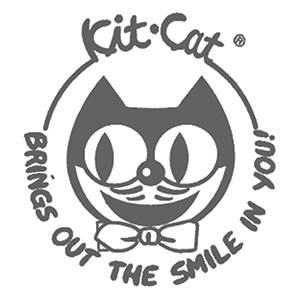
The Kit-Cat Klock is an art deco novelty style wall clock in the shape of a grinning black cat with cartoon eyes that roll horizontally in sync with a pendulum tail that wags beneath. The clock is traditionally colored black, but models in other colors/styles are available. It first appeared during the 1930s. The clock is an iconic symbol of kitchens in pop culture. Having changed very little in the intervening years, the first clock was made in 1932 by the California Clock Company in Portland, Oregon.
The first generation of clocks, manufactured in the 1930s, 1940s and 1950s, have two paws, while newer models have four paws and a bow tie. The words ‘Kit-Cat’ were added to the clock face in the 1980s. The original clocks were plug-in, but most models sold since the late 1980s use batteries. The manufacturer estimates that the clock has sold on average at the rate of one every three minutes for the last 50 years.
Posted in Art, Humor |
Leave a Comment »
February 25, 2013

Felix the Cat is a cartoon character created in the silent film era. His black body, white eyes, and giant grin, coupled with the surrealism of the situations in which his cartoons place him, combine to make Felix one of the most recognized cartoon characters in film history. Felix was the first character from animation to attain a level of popularity sufficient to draw movie audiences. Felix’s origins remain disputed. Australian cartoonist/film entrepreneur Pat Sullivan, owner of the Felix character, claimed during his lifetime to be its creator.
However, American animator Otto Messmer, Sullivan’s lead animator, has also been credited as such. What is certain is that Felix emerged from Sullivan’s studio in NYC, and cartoons featuring the character enjoyed success and popularity in 1920s popular culture. Aside from the animated shorts, Felix starred in a comic strip (drawn by Messmer) beginning in 1923, and his image soon adorned merchandise such as ceramics, toys and postcards. Several manufacturers made stuffed Felix toys. Jazz bands such as Paul Whiteman’s played songs about him (1923’s ‘Felix Kept On Walking’ and others).
read more »
Posted in Art, Humor, Money |
Leave a Comment »
February 19, 2013

Jejemon is a pop culture phenomenon in the Philippines. According to ‘Urban Dictionary,’ a Jejemon is a person ‘who has managed to subvert the English language to the point of incomprehensibility.’ ‘The Philippine Daily Inquirer’ describes Jejemons as a ‘new breed of hipster who have developed not only their own language and written text but also their own subculture and fashion.’ Short-hand typing was first popularized by text messaging (limited to 160 characters per text). As a result, an ‘SMS language’ developed in which words were shortened in order to fit the 160-character limit.
The Jejemons are said to be the new jologs, a term used for Filipinos of the lower income class. The sociolect of the Jejemons, called Jejenese, is derived from English, Filipino and their code-switched variant, Taglish. It has its own, albeit unofficial, orthography, known as Jejebet, which uses the Filipino variant of the Roman alphabet, Arabic numerals and other special characters. Words are created by rearranging letters in a word, alternating capitalization, with an over-usage of the letters H, X or Z, and silent letters. It has similarities with Leetspeak, primarily the alphanumeric nature of its writing.
Posted in Humor, Language, World |
Leave a Comment »
February 19, 2013


Jediism is a religion based on the philosophical and spiritual ideas of the Jedi as depicted in the science fiction film ‘Star Wars.’ It has no founder or central structure, but was the most selected ‘alternative faith’ in a census of England and Wales. Jediism became accepted as a religion following the Jedi census phenomenon in 2001 and the preceding email campaign to put ‘Jedi’ in answer to the census religion classification question.
The phenomenon attracted the attention of sociologist of religion Adam Possamai who analyzed it in the framework of what he dubs ‘hyper-real religion’ (religions inspired by popular culture). Jediism believers align themselves with the moral code demonstrated by the fictional Jedi. According to the Temple of the Jedi Order website, Jediism is a syncretistic religion, incorporating beliefs from various religious philosophies including Christianity, Sufism (Islam), Stoicism, Buddhism, Taoism, and Shintoism.
read more »
Posted in Humor, Philosophy |
Leave a Comment »
February 18, 2013

‘Harlem Shake‘ is a song recorded by American DJ and producer Baauer. It was released as a free digital download by Mad Decent imprint label Jeffree’s in 2012. The song incorporates samples of growling-lion sounds and Plastic Little’s 2001 song ‘Miller Time,’ specifically its line ‘then do the Harlem shake.’
In 2013, a user-submitted video set to ‘Harlem Shake’ became a viral hit on YouTube. The song features an undulating synth, harsh snares, and a mechanical bassline. It is categorized by Resident Advisor’s Andrew Ryce as a hip hop and bass song, while David Wagner of ‘The Atlantic’ describes its music as trap, a sub-genre with stylistic origins in EDM and Southern hip hop.
read more »
Posted in Art, Games, Humor |
Leave a Comment »
February 15, 2013

A hi-top fade is a style of haircut where hair on the sides is cut off or kept very short and hair on the top of the head is very long (in contrast, a low fade is when hair on the top is kept shorter). The hi-top has been a trend symbolizing the Golden Era of hip hop and urban contemporary music during the late 1980s and the early 1990s. The hi-top fade was common among young African Americans between 1986 to 1993 and to a lesser extent in the mid-1990s (1994-1996).
The style fell completely out of fashion by 1997, though it has slowly made a return in the public eye in the late 2000s. In the hip hop community throughout the mid-1980s, young African-Americans leaned towards Jheri curls or simple haircuts without tapers or fades of any sort.
read more »
Posted in Art, Humor |
Leave a Comment »
February 13, 2013

The Heart Attack Grill is an American hamburger restaurant in Las Vegas (formerly located in Chandler, Arizona). It has courted controversy by serving high-calorie menu items with deliberately provocative names coupled with waitresses in sexually provocative clothing. The establishment is a hospital theme restaurant: waitresses (‘nurses’) take orders (‘prescriptions’) from the customers (‘patients’).
A tag is wrapped on the patient’s wrist showing which foods they order and a ‘doctor’ examines the ‘patients’ with a stethoscope. The menu includes ‘Single,’ ‘Double,’ ‘Triple,’ and ‘Quadruple Bypass’ hamburgers, ranging from a half pound to two pounds of beef (up to about 8,000 calories), all-you-can-eat ‘Flatliner Fries’ (cooked in pure lard), beer and tequila (shots are served in four ounce novelty syringes.), ‘butter-fat Shakes,’ and soft drinks such as Jolt and Mexican-bottled Coca-Cola made with real sugar. Customers over 350 lb in weight eat for free if they weigh in with a doctor or nurse before each burger. Beverages and to-go orders are excluded and sharing food is also not allowed for the free food deal.
Posted in Food, Health, Humor |
1 Comment »
February 8, 2013
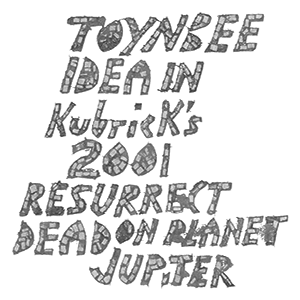
The Toynbee tiles are messages of unknown origin found embedded in asphalt of streets in about two dozen major cities in the United States and four South American capitals. Since the 1980s, several hundred tiles have been discovered. They are generally about the size of an American license plate (roughly 30 cm by 15 cm), but sometimes considerably larger. They contain some variation on the following inscription: ‘TOYNBEE IDEA, IN MOViE `2001, RESURRECT DEAD, ON PLANET JUPITER.’
Some of the more elaborate tiles also feature cryptic political statements or exhort readers to create and install similar tiles of their own. The material used for making the tiles was long a mystery, but evidence has emerged that they may be primarily made of layers of linoleum and asphalt crack-filling compound. Toynbee-tile enthusiasts believe that a native Philadelphian created the tiles because of the large number that appear in the city, their apparent age, and the variety of carving styles.
read more »
Posted in Humor |
Leave a Comment »
February 7, 2013
Sturgeon’s revelation, commonly referred to as Sturgeon’s law, is an adage commonly cited as ‘ninety percent of everything is crap.’ It is derived from quotations by Theodore Sturgeon, an American science fiction author.
The phrase was derived from Sturgeon’s observation that while science fiction was often derided for its low quality by critics, it could be noted that the majority of examples of works in other fields could equally be seen to be of low quality and that science fiction was thus no different in that regard to other art.
read more »
Posted in Humor, Language |
Leave a Comment »


 The Daily Omnivore