March 2, 2012


Corinthian leather is a term coined by the advertising agency Bozell to describe the upholstery used in certain Chrysler luxury vehicles beginning in 1974. Although the term suggests that the product has a relationship to or origination from Corinth, Greece, there is no relationship; the term is a marketing concept. Some sources say it was a blend of leather and vinyl (seat surfaces were leather and seat sides were vinyl), while other sources say it was simply a trade name for American produced leather, much of which was produced at a plant outside Newark, New Jersey.
The term was first used during the marketing campaign of the 1974 Chrysler Imperial, but the it is usually associated with the marketing campaign for the 1975 Chrysler Cordoba and that campaign’s celebrity spokesperson, Ricardo Montalban, who described the car’s seats as being covered with ‘soft Corinthian leather.’
Posted in Humor, Money, World |
Leave a Comment »
March 1, 2012
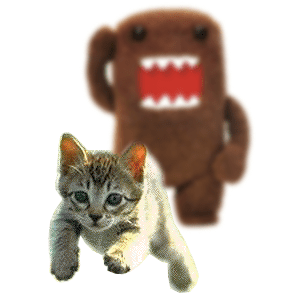
‘Every time you masturbate… God kills a kitten‘ is the caption of an image created by a member of the website Fark.com in 2002. The image features a kitten (subsequently referred to as ‘Cliché Kitty’) being chased by two Domos (a Japanese TV mascot), and has the tagline ‘Please, think of the kittens.’ This phony PSA is quite out of character with Domo’s image in Japan.
The phrase originally appeared as the headline ‘Fact: Every Time You Masturbate, God Kills a Kitten. How Many More Have to Die?’ with a kitten photo on the cover of ‘The Gonzo,’ a satirical publication produced by students at Georgetown University, in 1996.
Posted in Humor, Sex |
Leave a Comment »
March 1, 2012

The Masturbate-a-thon is an event in which participants masturbate in order to raise money for charity and increase the public awareness and dispel the shame and taboos that exist about this form of sexual activity. The event awards several honors for those who raise the most money as well as for multiple orgasms and endurance. In 1999, the Masturbate-a-Thon was originated by the collective Open Enterprises, which operates Good Vibrations a sex shop in San Francisco. The slogan ‘Come for a Cause’ was coined by Rachel Venning, the founder of the sex toy shop Babeland, formerly Toy in Babeland, which has branches in Seattle, in Brooklyn, and Manhattan.
In that year, the first live event was held at San Francisco’s Campus Theater, by the Center for Sex and Culture (CSC)’s Carol Queen and her partner, Robert Lawrence. CSC is an education-based non-profit providing professional-level sex education. The annual events are used as a public-health-education device to increase awareness of self-pleasure as a strategy for safer and healthier sex and to de-stigmatize self-love. The winner of ‘Longest Time Spent Masturbating/Male’ is Mr. Masanobu Sato, who in 2009 masturbated for 9 hours and 58 minutes. The winner of ‘Most Orgasms/Male’ was set by Big Rob in 2010—at 83 climaxes, a world record. The women’s world record is 222 orgasms.
Posted in Humor, Money, Sex |
Leave a Comment »
March 1, 2012

The Invisible Pink Unicorn (IPU) is the goddess of a parody religion used to satirize theistic beliefs, taking the form of a unicorn that is paradoxically both invisible and pink. She is a rhetorical illustration used by atheists and other religious skeptics as a contemporary version of Russell’s teapot, sometimes mentioned in conjunction with the Flying Spaghetti Monster.
The IPU is used to argue that supernatural beliefs are arbitrary by, for example, replacing the word God in any theistic statement with Invisible Pink Unicorn. The mutually exclusive attributes of pinkness and invisibility, coupled with the inability to disprove the IPU’s existence, satirize properties that some theists attribute to a theistic deity.
read more »
Posted in Humor, Philosophy |
Leave a Comment »
March 1, 2012

In academic publishing, the least publishable unit (LPU), colloquially ‘publon’ – the smallest measurable quantum of publication, is the minimum amount of information that can generate a publication in a peer-reviewed journal. The term is often used as a joking, ironic, or sometimes derogatory reference to the strategy of pursuing the greatest quantity of publications at the expense of their quality. Publication of the results of research is an essential part of science. The number of publications is sometimes used to assess the work of a scientist and as a basis for distributing research funds. In order to achieve a high rank in such an assessment, there is a trend to split up research results into smaller parts that are published separately, thus increasing the number of publications.
‘Salami publication’ or ‘salami slicing’ is a variant of the smallest-publishable-unit strategy. In salami slicing, data gathered by one research project is separately reported (wholly or in part) in multiple end publications. Salami slicing, apparently named by analogy with the thin slices made from larger pieces of salami meat, is generally considered questionable when not explicitly labeled, as it may lead to the same data being counted multiple times as apparently independent results in aggregate studies.
Posted in Education, Humor, Language, Science |
Leave a Comment »
February 29, 2012

Wim Delvoye (b. 1965) is a Belgian neo-conceptual artist known for his inventive and often shocking projects. Much of his work is focused on the body. He repeatedly links the attractive with the repulsive, creating work that holds within it inherent contradictions. He has an eclectic oeuvre, exposing his interest in a range of themes, from bodily function, to the Catholic Church, and numerous subjects in between.
Though Delvoye started tattooing pig skins taken from slaughterhouses in the United States in 1992, he began to tattoo live pigs in 1997. He ultimately moved the operation to an Art Farm in China in 2004 where restrictions regarding animal welfare were less strict. The pigs have been inked with a diverse array of designs, including the trivial, such as skulls and crosses, to Louis Vuitton designs, to designs dictated by the pig’s anatomy. Delvoye described the process of tattooing a live pig, ‘we sedate it, shave it and apply Vaseline to its skin.’ As another manifestation of contradiction in Delvoye’s art, he owns a pig farm though he is a practicing vegetarian.
Posted in Art, Humor |
Leave a Comment »
February 27, 2012

Cycle polo is a team sport invented in Ireland in 1891 by retired cyclist Richard J. Mecredy. It is similar to traditional polo, except that bicycles are used instead of horses. In recent years, an alternate form of the game known as ‘Hardcourt Bike Polo’ or ‘Urban Bike Polo’ has grown in popularity. In this variation, teams composed of three to five players compete on tennis courts, street hockey rinks, or whatever other surfaces are available.
The rules vary slightly by city. In the case of a ‘foot down’ or ‘dab’ (touching the ground with one’s foot) the player must ‘tap out’ by riding to mid-court and hitting a designated area with their mallet. There is usually a tap-out located on either side of the court. In order to score, the offensive player must hit the ball across the goal line using the narrow end of the mallet – this is called a ‘shot’ or ‘hit’ – hitting the ball across the goal line with the wide end of the mallet is called a ‘shuffle.’
Posted in Games, Humor |
Leave a Comment »
February 27, 2012
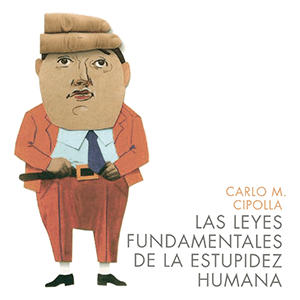
Stupidity is a lack of intelligence, understanding, reason, wit, or sense. It may be innate, assumed, or reactive – ‘being ‘stupid with grief’ as a defence against trauma,’ a state marked with ‘grief and despair…making even simple daily tasks a hardship.’ The root word ‘stupid,’ which can serve as an adjective or noun, comes from the Latin verb ‘stupere,’ for ‘being numb’ or ‘astonished,’ and is related to ‘stupor’ (in Roman culture ”the stupidus of the mimes’ was a sort of professional buffoon – the ‘fall-man,’ the eternal he-who-gets-kicked.’ The word entered the English language in the 16th century; since then, stupidity has become a pejorative appellation for human misdeeds, whether purposeful or accidental, due to absence of mental capacity.
The modern English word ‘stupid’ has a broad range of application, from being slow of mind (indicating a lack of intelligence, care or reason), dullness of feeling or sensation (torpidity, senseless, insensitivity), or lacking interest or point (vexing, exasperating). It can either infer a congenital lack of capacity for reasoning, or a temporary state of daze or slow-mindedness.
read more »
Posted in Education, Health, Humor |
Leave a Comment »
February 23, 2012

Jewish humor is self-deprecating, crude, and often anecdotal humor originating in Eastern Europe, which took root in the United States over the last hundred years. Beginning with vaudeville, and continuing through radio, stand-up comedy, film, and television, a disproportionately high percentage of American and Russian comedians have been Jewish.
Jewish humor is rooted in several traditions. The first is the intellectual and legal methods of the Talmud, which uses elaborate arguments and situations often seen as so absurd as to be humorous in order to tease out the meaning of religious law. There is an egalitarian tradition among the Jewish communities of Eastern Europe in which the powerful were often mocked subtly, rather than attacked overtly—as Saul Bellow once put it, ‘oppressed people tend to be witty.’ Jesters known as badchens used to poke fun at prominent members of the community during weddings, creating a good-natured tradition of humor as a levelling device.
read more »
Posted in Humor, Philosophy, Politics |
1 Comment »
February 22, 2012

Gallows humor is a type of humor that still manages to be funny in the face of, and in response to, a hopeless situation. It arises from stressful, traumatic, or life-threatening situations, often in circumstances such that death is perceived as impending and unavoidable. The genre developed in Central Europe, and then moved to the US as part of Jewish humor. Gallows humor is offered by the person affected by the dramatic situation, an aspect that is missing in the derivative called black comedy. It is rendered with the German expression ‘Galgenhumor,’ and is comparable to the French ‘rire jaune’ (‘sickly smile’), and the Belgian Dutch ‘groen lachen’ (‘laugh desperately’). Italian comedian Daniele Luttazzi discussed gallows humor focusing on the particular type of laughter that it arouses, and said that grotesque satire, as opposed to ironic satire, is the one that most often arouses this kind of laughter.
In the Weimar era Kabaretts, this genre was particularly common; Karl Valentin and Karl Kraus were the major masters of it. Sigmund Freud in his 1927 essay ‘Humour (Der Humor)’ puts forth the following theory of the gallows humor: ‘The ego refuses to be distressed by the provocations of reality, to let itself be compelled to suffer. It insists that it cannot be affected by the traumas of the external world; it shows, in fact, that such traumas are no more than occasions for it to gain pleasure.’ Gallows humor has the social effect of strengthening the morale of the oppressed and undermines the morale of the oppressors. ‘To be able to laugh at evil and error means we have surmounted them.’
Posted in Death, Humor, Language |
Leave a Comment »
February 22, 2012

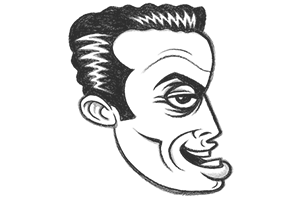
Blue comedy is comedy that is off-color, risqué, indecent or profane, largely about sex. It often contains profanity and/or sexual imagery that may shock and offend some audience members. ‘Working blue’ refers to the act of performing this type of material. A ‘blue comedian’ or ‘blue comic’ is a comedian who usually performs blue, or is known mainly for his or her blue material. Blue comedians often find it difficult to succeed in mainstream media.
Many comedians who are normally family-friendly might choose to work blue when off-camera or in an adult-oriented environment; Bob Saget exemplifies this dichotomy. A recording survives of one Masquers roast from the 1950s with Jack Benny, George Jessel, George Burns, and Art Linkletter all using highly risque material and, in some cases, obscenities. In the 1970s, CBS aired the ground-breaking sitcom ‘All in the Family,’ based on the British series ‘Till Death Us Do Part,’ which featured a ‘lovable’ bigot, Archie Bunker. The character’s dialogue usually contained racial prejudices and ethnic slurs, as well as derogatory comments against Jews, gays and women’s rights, but in a guise of blue humor against his own bigotry.
Posted in Humor, Politics, Sex |
1 Comment »
February 22, 2012
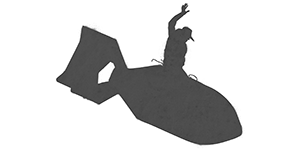

A black comedy is a comic work that employs black humor or gallows humor. The definition of black humor is problematic; it has been argued that it corresponds to the earlier concept of gallows humor (humor that still manages to be funny in the face of, and in response to, a hopeless situation); and that, as humor has been defined since Freud as a comedic act that anesthetizes an emotion, all humor is ‘black humor.’ The term ‘black humor’ (from the French ‘humour noir’) was coined by the Surrealist theoretician André Breton in 1935, to designate a sub-genre of comedy and satire in which laughter arises from cynicism and skepticism, often relying on topics such as death.
In black humor, topics and events that are usually regarded as taboo, specifically those related to death, are treated in an unusually humorous or satirical manner while retaining their seriousness; the intent of black comedy, therefore, is often for the audience to experience both laughter and discomfort, sometimes simultaneously.
read more »
Posted in Humor, Language, War |
Leave a Comment »


 The Daily Omnivore