December 19, 2010

The New Yorker cover (March 29, 1976) ‘View of the World from 9th Avenue,’ has come to represent Manhattan’s telescoped interpretation of the country beyond the Hudson River. The cartoon showed the supposedly limited mental geography of Manhattanites. The image shows Manhattan’s 9th Avenue, 10th Avenue, and the Hudson River (appropriately labeled), while the top half depicts the rest of the world. The rest of the United States is drawn as a square, with a thin brown strip along the Hudson representing New Jersey, the names of five cities (Los Angeles, Washington D.C., Las Vegas, Kansas City, and Chicago) and three states (Texas, Utah, and Nebraska) are scattered among a few rocks for the U.S. beyond New Jersey.
The Pacific Ocean, perhaps twice as wide again as the Hudson, separates the U.S. from three flattened land masses labeled China, Japan, and Russia. The illustration, depicting New Yorkers’ self-image, inspired many similar works, including the poster for the 1984 film Moscow on the Hudson; that movie poster led to a lawsuit, Steinberg v. Columbia Pictures Industries, Inc., 663 F. Supp. 706 (S.D.N.Y. 1987), which held that Columbia Pictures violated the copyright that Steinberg held on his work. Another homage was created for the cover of The Economist newspaper’s March 21–27, 2009 issue entitled ‘How China sees the world.’
Posted in Art, Humor, Politics |
Leave a Comment »
December 17, 2010
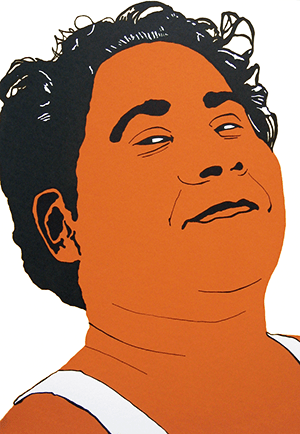
Oscar Zeta Acosta (1935 – disappeared 1974) was an American attorney, politician, and minor novelist, perhaps best known for his friendship with the American author Hunter S. Thompson, who characterized him as his Samoan Attorney, Dr. Gonzo, in his novel ‘Fear and Loathing in Las Vegas.’ In 1967, Acosta began working as an antipoverty attorney for the East Legal Aid Society in Oakland, California. In 1968 he moved to East Los Angeles and joined the Chicano Movement as an activist attorney. His controversial defense earned him the ire of the LAPD, who considered the ‘Brown Pride’ movement more dangerous than the Black Panthers.
In the summer of 1967 Acosta met Hunter S. Thompson, who would write an article on Acosta and the injustice in the barrios of East L.A. for ‘Rolling Stone’ in 1971 titled ‘Strange Rumblings in Aztlan.’ When working on the article, Thompson and Acosta visited Las Vegas (inspiring Hunter’s later novel on the city). In 1972, Acosta disappeared while traveling in Mexico. His son, Marco Acosta, believes that he was the last person to talk to his father. In May 1972, Acosta telephoned his son, telling him that he was ‘about to board a boat full of white snow.’ Marco is later quoted in reference to his father’s disappearance: ‘The body was never found, but we surmise that probably, knowing the people he was involved with, he ended up mouthing off, getting into a fight, and getting killed.’
Posted in Drugs, Humor, Politics |
Leave a Comment »
December 17, 2010
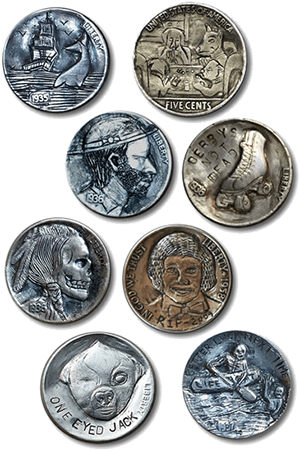
The hobo nickel is a sculptural art form involving the creative modification of small-denomination coins, essentially resulting in miniature bas reliefs. The nickel, because of its size, thickness, and relative softness, was a favored coin for this purpose. Due to its low cost and portability, this medium was particularly popular among hobos, hence the name. Common hobo nickels sell for $5 or $10, and rarer or more desirable coins sell for hundreds of dollars.
read more »
Posted in Art, Humor, Money |
Leave a Comment »
December 10, 2010

Transmetropolitan is a cyberpunk comic book series written by Warren Ellis with art by Darick Robertson and published by DC Comics. It chronicles the battles of Spider Jerusalem, infamous renegade gonzo journalist of the future, an homage to gonzo journalism founder Hunter S. Thompson. Jerusalem dedicates himself to fighting the corruption and abuse of power of two successive United States presidents; he strives to keep his world from turning more dystopian than it already is while dealing with the struggles of fame and power.
Posted in Art, Humor |
Leave a Comment »
December 10, 2010

Gonzo journalism is a style of journalism that is written subjectively, often including the reporter as part of the story via a first-person narrative. The word Gonzo was first used in 1970 to describe an article by Hunter S. Thompson, who later popularized the style. The term has since been applied to other subjective artistic endeavors.
Gonzo journalism tends to favor style over accuracy and often uses personal experiences and emotions to provide context for the topic or event being covered. It disregards the ‘polished’ edited product favored by newspaper media and strives for a more gritty approach. Use of quotations, sarcasm, humor, exaggeration, and profanity is common.
read more »
Posted in Humor, Language, Politics |
Leave a Comment »
December 9, 2010

Cyriak Harris is a British freelance animator better known by his first name Cyriak, or by his pseudonym Mutated Monty. He is known for his surreal short web animations. A regular contributor to the British website B3ta since 2004, Cyriak displays a surreal and often disturbing animation style with a distinct British theme. He uses a combination of Adobe Photoshop and After Effects for his animation and visuals along with FL Studio (formerly known as Fruity Lookps) for original music pieces alongside his videos.
Posted in Art, Humor |
Leave a Comment »
December 8, 2010
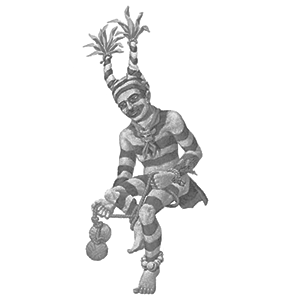
Clown society is a term used in anthropology and sociology for an organization of comedic entertainers (or ‘clowns’) who have a formalized role in a culture or society. Sometimes clown societies have a sacred role, to represent a trickster character in religious ceremonies. Other times the purpose served by members of a clown society is only to parody excessive seriousness, or to deflate pomposity. A clown shows what is wrong with the ordinary way of doing things, and a clown shows how to do ordinary things the wrong way.
Members of a clown society always dress in some kind of a special costume reserved for clowns, which is usually an absurdly extreme form of normal dress. While in their costume, clowns have special permission from their society to parody or criticize defective aspects of their own culture. Clown societies usually train new members to become clowns in an apprentice system. Sometimes the training is improvisational comedy, but usually a clown society trains members in well known forms of costume, pantomime, song, dance, and common visual gags
Posted in Humor, Philosophy, World |
Leave a Comment »
December 8, 2010

Bouffon is a modern french theater term that was re-coined in the early 1960s by French acting instructor Jacques Lecoq to describe a specific style of performance work that has a main focus in the art of mockery. Similar to, but distinct from clowning, the bouffon draws from burlesque, commedia dell’arte, farce, gallows humor, parody, satire, and slapstick.
According to Lecoq, ‘the difference between the clown and the bouffon is that while the clown is alone, the bouffon is part of a gang; while we make fun of the clown, the bouffon makes fun of us. At the heart of the bouffon is mockery pushed to the point of parody. Bouffons amuse themselves by reproducing the life of man in their own way, through games and pranks.’
Posted in Art, Humor, Language |
Leave a Comment »
December 7, 2010

Area code 321 is the area code serving Brevard County, Florida and home to the Kennedy Space Center. It has been in use since November 1, 1999, and was assigned to the area after a successful petition drive due to the Space Coast’s impact on the county (if pronounced properly – ‘three, two, one’– the code resembles the countdown which launches the many spacecraft from Cape Canaveral).
Posted in Humor, Politics, Technology |
Leave a Comment »
December 7, 2010

Tongue-in-cheek is a figure of speech used to imply that a statement or other production is humorously or otherwise not seriously intended, and it should not be taken at face value. The facial expression typically indicates that one is joking or making a mental effort. In the past, it may also have indicated contempt, but that is no longer common. By 1842, the phrase had acquired its contemporary meaning. Early users of the phrase include Sir Walter Scott in his 1828 novel ‘The Fair Maid of Perth.’ The ironic usage originates with the idea of suppressed mirth—biting one’s tongue to prevent an outburst of laughter.
Putting one’s tongue into a cheek was formerly used to signify contempt. For example, in Scottish author Tobias George Smollett’s ‘The Adventures of Roderick Random,’ which was published in 1748, the eponymous hero is taking a coach to Bath and apprehends a highwayman. This provokes an altercation with a less brave passenger: ‘He looked black and pronounced with a faultering voice, ‘O! ’tis very well—damn my blood! I shall find a time.’ I signified my contempt of him by thrusting my tongue in my cheek, which humbled him so much, that he scarce swore another oath aloud during the whole journey.’
Posted in Humor, Language |
Leave a Comment »
December 7, 2010

(With) a grain of salt is a literal translation of a Latin phrase, ‘(cum) grano salis.’ It is often used to show that intelligence and personal judgment are needed, as in ‘I drink wine cum grano salis since I must drive’ (with care, moderately) or ‘please, repair this electric cable cum grano salis’ (aware of the dangers). ‘Cum grano salis’ also means, like in modern English, that something should not be taken too literally. In Italy ‘to have salt on your pumpkin’ (pumpkin being your head) means to have intelligence and reasoning capabilities.
The phrase comes from Pliny the Elder’s ‘Naturalis Historia,’ regarding the discovery of a recipe for an antidote to a poison. In the antidote, one of the ingredients was a grain of salt. Threats involving the poison were thus to be taken ‘with a grain of salt’ and therefore less seriously. An alternative account says that the Roman general Pompey believed he could make himself immune to poison by ingesting small amounts of various poisons, and he took this treatment with a grain of salt to help him swallow the poison. In this version, the salt is not the antidote, it was taken merely to assist in swallowing the poison.
Posted in Food, Humor, Language |
Leave a Comment »
December 7, 2010
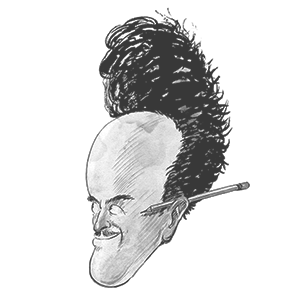
Ub Iwerks (1901 – 1971) was an American animator and special effects technician who created several of Walt Disney’s early characters including Mickey Mouse. Iwerks was considered by many to be Disney’s oldest friend, and he spent most of his career working for Disney in some capacity. The two met in 1918 while working for the Kansas City Art Studio, and would eventually start their own commercial art business together.
He was responsible for the distinctive style of the earliest Disney animated cartoons, and was also responsible for creating several early characters including Mickey Mouse, Clarabelle Cow, and Horace Horsecollar. The first few Mickey Mouse and Silly Symphonies cartoons were animated almost entirely by Iwerks. Disney and he had a falling out over the credit for the characters success. Their friendship and working partnership was severed when Iwerks accepted a contract with Disney competitor Pat Powers to start an animation studio under his own name.
read more »
Posted in Art, Humor, Money |
Leave a Comment »




 The Daily Omnivore