March 7, 2011

Brain lateralization [lat-er-uh-luh-zey-shuhn] is the distribution of function into right and left hemispheres. In most brains the left hemisphere is the center of language, logic, and rationality and controls the right side of the body, and the right hemisphere is the focus of creativity, intuition, holistic thought, and controls the left side of the body. In common speech lateralization is referred to as handedness, the preference for using either the left or the right side of the body for certain things.
Lateralization occurs in animals when one side of the brain is stronger (more dominant) than the other. Until fairly recently it was thought humans preferred the left or right sides of their body was because they could speak. However, it was later discovered that many nonverbal species display lateralization. For example, elephants often have preferences for whether they swing their trunks to the left or the right. Honeybees have right antennas that are more sensitive to smells. Parrots can be left- or right-footed, and some are ambidextrous. Chickens and minnows like to look for food with one eye and look out for predators with the other.
Posted in Health, Language, Science |
Leave a Comment »
March 6, 2011

Warchalking is the drawing of symbols in public places to advertise an open Wi-Fi wireless network. Inspired by hobo symbols, the warchalking marks were conceived by a group of friends in June 2002 and publicized by Matt Jones who designed the set of icons and produced a downloadable document containing them. Having found a Wi-Fi node, the warchalker draws a special symbol on a nearby object, such as a wall, the pavement, or a lamp post. Those offering Wi-Fi service might also draw such a symbol to advertise the availability of their Wi-Fi location, whether commercial or personal.
The word is formed by analogy to wardriving, the practice of driving around an area in a car to detect open Wi-Fi nodes. That term in turn is based on wardialing, the practice of dialing many phone numbers hoping to find a modem.
Posted in Language, Technology |
Leave a Comment »
March 6, 2011

Wardialing is a technique of using a modem to automatically scan a list of telephone numbers, usually dialing every number in a local area code to search for computers, Bulletin board systems and fax machines. Hackers use the resulting lists for various purposes, hobbyists for exploration, and crackers – hackers that specialize in computer security – for password guessing.
The popular name for this technique originated in the 1983 film WarGames. In the film, the protagonist programmed his computer to dial every telephone number in Sunnyvale, California to find other computer systems. Prior to the movie’s release, this technique was known as ‘hammer dialing’ or ‘demon dialing.’
Posted in Language, Money, Technology |
Leave a Comment »
March 6, 2011
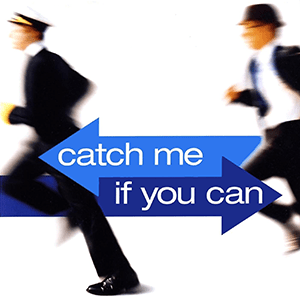
Social Engineering describes methods of influencing people with the goal of illegally obtaining sensitive data (e.g. passwords, credit card information). Social Engineers observe the personal environment of their victims and use fake identities to gain secret information or free services. In most cases Social Engineering is used to infiltrate third party computer systems to spy on sensitive data; in that case social engineering is also called Social Hacking.
read more »
Posted in Language, Money, Technology |
Leave a Comment »
March 4, 2011

A joe job is a spamming technique that sends out unsolicited e-mails using spoofed (falsified) sender data. Early joe jobs aimed at tarnishing the reputation of the apparent sender or inducing the recipients to take action against him, but they are now typically used by commercial spammers to conceal the true origin of their messages.
The name ‘joe job’ originated from such a spam attack on Joe Doll, webmaster of Joe’s Cyberpost. One user’s joes.com account was removed due to advertising through spam. In retaliation, the user sent another spam with the ‘reply-to’ headers forged to make it appear to be from Joe Doll. Besides prompting angry replies, it also caused joes.com to fall prey to denial-of-service attacks that temporarily took the web site down.
Posted in Language, Money, Technology |
Leave a Comment »
March 4, 2011

False flag operations are covert operations designed to deceive the public in such a way that the operations appear as though they are being carried out by other entities.
The name is derived from the military concept of flying false colors; that is, flying the flag of a country other than one’s own. False flag operations are not limited to war and counter-insurgency operations, and can be used in peace-time.
Posted in Language, Politics, War |
Leave a Comment »
March 4, 2011


In Internet slang, a troll is someone who posts inflammatory, extraneous, or off-topic messages in an online community, such as an online discussion forum, chat room, or blog, with the primary intent of provoking other users into a desired emotional response or of otherwise disrupting normal on-topic discussion. In addition to the offending poster, the noun troll can also refer to the provocative message itself.
read more »
Posted in Humor, Language, Technology |
Leave a Comment »
March 3, 2011
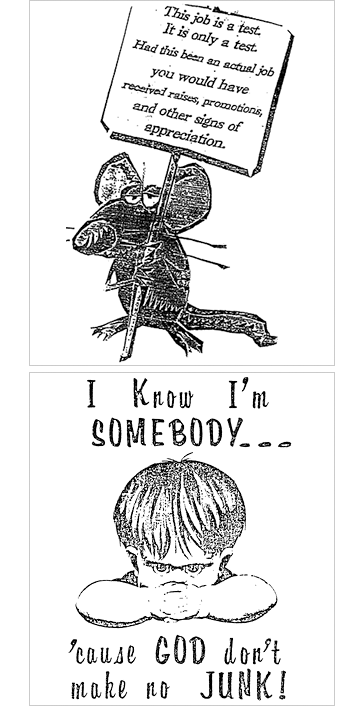
Faxlore refers to humorous texts, folk poetry, folk art, and urban legends that are circulated, not by word of mouth, but by fax machine. ‘Xeroxlore’ or ‘photocopylore’ is similar material circulated by photocopying. Cartoons and jokes often circulate as faxlore; the poor graphic quality becoming worse with each retransmission.
Because faxlore and xeroxlore is the (mis)appropriation of technology owned by the employer, it is often mildly subversive of the workplace and its values.
read more »
Posted in Humor, Language, Technology |
Leave a Comment »
March 3, 2011
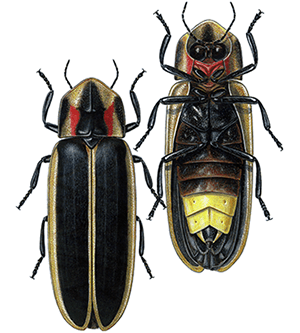
Crepuscular [kri-puhs-kyuh-ler] refers to animals that are primarily active during dawn and dusk. The term is derived from the Latin word ‘crepusculum,’ meaning ‘twilight.’ Crepuscular animals may also be active on a bright moonlit night. Some species are active only in the dawn (matutinal) or only in the dusk (vespertine). Many animals that are casually described as nocturnal are in fact crepuscular, including most cats. Others crepuscular species include include dogs, rabbits, pigs, rats, deer, skunks, and wombats. Many moths, beetles, flies, and other insects are crepuscular as well.
The patterns of activity are thought to be an antipredator adaptation. Many predators forage most intensely at night, while others are active at mid-day and see best in full sun. Thus the crepuscular habit may reduce predation. Some species have different habits in the absence of predators. For example, the Short-eared Owl is crepuscular on those of the Galápagos Islands that have buzzard species, but diurnal on those without. Additionally, in hot areas, it may be a way of avoiding thermal stress while capitalizing on available light.
Posted in Language, Science |
Leave a Comment »
March 3, 2011
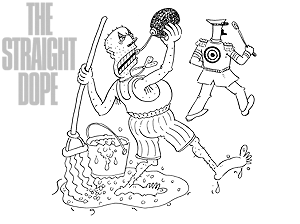
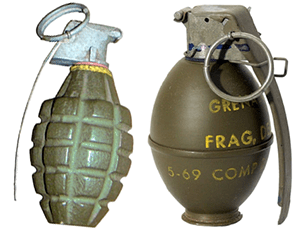
In the U.S. military, fragging refers to the act of attacking a superior officer in one’s chain of command with the intent to kill that officer. The term originated during the Vietnam War and was most commonly used to mean the assassination of an unpopular officer of one’s own fighting unit. Killing was often effected by means of a fragmentation grenade, hence the term.
The most common motive for choosing a fragmentation grenade or similar device is a perpetrator’s desire to avoid identification and the associated consequences at either the individual level (e.g., punishment by one’s superiors) or the collective level (e.g., dishonor brought to one’s unit): where a grenade is thrown in the heat of battle, soldiers can claim that the grenade landed too close to the person they ‘accidentally’ killed, that another member of the unit threw the grenade, or that an enemy soldier threw it back.
read more »
Posted in Death, Language, War |
Leave a Comment »
March 2, 2011


ASCII art is a graphic design technique that uses computers for presentation and consists of pictures pieced together from the 95 printable (from a total of 128) characters of the ASCII compliant character sets. The term is also loosely used to refer to text based art in general. ASCII art can be created with any text editor, and is often used with free-form languages. Most examples of ASCII art require a fixed-width font (non-proportional fonts, as on a traditional typewriter) such as Courier for presentation.
Among the oldest known examples of ASCII art are the creations by computer-art pioneer Kenneth Knowlton from around 1966, who was working for Bell Labs at the time. One of the main reasons ASCII art was born was because early printers often lacked graphics ability and thus characters were used in place of graphic marks. Also, to mark divisions between different print jobs from different users, bulk printers often used ASCII art to print large banners, making the division easier to spot so that the results could be more easily separated by a computer operator or clerk. ASCII art was also used in early e-mail when images could not be embedded.
Posted in Art, Language, Technology |
Leave a Comment »
March 2, 2011

Al Jazeera (literally, ‘The Island,’ referring to the Arabian Peninsula) is an international news network headquartered in Doha, Qatar. Initially launched as an Arabic news and current affairs satellite TV channel with the same name, Al Jazeera has since expanded into a network with several outlets, including the Internet and specialty TV channels in multiple languages. The original Al Jazeera channel’s willingness to broadcast dissenting views, for example on call-in shows, created controversies in the Arab states of the Persian Gulf. The station gained worldwide attention following the September 11, 2001 attacks, when it was the only channel to cover the war in Afghanistan live from its office there.
The original Al Jazeera channel was started in 1996 by an emiri decree with a loan of 500 million Qatari riyals (US$137 million) from the Emir of Qatar, Sheikh Hamad bin Khalifa. By its funding through loans or grants rather than direct government subsidies, the channel claims to maintain independent editorial policy. Much of the staff came from the BBC World Service’s Saudi-co-owned Arabic language TV station, which had shut down after two years of operation because of censorship demands by the Saudi Arabian government.
Posted in Language, Money, Politics |
Leave a Comment »


 The Daily Omnivore