February 24, 2011
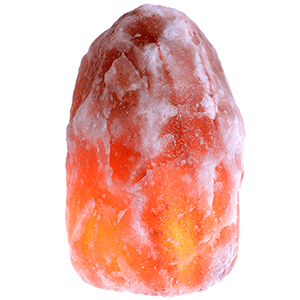
Himalayan salt is a marketing term for Halite (commonly known as rock salt) from Pakistan. It is mined in the Khewra Salt Mines, the second largest salt mine in the world, located about 300 km from the Himalayas, and about 160 kilometres from Islamabad, in the foothills of the Salt Range. The salt sometimes comes out in a reddish or pink color, with some crystals having an off-white to transparent color. It is commonly used for cooking similar to regular table salt, brine, and bath products.
Rock salts mined in several parts of the world, including Hawaii, Utah, Bolivia, the Murray-Darling basin of Australia, Peru, and Poland are marketed as Himalayan salt or pink salt. The color results from iron oxide. More recently, large crystal rocks are also used as Salt lamps. A salt lamp is a lamp carved from a larger salt crystal, often colored, with an incandescent bulb or a candle inside. The lamps give an attractive glow and are suitable for use as nightlights or for ambient mood lighting.
Posted in Food, Language, Money |
Leave a Comment »
February 23, 2011
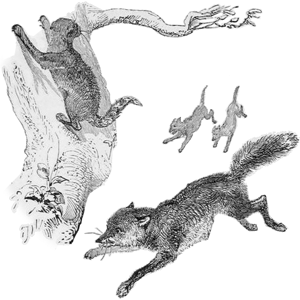
The term ‘analysis paralysis‘ refers to over-analyzing (or over-thinking) a situation, so that a decision or action is never taken, in effect paralyzing the outcome. A decision can be treated as over-complicated, with too many detailed options, so that a choice is never made, rather than try something and change if a major problem arises. A person might be seeking the optimal or ‘perfect’ solution upfront, and fear making any decision which could lead to erroneous results, when on the way to a better solution.
In Aesop’s Fables’ ‘The Fox and the Cat,’ the fox has ‘hundreds of ways of escaping’ while the cat has ‘only one.’ When they heard the hounds approaching, the cat scampered up a tree while ‘the Fox in his confusion was caught up by the hounds.’ The fable ends with the moral, ‘Better one safe way than a hundred on which you cannot reckon.’
Posted in Health, Language |
Leave a Comment »
February 23, 2011

‘Ghost sign‘ is a term for old hand-painted advertising signage that has been preserved on a building for an extended period of time. The signage may be kept for its nostalgic appeal, or simply indifference by the owner. They are also called ‘fading ads’ and ‘brickads.’ In many cases these are advertisements painted on brick that remained over time. Many ghost signs still visible are from the 1890s to 1960s. Such signs were most commonly used in the decades before the Great Depression.
As signage advertising formats changed, less durable signs appeared in the later 20th century, and ghost signs from that era are less common. Kathleen Hulser of the New York Historical Society, said, ‘[The signs] evoke the exuberant period of American capitalism. Consumer cultures were really getting going and there weren’t many rules yet, no landmarks preservation commission or organized community saying: ‘Isn’t this awful? There’s a picture of a man chewing tobacco on the corner of my street.’
Posted in Art, Language, Money |
Leave a Comment »
February 23, 2011


Laddism is a subculture commonly associated with Britpop music of the 1990s. The phenomenon was reflected in the magazine Loaded and its subsequent imitators.
Images of Laddishness are dominated by the male pastimes of drinking, watching football, and sex. The word ladette has been coined to describe young women who emulate laddish behavior, i.e. young women who behave in a boisterously assertive or crude manner and engage in heavy drinking sessions.
Posted in Humor, Language, Sex |
Leave a Comment »
February 23, 2011

Britpop is a subgenre of alternative rock that that grew out of the British independent music scene of the early 1990s and was characterized by bands influenced by British guitar pop music of the 1960s and 1970s. The movement developed as a reaction against various musical and cultural trends in the late 1980s and early 1990s, particularly the grunge phenomenon from the United States. In the wake of the musical invasion into the UK of American grunge bands, new British groups such as Suede and Blur launched the movement by positioning themselves as opposing musical forces, referencing British guitar music of the past and writing about uniquely British topics and concerns.
These bands were soon joined by others including Oasis, Pulp, Supergrass, Sleeper and Elastica. Britpop groups brought British alternative rock into the mainstream and formed the backbone of a larger British cultural movement called ‘Cool Britannia.’ Although its more popular bands were able to spread their commercial success overseas, especially to the United States, the movement largely fell apart by the end of the decade.
Posted in Art, Language, World |
Leave a Comment »
February 22, 2011
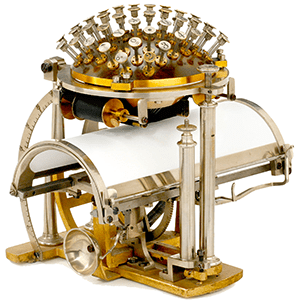
The Hansen Writing Ball was invented in 1865 by the reverend and principal of the Royal Institute for the deaf-mutes in Copenhagen. The writing ball was first patented and entered production in 1870, and was the first commercially produced typewriter. In Danish it was called the skrivekugle. The Hansen ball was a combination of unusual design and ergonomic innovations, but like most of the early 19th century typewriters, it did not allow the paper to be seen as it passed through the device.
Posted in Language, Technology |
1 Comment »
February 21, 2011


A platonic [pluh-ton-ik] solid is a three dimensional shape where each face is built from the same type of polygons, and there are the same number of polygons meeting at every corner of the shape. There are only five Platonic Solids: Tetrahedron, Cube, Hexahedron, Octahedron, Dodecahedron, and Isosahedron. The shapes are often used to make dice, because dice of these shapes can be made fair. 6-sided dice are very common, but the other numbers are commonly used in role-playing games. Such dice are commonly referred to as D followed by the number of faces (d8, d20 etc.).
The tetrahedron (4 sided), cube (6 sided), and octahedron (8 sided), are found naturally in crystal structures. In meteorology and climatology, global numerical models of atmospheric flow are of increasing interest which use grids that are based on an icosahedron (20 sides,refined by triangulation) instead of the more commonly used longitude/latitude grid. This has the advantage of better spatial resolution without singularities (i.e. the poles) at the expense of somewhat greater numerical difficulty.
Posted in Art, Language, Science |
Leave a Comment »
February 21, 2011

Lucy Temerlin (1964–1987) was a chimpanzee owned by the Institute for Primate Studies in Oklahoma, and raised by Maurice K. Temerlin, Ph.D., a psychotherapist and professor at the University of Oklahoma and his wife, Jane W. Temerlin.
read more »
Posted in Language, Science, Sex |
1 Comment »
February 21, 2011

A slush or a slushie is a flavored frozen drink. Frozen carbonated beverages, typified by the Slurpee or ICEE, are made by freezing a carbonated drink. These machines are complicated and expensive, and notably require a carbon dioxide supply. They make a very fine and ‘dry’ slush. Frozen uncarbonated beverages are made by freezing a non-carbonated juice or liquid. These machines do not require a pressure chamber, and so are much cheaper and easier to maintain. They make a slightly wetter slush. They are notable in the wide variety of drinks they create, including coffee-flavored ices and alcoholic drinks like margaritas and daiquiris.
Conventional slush drinks, typified by the Slush Puppie, use a single slurry made by freezing a sweetened base, similar to apple juice. This slurry is mixed at serving time with a flavoring syrup. These drinks are notable in that the flavored syrup can be drawn out of the drink, leaving a relatively-unflavoured base ice behind. ‘Instant’ slush drinks (beverages that turn to slush upon opening) are formed via supercooling (e.g. Slush-It!, the Chill Chamber which allows businesses to store beverages at below freezing temperatures, and supercooled Sprite from Coca-Cola which required special vending machines).
Posted in Food, Language, Money |
Leave a Comment »
February 21, 2011


Canard [kuh-nahrd] is the French word for duck. The word also can mean an unfounded or false, deliberately misleading fabrication, a false report, rumor or hoax. That usage derives from the phrase ‘vendre un canard à moitié’ (‘to half-sell a duck’), thus, from some long-forgotten joke, ‘to cheat.’ The Canard Digérateur, or Digesting Duck, was an automaton in the form of a duck, created in 1739 by Jacques de Vaucanson (the French inventor credited with creating the world’s first true robots, as well as the first automated loom).
The mechanical duck appeared to have the ability to eat kernels of grain, and to metabolize and defecate them. While the duck did not actually have the ability to do this – the food was collected in one inner container, and the pre-stored feces was ‘produced’ from a second, so that no actual digestion took place – Vaucanson hoped that a truly digesting automaton could one day be designed.
Posted in Art, Language, Technology |
Leave a Comment »
February 20, 2011

Small Is Beautiful: Economics As If People Mattered is a collection of essays by British economist E. F. Schumacher. It is often used to champion small, appropriate technologies that are believed to empower people more, in contrast with phrases such as ‘bigger is better.’ First published in 1973, ‘Small Is Beautiful’ brought Schumacher’s critiques of Western economics to a wider audience during the 1973 energy crisis and emergence of globalization.
Schumacher argues that the modern economy is unsustainable. Natural resources (like fossil fuels), are treated as expendable income, when in fact they should be treated as capital, since they are not renewable, and thus subject to eventual depletion. He further argues that nature’s resistance to pollution is limited as well. He concludes that government effort must be concentrated on sustainable development.
Posted in Language, Money, Politics |
Leave a Comment »
February 20, 2011

‘Wicked problem‘ is a phrase originally used in social planning to describe a problem that is difficult or impossible to solve because of incomplete, contradictory, and changing requirements that are often difficult to recognize. Moreover, because of complex interdependencies, the effort to solve one aspect of a wicked problem may reveal or create other problems.
A problem whose solution requires a great number of people to change their mindsets and behavior is likely to be a wicked problem. Therefore, many standard examples of wicked problems come from the areas of public planning and policy. These include global climate change, natural hazards, healthcare, the AIDS epidemic, pandemic influenza, international drug trafficking, homeland security, nuclear weapons, and nuclear energy and waste.
Posted in Language, Money, Politics |
Leave a Comment »




 The Daily Omnivore