September 24, 2010


Raggare (a Swedish word roughly corresponding to the English term ‘pick-up artist.’) refers to a subculture found mostly in Sweden and parts of Norway, Finland, Denmark, Germany and Austria. Raggare are closely related to the greaser subculture of the U.S. and are known for their love of hot rod cars and 1950s American pop culture. Pontiac Bonnevilles of the 1960s are particularly popular among raggare.
Considered by some a menace to society, but more often seen as an amusing group of outsiders, raggare culture lives on in Sweden, but in many ways it is still viewed in a negative light. Because of its mostly rural roots, retro-aesthetics, and unusual (for Swedes) pro-American stance, raggare are often (in urban areas and in pop-culture) seen as uneducated, with poor taste and a low-brow attitude towards sex.
Posted in Language, World |
Leave a Comment »
September 23, 2010

The Journal of Recreational Mathematics is an American journal dedicated to recreational mathematics, started in 1968. It is published quarterly by the Baywood Publishing Company. The journal contains original articles, book reviews, alphametics (verbal arithmetic), problems, conjectures, and solutions.
Posted in Education, Language, Science |
Leave a Comment »
September 23, 2010


Hafiz [hah-fiz], literally meaning ‘guardian’, is an honorific used by Muslims in modern days for someone who has completely memorized the Qur’an. The Islamic prophet Muhammad lived in the 7th century CE, in Arabia in a time when many people were not literate. The Arabs preserved their histories, genealogies, and poetry by memory alone. When Muhammad proclaimed the verses later collected as the Qur’an, his followers naturally preserved the words by memorizing them.
Early accounts say that the literate Muslims also wrote down such verses as they heard them. However, the Arabic writing of the time was a scripta defectiva, an incomplete script, that did not include vowel markings or other diacritics needed to distinguish between words. There are numerous traditions of recitation. Most hafiz know only one version, but true experts can recite in several traditions.
Posted in Language, Philosophy, World |
Leave a Comment »
September 23, 2010

Facilitated communication (FC) is a process by which a facilitator supports the hand or arm of a communicatively impaired individual while using a keyboard or other devices with the aim of helping the individual to develop pointing skills and to communicate. The procedure is controversial, since a majority of peer reviewed scientific studies conclude that the typed language output attributed to the clients is directed or systematically determined by the therapists who provide facilitated assistance.
Some neurologists and psychologists believe there is a high incidence of dyspraxia, or difficulty with planning and/or executing voluntary movement, among such individuals, and that this is alleviated by a facilitator’s manual support. Proponents of FC suggest that some people with autism and moderate and profound mental retardation may have ‘undisclosed literacy,’ or the capacity for other symbolic communication, consistent with higher intellectual functioning than has been presumed.
Posted in Health, Language |
Leave a Comment »
September 20, 2010

L’esprit de l’escalier (staircase wit) is thinking of a clever remark when it is too late. The German word Treppenwitz and the Yiddish word trepverter are used to express the same idea. This name for the phenomenon comes from French encyclopedist and philosopher Denis Diderot. A remark was made to him at a dinner party which left him speechless at the time because, he explains, ‘a sensitive man like me, overwhelmed by the argument levelled against him, becomes confused and can only think clearly again [when he reaches] the bottom of the stairs.’ The reception room was located on the étage noble, the noble storey, upstairs, so that to have reached the bottom of the stairs means to have definitively left the gathering in question.
Diderot’s fellow-philosophe Jean-Jacques Rousseau also recognised his own affliction with l’esprit de l’escalier, staircase wit. In his autobiographical book Confessions he blamed such social blunders and missed opportunities for turning him into a misanthrope, and reassured himself that he was better at ‘conversations by mail’.
Posted in Language, World |
Leave a Comment »
September 17, 2010


Omertà [aw-mer-tah] is a popular attitude and code of honor, common in areas of southern Italy where criminal organizations like the Mafia, ‘Ndrangheta, and Camorra are strong. A common definition is the ‘code of silence.’ Omertà implies ‘the categorical prohibition of cooperation with state authorities or reliance on its services, even when one has been victim of a crime.’ Even if somebody is convicted for a crime he has not committed, he is supposed to serve the sentence without giving the police any information about the real criminal, even if that criminal has nothing to do with the Mafia himself. Within Mafia culture, breaking omertà is punishable by death.
The code was adopted by Sicilians long before the emergence of Cosa Nostra (some observers date it to the 16th century as a way of opposing Spanish rule). It is also deeply rooted in rural Crete, Greece. The origin of the word is often traced to the Spanish word ‘hombredad,’ meaning manliness, through the Sicilian word ‘omu’ for man. According to a different theory, the word comes from Latin ‘humilitas’ (humility), which became ‘umirtà’ and then finally omertà in some southern Italian dialects.
Posted in Language, World |
Leave a Comment »
September 16, 2010
The Anarchist Cookbook, first published in 1971, is a book that contains instructions for the manufacture of explosives, rudimentary telecommunications hacking devices, and other quasi-legal and contraband items.
It was written by William Powell to protest United States involvement in the Vietnam War. Since writing the book, Powell has converted to Anglican Christianity and attempted to have the book removed from circulation.
Posted in Language, Politics, War |
Leave a Comment »
September 16, 2010
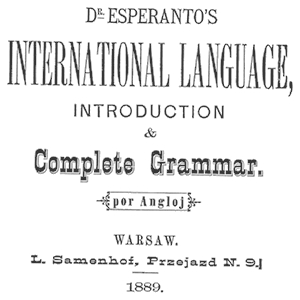
Esperanto [es-puh-rahn-toh] is the most widely spoken constructed language. Its name derives from Doktoro Esperanto, the pseudonym under which L. L. Zamenhof published the first book detailing Esperanto, the Unua Libro, in 1887. The word esperanto means ‘one who hopes’ in the language itself. Zamenhof’s goal was to create an easy to learn and politically neutral language that would serve as a universal second language to foster peace and international understanding.
Esperanto has approximately one thousand native speakers, i.e. people who learned Esperanto as one of their native languages from their parents. There is controversy over the number of people who are fluent in Esperanto. Estimates range from 10,000 to as high as two million. The users are spread in about 115 countries. Although no country has adopted the language officially, Esperanto was officially recognized by UNESCO in 1954, and is also the language of instruction in one university, the Akademio Internacia de la Sciencoj in San Marino.
Posted in Language, World |
1 Comment »
September 15, 2010

Smegma [smeg-muh] (Greek for ‘soap’), sometimes described as a ‘cheesy substance,’ is a combination of exfoliated (shed) epithelial cells, transudated skin oils, and moisture. It occurs in both female and male mammalian genitalia. In human females, it collects around the clitoris and in the folds of the labia minora.
In human males, smegma is produced and can collect under the foreskin. In healthy animals, smegma helps clean and lubricate the genitals. In veterinary medicine, analysis of this smegma is sometimes used for detection of urogenital tract pathogens.
Posted in Health, Language |
Leave a Comment »
September 14, 2010

In psychology, the term jamais vu (from the French, meaning ‘never seen’) is used to describe any familiar situation which is not recognized by the observer. Often described as the opposite of déjà vu, jamais vu involves a sense of eeriness and the observer’s impression of seeing the situation for the first time, despite rationally knowing that he or she has been in the situation before. It is linked to the linguistic concept of semantic satiation (a cognitive phenomenon in which repetition causes a word or phrase to temporarily lose meaning for the listener).
Posted in Language, Science |
Leave a Comment »
September 13, 2010
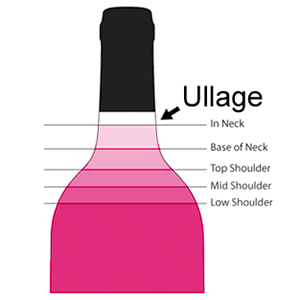
Ullage [uhl-ij] refers to the unfilled space in a container of liquid. In wine making, ullage also refers to the process of evaporation that creates a headspace itself or it can be used as a past tense verb to describe a wine barrel or bottle that has gone through the evaporation process (to be ullaged, etc). The headspace of air is a mixture mostly of alcohol and water vapors with carbon dioxide that is a by-product of the fermentation process.
In containers that are not completely air-tight (such as an oak wine barrel or a cork-stoppered wine bottle), oxygen can also seep into this space. While some oxygen is beneficial to the aging process of wine, excessive amounts can lead to oxidation and other various wine faults. This is why wine in the barrels is regularly ‘topped up’ and refilled to the top with wine in order to minimize the head space. In the bottle, the ullage or ‘fill level’of the wine can be an important indicator of the kind of care and storage conditions that the wine was kept in. After-market resellers and wine auction houses will often inspect the ullage levels of older vintages to determine the potential quality and value of wine.
Posted in Food, Language |
Leave a Comment »
September 13, 2010

Shin-Lamedh-Mem are the three letter root of many Semitic words, including shalom and salām, which mean ‘peace’ (among other things) in Hebrew and Arabic respectively. The root itself translates as ‘whole, safe, intact.’
Posted in Language, World |
Leave a Comment »



 The Daily Omnivore