October 3, 2015


Joshua Foer (b. 1982) is a freelance journalist living in Connecticut, with a primary focus on hard sciences. He was the 2006 USA Memory Champion, whichwas described in his 2011 book, ‘Moonwalking with Einstein: The Art and Science of Remembering Everything.’ Foer set a new US record in the ‘speed cards’ event by memorizing a deck of 52 cards in 1 minute and 40 seconds. His book describes his journey from participatory journalist to national champion mnemonist, under the tutelage of British Grand Master of Memory, Ed Cooke. Penguin paid a $1.2 million advance for publishing rights, and the film rights were optioned by Columbia Pictures shortly after publication.
Foer was born in Washington, DC to Esther Foer, Director of Sixth & I Historic Synagogue, and Albert Foer, the president of the American Antitrust Institute, an antitrust watchdog. He is the younger brother of former ‘The New Republic’ editor Franklin Foer and novelist Jonathan Safran Foer. Josh has organized several websites and organizations based on his interests. He created the ‘Athanasius Kircher Society,’ which had only one session, featuring savant Kim Peek and proto-astronaut Joseph Kittinger. He is the co-founder of the ‘Atlas Obscura,’ an online compendium of ‘The World’s Wonders, Curiosities, and Esoterica.’ He is also a co-organizer of ‘Sukkah City’ a Kosher architectural design competition, and Sefaria, a non-profit dedicated to building digital experiences and infrastructure for Jewish texts.
Posted in Games, Language, Science |
Leave a Comment »
October 1, 2015

The Dr. Fox effect states that even experts will be fooled by a nonsensical lecture if it is delivered with warmth, liveliness, and humor. A 1980 study found that the perceived prestige of research is increased by using a confounding writing style, with research competency being positively correlated to reading difficulty.
The original experiment was conducted at USC School Of Medicine in 1970. Two speakers gave lectures to a classroom of psychiatrists and psychologists on a topic the attendees were unfamiliar with (‘Mathematical Game Theory as Applied to Physician Education’). The control group was lectured by an actual scientist and the other by an actor who was given the identity ‘Dr. Myron L. Fox,’ a graduate of Albert Einstein College of Medicine.
read more »
Posted in Education, Health, Language |
1 Comment »
September 30, 2015

Edisonade is a modern term, coined in 1993 by John Clute in his and Peter Nicholls’ ‘The Encyclopedia of Science Fiction,’ for fictional stories about a brilliant young inventor and his inventions. This subgenre started in the Victorian and Edwardian eras and had its apex of popularity during the late 19th and early 20th centuries, and was common in ‘scientific romance,’ an archaic term for the genre of fiction now known as ‘science fiction.’
The term ‘Edisonade’ originated in the 1850s to describe both fiction and elements of scientific writing, but has since come to refer to the science fiction of the late nineteenth and early twentieth century, primarily that of Jules Verne, H. G. Wells, and Arthur Conan Doyle. In recent years, the term has come to be applied to science fiction written in a deliberately anachronistic style, as a homage to or pastiche of the original scientific romances.
read more »
Posted in Art, Language, Technology |
Leave a Comment »
September 29, 2015

A Short History of Progress is a nonfiction book and lecture series by Canadian author Ronald Wright about societal collapse. The lectures were delivered as a series of five speeches, each taking place in different cities across Canada as part of the 2004 ‘Massey Lectures’ (an annual series of lectures on a political, cultural or philosophical topic given in Canada by a noted scholar) which were broadcast on the CBC Radio program, ‘Ideas.’
Wright, an author of fiction and nonfiction works, uses the fallen civilizations of Easter Island, Sumeria, Rome, and Maya, as well as examples from the Stone Age, to see what conditions led to the downfall of those societies. He examines the meaning of progress and its implications for civilizations—past and present—arguing that the twentieth century was a time of runaway growth in human population, consumption, and technology that has now placed an unsustainable burden on all natural systems.
read more »
Posted in Language, Politics, World |
1 Comment »
September 28, 2015
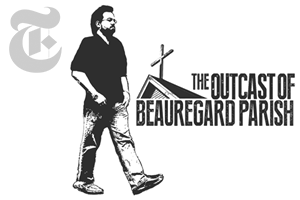

Jerry DeWitt is an American author and public speaker, and a prominent member of the American atheism movement. He is a former pastor of two evangelical churches, who publicly deconverted to atheism in 2011. DeWitt is the former executive director of ‘Recovering From Religion,’ a group which helps people find their way after a loss of faith.
He currently leads the ‘Community Mission Chapel,’ which DeWitt calls an ‘atheist church.’ In a story for the ‘New York Times,’ he said, ‘Just because we value critical thinking and the scientific method, that doesn’t mean we suddenly become disembodied and we can no longer benefit from our emotional lives.’
read more »
Posted in Health, Language, Philosophy |
Leave a Comment »
September 21, 2015


Trigger warnings are disclaimers that content contains strong writing or images which could unsettle those with mental health difficulties. Angus Johnston, a history professor at the City University of New York, said that trigger warnings can be a part of ‘sound pedagogy,’ noting that students encountering potentially triggering material are ‘coming to it as whole people with a wide range of experiences, and that the journey we’re going on together may at times be painful. It’s not coddling them to acknowledge that. In fact, it’s just the opposite.’
However, students at UC Santa Barbara passed a resolution in support of mandatory trigger warnings for classes that could contain potentially upsetting material. Professors would be required to alert students of such material and allow them to skip classes that could make them feel uncomfortable.
read more »
Posted in Health, Language, Politics |
Leave a Comment »
September 19, 2015

An Irish bull is a ludicrous, incongruent or logically absurd statement, generally unrecognized as such by its author. The addition of the epithet Irish is a late addition. The ‘Irish bull’ is to the sense of a statement what the dangling participle is to the syntax. A jarring or amusing absurdity is created by hastiness or lack of attention to speech or writing.
Although, strictly speaking, Irish bulls are so structured grammatically as to be logically meaningless, their actual effect upon listeners is usually to give vivid illustrations to obvious truths. Hence, as John Pentland Mahaffy, Provost of Trinity College, Dublin, famously observed, ‘an Irish bull is always pregnant,’ i.e. with truthful meaning.
read more »
Posted in Humor, Language, World |
2 Comments »
September 9, 2015


The Overton window is the range of ideas the public will accept. It is used by media pundits and particularly favored in conservative and libertarian discourse.
The term derives from its originator, Joseph P. Overton (1960–2003), of the Mackinac Center for Public Policy, a free market think tank. Overton described six degrees acceptance of an idea: Unthinkable, Radical, Acceptable, Sensible, Popular, and Policy.
read more »
Posted in Language, Money, Politics |
Leave a Comment »
September 8, 2015


A predictable surprise describes a situation or circumstance in which avoidable crises are marginalized in order to satisfy economic and social policies. The term was popularized by Harvard Business School professors Max H. Bazerman and Michael D. Watkins who defined ‘predictable surprises’ as problems that: at least some people are aware of, are getting worse over time, and are likely to explode into a crisis eventually, but are not prioritized by key decision-makers or have not elicited a response fast enough to prevent severe damage.
These problems tend to require a significant investment in the near term that will not pay off until later. This could involve changes to established organization culture and/or changes that competing interests do not benefit from. Frequently cited examples include the Iraq War, Enron, the subprime mortgage crisis, the Hurricane Katrina response, global warming, and the Catholic sex abuse scandal.
Posted in Language, Money, Politics |
1 Comment »
September 7, 2015
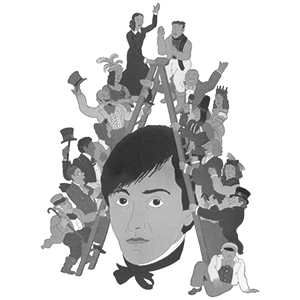
Nicholas Nickleby is a novel by Charles Dickens. Originally published as a monthly serial from 1838 to 1839, it was Dickens’ third novel. The book centers on the life and adventures of Nicholas Nickleby, a young man who must support his mother and sister after his father dies. Dickens began writing ‘Nickleby’ while still working on ‘Oliver Twist’ and while the mood is considerably lighter, his depiction of the Yorkshire school run by Wackford Squeers is as moving and influential as those of the workhouse and criminal underclass in ‘Twist.’
Like most of Dickens’ early works, the novel has a contemporary setting. Much of the action takes place in London, with several chapters taking place in Dickens’ birthplace of Portsmouth, as well as settings in Yorkshire and Devon. The tone of the work is that of ironic social satire, with Dickens taking aim at what he perceives to be the class injustices of Victorian England. Many memorable characters are introduced, including Nicholas’ malevolent Uncle Ralph, and the villainous Wackford Squeers, who operates an abusive all-boys boarding school at which Nicholas temporarily serves as a tutor.
read more »
Posted in Art, Language |
Leave a Comment »
September 6, 2015

‘Silas Marner: The Weaver of Raveloe’ is the third novel by George Eliot, pen name of English novelist Mary Ann Evans. Published in 1861, it is an outwardly simple tale of a linen weaver, it is notable for its strong realism and its sophisticated treatment of a variety of issues ranging from religion to industrialization to community. Eliot’s novels often presented the cases of social outsiders and small-town persecution.
The novel is set in the early years of the 19th century. Silas Marner, a weaver, is a member of a small Calvinist congregation in Lantern Yard, a slum street in an unnamed city in Northern England. He is falsely accused of stealing the congregation’s funds while watching over the very ill deacon.
read more »
Posted in Art, Language |
1 Comment »
August 29, 2015


Stewart Brand (b. 1938) is an American writer, best known as editor of the ‘Whole Earth Catalog,’ a counterculture magazine and mail order catalog. He founded a number of organizations, including The WELL (one of the oldest virtual communities in continuous operation), the Global Business Network (a scenario planner and forecaster for companies, NGOs, and governments), and the Long Now Foundation (a nonprofit that promotes very long-term projects, e.g. a 10,000 year clock). He is the author of several books, most recently ‘Whole Earth Discipline: An Ecopragmatist Manifesto.’
Brand attended Phillips Exeter Academy. He studied biology at Stanford University, graduating in 1960. His first marriage was to Lois Jennings, an Ottawa Native American and mathematician. As a soldier in the Army, he was a parachutist and taught infantry skills; he later expressed the view that his experience in the military had fostered his competence in organizing. A civilian again in 1962, he studied design at San Francisco Art Institute, photography at San Francisco State College, and participated in a legitimate scientific study of then-legal LSD, in Menlo Park, California.
read more »
Posted in Language, Politics, Technology |
Leave a Comment »


 The Daily Omnivore