September 19, 2015
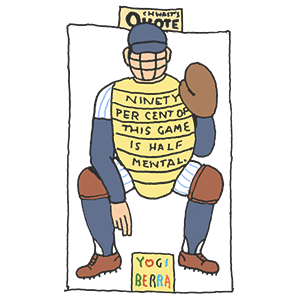
An Irish bull is a ludicrous, incongruent or logically absurd statement, generally unrecognized as such by its author. The addition of the epithet Irish is a late addition. The ‘Irish bull’ is to the sense of a statement what the dangling participle is to the syntax. A jarring or amusing absurdity is created by hastiness or lack of attention to speech or writing.
Although, strictly speaking, Irish bulls are so structured grammatically as to be logically meaningless, their actual effect upon listeners is usually to give vivid illustrations to obvious truths. Hence, as John Pentland Mahaffy, Provost of Trinity College, Dublin, famously observed, ‘an Irish bull is always pregnant,’ i.e. with truthful meaning.
read more »
Posted in Humor, Language, World |
2 Comments »
September 9, 2015


The Overton window is the range of ideas the public will accept. It is used by media pundits and particularly favored in conservative and libertarian discourse.
The term derives from its originator, Joseph P. Overton (1960–2003), of the Mackinac Center for Public Policy, a free market think tank. Overton described six degrees acceptance of an idea: Unthinkable, Radical, Acceptable, Sensible, Popular, and Policy.
read more »
Posted in Language, Money, Politics |
Leave a Comment »
September 8, 2015


A predictable surprise describes a situation or circumstance in which avoidable crises are marginalized in order to satisfy economic and social policies. The term was popularized by Harvard Business School professors Max H. Bazerman and Michael D. Watkins who defined ‘predictable surprises’ as problems that: at least some people are aware of, are getting worse over time, and are likely to explode into a crisis eventually, but are not prioritized by key decision-makers or have not elicited a response fast enough to prevent severe damage.
These problems tend to require a significant investment in the near term that will not pay off until later. This could involve changes to established organization culture and/or changes that competing interests do not benefit from. Frequently cited examples include the Iraq War, Enron, the subprime mortgage crisis, the Hurricane Katrina response, global warming, and the Catholic sex abuse scandal.
Posted in Language, Money, Politics |
1 Comment »
September 7, 2015
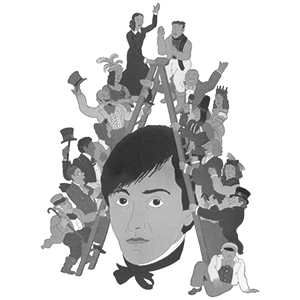
Nicholas Nickleby is a novel by Charles Dickens. Originally published as a monthly serial from 1838 to 1839, it was Dickens’ third novel. The book centers on the life and adventures of Nicholas Nickleby, a young man who must support his mother and sister after his father dies. Dickens began writing ‘Nickleby’ while still working on ‘Oliver Twist’ and while the mood is considerably lighter, his depiction of the Yorkshire school run by Wackford Squeers is as moving and influential as those of the workhouse and criminal underclass in ‘Twist.’
Like most of Dickens’ early works, the novel has a contemporary setting. Much of the action takes place in London, with several chapters taking place in Dickens’ birthplace of Portsmouth, as well as settings in Yorkshire and Devon. The tone of the work is that of ironic social satire, with Dickens taking aim at what he perceives to be the class injustices of Victorian England. Many memorable characters are introduced, including Nicholas’ malevolent Uncle Ralph, and the villainous Wackford Squeers, who operates an abusive all-boys boarding school at which Nicholas temporarily serves as a tutor.
read more »
Posted in Art, Language |
Leave a Comment »
September 6, 2015
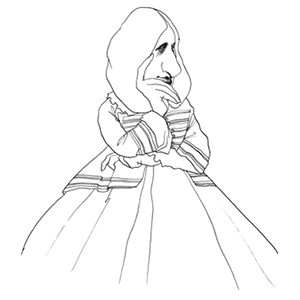
‘Silas Marner: The Weaver of Raveloe’ is the third novel by George Eliot, pen name of English novelist Mary Ann Evans. Published in 1861, it is an outwardly simple tale of a linen weaver, it is notable for its strong realism and its sophisticated treatment of a variety of issues ranging from religion to industrialization to community. Eliot’s novels often presented the cases of social outsiders and small-town persecution.
The novel is set in the early years of the 19th century. Silas Marner, a weaver, is a member of a small Calvinist congregation in Lantern Yard, a slum street in an unnamed city in Northern England. He is falsely accused of stealing the congregation’s funds while watching over the very ill deacon.
read more »
Posted in Art, Language |
1 Comment »
August 29, 2015


Stewart Brand (b. 1938) is an American writer, best known as editor of the ‘Whole Earth Catalog,’ a counterculture magazine and mail order catalog. He founded a number of organizations, including The WELL (one of the oldest virtual communities in continuous operation), the Global Business Network (a scenario planner and forecaster for companies, NGOs, and governments), and the Long Now Foundation (a nonprofit that promotes very long-term projects, e.g. a 10,000 year clock). He is the author of several books, most recently ‘Whole Earth Discipline: An Ecopragmatist Manifesto.’
Brand attended Phillips Exeter Academy. He studied biology at Stanford University, graduating in 1960. His first marriage was to Lois Jennings, an Ottawa Native American and mathematician. As a soldier in the Army, he was a parachutist and taught infantry skills; he later expressed the view that his experience in the military had fostered his competence in organizing. A civilian again in 1962, he studied design at San Francisco Art Institute, photography at San Francisco State College, and participated in a legitimate scientific study of then-legal LSD, in Menlo Park, California.
read more »
Posted in Language, Politics, Technology |
Leave a Comment »
August 5, 2015
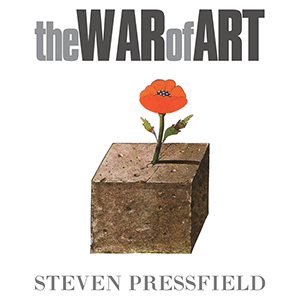
Resistance is a concept created by American novelist Steven Pressfield to describe a universal force that he claims acts against human creativity. It was first mentioned in his nonfiction book ‘The War of Art’ and elaborated in the follow-up books ‘Do The Work’ and ‘Turning Pro.’ It is also a recurring theme in some of his novels such as ‘The Legend of Bagger Vance’ and ‘The Virtues of War.’
Resistance is described in a mythical fashion as a universal force that has one sole mission: to keep things as they are. Pressfield claims that Resistance does not have a personal vendetta against anyone, rather it is simply trying to accomplish its only mission: maintenance of the status quo. It is the force that will stop an individual’s creative activity through any means necessary, such as rationalizing, inspiring fear and anxiety, emphasizing other distractions that require attention, or raising the voice of an inner critic.
read more »
Posted in Art, Language, Philosophy |
1 Comment »
August 4, 2015

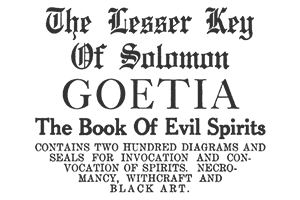
A sigil [sij-il] is a symbol used in magic. The term has usually referred to a type of pictorial signature of a demon or other supernatural entity; in modern usage, especially in the context of chaos magic (a postmodern magical tradition which emphasizes the pragmatic use of belief systems), it refers to a symbolic representation of the magician’s desired outcome.
The term derives from the Latin ‘sigillum,’ meaning ‘seal,’ though it may also be related to the Hebrew word ‘segula’ meaning ‘word, action, or item of spiritual effect, talisman.’ The current use of the term is derived from Renaissance magic (a resurgence in hermeticism and Neo-Platonic varieties of ceremonial magic in the 15th and 16th centuries), which was in turn inspired by the magical traditions of antiquity.
read more »
Posted in Death, Language, Philosophy |
Leave a Comment »
August 1, 2015

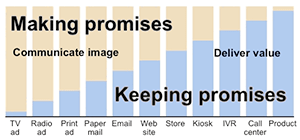
Upaya [oo-pah-yuh] (Sanskrit: ‘expedient means’) is a term used in Buddhism to refer to an aspect of guidance along the Buddhist Paths to liberation where a conscious, voluntary action is driven by an incomplete reasoning around its direction. Upaya is often combined with ‘kaushalya’ (‘cleverness’) to form ‘upaya-kaushalya’ meaning ‘skill in means,’ a concept emphasizing that practitioners may use their own specific methods or techniques that fit the situation in order to gain enlightenment. The implication is that even if a technique, view, etc., is not ultimately ‘true’ in the highest sense, it may still be an expedient practice to perform or view to hold; i.e., it may bring the practitioner closer to the true realization in a similar way.
The exercise of skill to which it refers, the ability to adapt one’s message to the audience, is of enormous importance in the ‘Pali Canon’ (some of the oldest texts in Buddhism). The most important concept in ‘skill in means’ is the use, guided by wisdom and compassion, of a specific teaching (means) geared to the particular audience taught. Edward Conze, in ‘A Short History Of Buddhism,’ says ”Skill in means’ is the ability to bring out the spiritual potentialities of different people by statements or actions which are adjusted to their needs and adapted to their capacity for comprehension.’
read more »
Posted in Language, Philosophy |
1 Comment »
July 31, 2015


A double bind is an emotionally distressing dilemma in communication in which an individual (or group) receives two or more conflicting messages, and one message negates the other. This creates a situation in which a successful response to one message results in a failed response to the other (and vice versa), so that the person will automatically be wrong regardless of response. The double bind occurs when the person cannot confront the inherent dilemma, and therefore can neither resolve it nor opt out of the situation.
The classic example given of a negative double bind is of a mother telling her child that she loves him or her, while at the same time turning away in disgust (the words are socially acceptable; the body language is in conflict with it). The child doesn’t know how to respond to the conflict between the words and the body language and, because the child is dependent on the mother for basic needs, he or she is in a quandary. Small children have difficulty articulating contradictions verbally and can neither ignore them nor leave the relationship.
read more »
Posted in Health, Language, Science |
1 Comment »
July 13, 2015

‘The Truth Machine‘ is a 1996 science fiction novel by James L. Halperin about an infallible lie detector. Soon, every citizen must pass a thorough test under a Truth Machine to get a job or receive any sort of license. Eventually, people begin wearing them all the time, thus eliminating dishonesty in all parts of human interaction, including most crime, terrorism and a great deal of general social problems.
The novel focuses on the life story of the machine’s inventor, Pete Armstrong, a child prodigy whose life has been defined by the tragic murder of his younger brother, Leonard, by an ex-convict who was believed to be capable of committing violent crimes again, but who could not be incarcerated on mere suspicions. Armstrong claimed that as long as it was employed universally (and not just by government officials), the ‘truth machine’ could revolutionize humanity and take it to that next evolutionary step. However, the protagonist places a back door in the device, allowing him to avoid detection when he repeats fragments of Walt Whitman’s poem ‘O Captain! My Captain!’ in his mind.
Posted in Language, Politics, Technology |
Leave a Comment »
July 9, 2015
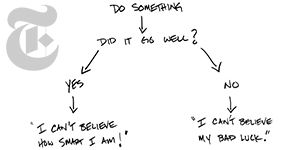

Explanatory style is a psychological attribute that indicates how people explain to themselves why they experience a particular event, either positive or negative. There are three main components: Personal (internal vs. external), Permanent (stable vs. unstable), and Pervasive (global vs. local/specific).
‘Personalization’ refers to how one explains the cause of an event. People experiencing events may see themselves as the cause; that is, they have internalized the cause for the event (e.g. ‘I always forget to make that turn,’ as opposed to, ‘That turn can sure sneak up on you’). ‘Permanenence’ describes how one explains the extent of the cause. People may see a situation as unchangeable (e.g., ‘I always lose my keys’ or ‘I never forget a face’). ‘Pervasiveness’ measures how one explains the extent of the effects. People may see a situation as affecting all aspects of life (e.g., ‘I can’t do anything right’ or ‘Everything I touch seems to turn to gold’).
read more »
Posted in Health, Language, Science |
1 Comment »



