April 11, 2013
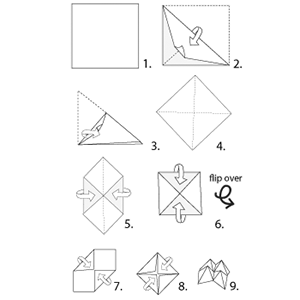
Querent [kweer-ent] as ‘one who seeks’ is derived, according to the Oxford English Dictionary, from the Latin word for ‘to seek, gain, ask.’ Querent denotes ‘a person who questions an Oracle,’ usually for otherworldly advice. This oracle may simply be a divinatory technique, such as the I Ching, that is manipulated by the Querent themselves without recourse to any other human agency. Alternatively it may involve another person, someone perhaps seen as a ‘fortune teller’ — particularly a Practitioner of Tarot reading or other form of Mediumship — from whom advice is sought.
The mindset of a Querent plays a significant role in a reading. Those who approach a reading with heavy skepticism, especially if they are dealing with a human oracle, are often unwilling to engage the Reader at all, which can result in a stifling of the prophetic flow that is required for divination. Conversely, some approach with great respect, as if they predetermine that the Diviner or the system of divination is influence by some kind of higher, even divine, power and thereby will believe virtually anything they are told. A third ideal group will talk freely with a human oracle and accept their advice with a healthy dose of skepticism, yet still remain open minded to the possibility of revelation.
Posted in Language, Philosophy |
Leave a Comment »
April 10, 2013

The Joker is a special type of playing card found in most modern decks, or else a type of tile in some Mahjong game sets, specifically used in the American version of Mahjong. It is believed that the term ‘Joker’ comes from ‘Jucker,’ the original German spelling of ‘Euchre,’ (a trick-taking card game for which the Joker card was invented).
The card was originally introduced in about 1860 to be used as the highest trump. Catherine Perry Hargrave documents jokers from 1862 and 1865 in her book ‘A History of Playing Cards.’ The 1862 card has a tiger on it and the label ‘Highest Trump,’ while the one from 1865 is inscribed ‘This card takes either Bower’ and ‘Imperial Bower,’ or ‘Highest Trump Card.’
read more »
Posted in Games, Humor, Language |
1 Comment »
April 9, 2013

Building Stories is a 2012 graphic novel by American cartoonist Chris Ware. The unconventional work is made up of fourteen printed works—cloth-bound books, newspapers, broadsheets and flip books—packaged in a boxed set.
The work took a decade to complete, and was published by Pantheon Books. The intricate, multilayered stories pivot around an unnamed female protagonist with a missing leg. It mainly focuses on her time in a three-story brownstone apartment building in Chicago, but follows her later in her life as a mother. The parts of the work can be read in any order.
read more »
Posted in Art, Language |
Leave a Comment »
April 9, 2013

Franklin Christenson Ware (b. 1967), known professionally as Chris Ware, is an American comic book artist and cartoonist, notable for his ‘Acme Novelty Library’ series and the graphic novels ‘Jimmy Corrigan, the Smartest Kid on Earth,’ and ‘Building Stories.’ His works explore themes of social isolation, emotional torment and depression.
His works tend to use a vivid color palette and are full of realistic, meticulous detail. His lettering and images are often elaborate and sometimes evoke the ragtime era or another early 20th-century American design style. Ware often refers to himself in the publicity for his work in self-effacing, even withering tones. He is considered by some critics and fellow notable illustrators and writers, such as Dave Eggers, to be among the best currently working in the medium.
read more »
Posted in Art, Humor, Language |
1 Comment »
April 9, 2013

Culinary name is the name of an ingredient when used in the kitchen for preparing food, as opposed to their names in agriculture or in scientific nomenclature. Some are used because they sounds more attractive than the real name, or because a cheaper ingredient can be linked with a more expensive one. The culinary name may also refer to a way of cooking or to a region, or using a particular ingredient.
Additionally, name given on a menu may be different from the culinary name. For example, from the 19th until the mid-20th century, many restaurant menus were written in French and not in the local language. Examples include veal (calf), calamari (squid), scampi (Italian-American name for shrimp), and sweetbreads (pancreas or thymus gland). Culinary names are especially common for fish and seafood, where multiple species are marketed under a single familiar name.
read more »
Posted in Food, Language, Money |
Leave a Comment »
April 3, 2013

‘The Starfish and the Spider: The Unstoppable Power of Leaderless Organizations’ is a 2006 book by Ori Brafman (author of the 2010 book ‘Click: The Magic of Instant Connections’) and Rod Beckstrom (President of ICANN); it is an exploration of the implications of the recent rise of decentralized organizations such as Wikipedia, Grokster and YouTube.
The book contrasts them to centralized organizations, such as Encyclopædia Britannica. The spider and starfish analogy refers to the contrasting biological nature of the respective organisms, starfish have a decentralized neural structure permitting regeneration, whereas spiders have in a hierarchical nervous system.
read more »
Posted in Language, Money, Technology |
Leave a Comment »
April 2, 2013

Dumpster diving (called ‘skipping’ in the UK) is the practice of sifting through commercial or residential waste to find items that have been discarded by their owners, but that may prove useful to the dumpster diver. Dumpster diving is also viewed as an effective urban foraging technique.
Dumpster divers will forage dumpsters for items such as clothing, furniture, food, and similar items in good working condition. The dumpster diving term originates from the best-known manufacturer of commercial trash bins, Dempster, who use the trade name ‘Dumpster’ for their bins, and the fanciful image of someone leaping head first into a dumpster as if it were a swimming pool. In practice, the size and design of most dumpsters makes it possible to retrieve many items from the outside of dumpsters without having to ‘dive’ into them.
read more »
Posted in Food, Language, Money |
Leave a Comment »
March 29, 2013

Marvels is a four-issue limited series comic book written by Kurt Busiek, painted by Alex Ross and edited by Marcus McLaurin, and published by Marvel Comics in 1994. Set from 1939 to 1974; the series examines the Marvel Universe, the collective setting of most of Marvel’s superhero series, from the perspective of an Everyman character: news photographer Phil Sheldon.
The street-level series portrayed ordinary life in a world full of costumed supermen, with each issue featuring events well known to readers of Marvel comics as well as a variety of minute details and retelling the most famous events in the Marvel universe. Busiek and Ross returned to the ‘everyday life in a superhero universe’ theme in the Homage Comics series ‘Astro City.’
read more »
Posted in Art, Language |
1 Comment »
March 29, 2013
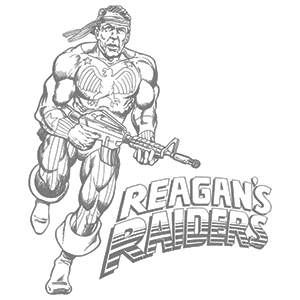
The American Monomyth is a 1977 book by Robert Jewett and John Shelton Lawrence arguing for the existence and cultural importance of an ‘American Monomyth,’ a variation on the classical monomyth (the hero’s journey, a theme found in narratives from around the world) as proposed by Joseph Campbell. The hero ventures from the normal world into a supernatural one, winning a decisive victory there and returning with a ‘boon.’
In contrast, Jewett and Lawrence define the American monomyth as: ‘A community in a harmonious paradise is threatened by evil; normal institutions fail to contend with this threat; a selfless superhero emerges to renounce temptations and carry out the redemptive task; aided by fate, his decisive victory restores the community to its paradisiacal condition; the superhero then recedes into obscurity.’
Posted in Language, Politics, World |
Leave a Comment »
March 29, 2013

The American way of life is an expression that refers to the lifestyle of people living in the United States of America. It is an example of a behavioral modality, developed from the 17th century until today.
It refers to a nationalist ethos that purports to adhere to principles of ‘life, liberty and the pursuit of happiness.’ It has some connection to the concept of American exceptionalism and the American Dream.
read more »
Posted in Language, Politics, World |
Leave a Comment »
March 29, 2013

Superfolks is a 1977 novel by Robert Mayer, which satirizes the superhero and comic book genres, and was aimed at a more adult audience than those genres typically attracted. Superfolks examines comic book conventions and clichés from a more serious, ‘literary’ perspective.
The novel was influential on many writers of superhero comic books in the 1980s and 1990s, notably Alan Moore and Kurt Busiek. Although the book’s pop culture references clearly date it to the 1970s, its influence on the deconstruction of the superhero genre is still felt through Moore’s ‘Watchmen,’ ‘Marvelman,’ and ‘Superman: Whatever Happened to the Man of Tomorrow?’
read more »
Posted in Humor, Language |
Leave a Comment »
March 23, 2013

The Bell Jar is American writer and poet Sylvia Plath’s only novel, which was originally published under the pseudonym ‘Victoria Lucas’ in 1963. The novel is semi-autobiographical with the names of places and people changed.
The book is often regarded as a roman à clef (real events disguised as fiction), with the protagonist’s descent into mental illness paralleling Plath’s own experiences with what may have been clinical depression. Plath committed suicide a month after its first UK publication. The novel was published under her name for the first time in 1967 and was not published in the United States until 1971, pursuant to the wishes of Plath’s mother and her husband Ted Hughes.
read more »
Posted in Death, Health, Language |
Leave a Comment »



