April 23, 2012
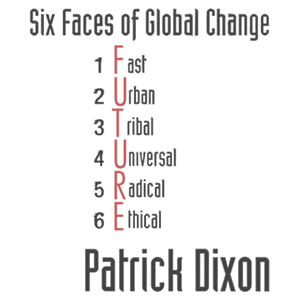
Futurewise is a book on global trends written by the futurist Patrick Dixon in 1998, with new editions in 2001, 2003, and 2007. ‘Futurewise’ contains over 500 expectations about what future life will be like, and divides future trends into six dimensions, which spell the word FUTURE: Fast (combinations of events bring new opportunities for agile leaders—and risks); Urban (demographics and lifestyle issues including megacities); Tribal (the most powerful force in the world today is tribalism—basis of culture, belonging, teams, brands); Universal (globalization at cost of local identity, risking international tensions, and the impact of the digital age); Radical (the rise of single issue activism and the death of left-right politics); and Ethical (the passions people have and personal values, including spirituality– the glue holding our future together)
A key thesis of ‘Futurewise’ is that the future is about emotion, and that emotional reactions to events are usually more important than the events themselves. Therefore a deep understanding is needed of how people are likely to feel in the future. The book also focuses on managing uncertainty. Risk management is a major challenge for all large corporations, including responding to wild cards – low probability but potentially high impact events.
Posted in Language, Politics, World |
Leave a Comment »
April 19, 2012

Rubyfruit Jungle is the first novel (1973) by Rita Mae Brown, remarkable, in its day, for its explicit lesbianism. The novel is a semi-autobiographical (some have suggested picaresque) account of Brown’s youth and emergence as a lesbian author. The term ‘ruby fruit jungle’ is slang for the female genitals. The novel focuses on Molly Bolt, the adopted daughter of a poor family, who possesses remarkable beauty and who is aware of her lesbianism from early childhood. The work is notable for being an early literary lesbian novel, as well as for Brown’s own activism in lesbian and feminist causes. Many lesbian readers have found in it a reflection of their own experiences and observations. While some now refer to it as ‘just another lesbian coming of age novel’ (Bildungsroman), its success is part of why the genre is now often considered a cliché.
In 1955, when Brown was 11 years old, her family moved to Fort Lauderdale where she attended high school and experimented sexually with boys and girls. When Brown was 16, her girlfriend’s father found her love letters, and Brown was dismissed from the student council. In the 1960s, Brown attended Broward Community College and the University of Florida, but she was expelled from UF for participating in a civil rights rally. She later moved to New York City, attended New York University, and received a degree in Classics and English. Later, she received another degree in Cinematography from the New York School of Visual Arts, and, in 1976, she received a doctorate in political science.
Posted in Language, Politics, Sex |
Leave a Comment »
April 17, 2012
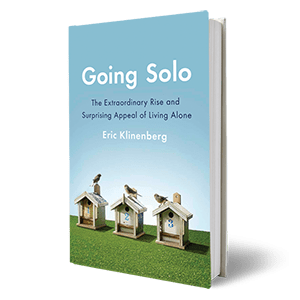
Eric Klinenberg is an American sociologist and a scholar of urban studies, culture, and media. He is best known for his contributions as a public sociologist. He is currently Professor of Sociology, Public Policy, and Media, Culture, and Communications at New York University, as well as the editor of the journal ‘Public Culture.’ Klinenberg’s first book, ‘Heat Wave: A Social Autopsy of Disaster in Chicago,’ was published by the University of Chicago Press in 2002.
It was praised as ‘trenchant, persuasive tale of slow murder by public policy.’ Klinenberg’s second book, ‘Fighting for Air: The Battle to Control America’s Media,’ was called ‘a must-read for those who wonder what happened to good radio, accurate reporting and autonomous public interest.’ Since its publication, he has testified before the FCC and briefed Congress on his findings. His latest book, ‘Going Solo: The Extraordinary Rise and Surprising Appeal of Living Alone,’ was published in 2012.
Posted in Language, Politics, Science |
Leave a Comment »
April 17, 2012

The terms empathogen [em-path-uh-jen] and entactogen are used to describe a class of psychoactive drugs that produce distinctive emotional and social effects similar to those of MDMA (‘Ecstasy’) characterized by increased empathy (the ability to understand and share the feelings of another). Putative members of this class include 2C-B, 2C-I, MDMA, MDA, MDEA, MBDB, 2C-T-7, and 2C-T-2, among others.
The chemical structure of many entactogens contains a substituted amphetamine core, and most belong to the phenethylamine class of psychoactive drugs, although several (AET and AMT) are tryptamines. When referring to MDMA and its counterparts, the term ‘MDxx’ is often used with the exception of MDPV.
read more »
Posted in Drugs, Health, Language |
Leave a Comment »
April 14, 2012

Chironomia is the art of using gesticulations or hand gestures to good effect in traditional rhetoric or oratory. Effective use of the hands, with or without the use of the voice, is a practice of great antiquity, which was developed and systematized by the Greeks and the Romans. Various gestures had conventionalized meanings which were commonly understood, either within certain class or professional groups, or broadly among dramatic and oratorical audiences.
Gilbert Austin was a well-known author on chironomia, in the preface to his book on the subject, Austin writes: ‘…it is a fact, that we do not possess from the ancients, nor yet from the labors of our own countrymen, any sufficiently detailed and precise precepts for the fifth division of the art of rhetoric, namely rhetorical delivery, called by the ancients ‘actio’ and ‘pronuntiatio.”
read more »
Posted in Language, Philosophy, Science |
Leave a Comment »
April 13, 2012
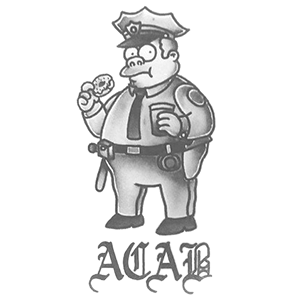
A.C.A.B. stands for ‘All Cop[per]s Are Bastards.’ Dating from at least the 1940s, and used as a slogan during the UK miners’ strike, A.C.A.B. is an abbreviation often integrated into prison tattoos in the United Kingdom, it is most commonly rendered with one letter between the knuckle and first joint of each finger, alternatively sometimes seen as symbolic small dots across each knuckle.
The British Oi! punk band, the 4-Skins, popularized the acronym in their 1980s song of the same name. It is currently in common usage as a phrase and tattoo amongst some ultras ( a type of sports fans renowned for their fanatical and elaborate displays of ‘support’) groups in Europe, particularly in Eastern Europe where most groups are more akin to hooligans than ultras.
Posted in Language, Politics, World |
Leave a Comment »
April 13, 2012
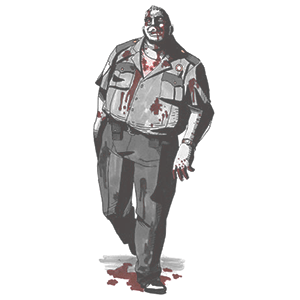
HWDP [ha-voo-de-pe] is a frequently used acronym of a Polish vulgar phrase ‘chuj w dupę policji,’ meaning literally ‘a dick up the police’s ass.’ It can be best compared to the English-language phrase ACAB (‘All Cops Are Bastards’), known in western English-language countries, painted on walls by aggressive football fans already in the 1960s. It is also commonly used as a tattoo among some of the Latino prisoners in the United States of America, who claim it stands for ‘Always Carry A Bible,’ when asked about it by the authorities. Another English counterpart of this Polish vulgar phrase is FTP, an acronym of the phrase ‘fuck the police.’
This vulgar slogan, often written on walls, is used by a part of the youth as a form of provocation against the police, but also one of its ‘trademarks.’ Writing of the HWDP characters, visible from far, is a de facto form of aggressive vandalism, which reasonably lowers the value of the flats near the marked objects. The habit of using the HWDP slogan is particularly popular amongst aggressive football fans, called pseudokibice, of the beginning of the 21st century. It is a specific expression of protest against the authorities and the entire surrounding system, although it isn’t an ideological rebellion, but instead, a characteristic sign of the additude to the surrounding reality.
Posted in Language, Politics, World |
Leave a Comment »
April 13, 2012
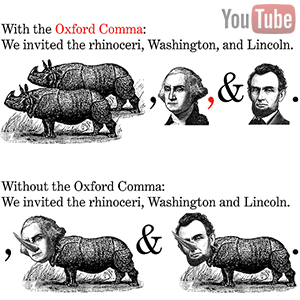
The serial comma (also known as the Oxford comma or Harvard comma) is the comma used immediately before a coordinating conjunction (usually ‘and’ or ‘or’) preceding the final item in a list of three or more items.
For example, a list of three countries can be punctuated as either ‘Portugal, Spain, and France’ (with the serial comma) or as ‘Portugal, Spain and France’ (without the serial comma).
read more »
Posted in Education, Language, World |
1 Comment »
April 12, 2012

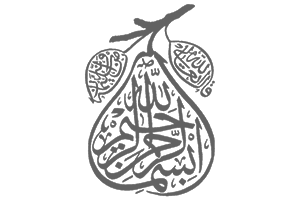
A calligram [kal-uh-gram] is a poem, phrase, or word in which the typeface, calligraphy, or handwriting is arranged in a way that creates a visual image. The image created by the words expresses visually what the word, or words, say. In a poem, it manifests visually the theme presented by the text of the poem.
Guillaume Apollinaire was a famous calligram writer and author of a book of poems called ‘Calligrammes.’ His poem written in the form of the Eiffel Tower is an example of a calligram.
Posted in Art, Language |
Leave a Comment »
April 12, 2012

Eye music (often referred to in English by its exact German translation ‘Augenmusik’) describes graphical features of scores that when performed are unnoticeable by the listener. A clear definition of eye music is elusive, for the border between eye music, word painting, and representations of melody and form depends on the relationships of composer, performer, and listener. Word painting (also known as tone painting or text painting) is writing music that reflects the literal meaning of a song (r.g. ascending scales would accompany lyrics about going up; slow, dark music would accompany lyrics about death).
To a person well-versed in the style of Baroque music, word painting is, as intended, noticed. But someone unused to Baroque musical style may not appreciate that musical effect – to them they are merely notes and lyrics. In this case, word painting is no longer the issue. For them, the ‘leaps’ of written notes are unhearable, but are visible only to the composer or performer: a definition of eye music.
read more »
Posted in Art, Language |
Leave a Comment »
April 12, 2012
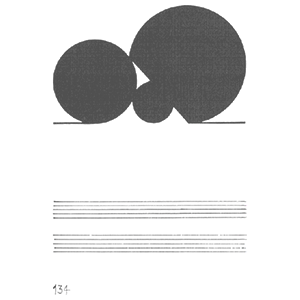
Graphic notation is the representation of music through the use of visual symbols outside the realm of traditional music notation. Graphic notation evolved in the 1950s, and it is often used in combination with traditional music notation. Composers often rely on graphic notation in experimental music, where standard musical notation can be ineffective. A common aspect of graphic notation is the use of symbols to convey information to the performer about the way the piece is to be performed. These symbols first began to appear in the works of avant-garde composers such as Morton Feldman, Karlheinz Stockhausen, and Krzysztof Penderecki, as well as the works of experimental composers such as John Cage and Earle Brown during the 1950s and 60s. In the late 1970s, the Brazilian composer Emanuel Dimas de Melo Pimenta started producing graphic notation in four dimensions, inside virtual reality.
After working as Stockhausen’s assistant, Cornelius Cardew began work on a massive graphic score, which he titled ‘Treatise.’ The piece consists of 193 pages of highly abstract scores. The score itself is almost its own separate work of art. In 2008, Theresa Sauer edited a compendium featuring graphic scores by composers from over fifty countries, demonstrating how widespread the practice has become. Notable graphic scores(in which the music is represented using symbols and illustrations) include: Hans-Christoph Steiner’s score for ‘Solitude,’ created using the Pure Data programming language. Altered Notation can be seen in George Crumb’s work, where he uses traditional notation but presents the music on the page in a graphic or nontraditional manner such as spirals or circles.
Posted in Art, Language |
Leave a Comment »
April 12, 2012
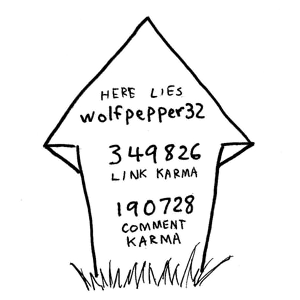
Egoboo is a colloquial expression for the pleasure received from public recognition of voluntary work. The term was in use in science fiction fandom no later than 1947, when it was used (spelled ‘ego boo’) in a letter from Rick Sneary published in the letter column of ‘Thrilling Wonder Stories.’
It was originally simply used to describe the ‘ego boost’ someone feels on seeing their name in print. As a reliable way for someone to get their name in print was to do something worth mentioning, it became caught up with the idea of voluntary community participation. As a result of this, in later years, the term grew to mean something akin to an ephemeral currency, e.g., ‘ got a lot of egoboo for editing that newsletter.’
read more »
Posted in Language, Money |
Leave a Comment »


 The Daily Omnivore