February 22, 2012
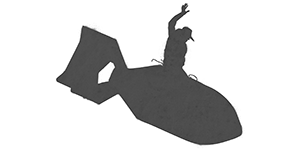

A black comedy is a comic work that employs black humor or gallows humor. The definition of black humor is problematic; it has been argued that it corresponds to the earlier concept of gallows humor (humor that still manages to be funny in the face of, and in response to, a hopeless situation); and that, as humor has been defined since Freud as a comedic act that anesthetizes an emotion, all humor is ‘black humor.’ The term ‘black humor’ (from the French ‘humour noir’) was coined by the Surrealist theoretician André Breton in 1935, to designate a sub-genre of comedy and satire in which laughter arises from cynicism and skepticism, often relying on topics such as death.
In black humor, topics and events that are usually regarded as taboo, specifically those related to death, are treated in an unusually humorous or satirical manner while retaining their seriousness; the intent of black comedy, therefore, is often for the audience to experience both laughter and discomfort, sometimes simultaneously.
read more »
Posted in Humor, Language, War |
Leave a Comment »
February 21, 2012
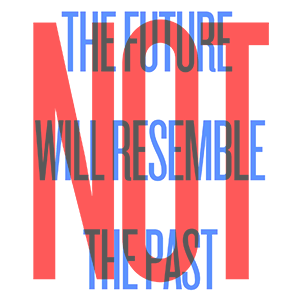
The Beginning of Infinity is a popular science book by physicist David Deutsch that was published in 2011. Deutsch views the enlightenment of the 18th century as near the beginning of an infinite sequence of purposeful knowledge creation. Knowledge here consists of information with good explanatory function that is resistant to falsifiability. Any real process physically possible is able to be performed provided the knowledge to do so has been acquired.
The enlightenment set up the conditions for knowledge creation which disrupted the static societies that previously existed. These conditions are the valuing of creativity and the free and open debate that exposed ideas to criticism to reveal those good explanatory ideas that naturally resist being falsified due to their having basis in reality. Deutsch points to previous moments in history, such as Renaissance Florence and Plato’s Academy in Golden age Athens, where this process almost got underway before succumbing to their static societies’ resistance to change.
read more »
Posted in Language, Science, Technology |
1 Comment »
February 21, 2012

The Turing test is a test to see if a computer can trick a person into believing that the computer is a person too. Alan Turing thought that if a human could not tell the difference between another human and the computer, then that computer must be as intelligent as a human. No one has made a computer that can pass the Turing test. A chatterbot called Elbot came close in 2008. The test was introduced by Alan Turing in his 1950 paper ‘Computing Machinery and Intelligence,’ which opens with the words: ‘I propose to consider the question, ‘Can machines think?” Since ‘thinking’ is difficult to define, Turing chooses to ‘replace the question by another, which is closely related to it and is expressed in relatively unambiguous words’:
‘Are there imaginable digital computers which would do well in the imitation game?’ (a party game in which a man and a woman go into separate rooms and guests try to tell them apart by writing a series of questions and reading the typewritten answers sent back; both the man and the woman aim to convince the guests that they are the other). This question, Turing believed, is one that can actually be answered. In the remainder of the paper, he argued against all the major objections to the proposition that ‘machines can think.’ In the years since 1950, the test has proven to be both highly influential and widely criticized, and it is an essential concept in the philosophy of artificial intelligence.
read more »
Posted in Games, Language, Technology |
Leave a Comment »
February 21, 2012


Electronica includes a wide range of contemporary electronic music designed for a wide range of uses, including listening, dancing, and background music for other activities. Unlike electronic dance music, which is sub-genre in the category, all examples of electronica are not necessarily made for dancing. Genres such as techno, drum and bass, downtempo, and ambient are among those encompassed by the umbrella term, entering the American mainstream from ‘alternative’ or ‘underground’ venues during the late 1990s.
With newly prominent music styles such as reggaeton, and subgenres such as electroclash, indie pop, and favela funk, electronic music styles in the current decade are seen to permeate nearly all genres of the mainstream and indie landscape such that a distinct ‘electronica’ genre of pop music is rarely noted.
read more »
Posted in Art, Language, Technology |
1 Comment »
February 21, 2012
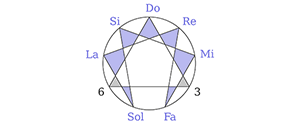
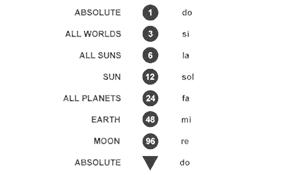
The Fourth Way refers to a concept used by Russian spiritualist G.I. Gurdjieff to describe an approach to self-development learned over years of travel in the East that combined what he saw as three established traditional ‘ways,’ or ‘schools’ into a fourth way. These three ways were of the body, mind, and emotions. The term ,The Fourth Way, was further developed by Russian esotericist P.D. Ouspensky in his lectures and writings. Posthumously, Ouspensky’s students published a book entitled ‘Fourth Way,’ based on his lectures. The ‘Fourth Way’ is sometimes referred to as ‘The Work,’ ‘Work on oneself,’ or ‘The System.’
According to this system, the chief difference between the three traditional schools, or ways, and the fourth way is that ‘they are permanent forms which have survived throughout history mostly unchanged, and are based on religion. Where schools of yogis, monks or fakirs exist, they are barely distinguishable from religious schools. The fourth way differs in that it is not a permanent way. It has no specific forms or institutions and comes and goes controlled by some particular laws of its own.’
read more »
Posted in Language, Philosophy |
Leave a Comment »
February 21, 2012
A Guide for the Perplexed is a short book by E. F. Schumacher, published in 1977. The title is a reference to Maimonides’s ‘The Guide for the Perplexed.’ Schumacher himself considered ‘A Guide for the Perplexed’ to be his most important achievement, although he was better known for his 1974 environmental economics bestseller ‘Small Is Beautiful,’ which made him a leading figure within the ecology movement.
His daughter wrote that her father handed her the book on his deathbed, five days before he died and he told her ‘this is what my life has been leading to.’ The book is a statement of the philosophical underpinnings that inform ‘Small is Beautiful.’
read more »
Posted in Language, Philosophy, Science |
1 Comment »
February 19, 2012
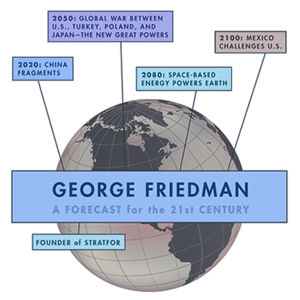
The Next 100 Years is a 2009 non-fiction book by American political scientist George Friedman. In the book, Friedman attempts to predict the major geopolitical events and trends of the 21st century. Friedman also speculates in the book on changes in technology and culture that may take place during this period. Friedman predicts a second American cold war with Russia in the 2010s. Friedman asserts that around 2015, the United States will become a close ally to some Eastern European countries, who will be dedicated to resisting Russian geopolitical threats during this period.
Friedman speculates in the book that the United States will probably become a close ally of Poland, the Czech Republic, Hungary, and Romania, who may form a military alliance during this period. According to Friedman’s prediction, around the year 2020, Russia will collapse, fragment, and disintegrate from the economic and political pressure of a second cold war.
read more »
Posted in Language, Politics, War |
Leave a Comment »
February 18, 2012

The melting pot is a metaphor for a heterogeneous society becoming more homogeneous, the different elements ‘melting together’ into a harmonious whole with a common culture. It is particularly used to describe the assimilation of immigrants to the United States; the melting-together metaphor was in use by the 1780s.
After 1970 the desirability of assimilation and the melting pot model was challenged by proponents of multiculturalism, who assert that cultural differences within society are valuable and should be preserved, proposing the alternative metaphor of the mosaic or salad bowl – different cultures mix, but remain distinct.
read more »
Posted in Language, Politics, World |
Leave a Comment »
February 16, 2012

The Feiler Faster Thesis (FFT) is a theory in modern journalism that the increasing pace of society is matched by (and perhaps driven by) journalists’ ability to report events and the public’s desire for more information. The idea is credited to American author Bruce Feiler and first defined by journalist Mickey Kaus in a 2000 ‘Slate’ article, ‘Faster Politics: ‘Momentum’ ain’t what it used to be.” Kaus describes two trends: the speeding up of the news cycle and the compression of the schedule of primaries for the 2000 U.S. general election, writing: ‘Feiler’s point is that we should put these two trends together–and that when we do, Trend 1 considerably softens the impact of Trend 2.’ Kaus uses the observation to reassess the concept of momentum in politics, suggesting that there are now simply more opportunities for turns of fortune and that voters are able, for the most part, to keep up.
The idea is based on James Gleick’s 1999 book ‘Faster,’ which makes the argument that the pace of Western society, and American society in particular, has increased and that ‘a compression of time characterizes the life of the century now closing.’ Gleick documents the ways technology speeds up work and the time people spend doing various tasks, including sleeping. He points out that ‘we have learned to keep efficiency in mind as a goal, which means that we drive ourselves hard.’ Gleick’s key observation is that ‘some of us say we want to save time when really we just want to do more.’
Posted in Language, Politics, Technology |
Leave a Comment »
February 16, 2012
Bruce Feiler (b. 1964) is a popular American writer on faith, family, and finding meaning in everyday life. He is also the writer/presenter of the PBS miniseries ‘Walking the Bible.’ His latest book, ‘The Council of Dads: My Daughters, My Illness, and the Men Who Could Be Me,’ describes how he responded to a diagnosis of cancer by asking six men from all passages of his life to be present through the passages of his young daughters’ lives. ‘Walking the Bible’ describes his perilous, 10,000-mile journey retracing the Five Books of Moses through the desert. ‘Where God Was Born’ describes his year-long trek retracing the Bible through Israel, Iraq, and Iran. ‘America’s Prophet: Moses and the American Story’ discusses the significance of Moses as a symbolic prophet throughout four-hundred years of American history.
Feiler completed his undergraduate degree at Yale University, before spending time teaching English in Japan. This experience led to his first book, ‘Learning to Bow: Inside the Heart of Japan,’ a popular portrait of life in a small Japanese town. Upon his return he earned a masters degree in international relations from the University of Cambridge in the UK, which he chronicled in his book ‘Looking for Class.’ His early books involve immersing himself in different cultures and bringing other worlds to life. He also entered the world of a traveling circus for ‘Under the Big Top,’ which depicts the year he spent performing as a clown in the Clyde Beatty-Cole Bros. Circus. Feiler is also credited with formulating the Feiler Faster Thesis which states that the increasing pace of society is matched by (and perhaps driven by) journalists’ ability to report events and the public’s desire for more information.
Posted in Death, Language, Philosophy |
Leave a Comment »
February 15, 2012

Robopocalypse is a science fiction book by Daniel H. Wilson published in 2011. The author has a PhD in robotics from Carnegie Mellon University, and many of the robots in the novel were inspired by real-world robotics research. The setting of the novel is the near future, where an increasingly robot-reliant society faces extinction after a computer scientist accidentally unleashes a sentient artificial intelligence named Archos.
After failed attempts at AI, Archos becomes self aware and immediately takes steps to stop his destruction. By infecting all devices that are chip controlled (cars, elevators, robots, etc.), Archos begins a systematic attack on mankind. Small bands of survivors find ways to circumvent the eradication. This is a story of those survivors in the months and days leading up to and following Archos’ self-awareness. Steven Spielberg has committed to direct a film based on the novel.
Posted in Art, Language, Technology |
Leave a Comment »
February 14, 2012


A sockpuppet is an online identity used for purposes of deception. The term—a reference to the manipulation of a simple hand puppet made from a sock—originally referred to a false identity assumed by a member of an internet community who spoke to, or about himself while pretending to be another person.
The term now includes other uses of misleading online identities, such as those created to praise, defend or support a third party or organization. A significant difference between the use of a pseudonym and the creation of a sockpuppet is that the sockpuppet poses as an independent third-party unaffiliated with the puppeteer.
read more »
Posted in Language, Money, Technology |
2 Comments »


 The Daily Omnivore