November 10, 2011
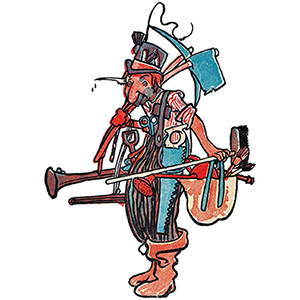
‘Jack of all trades, master of none’ refers to a person that is competent in many skills but not outstanding in any particular one. The earliest recorded versions of the phrase do not contain the second part (indeed they are broadly positive in tone).
A Jack of all trades may be a master of integration, as such an individual knows enough from many learned trades and skills to be able to bring their disciplines together in a practical manner. This person is a generalist rather than a specialist. A person who is exceptional in many disciplines is known as a polymath or a ‘Renaissance man’; a typical example is Leonardo da Vinci. The phrase became increasingly cynical in connotation during the 20th century.
read more »
Posted in Language, Money |
1 Comment »
November 10, 2011

Short messages on services such as Twitter or identi.ca may be tagged by including one or more hashtags: words or phrases prefixed with the symbol ‘#,’ with multiple words concatenated, such as those in: ‘#Wikipedia is my favorite kind of #encyclopedia.’ Then, a person can search for the string ‘#Wikipedia’ and this tagged word will appear in the search engine results. These hashtags also show up in a number of trending topics websites, including Twitter’s own front page. Such tags are case-insensitive. Hashtags were invented on Twitter by Chris Messina. One phenomenon specific to the Twitter ecosystem are micro-memes, which are emergent topics for which a hashtag is created, used widely for a few days, then disappears. Other sites, such as Hashable, have adopted the hashtag to use for other reasons.
The feature has been added to other, non-short-message-oriented services, such as the user comment systems on YouTube and Gawker Media; in the case of the latter, hashtags for blog comments and directly-submitted comments are used to maintain a more constant rate of user activity even when paid employees are not logged into the website. Real-time search aggregators such as Google Real-Time Search also support hashtags in syndicated posts, meaning that hashtags inserted into Twitter posts can be hyperlinked to incoming posts falling under that same hashtag; this has further enabled a view of the ‘river’ of Twitter posts which can result from search terms or hashtags.
Posted in Language, Technology |
Leave a Comment »
November 10, 2011

In popular usage, eccentricity [ek-suhn-tris-i-tee] (also called quirkiness or kookiness) refers to unusual or odd behavior on the part of an individual. This behavior would typically be perceived as unusual or unnecessary, without being demonstrably maladaptive. Eccentricity is contrasted with ‘normal’ behavior, the nearly universal means by which individuals in society solve given problems and pursue certain priorities in everyday life. People who consistently display benignly eccentric behavior are labeled as ‘eccentrics.’
Derived from Greek ekkentros, ‘out of the center,’ the word ‘eccentric’ first appeared in English in 1551 as an astronomical term meaning ‘a circle in which the earth, sun, etc. deviates from its center.’ Five years later, in 1556, an adjective form of the word was added. 129 years later, in 1685, the definition evolved from the literal to the figurative, and eccentric began being used to describe unconventional or odd behavior. A noun form of the word – a person who possesses and exhibits these unconventional or odd qualities/behaviors – didn’t appear until 1832.
read more »
Posted in Health, Language, Money |
1 Comment »
November 9, 2011
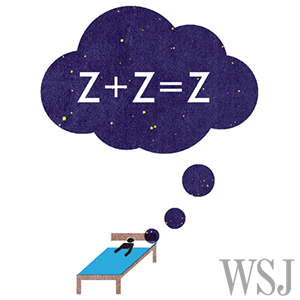
Sleep-learning (also known as hypnopædia [hip-noh-pee-dee-uh]) attempts to convey information to a sleeping person, typically by playing a sound recording to them while they sleep. This now-discredited technique was supposed to be moderately effective at making people remember direct passages or facts, word for word. Since the electroencephalography studies by Charles W. Simon and William H. Emmons in 1956, learning by sleep has not been taken seriously. The researchers concluded that learning during sleep was ‘impractical and probably impossible.’ They reported that stimulus material presented during sleep was not recalled later when the subject awoke unless alpha wave activity occurred at the same time the stimulus material was given. Since alpha activity during sleep indicates the subject is about to awake, the researchers felt that any learning occurred in a waking state.
In Aldous Huxley’s 1932 novel ‘Brave New World,’ hypnopaedia is used for the conditioning of children by future culture. In the novel, sleep-learning was discovered by accident when a Polish boy named Reuben Rabinovitch was able to recite an entire radio broadcast in English after a radio receiver was left on in his sleep. The boy was unable to comprehend what he had heard via hypnopædia, but it was soon realized that it could be used to effectively make suggestions about morality.
Posted in Education, Humor, Language |
1 Comment »
November 9, 2011

‘Maus: A Survivor’s Tale,’ by Art Spiegelman, is a biography of the author’s father, Vladek Spiegelman, a Polish Jew and Holocaust survivor. It alternates between descriptions of Vladek’s life in Poland before and during the Second World War and Vladek’s later life in the Rego Park neighborhood of New York City.
The work is a graphic narrative in which Jews are depicted as mice, while Germans are depicted as cats. It is the only comic book ever to have won a Pulitzer Prize.
read more »
Posted in Art, Language, War |
Leave a Comment »
November 9, 2011

Garbage Pail Kids (also known as ‘Basuritas’ in Latin America, ‘Gang do Lixo’ in Brazil, ‘Sgorbions’ in Italy, ‘Les Crados’ in France and ‘Die total kaputten Kids’ in Germany) is a series of trading cards produced by the Topps Company, originally released in 1985 and designed to parody the Cabbage Patch Kids dolls, which were immensely popular at the time.
Each sticker card features a character with a comical abnormality and/or suffering some terrible fate, and punning name, such as ‘Glandular Angela’ or ‘Half-Nelson.’ Fifteen series of regular trading cards were released in the United States, with various sets released in other countries.
read more »
Posted in Art, Humor, Language |
Leave a Comment »
November 9, 2011

Ruin value (German: Ruinenwert) is the concept that a building be designed such that if it eventually collapsed, it would leave behind aesthetically pleasing ruins that would last far longer without any maintenance at all. The idea was pioneered by German architect Albert Speer while planning for the 1936 Summer Olympics and published as ‘The Theory of Ruin Value’ (‘Die Ruinenwerttheorie’), although he was not its original inventor. The intention did not stretch only to the eventual collapse of the buildings, but rather assumed such buildings were inherently better designed and more imposing during their period of use.
The idea was supported by Adolf Hitler, who planned for such ruins to be a symbol of the greatness of the Third Reich, just as Ancient Greek and Roman ruins were symbolic of those civilizations.
read more »
Posted in Language, Technology |
Leave a Comment »
November 9, 2011
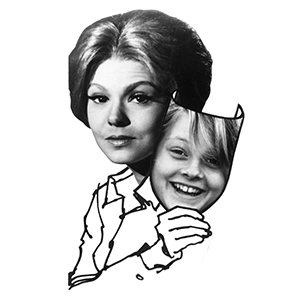
A body swap is a storytelling device seen in a variety of fiction, most often in television shows and movies, in which two people (or beings) exchange minds and end up in each other’s bodies. Alternatively, their minds may stay where they are as their bodies adjust. The two people usually keep their voices in cartoons, for purposes of knowing who is who. There are three distinct types of body swapping. Switches can be caused by magic items such as amulets, heartfelt wishes, or just strange quirks of the universe. The switches typically reverse after the subjects have expanded their world views, gained a new appreciation for each other’s troubles by literally ‘walking in another’s shoe’ and/or caused sufficient amounts of farce. Notable examples include the books ‘Vice Versa’ (1882) and ‘Freaky Friday’ (1972), as well as the film versions of both.
Switches accomplished by technology, exempting gadgets advanced sufficiently to appear as magic, are the fare of mad scientists. Body-swapping devices are characterized by highly experimental status, straps, helmets with complicated cables that run to a central system and a tendency to direly malfunction before their effects can be reversed. Those without such means may resort to brain transplants. Such experiments can have overtones of horror; evil mad scientists seldom use willing test subjects.
Posted in Art, Humor, Language |
Leave a Comment »
November 8, 2011

Comfort food is food prepared traditionally that may have a nostalgic or sentimental appeal. Many comfort foods are flavorful and easily eaten, having soft consistencies. American comfort foods include apple pie, chicken soup, chili, chocolate chip cookies, fried chicken, macaroni & cheese, mashed potatoes, meatloaf, and potato salad. Australian comfort foods include vegemite, meat pies, fish and chips, chiko rolls, dim sims, and potato cakes.
In Chinese culture the comfort foods might differ between each households. Nevertheless the common theme is usually invoked nostalgic sentiments of home and family. Chinese comfort foods usually served warm, have soft texture and it might be soupy. Some of common Chinese comfort foods are: baozi, rice congee, chinese noodles, and dim sum.
read more »
Posted in Food, Language, World |
Leave a Comment »
November 8, 2011
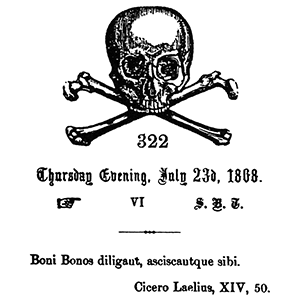
A secret society is a club or organization whose activities and inner functioning are concealed from non-members. The society may or may not attempt to conceal its existence. The term usually excludes covert groups, such as intelligence agencies or guerrilla insurgencies, which hide their activities and memberships but maintain a public presence.
The exact qualifications for labeling a group as a secret society are disputed, but definitions generally rely on the degree to which the organization insists on secrecy, and might involve the retention and transmission of secret knowledge, denial of membership in or knowledge of the group, the creation of personal bonds between members of the organization, and the use of secret rites or rituals which solidify members of the group.
read more »
Posted in Games, Language, Money |
Leave a Comment »
November 1, 2011
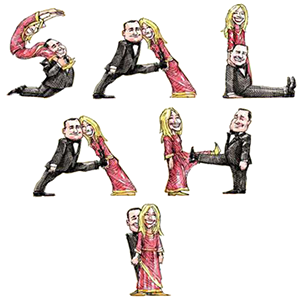
Gate-crashing, gatecrashing or party crashing is the act of attending an invite-only event without invitation. The person doing the gate-crashing is known as a gate-crasher. Gate crashing is also the act of tracing a signal through logic gates in electronics. Reasons for gate-crashing include avoiding entry fees, gaining access to free food and beverages (often alcoholic) , gaining access to a party that they wanted to be invited to, taking pictures of famous people, having pictures taken with famous people, and more serious crimes like stalking, kidnapping, murder, theft, fraud, and causing general disruptions.
Various techniques that involve blending in with the crowd can be used to gain access to some events. Various measures can be taken to prevent gate-crashers from gaining access such as collecting invitations at the door and employing staff to identify potential uninvited guests, but such measures can still be thwarted by a skilled gate-crasher. The 2009 U.S. state dinner security breaches occurred when Michaele and Tareq Salahi, from Virginia, allegedly gate-crashed the state dinner between President Barack Obama and Indian Prime Minister Manmohan Singh.
Posted in Language, Politics, Technology |
1 Comment »
November 1, 2011
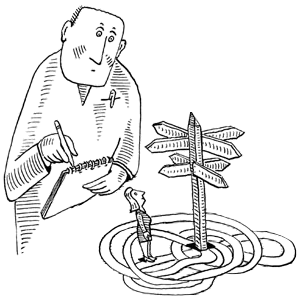
Developmental Topographical Disorientation, also known as DTD, is caused by the inability to segregate landmarks and derive navigational information from them, navigate through a non-verbal process, or generate cognitive maps. This is a newly discovered cognitive disorder in which patients who do not have brain structural abnormalities, such as lesions, and exhibit symptoms since childhood. Not to be confused with healthy individuals who have a poor sense of direction, DTD patients get lost in very familiar surroundings, such as their house or neighborhood, daily. This disorder could stem from a lack of experience in navigation during development and could present in different degrees of severity.
A woman in Vancouver, referred to as Pt1, presented with topographical disorientation in absence of any structural lesions. Despite normal cognitive development, she has never been able to orient with in the environment. Further testing showed that she was able to follow route based, landmark based, and verbal directions to reach a destination in an urban environment. In map based testing, the patient was unable to determine the shortest path between two locations on a map, but was able to follow a route traced on a map. The patient was unable to draw a detailed schematic of her house. Although the number of rooms and their locations were accurate, the spatial scaling was distorted.
Posted in Health, Language |
Leave a Comment »


 The Daily Omnivore