April 28, 2011

Ultracrepidarianism [uhl-truh-krep-i-dair-ee-uhn-iz-uhm] is the habit of giving opinions and advice on matters outside of one’s knowledge. The term was first publicly recorded in 1819 by the essayist William Hazlitt in a letter to William Gifford, the editor of the ‘Quarterly Review,’ a London periodical. The term draws from a comment purportedly made by Apelles, a famous Greek artist to a shoemaker who presumed to criticise his painting. The Latin phrase, ‘Sutor, ne ultra crepidam’ meaning literally ‘Shoemaker, not above the sandal,’ used to warn people off passing judgement beyond their expertise.
As the story goes, the shoemaker (sutor) had approached the painter Apelles of Kos to point out a defect in the artist’s rendition of a sandal (crepida), which Apelles duly corrected. Encouraged by this, the shoemaker then began to enlarge on other defects he considered present in the painting, at which point Apelles silenced him with his famous ‘Sutor, ne ultra crepidam.’ The saying remains popular in several languages, and is translated directly into the common Dutch saying ‘schoenmaker, blijf bij je leest’ (shoemaker, stick to your last, a last being the wooden pattern used in shoemaking).
Posted in Humor, Language |
Leave a Comment »
April 28, 2011
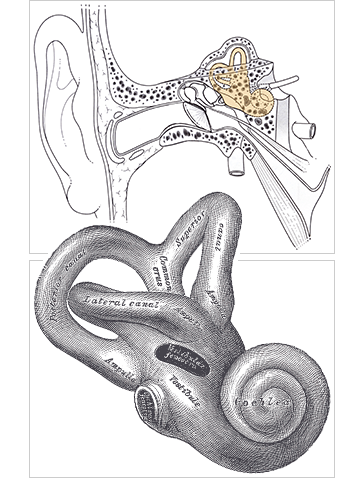
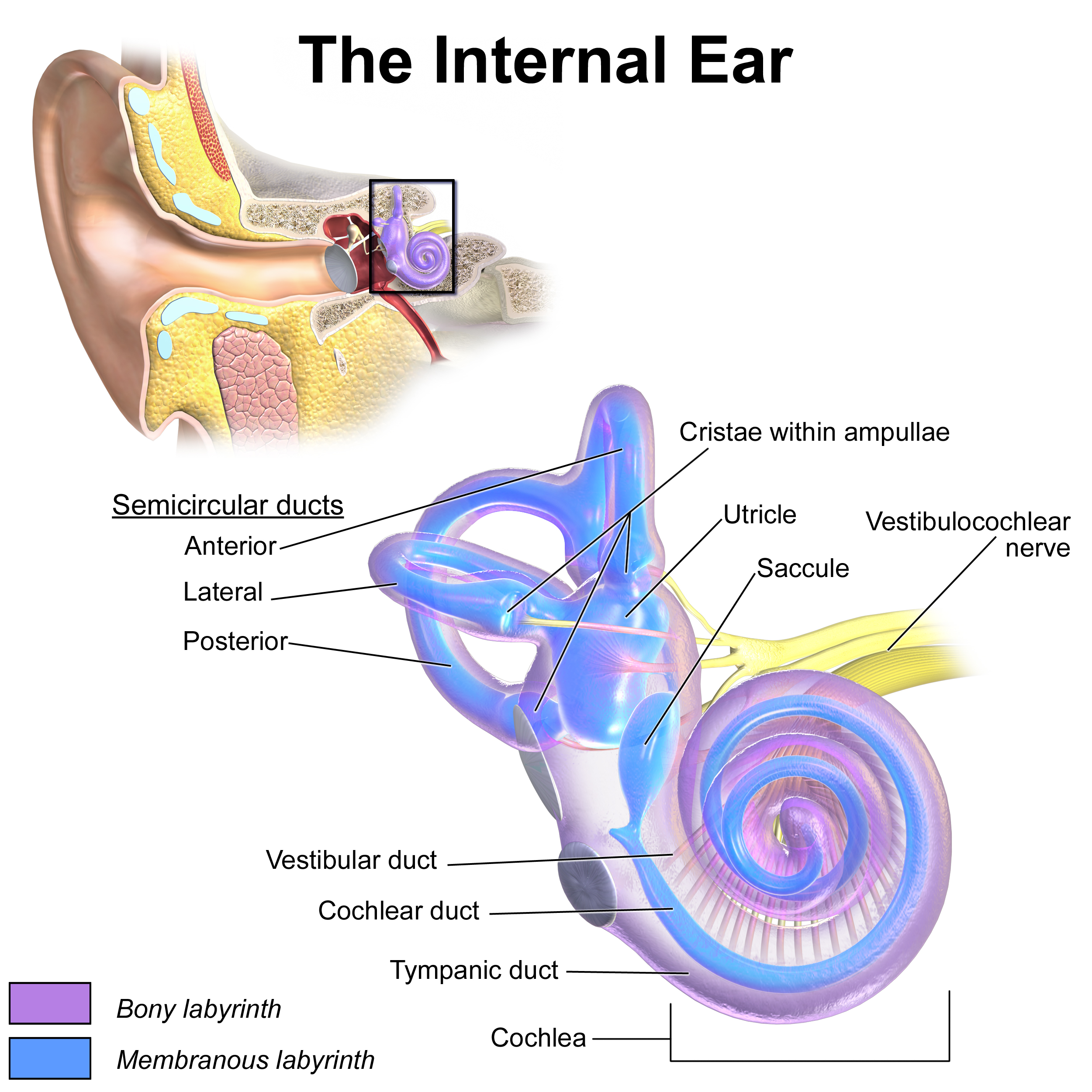
The receptors for the senses of equilibrium (vestibule) and hearing (cochlea) are housed within a collection of fluid filled tubes and chambers known as the membranous labyrinth, which is located within the bony labyrinth, a cavity in an an animal’s skull bones.
Posted in Health, Language, Science |
Leave a Comment »
April 28, 2011
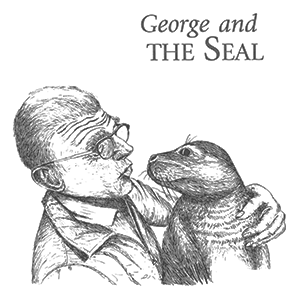
Hoover was a harbor seal who was able to imitate basic human speech. He was found as an orphan by George and Alice Swallow in Maine in 1971. At first the baby seal didn’t want to eat, but soon he ate at the pace of a vacuum cleaner (hence his name).
When Hoover outgrew the bathtub, he was transferred to the pond outside their house where he began to imitate people’s voices. Again he was moved, this time to the New England Aquarium, where he told visitors to ‘Get outta here!’ in a thick New England accent.
Posted in Humor, Language, Science |
Leave a Comment »
April 26, 2011

Minnesota nice is the stereotypical behavior of long-time Minnesota residents, to be courteous, reserved, and mild mannered. The cultural characteristics of Minnesota nice include a polite friendliness, an aversion to confrontation, a tendency toward understatement, a disinclination to make a fuss or stand out, emotional restraint, and self-deprecation.
It can also refer to traffic behavior, such as slowing down to allow another driver to enter a lane in front of the other person. The negative side of ‘Minnesota nice,’ occurs in the form of passive aggressiveness and resistance to change.
read more »
Posted in Humor, Language, Politics |
Leave a Comment »
April 26, 2011

Garlic fingers are an Atlantic Canadian dish, similar to a pizza in shape and size and made with the same type of dough. Instead of the traditional tomato sauce and toppings it is garnished with melted butter, garlic and sometimes cheese. Seasonings, such as parsley or bacon bits, may also be added.
It is often eaten as a side dish with pizza, dipped in donair (normally served on a donaer kebab) or marinara sauce. Instead of being cut in triangular slices, they are presented in thin strips, or ‘fingers.’ The dish is also popular in Wisconsin, where they are known as pizza fries.
Posted in Food, Language, World |
Leave a Comment »
April 26, 2011

Ringolevio [ring-uh-lee-vee-oh] is a children’s game which may be played anywhere but which originates in the streets of Depression era New York City. In some quarters this game is known as Manhunt which is really another game with different rules. Both are among the many variations of tag. Ringolevio requires close team work and near-military strategy.
There are two teams, each has its own ‘jail,’ perhaps a park bench or other defensible turf. Anyone on the pursuing side can catch anyone on the pursued side by grabbing hold of them and chanting ‘Chain chain double chain, no break away’ or (‘Ringolevio, 1-2-3, 1-2-3, 1-2-3’) If the person pursued breaks free at any point during this brief recitation, the person is not caught. If caught, the pursuer takes the prisoner to jail. The game ends when one team catches all the members of the opposing team.
read more »
Posted in Games, Language |
Leave a Comment »
April 26, 2011


A location-based service (LBS) is an information or entertainment service, accessible with mobile devices through the mobile network and utilizing the ability to make use of the geographical position of the mobile device. LBS include services to identify a location of a person or object, such as discovering the nearest ATM or the whereabouts of a friend or employee.
It also include parcel tracking and vehicle tracking services, and can include mobile commerce when taking the form of coupons or advertising directed at customers based on their current location. They include personalized weather services and even location-based games. They are an example of telecommunication convergence.
Posted in Language, Money, Technology |
Leave a Comment »
April 26, 2011

Absolute hot is the hottest temperature that anything can reach. It is theorized at around 1032 kelvins. This temperature is also known as the Planck temperature, in honor of German physicist Max Planck who first proposed it. It is the opposite of ‘Absolute Zero’ which is −273.15°C on the Celsius scale or 0°K on the Kelvin scale. Absolute hot is a concept of temperature that postulates the existence of a highest attainable temperature of matter.
The Planck temperature is assumed to be the highest temperature in conventional physics because conventional physics breaks down at that temperature. Above 1032K, particle energies become so large that the gravitational forces between them become as strong as any other force (like electromagnetism). Some forms of string theory, however, allow a temperature of 1030K, known as Hagedorn temperature.
Posted in Language, Science |
Leave a Comment »
April 26, 2011

Deadpan is a form of comic delivery in which humor is presented without a change in emotion or body language, usually speaking in a casual, monotone, solemn, blunt, disgusted or matter-of-fact voice and expressing an unflappably calm, archly insincere or artificially grave demeanor.
This delivery is also called dry wit when the intent, but not the presentation, is humorous, oblique, sarcastic, or apparently unintentional. The term ‘deadpan’ first emerged as an adjective or adverb in the 1920s, as a compound word (‘pan’ was a slang term for ‘face’).
read more »
Posted in Art, Humor, Language |
Leave a Comment »
April 25, 2011
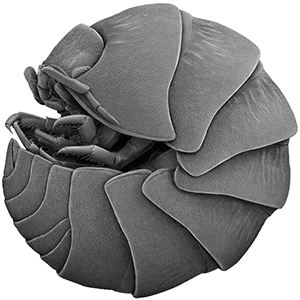
Often mistaken for insects, armadillidiidae is a family of woodlice, a terrestrial crustacean group in the order Isopoda. Unlike members of other woodlouse families, members of this family can roll into a ball, an ability they share with the outwardly similar but unrelated pill millipedes and other animals.
It is this ability which gives woodlice in this family their common name of pill bugs or roly polies. Because of their unusual yet non-threatening appearance, certain types of armadillidiids are kept as pets in areas such as the American South, typically among children. Owners of pet tarantulas sometimes keep pill bugs as cage cleaners in the same habitat. The pill bugs eat feces, mold, and leftovers.
Posted in Language, Science |
Leave a Comment »
April 25, 2011


A zarf is a holder, usually of ornamental metal, for a coffee cup without a handle. Although coffee was probably discovered in Ethiopia, it was in Turkey at around the thirteenth century that it became popular as a beverage. As with the serving of tea in China and Japan, the serving of coffee in Turkey was a complex, ritualized process.
It was served in small cups without handles (known as fincan), which were placed in holders known as zarf to protect the cup and also the fingers of the drinker from the hot fluid. Cups were typically made of porcelain, but also of glass and wood.
Posted in Art, Food, Language |
Leave a Comment »
April 24, 2011

A Silver Alert is a public notification system in the United States to broadcast information about missing persons – especially seniors with Alzheimer’s Disease, dementia or other mental disabilities – in order to aid in their return. Approximately 6 in 10 dementia victims will wander at least once, and if not found within 24 hours, up to half of wandering seniors with dementia suffer serious injury or death.
read more »
Posted in Health, Language, Politics |
Leave a Comment »




 The Daily Omnivore