March 8, 2011

Michel Fournier (b. 1944) is an adventurer and retired French Air Force colonel. He has been involved in planning several attempts to break freefall jumping height records, but has yet to be successful. In 1998, the French space agency chose Fournier to conduct a record jump to test the ability of astronauts to survive reentry without a space craft. This project was quickly canceled. In 2003, Fournier attempted his first privately-financed jump but the balloon ripped while being filled. ‘The New York Times’ reports that Fournier has spent nearly $20 million on his two private attempts.
Fournier was scheduled to carry out the Grand Saut (Big Jump) project in 2008, which would have seen him ascend to 40 km (25 mi) in a balloon and freefall 34 km (21 mi) to earth before opening his parachute at 6 km (3.7 mi). In the process he was expected to break the sound barrier, and reach speeds upward of 1,000 miles per hour. His freefall was expected to last 15 minutes. Joseph Kittinger set the previous parachute record by jumping from 31,333 meters (102,799 ft) in 1960 (with a small parachute for guidance) under Project Excelsior. Roger Eugene Andreyev from the Soviet Union holds the longest freefall record of 24,483 meters (80,325 ft) in 1962.
Posted in Games, Money, Technology |
Leave a Comment »
March 8, 2011
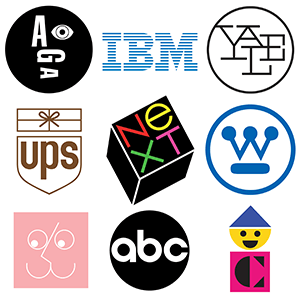

Paul Rand (1914 — 1996) was an American graphic designer, best known for his corporate logo designs, including the logos for IBM, UPS, Enron, Westinghouse, and ABC. He was one of the originators of the Swiss Style of graphic design, which emphasizes cleanliness, readability and objectivity.
read more »
Posted in Art, Money, Philosophy |
Leave a Comment »
March 8, 2011


Graphic design is the art of communication, stylizing, and problem-solving through the use of type, space, and image. Graphic design often refers to both the process (designing) by which the communication is created and the products (designs) which are generated.
Common uses of graphic design include identity (logos and branding), publications (magazines, newspapers and books), print advertisements, posters, billboards, website graphics and elements, signs and product packaging. For example, a product package might include a logo or other artwork, organized text and pure design elements such as images, shapes and color which unify the piece. Composition is one of the most important features of graphic design, especially when using pre-existing materials or diverse elements.
read more »
Posted in Art, Money, Technology |
Leave a Comment »
March 8, 2011

Saul Bass (1920 – 1996) was an American graphic designer and filmmaker, best known for his design on animated motion picture title sequences. During his 40-year career he worked for some of Hollywood’s greatest filmmakers, including most notably Alfred Hitchcock, Otto Preminger, Stanley Kubrick, and Martin Scorsese. His most famous title sequences are the animated paper cut-out of a heroin addict’s arm for Preminger’s ‘The Man with the Golden Arm,’ the text racing up and down what eventually becomes a high-angle shot of the UN building in Alfred Hitchcock’s ‘North by Northwest,’ and the disjointed text that races together and apart in ‘Psycho’ (1960).
Saul Bass designed the sixth AT&T Bell System logo. He also designed AT&T’s ‘globe’ logo after the breakup of the Bell System. Bass also designed Continental Airlines’ 1968 ‘jetstream’ logo which became the most recognized airline industry logo of the 1970s, and several other major corporate logos.
Posted in Art, Money |
Leave a Comment »
March 8, 2011

Alex Ross (b. 1970) is an American comic book artist. He is praised for his realistic, human depictions of classic comic book characters. Since the 1990s he has done work for Marvel Comics and DC Comics (e.g. Marvels and Kingdom Come, respectively), as well as being involved in creating independent works featuring superheroes (e.g. Astro City and Project Superpowers).
Because his painting style is time-consuming, he primarily serves as a plotter and/or cover artist. Ross’ rendering style, his attention to detail, and the perceived tendency of his characters to be depicted staring off into the distance has been satirized in Mad magazine.
read more »
Posted in Art, Money |
Leave a Comment »
March 8, 2011

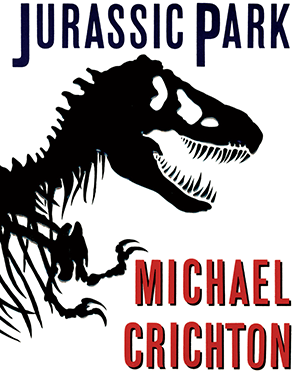
Chip Kidd (b. 1964) is an American author and graphic designer, known for his innovative book covers. He is currently associate art director at Knopf, an imprint of Random House. He first joined the Knopf design team in 1986, as a junior assistant. Kidd also supervises graphic novels at Pantheon.
His output includes cover concepts for books by Bret Easton Ellis, Haruki Murakami, Dean Koontz, Cormac McCarthy, Frank Miller, Alex Ross, David Sedaris, John Updike and others. His design for Michael Crichton’s Jurassic Park novel was carried over into marketing for the film adaptation. Oliver Sacks and other authors have contract clauses stating that Kidd design their books. Kidd is currently working with writer Lisa Birnbach on True Prep, a follow-up to her 1980 book The Official Preppy Handbook.
Posted in Art, Language, Money |
2 Comments »
March 7, 2011


Hapshash and the Coloured Coat is the name of an influential British graphic design and avant-garde musical partnership between Michael English and Nigel Waymouth, producing psychedelic posters and two albums of underground music. The silkscreen printed posters they created, advertising underground ‘happenings,’ clubs and concerts in London, became so popular at the time that they helped launch the commercial sale of posters as art, initially in fashionable stores such as the Indica Bookshop and Carnaby Street boutiques.
Their posters remain highly sought after: a poster advertising Jimi Hendrix’s 1967 concert at the Fillmore Auditorium in San Francisco, depicting the guitarist as a psychedelic Native American chief with a hunting bow in one hand and a peace pipe in the other, was valued in 2008 at $125,000. Their first album of psychedelic music, produced by a collective in early 1967 and including many famous names, is now seen as being influential on the early works of Amon Düül and other pioneers of German Krautrock, as well as inspiring sections of the Rolling Stones’ Their Satanic Majesties Request album.
Posted in Art, Drugs, Money |
Leave a Comment »
March 7, 2011

ZZ Top is an American rock band, sometimes referred to as ‘That Little Ol’ Band from Texas.’ Their style, which is rooted in the blues, has come to incorporate elements of arena, Southern, and boogie rock. The band is from Houston, Texas, formed in 1969. Musician Billy Gibbons and drummer Dan Mitchell, originally in a band called the ‘Moving Sidewalks,’ got together with bassist Lanier Greig, forming ZZ Top. In 1969, Greig and Mitchell were replaced by Dusty Hill and Frank Beard from the band ‘American Blues.’
They were signed to London Records in 1970 and released several albums. After years of touring, the band went on a two-year break in 1977, which resulted in Gibbons and Hill growing chest-length beards. The band’s name was rumored to have derived from Zig-Zag and TOP rolling papers. Gibbons, however it actually refers to an apartment Gibbons lived in, with a row of flyers on a wall, including Z. Z. Hill and B.B. King posters. Coming to the conclusion that B.B. King was on the ‘top,’ Gibbons settled with the name ‘ZZ Top.’
Posted in Art, Money |
Leave a Comment »
March 7, 2011
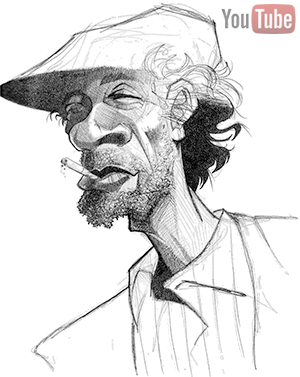
Gil Scott-Heron (b. 1949) is an American poet, musician, and author known primarily for his late 1970s and early 1980s work as a spoken word performer and his collaborative soul works with musician Brian Jackson, which featured a musical fusion of jazz, blues and soul music, as well as lyrical content concerning social and political issues of the time, delivered in both rapping and melismatic vocal styles by Scott-Heron.
The music of these albums, most notably ‘Pieces of a Man’ and ‘Winter in America’ in the early 1970s, influenced and helped engender later African-American music genres such as hip hop and neo soul. Scott-Heron’s recording work is often associated with black militant activism and has received much critical acclaim for one of his most well-known compositions ‘The Revolution Will Not Be Televised.’
Posted in Art, Money, Politics |
Leave a Comment »
March 7, 2011

Root beer is a carbonated, sweetened beverage, originally made using the root of a sassafras plant (or the bark of a sassafras tree) as the primary flavor. Root beer, popularized in North America, comes in two forms: alcoholic and soft drink. The historical root beer provided a drink with a very low alcohol content, like a small or ‘near beer’. Although roots are used as the source of many soft drinks in many countries throughout the world (and even alcoholic beverages/beers), the name root beer is rarely used outside North America, Britain, Ireland and the Philippines. Most other countries have their own indigenous versions of root-based beverages and small beers but with different names.
There are hundreds of root beer brands in the United States, and there is no standardized recipe. The primary ingredient, artificial sassafras flavoring, is complemented with other flavors, common ones being vanilla, wintergreen, cherry tree bark, licorice root, sarsaparilla root, nutmeg, acacia, anise, molasses, cinnamon, clove and honey. Homemade root beer is usually made from concentrate, though it can also be made from actual herbs and roots. Both alcoholic and non-alcoholic root beers have a thick and foamy head when poured, often enhanced by the addition of yucca extract.
Posted in Drugs, Food, Money |
Leave a Comment »
March 6, 2011

Louis’ Lunch in New Haven, Connecticut, advertises itself as the first restaurant to serve hamburgers and as being the oldest hamburger restaurant still operating. Opened as a small lunch wagon in 1895, it was also one of the first places in the US to serve steak sandwiches. Louis Lassen, a butter dealer, operated a lunch wagon where he served steak and ground steak hamburger sandwiches, made from scrap trimmings, to local factory workers. According to family legend, one day in 1900 a local businessman dashed into the small New Haven lunch wagon and pleaded for a lunch to go. Lassen hurriedly sandwiched a broiled hamburger between two slices of bread and sent the customer on his way, so the story goes, with America’s first hamburger being served.
The fourth generation of Lassens own and operate Louis’ Lunch today. The restaurant flame broils the hamburgers, the original way, in antique 1898 vertical cast iron gas stove with hinged steel wire gridirons to hold the hamburgers in place while they cook simultaneously on both sides. The patties are hand formed from ground steak made from a secret blend of five different cuts of beef. The hamburgers are prepared with cheese, tomato or onion as the only condiments or garnish; never any mustard, ketchup or mayonnaise on two square pieces of toasted white bread.
Posted in Food, Money |
1 Comment »
March 6, 2011

Bette Nesmith (1924 – 1980) was an American typist, the inventor of Liquid Paper, and mother of musician and producer Michael Nesmith of The Monkees.
It was very difficult to erase mistakes made by early electric typewriters, which caused problems for her. She put tempera water-based paint in a bottle to correct her mistakes, and secretly used her white correction paint for five years, making some improvements with help from her son’s high school chemistry teacher. Some superiors admonished her against using it, but coworkers frequently sought her ‘paint out.’ She eventually began marketing her typewriter correction fluid as ‘Mistake Out’ in 1956, and later as ‘Liquid Paper.’
Posted in Money, Technology |
Leave a Comment »





 The Daily Omnivore