July 28, 2016

Leo Burnett (1891 – 1971) was an American advertising executive and the founder of Leo Burnett Company, Inc. He was responsible for creating some of advertising’s most well-known characters and campaigns of the 20th century, including ‘Tony the Tiger,’ ‘Charlie the Tuna,’ the ‘Marlboro Man,’ the ‘Maytag Repairman,’ United’s ‘Fly the Friendly Skies,’ Allstate’s ‘Good Hands,’ and for garnering relationships with multinational clients such as McDonald’s, Hallmark, and Coca-Cola.
His first job out of college was as a reporter for the ‘Peoria Journal Star’ in Peoria, Illinois. In 1917, Leo moved to Detroit and was hired to edit an in-house publication for ‘Cadillac Clearing House,’ later becoming an advertising director for the same institution. At Cadillac, Leo met his advertising mentor, Theodore F. MacManus, whom Leo called ‘one of the great advertising men of all time.’
read more »
Posted in Language, Money |
Leave a Comment »
July 13, 2016


Search engine optimization (SEO) is the process of affecting the visibility of a website or a web page in a web search engine’s unpaid results — often referred to as ‘natural,’ ‘organic,’ or ‘earned’ results. In general, the earlier (or higher ranked on the search results page), and more frequently a site appears in the search results list, the more visitors it will receive from the search engine’s users, and these visitors can be converted into customers. SEO may target different kinds of searches, including for images, places, videos, scholarly articles, news stories, and industry-specific vertical search engines (specialty or topical search engines, such as Yelp for local business reviews and Zillow for real estate listings).
As an Internet marketing strategy, SEO considers how search engines work, what people search for, the actual search terms or keywords typed into search engines and which search engines are preferred by their targeted audience. Optimizing a website may involve editing its content, HTML and associated coding to both increase its relevance to specific keywords and to remove barriers to the indexing activities of search engines. Promoting a site to increase the number of backlinks (referred links), or inbound links, is another SEO tactic.
read more »
Posted in Money, Technology |
Leave a Comment »
June 26, 2016
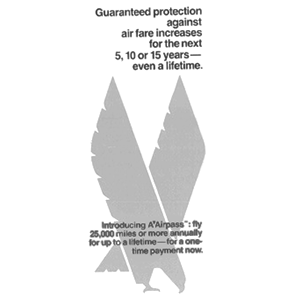
AAirpass is a membership-based discount program offered by American Airlines to frequent flyers launched in 1981. The program is best known for a previous offering of unlimited travel on American Airlines and unlimited access to Admirals Club locations. Pass holders were offered terms of five years or lifetime. Today the program no longer offers lifetime or unlimited travel focusing instead on pre-paid fares at a discounted, fixed price for frequent travelers. A minimum commitment of $10,000 per traveler, per year is required. Existing unlimited AAirpasses remain valid.
The program initially enabled passholders unlimited first class travel on any of the airline’s flights worldwide. Lifetime membership was priced at $250,000, with the option to purchase a companion pass for an additional $150,000. A total of 66 AAirpasses are reported to have been sold under the unlimited travel conditions with businessman Michael Dell and Willie Mays among those who purchased the original offer. The program was launched at a time when the airline was struggling financially and in need of a quick infusion of cash.
read more »
Posted in Money, World |
Leave a Comment »
June 13, 2016
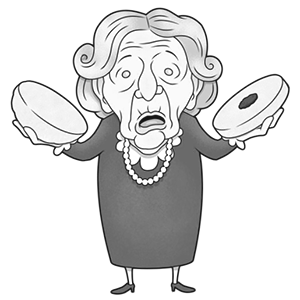
“Where’s the beef?” is a catchphrase in the United States and Canada. The phrase originated as a slogan for the fast food chain Wendy’s. Since then it has become an all-purpose phrase questioning the substance of an idea, event or product.
The phrase first came to public attention in a television commercial for the Wendy’s in 1984. In reality, the strategy behind the campaign was to distinguish competitors (McDonald’s and Burger King) big name sandwiches (Big Mac and Whopper respectively) from Wendy’s ‘modest’ Single by focusing on the large bun used by the competitors and the larger beef patty in Wendy’s sandwich. In the ad, titled ‘Fluffy Bun,’ actress Clara Peller receives a burger with a massive bun from a fictional competitor, which uses the slogan ‘Home of the Big Bun.’ The small patty prompts Peller to angrily exclaim, ‘Where’s the beef?’
read more »
Posted in Food, Humor, Money |
1 Comment »
June 7, 2016

The Diderot [dee-duh-roh] effect is a social phenomenon related to consumer goods that comprises two ideas. The first posits that goods purchased by consumers will be cohesive to their sense of identity, and as a result, will be complementary to one another. The second states that the introduction of a new possession that is deviant from the consumer’s current complementary goods can result in a process of spiraling consumption. The term was coined by anthropologist and scholar of consumption patterns Grant McCracken in 1988, and is named after the French philosopher Denis Diderot (1713–1784), who first described the effect in an essay.
The term has become common in discussions of sustainable consumption and green consumerism, in regard to the process whereby a purchase or gift creates dissatisfaction with existing possessions and environment, provoking a potentially spiraling pattern of consumption with negative environmental, psychological and social impacts.
read more »
Posted in Health, Money |
Leave a Comment »
June 6, 2016

Product placement is form of advertising where brands appear in media such as film, television, and video games. Product placement stands out as a marketing strategy because it is the most direct attempt to derive commercial benefit from ‘the context and environment within which the product is displayed or used.’ The technique can be beneficial for viewers, since interruptive advertising removes them from the entertainment.
According to PQ Media, a consulting firm that tracks alternative media spending, 2014 product placement expenditures were estimated at $10.58 billion, rising 13.6% year-over-year, and global branded entertainment growth reached $73.27 billion. The firm noted that brand marketers are seeking improved methods to engage younger audiences used to ad-skipping and on-demand media usage, and branded entertainment provides omnichannel possibilities to more effectively engage post-boomers, particularly Millennials.
read more »
Posted in Money |
Leave a Comment »
June 5, 2016

Divide and choose (or ‘I cut, you choose‘) is a procedure for envy-free cake-cutting between two partners. It involves a heterogeneous good or resource (‘the cake’) and two partners which have different preferences over parts of the cake. The protocol proceeds as follows: one person cuts the cake into two pieces, and the other person chooses his piece first.
Divide-and-choose is mentioned in the Bible. In Genesis, when Abraham and Lot come to the land of Canaan, Abraham suggests that they divide it among them. Then Abraham, coming from the south, divides the land to a ‘left’ (western) part and a ‘right’ (eastern) part, and lets Lot choose. Lot chooses the eastern part which contains Sodom and Gomorrah.
read more »
Posted in Games, Money, Science |
Leave a Comment »
May 20, 2016
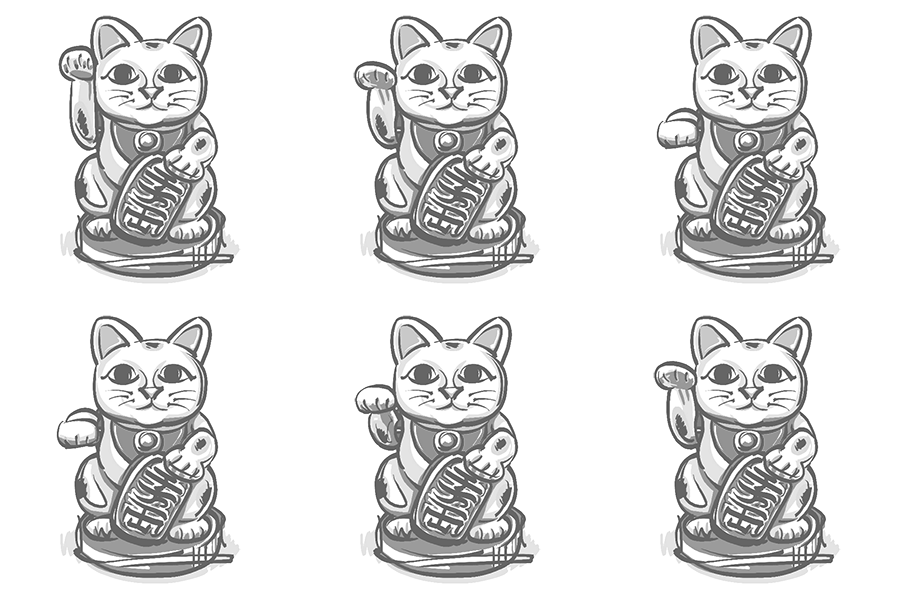
The maneki-neko (Japanese: ‘beckoning cat’) is a common Japanese figurine (lucky charm, talisman) which is often believed to bring good luck to the owner. In modern times, they are usually made of ceramic or plastic. The figurine depicts a cat (traditionally a calico Japanese Bobtail) beckoning with an upright paw, and is usually displayed in—often at the entrance of—shops, restaurants, pachinko parlors, and other businesses. Some of the sculptures are electric or battery-powered and have a slow-moving paw beckoning. The maneki-neko is sometimes also called the ‘welcoming cat,’ ‘lucky cat,’ ‘money cat,’ ‘happy cat,’ or ‘fortune cat’ in English.
Maneki-neko come in different variations. Common colors are white, black, gold and sometimes red. In addition to figurines, maneki-neko can be found as keychains, piggy banks, air fresheners, house-plant pots, and miscellaneous ornaments, as well as large statues. It is also sometimes called the ‘Chinese lucky cat’ due to its popularity among Chinese merchants.
read more »
Posted in Money, World |
1 Comment »
May 9, 2016


Guerrilla marketing is an advertisement strategy concept designed for businesses to promote their products or services in an unconventional way with little budget to spend. This involves high energy and imagination focusing on grabbing the attention of the public in more personal and memorable level. Some large companies use unconventional advertising techniques, proclaiming to be guerrilla marketing but those companies will have larger budget and the brand is already visible. The main point of guerrilla marketing is that the activities are done exclusively on the streets or other public places, such as shopping centers, parks or beaches with maximum exposure.
The term and concept were first described by Jay Conrad Levinson in his 1984 book ‘Guerrilla Marketing.’ Traditional advertising media channels such as print, radio, television, and direct mail are falling out of fashion, forcing marketers and advertisers to look for new strategies to get their commercial messages to the consumer. Guerrilla marketing tries to create surprising and memorable experiences for potential consumer, to increases the likelihood that will tell their friends about it and via word of mouth.
read more »
Posted in Money |
Leave a Comment »
April 28, 2016

The Pepsi Challenge is an ongoing marketing promotion run by PepsiCo since 1975. It is also the name of a cross country ski race at Giant’s Ridge Ski Area in Biwabik, Minnesota, an event sponsored by Pepsi. The challenge originally took the form of a single blind taste test. At malls, shopping centers, and other public locations, a Pepsi representative set up a table with two white cups: one containing Pepsi and one with Coca-Cola. Shoppers were encouraged to taste both colas, and then select which drink they prefer. The results of the test leaned toward a consensus that Pepsi was preferred by more Americans.
The Pepsi Challenge taste test ad campaign is frequently credited for Coca-Cola’s decision to introduce New Coke in 1985. In his book ‘Blink: The Power of Thinking Without Thinking’ (2005), author Malcolm Gladwell presents evidence that suggests Pepsi’s success over Coca-Cola is a result of the flawed nature of the ‘sip test’ method. His research shows that tasters will generally prefer the sweeter of two beverages based on a single sip, even if they prefer a less sweet beverage over the course of an entire can. Additionally, many participants recalled a difference in temperature between the two drinks. According to these claims, Pepsi was served chilled, while Coca-Cola was served at room temperature, thus making the Pepsi more appealing.
Posted in Food, Money |
1 Comment »
April 27, 2016

‘Buyology: Truth and Lies About Why We Buy’ (2008) is a bestselling book by Danish marketing expert Martin Lindstrom, in which he analyzes buying decisions. The author attempts to identify the factors that influence buyers’ decisions in a world cluttered with messages such as advertisements, slogans, jingles, and celebrity endorsements. Lindstrom, through a study of the human psyche, examines the subconscious mind and its role in deciding what the buyer will buy. He debunks some myths about advertising and promotion.
‘Buyology’ is claimed to be a result of the author’s three year neuromarketing study on 2,081 people to identify the effect of brands, logos, commercials, advertisements and products on them. Neuromarketing investigates the sensorimotor, cognitive, and affective response to marketing stimuli. The study was funded by seven corporations, including GlaxoSmithKline, Hakuhodo, Fremantle – and Lindstrom himself. The study evaluates the effectiveness of logos, product placement and subliminal advertising, the influence of our senses and the correlation between religion and branding.
Posted in Language, Money |
Leave a Comment »
April 14, 2016

Fuerdai is a Chinese term that means ‘the second generation of the rich.’ This term is used to describe social and moral problems that are associated with modern China’s recent economic ascendency. Fuerdai are sons and daughters of the Chinese nouveau riche of the early years of China’s reform era (from the late 1970s onward). During the new era, in which private initiative could be rewarded by wealth, many new rich Chinese emerged in the former-socialist society. Their children often enjoy a comfortable lifestyle and have a much easier and obstacle-free life path.
Most wealthy Chinese send their children abroad to get a better education. This especially true in the US and Canada where it is common to see well-off Chinese students attending driving cars that are out of reach for the vast majority of American students. Universities look favorably to this kind of international student as they generate more revenue and tend to pay more fees. Places like Los Angeles, San Francisco, Seattle, Vancouver, West Lafayette, Indiana (home to Purdue University), Toronto, Boston, New York, and Dallas tend to have high numbers of Fuerdai, who will often attend university for four years and sell their cars right after graduation.
Posted in Money, Politics, World |
1 Comment »


 The Daily Omnivore