April 14, 2016

Fuerdai is a Chinese term that means ‘the second generation of the rich.’ This term is used to describe social and moral problems that are associated with modern China’s recent economic ascendency. Fuerdai are sons and daughters of the Chinese nouveau riche of the early years of China’s reform era (from the late 1970s onward). During the new era, in which private initiative could be rewarded by wealth, many new rich Chinese emerged in the former-socialist society. Their children often enjoy a comfortable lifestyle and have a much easier and obstacle-free life path.
Most wealthy Chinese send their children abroad to get a better education. This especially true in the US and Canada where it is common to see well-off Chinese students attending driving cars that are out of reach for the vast majority of American students. Universities look favorably to this kind of international student as they generate more revenue and tend to pay more fees. Places like Los Angeles, San Francisco, Seattle, Vancouver, West Lafayette, Indiana (home to Purdue University), Toronto, Boston, New York, and Dallas tend to have high numbers of Fuerdai, who will often attend university for four years and sell their cars right after graduation.
Posted in Money, Politics, World |
1 Comment »
April 11, 2016

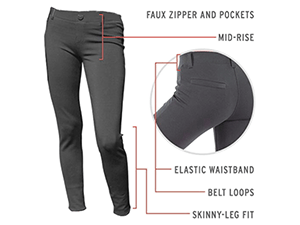
Athleisure is a trend in fashion in which clothing designed for athletic workouts (sometimes termed ‘activewear) is worn outside of the gym to go to the office or shopping or other social occasions. Athleisure outfits are ‘yoga pants, tights and leggings’ that ‘look like athletic wear’ characterized as ‘fashionable, dressed up sweats and exercise clothing.’ The idea is that ‘gym clothes are making their way out of the gym and becoming a larger part of people’s everyday wardrobes.’
One account suggests that the trend came about because people could wear them for multiple occasions without having to change, which meant greater convenience, since people did not have to carry an extra gym outfit on the way to the office, for example. Reports in the Wall Street Journal describe the athleisure market as growing, displacing typical workwear styles, and cutting into sales of jeans. While the trend was started by women, men are increasingly turning to athleisure wear as well. For men’s fashion, athleisure wear began with luxury sweatpants (‘joggers’) and then moved to the upper torso region with ‘dressy/sporty versions of men’s blazers, varsity jackets, pea coats and sweaters.’
Posted in Games, Money |
Leave a Comment »
March 29, 2016


In advertising, a hard sell is an advertisement or campaign that uses a more direct, forceful, and overt sales message. The term is also used to describe aggressive sales techniques used by company representatives, particularly in the context of doorstep selling.
The concepts that distinguish a hard sell from a ‘soft sell’ (subtle, casual, or friendly sales message) have to do with directness of an advertiser or seller, rational appeal, and the amount of information given to the buyer about a product. A hard sell is extremely direct in nature. An advertisement will contain a forceful, loud slogan in order to grab buyers’ attention, or a salesperson will be very persistent, cornering their buyer into purchasing the product they are selling.
read more »
Posted in Money |
Leave a Comment »
March 26, 2016
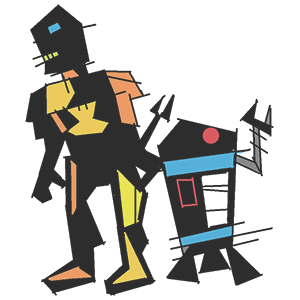
A shared universe is a set of creative works where more than one writer (or other artist) independently contributes a work that can stand alone but fits into the joint development of the storyline, characters, or world of the overall project. It is common in genres like science fiction. It differs from ‘collaborative writing’ where multiple artists are working together on the same work, and from ‘crossovers’ where the works and characters are independent except for a single meeting.
The term shared universe is also used within comics to reflect the overall milieu created by the comic book publisher in which characters, events, and premises from one product line appear in other product lines in a media franchise. The term has also been used in a wider, non-literary sense to convey interdisciplinary or social commonality, often in the context of a ‘shared universe of discourse.’
read more »
Posted in Art, Money |
Leave a Comment »
March 24, 2016

Fika [fee-kah] is a concept in Swedish culture with the basic meaning ‘to have coffee,’ often accompanied with pastries or sandwiches. A more contemporary generalized meaning of the word, where the coffee may be replaced by tea or even juice, lemonade or squash for children, has become widespread. In some social circles, even just a sandwich or a small meal may be denoted a fika similar to the English concept of afternoon tea. In Sweden pastries in general (for example cinnamon buns) are often referred to as ‘fikabröd’ (‘fika bread’).
Fika is a common practice at workplaces in Sweden where it constitutes at least one break during a normal workday. Often, two fikas are taken in a day at around 9:00 in the morning and 3:00 in the afternoon. The work fika is an important social event where employees can gather and socialize to discuss private and professional matters. It is not uncommon for management to join employees and to some extent it can even be considered impolite not to join one’s colleagues at fika. The practice is not limited to any specific sector of the labor market and is considered normal practice even in government administration.
read more »
Posted in Food, Money, World |
Leave a Comment »
March 20, 2016

‘You have two cows‘ is a joke comparing political systems that circulated throughout the US since around 1936 under the title ‘Parable of the Isms.’ A column in ‘The Chicago Daily Tribune’ in 1938 attributes a version involving socialism, communism, fascism and New Dealism to an address by lawyer Silas Strawn to the Economic Club of Chicago in 1935.
The joke always begins with ‘You have two cows…’ followed by a political system and its effect on the cows. For example, ‘socialism’ (the government takes one and gives it to your neighbor), ‘communism’ (you give them to the government, and the government then gives you some milk), fascism (you give them to the government, and the government then sells you some milk), and capitalism (you sell one and buy a bull).
Posted in Humor, Money, Politics |
1 Comment »
March 14, 2016

An impulse purchase is an unplanned decision to buy a product or service, made just before a completing an unrelated transaction. Research findings suggest that emotions and feelings play a decisive role in purchasing, triggered by seeing the product or upon exposure to a well crafted promotional message.
Impulse buying disrupts the normal decision making models in consumers’ brains. The logical sequence of the consumers’ actions is replaced with an irrational moment of self gratification. Impulse items appeal to the emotional side of consumers. Items bought on impulse are not usually considered functional or necessary in their lives. Preventing impulse buying involves techniques such as setting budgets before shopping and taking time out before the purchase is made.
read more »
Posted in Health, Money |
Leave a Comment »
March 11, 2016
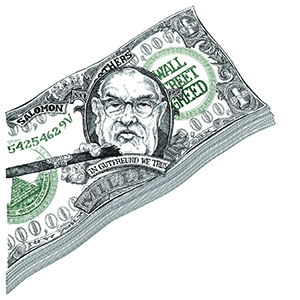
Liar’s Poker is a non-fiction, semi-autobiographical book by Michael Lewis describing the author’s experiences as a bond salesman on Wall Street during the late 1980s. Two important figures in that history feature prominently in the text, the head of Salomon Brothers’ mortgage department Lewis Ranieri and the firm’s CEO John Gutfreund. The book’s name is taken from a high-stakes gambling game popular with bond traders.
First published in 1989, it is considered one of the books that defined Wall Street in that era, along with Bryan Burrough and John Helyar’s ‘Barbarians at the Gate: The Fall of RJR Nabisco,’ and the fictional ‘The Bonfire of the Vanities by Tom Wolfe.’ The book captures an important period in the history of New York’s financial markets.
read more »
Posted in Games, Language, Money |
Leave a Comment »
March 8, 2016
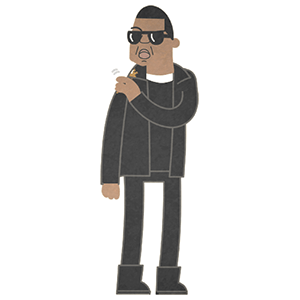
To have a chip on one’s shoulder refers to the act of holding a grudge or grievance that readily provokes disputation. The expression comes from the ancient right of shipwrights within the Royal Navy Dockyards to take home a daily allowance of offcuts of timber, even if good wood had to be cut up for this purpose. The privilege was instated as a prescriptive right from 1634. By 1756, the privilege was costing taxpayers too much in lost timber for warship repair and construction, and a decision was then made by the Navy Board to limit the quantity a shipwright could carry home. A warrant was issued to the Royal Dockyards to reduce the quantity of chips by ordering shipwrights to carry their bundles under their arms instead of on their shoulders, as one could not carry as much timber in this fashion.
There was an incident on the very first day the law was enforced: ‘Then came John Miller, shipwright, about thirty feet before the main body of the people, on which the Master Shipwright ordered him to lower his chips. He answered he would not, with that the Master Shipwright took hold of him, and said he should. He, the said Miller replied, ‘Are not the chips mine? I will not lower them.’ Immediately the main body pushed on with their chips on their shoulders, crowded and forced the Master Shipwright and the First Assistant through the gateway, and when out of the yard give three huzzas.’
Posted in Language, Money |
1 Comment »
March 5, 2016

Kindness priming is an affect-dependent cognitive effect in which subjects will display a positive affect following exposure to kindness. Individuals who are exposed to an act of kindness – the priming – subsequently notice more of the positive features of the world than they would otherwise. A person receiving a free voucher from a stranger, for example, may become more inclined to perceive the intentions of others around them as good.
It is hypothesized that kindness priming involves the same cognitive circuitry that enables memory priming. By activating neural representations of positive affect, an act of kindness stimulates increased activity in related associative networks. It is therefore more likely that subsequent stimuli will activate these related, positive networks, and so the positive affect continues to be carried forward in a feed forward manner. Additionally, kindness priming has also been shown to inoculate against negative stimuli in the short term, thus temporarily improving an individual’s resilience.
read more »
Posted in Health, Money |
Leave a Comment »
March 4, 2016


Affective forecasting (also known as the ‘hedonic forecasting mechanism’) is the prediction of one’s affect (emotional state) in the future. As a process that influences preferences, decisions, and behavior, affective forecasting is studied by both psychologists and economists, with broad applications.
Psychologist Daniel Kahneman and business school professor Jackie Snell began research on hedonic forecasts in the early 1990s, examining its impact on decision making. The term ‘affective forecasting’ was later coined by psychologists Timothy Wilson and Daniel Gilbert. Early research focused solely on measuring emotional forecasts, while subsequent studies examined accuracy, revealing that people are surprisingly poor judges of their future emotional states. For example, in predicting how events like winning the lottery might affect their happiness, people are likely to overestimate future positive feelings, ignoring the numerous other factors that might contribute to their emotional state outside of the single lottery event.
read more »
Posted in Health, Money |
Leave a Comment »
March 2, 2016
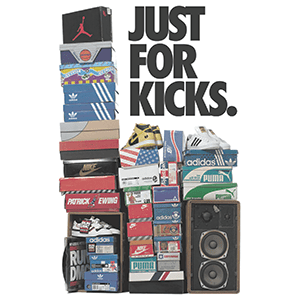
A sneakerhead is a person who collects, trades or admires sneakers as a hobby. The birth of sneakerhead culture in the United States came in the 1980s and can be attributed to two major sources: basketball, specifically the emergence of Michael Jordan and his eponymous Air Jordan line of shoes released in 1985, and the growth of hip hop music. The boom of signature basketball shoes during this era provided the sheer variety necessary for a collecting subculture, while the Hip-Hop movement gave the sneakers their street credibility as status symbols.
Several popular brands and styles of sneakers have emerged as collectors items in the sneakerhead subculture, including Air Jordans, Air Force Ones, Nike Dunks, Nike Skateboarding (SB), Nike Foamposites, Nike Air Max, and in the past few years, the Nike Air Yeezy. Shoes that have the most value are usually exclusive or limited editions. Also certain color schemes may be rarer relative to others in the same sneaker, inflating desirability and value. Recently, sneaker customs, or one-of-a-kind sneakers that have been hand-painted, have become popular as well.
Posted in Art, Games, Money |
Leave a Comment »


 The Daily Omnivore