March 14, 2016

An impulse purchase is an unplanned decision to buy a product or service, made just before a completing an unrelated transaction. Research findings suggest that emotions and feelings play a decisive role in purchasing, triggered by seeing the product or upon exposure to a well crafted promotional message.
Impulse buying disrupts the normal decision making models in consumers’ brains. The logical sequence of the consumers’ actions is replaced with an irrational moment of self gratification. Impulse items appeal to the emotional side of consumers. Items bought on impulse are not usually considered functional or necessary in their lives. Preventing impulse buying involves techniques such as setting budgets before shopping and taking time out before the purchase is made.
read more »
Posted in Health, Money |
Leave a Comment »
March 11, 2016
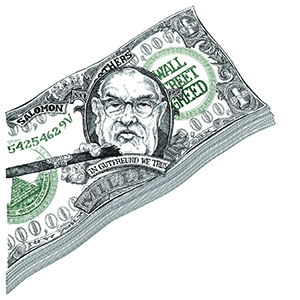
Liar’s Poker is a non-fiction, semi-autobiographical book by Michael Lewis describing the author’s experiences as a bond salesman on Wall Street during the late 1980s. Two important figures in that history feature prominently in the text, the head of Salomon Brothers’ mortgage department Lewis Ranieri and the firm’s CEO John Gutfreund. The book’s name is taken from a high-stakes gambling game popular with bond traders.
First published in 1989, it is considered one of the books that defined Wall Street in that era, along with Bryan Burrough and John Helyar’s ‘Barbarians at the Gate: The Fall of RJR Nabisco,’ and the fictional ‘The Bonfire of the Vanities by Tom Wolfe.’ The book captures an important period in the history of New York’s financial markets.
read more »
Posted in Games, Language, Money |
Leave a Comment »
March 8, 2016
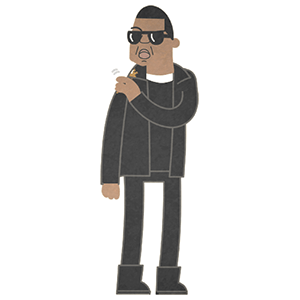
To have a chip on one’s shoulder refers to the act of holding a grudge or grievance that readily provokes disputation. The expression comes from the ancient right of shipwrights within the Royal Navy Dockyards to take home a daily allowance of offcuts of timber, even if good wood had to be cut up for this purpose. The privilege was instated as a prescriptive right from 1634. By 1756, the privilege was costing taxpayers too much in lost timber for warship repair and construction, and a decision was then made by the Navy Board to limit the quantity a shipwright could carry home. A warrant was issued to the Royal Dockyards to reduce the quantity of chips by ordering shipwrights to carry their bundles under their arms instead of on their shoulders, as one could not carry as much timber in this fashion.
There was an incident on the very first day the law was enforced: ‘Then came John Miller, shipwright, about thirty feet before the main body of the people, on which the Master Shipwright ordered him to lower his chips. He answered he would not, with that the Master Shipwright took hold of him, and said he should. He, the said Miller replied, ‘Are not the chips mine? I will not lower them.’ Immediately the main body pushed on with their chips on their shoulders, crowded and forced the Master Shipwright and the First Assistant through the gateway, and when out of the yard give three huzzas.’
Posted in Language, Money |
1 Comment »
March 5, 2016


Kindness priming is an affect-dependent cognitive effect in which subjects will display a positive affect following exposure to kindness. Individuals who are exposed to an act of kindness – the priming – subsequently notice more of the positive features of the world than they would otherwise. A person receiving a free voucher from a stranger, for example, may become more inclined to perceive the intentions of others around them as good.
It is hypothesized that kindness priming involves the same cognitive circuitry that enables memory priming. By activating neural representations of positive affect, an act of kindness stimulates increased activity in related associative networks. It is therefore more likely that subsequent stimuli will activate these related, positive networks, and so the positive affect continues to be carried forward in a feed forward manner. Additionally, kindness priming has also been shown to inoculate against negative stimuli in the short term, thus temporarily improving an individual’s resilience.
read more »
Posted in Health, Money |
Leave a Comment »
March 4, 2016


Affective forecasting (also known as the ‘hedonic forecasting mechanism’) is the prediction of one’s affect (emotional state) in the future. As a process that influences preferences, decisions, and behavior, affective forecasting is studied by both psychologists and economists, with broad applications.
Psychologist Daniel Kahneman and business school professor Jackie Snell began research on hedonic forecasts in the early 1990s, examining its impact on decision making. The term ‘affective forecasting’ was later coined by psychologists Timothy Wilson and Daniel Gilbert. Early research focused solely on measuring emotional forecasts, while subsequent studies examined accuracy, revealing that people are surprisingly poor judges of their future emotional states. For example, in predicting how events like winning the lottery might affect their happiness, people are likely to overestimate future positive feelings, ignoring the numerous other factors that might contribute to their emotional state outside of the single lottery event.
read more »
Posted in Health, Money |
Leave a Comment »
March 2, 2016
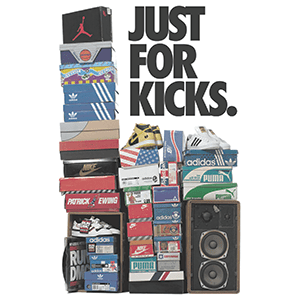
A sneakerhead is a person who collects, trades or admires sneakers as a hobby. The birth of sneakerhead culture in the United States came in the 1980s and can be attributed to two major sources: basketball, specifically the emergence of Michael Jordan and his eponymous Air Jordan line of shoes released in 1985, and the growth of hip hop music. The boom of signature basketball shoes during this era provided the sheer variety necessary for a collecting subculture, while the Hip-Hop movement gave the sneakers their street credibility as status symbols.
Several popular brands and styles of sneakers have emerged as collectors items in the sneakerhead subculture, including Air Jordans, Air Force Ones, Nike Dunks, Nike Skateboarding (SB), Nike Foamposites, Nike Air Max, and in the past few years, the Nike Air Yeezy. Shoes that have the most value are usually exclusive or limited editions. Also certain color schemes may be rarer relative to others in the same sneaker, inflating desirability and value. Recently, sneaker customs, or one-of-a-kind sneakers that have been hand-painted, have become popular as well.
Posted in Art, Games, Money |
Leave a Comment »
March 1, 2016


The bandwagon effect is a phenomenon whereby the rate of uptake of beliefs, ideas, fads and trends increases the more that they have already been adopted by others. As more people come to believe in something, others also ‘hop on the bandwagon’ regardless of the underlying evidence.
The tendency to follow the actions or beliefs of others can occur because individuals directly prefer to conform to social pressure, or because individuals derive information from others. The former has been used to explain Asch’s conformity experiments, a series of studies directed by Polish American social psychologist Solomon Asch studying if and how individuals yield to or defy a majority group and the effect of such influences on beliefs and opinions.
read more »
Posted in Health, Money, Philosophy |
1 Comment »
February 27, 2016

Psychological pricing (also known as ‘price ending’ and ‘charm pricing’) is a pricing/marketing strategy based on the theory that certain prices have a psychological impact. Consumers tend to perceive ‘odd prices’ as being significantly lower than they actually are, mentally rounding to the next lowest monetary unit. Thus, prices such as $1.99 are associated with spending $1 rather than $2. Now that many customers are used to odd pricing, some restaurants and high-end retailers psychologically-price in even numbers in an attempt to reinforce their brand image of quality and sophistication.
In a traditional cash transaction, fractional pricing imposes tangible costs on the vendor (printing fractional prices), the cashier (producing awkward change) and the customer (stowing the change). These factors have become less relevant with the increased use of checks, credit and debit cards and other forms of currency-free exchange; also, the addition of sales tax makes the pre-tax price less relevant to the amount of change (although in Europe the sales tax is generally included in the shelf price).
read more »
Posted in Money |
Leave a Comment »
February 20, 2016
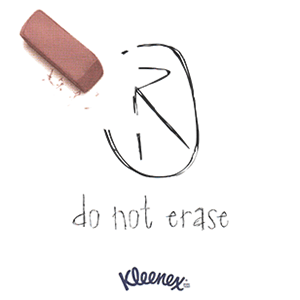
In marketing, brand management is the analysis and planning on how a brand is perceived in the market, with the goal of developing a good relationship with the target market. Tangible elements of brand management include the product itself (i.e. the look, price, packaging). Intangible elements include the experience that the consumer has had with the brand, and also their relationship with it. A brand manager would oversee all of these things. The modern discipline of brand management is considered to have been started by a famous memo at Procter & Gamble by Neil H. McElroy.
Marketing scholar Molly Hislop defined branding as ‘the process of creating a relationship or a connection between a company’s product and emotional perception of the customer for the purpose of generating segregation among competition and building loyalty among customers.’ It is a fulfillment in customer expectations and consistent customer satisfaction. Brand management aims to create an emotional connection between products, companies and their customers and constituents. Brand managers create strategies to convert a suspect to prospect; prospect to buyer; buyer to customer and customer to brand advocates.
read more »
Posted in Money |
Leave a Comment »
February 19, 2016


Inbound marketing is promoting a company through blogs, podcasts, video, eBooks, electronic newsletters, whitepapers, SEO (search engine optimization), physical products, social media marketing, and other forms of content marketing which serve to attract customers through the different stages of the purchase funnel. In contrast, buying attention (marketing stunts), cold-calling, direct paper mail, radio, TV advertisements, sales flyers, spam, telemarketing, and traditional advertising are considered ‘outbound marketing.’
Inbound marketing refers to marketing activities that bring visitors in, rather than marketers having to go out to get prospects’ attention. Inbound marketing earns the attention of customers, makes the company easy to be found, and draws customers to the website by producing interesting content. Many companies are now realizing that their technical documentation, often considered a ‘necessary evil,’ is authoritative, trustworthy content that can be their most effective inbound marketing channel, generating more than half of overall site traffic and over half of lead generation.
read more »
Posted in Money |
Leave a Comment »
February 18, 2016


Earned media refers to publicity gained through promotional efforts other than advertising, as opposed to ‘paid media,’ which refers to publicity gained through advertising. There are many types of media available to online marketers and fit into the broad categories. Owned media is defined as communication channels that are within one’s control, such as websites, blogs, or email. Paid media refers mostly to traditional advertising. Earned media, on the other hand, is generated when content receives recognition and a following outside of traditional paid advertising, through communication channels such as social media and word of mouth.
A Nielsen study in 2013 found that earned media (also described in the report as ‘word-of-mouth’) is the most trusted source of information in all countries it surveyed worldwide. It also found that earned media is the channel most likely to stimulate the consumer to action. Other authorities make the distinction between online and offline earned media / word-of-mouth, and have shown that offline word-of-mouth has been found to be more effective than online word-of-mouth.
read more »
Posted in Money |
Leave a Comment »
February 17, 2016

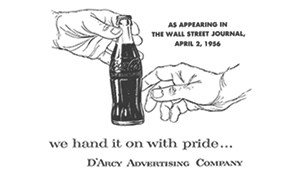
The study of the history of marketing as an academic field emerged only recently with the publication of ‘The History of Marketing Thought’ by Robert Bartels in 1976. Broadly defined marketing is any activity that connects producers with consumers, which was previously considered a subtopic of economics. Wroe Alderson’s book, ‘Marketing Behavior and Executive Action’ (1957) is also considered a break-point in the history of marketing thought. After Alderson, marketing began to incorporate other fields of knowledge besides economics, notably behavioral science, developing into a multidisciplinary field.
Marketing historian Jagdish Shethhave identified three schools of marketing: Managerial (systematized marketing emerged during the late 1950s and became arguably the predominant and most influential school of thought in the field), Consumer/Buyer Behavior (the use of behavioral science to market goods and services was popularized in the second half of the twentieth century), and Social Exchange (recently, ‘exchange’ has been forwarded as the fundamental concept of marketing).
read more »
Posted in Money |
Leave a Comment »



