September 8, 2015


A predictable surprise describes a situation or circumstance in which avoidable crises are marginalized in order to satisfy economic and social policies. The term was popularized by Harvard Business School professors Max H. Bazerman and Michael D. Watkins who defined ‘predictable surprises’ as problems that: at least some people are aware of, are getting worse over time, and are likely to explode into a crisis eventually, but are not prioritized by key decision-makers or have not elicited a response fast enough to prevent severe damage.
These problems tend to require a significant investment in the near term that will not pay off until later. This could involve changes to established organization culture and/or changes that competing interests do not benefit from. Frequently cited examples include the Iraq War, Enron, the subprime mortgage crisis, the Hurricane Katrina response, global warming, and the Catholic sex abuse scandal.
Posted in Language, Money, Politics |
1 Comment »
August 8, 2015


Extraterrestrial real estate is land on other planets or natural satellites or parts of space that is offered for sale. No such sale has ever been recognized by any authority. Nevertheless, some private individuals and organizations have claimed ownership of celestial bodies, such as the Moon, and are actively involved in ‘selling’ parts of them through certificates of ownership termed ‘Lunar deeds,’ ‘Martian deeds,’ or similar sham legal documents.
The topic of real estate on celestial objects has been present since the 1890s. In 1936, A. Dean Lindsay made claims for all extraterrestrial objects. He sent a letter to the Pittsburgh Notary Public along with a deed and money for establishment of the property. The public sent offers to buy objects from him as well. The UN sponsored 1967 ‘Outer Space Treaty’ established all of outer space as an international commons by describing it as the ‘province of all mankind’ and forbidding all the nations from claiming territorial sovereignty.
read more »
Posted in Money, Politics, World |
Leave a Comment »
July 22, 2015
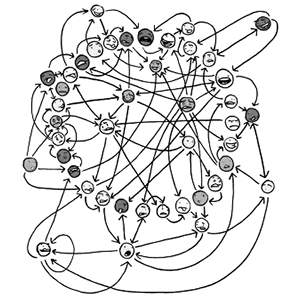
Fan service is a term originating from anime and manga fandom for material in a series which is intentionally added to please the audience (i.e. ‘giving the people what they want’). Fan service usually refers to ‘gratuitous titillation,’ but can also refer to intertextual references to other series and other ‘indulgent’ inclusions.
Long shots of robots in mecha shows, nudity, violent episode-long fight scenes, and emphasis on ‘shipping’ (the desire by fans for two people, either real-life celebrities or fictional characters, to be in a relationship, romantic or otherwise) can all be considered fan service as they are specifically aimed at pleasing the fans of any given show. Meta-references are intended to be seen and understood by the fans, as a way for creators to acknowledge and engage the more knowledgeable members of the fanbase.
read more »
Posted in Art, Money, Sex |
Leave a Comment »
July 15, 2015
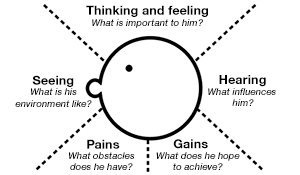

Perspective-taking is the process by which an individual views a situation from another’s point-of-view. It can occur visually in that one changes their physical location to see things as someone else does, or cognitively in that one mentally simulates the point-of-view of another’s cognitive state. For instance, one can visualize the viewpoint of a taller individual (physical state) or reflect upon another’s point-of-view on a particular concept (cognitive state).
In other words, perspective-taking is the process of temporarily suspending one’s own point-of-view in an attempt to view a situation as someone else might. This process does not necessitate any form of affinity, compassion, or emotional identification with the other (i.e. empathy). Therefore, as an other-oriented activity, perspective-taking can be used to gain an understanding of a given physical state and/or situation after which a determination of appropriate action can be selected (e.g., empathy).
read more »
Posted in Health, Money, Politics |
Leave a Comment »
June 19, 2015
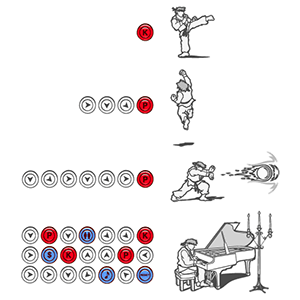
A learning curve graphically represents the amount of experience it takes to learn a given task. Skills with a steep learning curve are difficult to learn quickly, but progress comes rapidly once past the initial hurdle. Activities with a shallow learning curve, by contrast, are said to be ‘easy to learn, hard to master’ (Bushnell’s Law of video game design).
The term can refer to individual tasks repeated in a series of trials or a body of knowledge is learned over time. It was first described by German psychologist Hermann Ebbinghaus in 1885. His tests involved memorizing series of nonsense syllables, and recording the success over a number of trials. The translation does not use the term learning curve—but he presents diagrams of learning against trial number. He also notes that the score can decrease, or even oscillate.
read more »
Posted in Education, Games, Money |
1 Comment »
June 13, 2015

Tokenism [toh-kuh-niz-uhm] is the policy and practice of making a perfunctory gesture towards the inclusion of members of minority groups. The effort of including a token employee to a workforce usually is intended to create the appearance of social inclusiveness and diversity (racial, religious, sexual, etc.), and so deflect accusations of discrimination.
Employment tokenism misrepresents the person possessing inferior intellect, job skills, and work capacity, relative to the other workers of the group, as well as a superficial personality that is sufficiently bland and inoffensive to not affront the sensibility of superiority inherent to white privilege. Alternatively, the differences of the token person might be over-emphasized and made either exotic or glamorous, or both, which are extraordinary conditions that maintain the Otherness that isolates the token worker from the group.
read more »
Posted in Money, Politics, World |
Leave a Comment »
May 26, 2015

A burl is a tree growth in which the grain has grown in a deformed manner. It is commonly found in the form of a rounded outgrowth on a tree trunk or branch that is filled with small knots from dormant buds. Insect infestation and certain types of molds are the most common causes of this condition, although other stresses can also promote burl formation, such as physical injury, or viral or fungal infection.
Most burls grow beneath the ground, attached to the roots as a type of malignancy that is generally not discovered until the tree dies or falls over. Such burls sometimes appear as groups of bulbous protrusions connected by a system of rope-like roots. Almost all burl wood is covered by bark, even if it is underground. In some tree species, burls can grow to great size. The largest, at 26 feet, occur in redwoods and can encircle the entire trunk. Burls yield a very peculiar and highly figured wood, prized for its beauty, strength, and rarity. It is sought after by furniture makers, artists, and wood sculptors.
read more »
Posted in Art, Money |
1 Comment »
May 21, 2015

The tiny house movement is a popular description for the architectural and social movement that advocates living simply in small homes. In the US the average size of new single family homes grew from 1,780 square feet in 1978 to 2,479 in 2007, despite a decrease in the size of the average family. Reasons for this include increased material wealth and prestige. The small house movement is a return to houses less than 1,000 square feet, some as small as 80 square feet.
Sarah Susanka has been credited with starting the recent countermovement toward smaller houses when she published ‘The Not So Big House’ in 1997. Earlier pioneers include Lloyd Kahn, author of ‘Shelter’ in 1973.’ Tiny houses on wheels were popularized by Jay Shafer who designed and lived in a 96 sq ft house and later went on to offer the first plans for tiny houses on wheels, initially founding ‘Tumbleweed Tiny House Company,’ and then ‘Four Lights Tiny House Company’ in 2012.
read more »
Posted in Money, Technology, World |
1 Comment »
May 13, 2015

Pappy Van Winkle’s Family Reserve is the flagship brand of bourbon whiskey owned by the ‘Old Rip Van Winkle Distillery’ company (which does not actually own or operate a distillery, but rather has it produced under a contract with another company). It is distilled and bottled by the Sazerac Company at its Buffalo Trace Distillery in Frankfort, Kentucky. It is often regarded as one of the finest bourbons in the world, and is rare to find on the market due to its very low production and high demand. The product has a cult-like following. Famous chefs such as Anthony Bourdain and David Chang have favored the product.
‘Food Republic’ reported that Chef John Currence said: ‘There’s Pappy Van Winkle, then there’s everything else.’ Bourbon aficionados have shown up in droves to get a small chance in a lottery to purchase some. It has been called ‘the bourbon everyone wants but no one can get.’ A writer for ‘The Wall Street Journal’ said ‘You could call it bourbon, or you could call it a $5,000 bottle of liquified, barrel-aged unobtanium.’ Jen Doll wrote in ‘The Wire,’ ‘It’s an age-old dilemma (supply and demand) leading to an age-old marketing dream (a product that can’t be kept on the shelves … money in the pockets … bourbon in the bourbon snifters).’
read more »
Posted in Drugs, Food, Money |
Leave a Comment »
May 8, 2015

Card counting is a casino card game strategy used primarily in blackjack to determine whether the next hand is likely to give a probable advantage to the player or to the dealer. Card counters are a class of advantage players, who attempt to decrease the house edge by keeping a running tally of all high and low valued cards seen by the player.
Card counting allows players to bet more with less risk when the count gives an advantage as well as minimize losses during an unfavorable count. Card counting also provides the ability to alter playing decisions based on the composition of remaining cards. Card counting (sometimes called ‘card reading’) is also used in trick-taking games such as contract bridge or spades to optimize the winning of tricks (rounds of play).
read more »
Posted in Games, Money, Politics |
Leave a Comment »
April 30, 2015

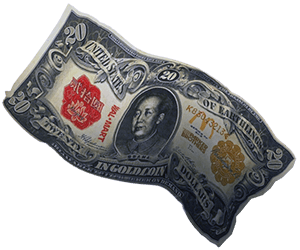
World currency normally refers to a currency that is transacted internationally, with no set borders, but an alternative definition refers to a hypothetical single global currency or supercurrency, such as the proposed ‘terra’ or the ‘DEY’ (Dollar Euro Yen), produced and supported by a central bank which is used for all transactions around the world, regardless of the nationality of the entities (individuals, corporations, governments, or other organizations) involved in the transaction.
Advocates of a global currency, notably famed economist John Maynard Keynes, have argued that such a currency would not suffer from inflation, which, in extreme cases, has had disastrous effects for economies. In addition, many argue that a single global currency would make conducting international business more efficient and would encourage foreign direct investment.
read more »
Posted in Money, Politics, World |
1 Comment »
April 29, 2015

The United Federation of Planets, usually referred to as ‘the Federation,’ is an interstellar federal republic composed of planetary sovereignties depicted in the ‘Star Trek’ science fiction franchise. Formed in 2161, the planetary governments voluntarily exist semi-autonomously under a single central government based on the Utopian principles of universal liberty, rights, and equality, and to share their knowledge and resources in peaceful cooperation and space exploration.
The Federation is described a post-capitalist, libertarian, constitutional republic, which was composed of more than 150 member planets and thousands of colonies spread across some 6,000,000 cubic light years of the Milky Way Galaxy by 2373. The social structure within the Federation is classless and operates within a moneyless ‘New World Economy.’ It is described as stressing, at least nominally, the values of universal liberty, equality, justice, peace, and cooperation. The Federation also maintains its own quasi-militaristic and scientific exploratory agency, known as ‘Starfleet’ which handles many other governmental processes, sometimes with no other agency’s influence, such as border defense and diplomatic relations.
read more »
Posted in Art, Money, Politics |
Leave a Comment »


 The Daily Omnivore