April 9, 2013

Culinary name is the name of an ingredient when used in the kitchen for preparing food, as opposed to their names in agriculture or in scientific nomenclature. Some are used because they sounds more attractive than the real name, or because a cheaper ingredient can be linked with a more expensive one. The culinary name may also refer to a way of cooking or to a region, or using a particular ingredient.
Additionally, name given on a menu may be different from the culinary name. For example, from the 19th until the mid-20th century, many restaurant menus were written in French and not in the local language. Examples include veal (calf), calamari (squid), scampi (Italian-American name for shrimp), and sweetbreads (pancreas or thymus gland). Culinary names are especially common for fish and seafood, where multiple species are marketed under a single familiar name.
read more »
Posted in Food, Language, Money |
Leave a Comment »
April 8, 2013

A black bloc is a tactic for protests and marches where individuals wear black clothing, scarves, sunglasses, ski masks, motorcycle helmets with padding, or other face-concealing and face-protecting items. The clothing is used to conceal marchers’ identities, allow them to appear as one large unified mass, and promote solidarity.
The tactic was developed in the 1980s in the European autonomist movement’s protests against squatter evictions, nuclear power, and restrictions on abortion among other things. Black blocs gained broader media attention outside Europe during the 1999 Seattle WTO protests, when a black bloc damaged property of GAP, Starbucks, Old Navy, and other multinational retail locations in downtown Seattle.
read more »
Posted in Money, Politics, World |
Leave a Comment »
April 3, 2013
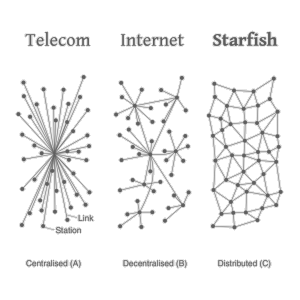
‘The Starfish and the Spider: The Unstoppable Power of Leaderless Organizations’ is a 2006 book by Ori Brafman (author of the 2010 book ‘Click: The Magic of Instant Connections’) and Rod Beckstrom (President of ICANN); it is an exploration of the implications of the recent rise of decentralized organizations such as Wikipedia, Grokster and YouTube.
The book contrasts them to centralized organizations, such as Encyclopædia Britannica. The spider and starfish analogy refers to the contrasting biological nature of the respective organisms, starfish have a decentralized neural structure permitting regeneration, whereas spiders have in a hierarchical nervous system.
read more »
Posted in Language, Money, Technology |
Leave a Comment »
April 3, 2013
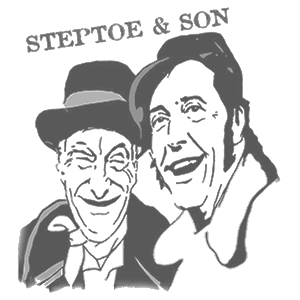
A rag-and-bone man collects unwanted household items and sells them to merchants. Traditionally this was a task performed on foot, with the scavenged materials (which included rags, bones and various metals) kept in a small bag slung over the shoulder.
Some wealthier rag-and-bone men used a cart, sometimes pulled by horse. 19th-century rag-and-bone men typically lived in penury, surviving on the proceeds of what they collected each day. Conditions improved following the Second World War, but the trade declined during the latter half of the 20th century. Lately, however, due in part to the soaring price of scrap metal, rag-and-bone men can once again be seen at work.
read more »
Posted in Money, World |
Leave a Comment »
April 2, 2013

The Zabbaleen (Egyptian Arabic: ‘Garbage people’) are teenagers and adults who have served as Cairo’s informal garbage collectors for the past 70 to 80 years. They are also known as ‘Zarraba’ (‘pig-pen operators’).
Spread out among seven different settlements scattered in the Greater Cairo Urban Region, the Zabbaleen population is between 50,000 and 70,000. The largest settlement is Mokattam village, nicknamed ‘Garbage City,’ located at the foot of the Mokattam Mountains, next to Manshiyat Naser, a slum settlement on the outskirts of Cairo. The Zabbaleen community in Mokattam Village has a population of around 20,000 to 30,000, over 90 percent of which are Coptic Christians.
read more »
Posted in Money, Politics, World |
Leave a Comment »
April 2, 2013

Manshiyat Naser, also known as Garbage City, is a slum settlement at the base of Mokattam Hill on the outskirts of Cairo.
Its economy revolves around the collection and recycling of the city’s garbage. Although the area has streets, shops, and apartments as other areas of the city, it lacks infrastructure and often has no running water, sewage, or electricity.
read more »
Posted in Health, Money, World |
Leave a Comment »
April 2, 2013

Dumpster diving (called ‘skipping’ in the UK) is the practice of sifting through commercial or residential waste to find items that have been discarded by their owners, but that may prove useful to the dumpster diver. Dumpster diving is also viewed as an effective urban foraging technique.
Dumpster divers will forage dumpsters for items such as clothing, furniture, food, and similar items in good working condition. The dumpster diving term originates from the best-known manufacturer of commercial trash bins, Dempster, who use the trade name ‘Dumpster’ for their bins, and the fanciful image of someone leaping head first into a dumpster as if it were a swimming pool. In practice, the size and design of most dumpsters makes it possible to retrieve many items from the outside of dumpsters without having to ‘dive’ into them.
read more »
Posted in Food, Language, Money |
Leave a Comment »
April 1, 2013

A publicity stunt is a planned event designed to attract the public’s attention to the event’s organizers or their cause. Publicity stunts can be professionally organized or set up by amateurs. Such events are frequently utilized by advertisers, celebrities, athletes, and politicians. Organizations sometimes seek publicity by staging newsworthy events that attract media coverage. They can be in the form of groundbreakings, world record attempts, dedications, press conferences or organized protests. By staging and managing the event, the organization attempts to gain some control over what is reported in the media. Successful publicity stunts have news value, offer photo, video and sound bite opportunities, and are arranged primarily for media coverage.
It is sometimes hard for organizations to design successful publicity stunts that highlight the message instead of burying it. For example, it makes sense for a pizza company to bake the world’s largest pizza but it would not make sense for the YMCA to sponsor that same event. The importance of publicity stunts is generating news interest and awareness for the concept, product or service being marketed. Stunts are effective communication tools when used well and useless time wasters when they are not.
Posted in Money |
Leave a Comment »
April 1, 2013

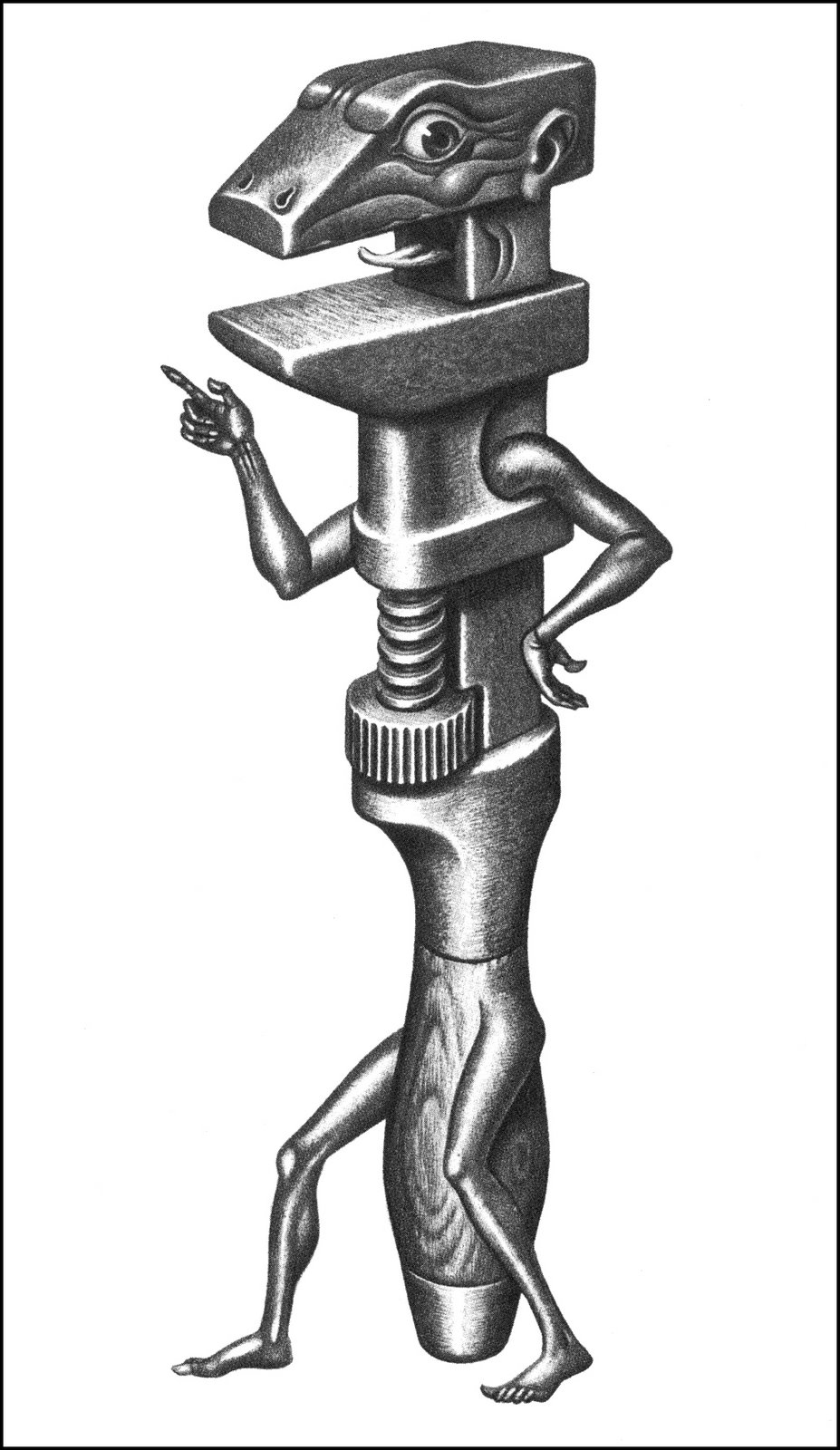
Boris Artzybasheff [ahrt-si-bah-shif] (1899 – 1965) was an American illustrator known for his strongly worked and often surreal designs. Artzybasheff was born in Ukraine, son of the author Mikhail Artsybashev. He is said to have fought as a White Russian (royalist).
During 1919 he arrived in New York City, where he worked in an engraving shop. His earliest work appeared in 1922 as illustrations for ‘Verotchka’s Tales’ and ‘The Undertaker’s Garland.’ A number of other book illustrations followed during the 1920s. Over the course of his career, he illustrated some 50 books, several of which he wrote, most notably ‘As I See.’
read more »
Posted in Art, Money |
Leave a Comment »
March 31, 2013
‘Fully Flared‘ is a street skateboarding video by the Lakai footwear company, featuring video parts from its team riders. The film is directed by Ty Evans, Spike Jonze, and Cory Weincheque. The introduction features the skateboarders performing tricks in a vacant urban space, consisting of obstacles, blocks, and stair sets, while explosions occur. Presented in slow motion, the introduction feature is accompanied by a soundtrack from electronic music group, M83. Originally, Evans, Jonze, and Howard played with different ideas that were significantly more dangerous than what was eventually featured.
The main group filming was Aaron Meza and Chris Ray. In Europe, an Italian filmmaker named Fedrico Vitetta – who’d been living with Oliver Barton in Spain for a year – took on the role. Then was conceptual help from Rick Howard and Spike Jonze. Finally, Johannes Gamble helped with all the effects work.
Posted in Art, Money |
Leave a Comment »
March 31, 2013

‘Pirates and Emperors, Old and New: International Terrorism in the Real World’ is a book by political theorist Noam Chomsky, titled after an observation by St. Augustine in ‘City of God,’ proposing that what governments coin as ‘terrorism’ in the small simply reflects what governments utilize as ‘warfare’ in the large. Yet, governments coerce their populations to denounce the former while embracing the latter.
In the ‘City of God,’ St. Augustine tells the story of a pirate captured by Alexander the Great, who asked him ‘how dare he molest the sea.’ ‘How dare you molest the whole world’ the pirate replied. ‘Because I do it with a little ship only, I am called a thief; you, doing it with a great navy, are called an emperor.’ The book inspired a humorous short web animation titled ‘Pirates & Emperors (or, Size Does Matter),’ illustrating Chomsky’s thesis.
Posted in Money, Politics, War |
Leave a Comment »
March 29, 2013

Captain Marvel, also known as ‘Shazam,’ is a fictional comic book superhero, originally published by Fawcett Comics and later by DC. Created in 1939 by artist C. C. Beck and writer Bill Parker, the character first appeared in 1940 in ‘Whiz Comics’ #2. With a premise that taps adolescent fantasy, Captain Marvel is the alter ego of Billy Batson, a youth who works as a radio news reporter and was chosen to be a champion of good by the wizard Shazam.
Whenever Billy speaks the wizard’s name, he is struck by a magic lightning bolt that transforms him into an adult superhero empowered with the abilities of six archetypal, historical figures. Several friends and family members, most notably Marvel Family cohorts Mary Marvel and Captain Marvel Jr., can share Billy’s power and become ‘Marvels’ themselves.
read more »
Posted in Art, Money |
1 Comment »



 The Daily Omnivore