February 17, 2013
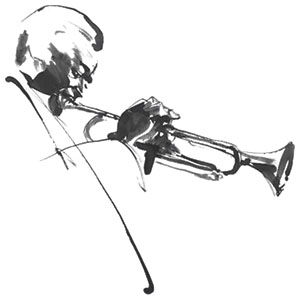
Coolness is an admired aesthetic of attitude, behavior, comportment, appearance and style, influenced by and a product of the Zeitgeist (‘spirit of the age’). Because of the varied and changing connotations of cool, as well its subjective nature, the word has no single meaning.
It has associations of composure and self-control and often is used as an expression of approval. Although commonly regarded as slang, it is widely used among disparate social groups, and has endured in usage for generations. Because there is no single concept of cool, one of its essential characteristics is mutability—what is considered cool changes over time and varies among cultures and generations.
read more »
Posted in Language, Money, Philosophy |
Leave a Comment »
February 14, 2013
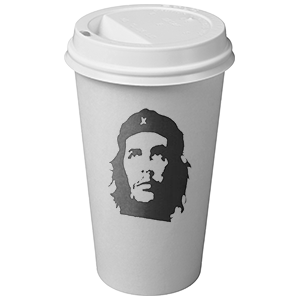
‘The Rebel Sell: Why the culture can’t be jammed’ (published in the US as ‘Nation of Rebels: Why Counterculture Became Consumer Culture’) is a non-fiction book written by University of Toronto philosopher Joseph Heath and Canadian journalist Andrew Potter in 2004. Their central claim is that counter-cultural movements have failed, and that they all share a common fatal error in the way they understand society; thus counter-culture is not a threat to ‘the system.’
Following their claim that conformity isn’t something perpetuated by mainstream media, Potter and Heath identify other sources of conformity using work from Hobbes, Rousseau, and Freud. They describe conformity as often the byproduct of simple market preferences or, alternatively, as an attempt to resolve a collective action problem. For instance, they claim that school uniforms curb the fashion ‘arms race’ created between students when no restrictions are in place, and that they are not intended merely to stamp out individualism, as many counter-cultural figures have suggested.
read more »
Posted in Language, Money, Politics |
Leave a Comment »
February 13, 2013

Chet Helms (1942 – 2005), often called the father of San Francisco’s 1967 ‘Summer of Love,’ was a music promoter and a cultural figure in San Francisco during its hippie period in the late Sixties. Helms was the founder and manager of Big Brother and the Holding Company and recruited Janis Joplin as its lead singer.
He was a producer and organizer, helping to stage free concerts and other cultural events at Golden Gate Park, the backdrop of San Francisco’s Summer of Love in 1967, as well as at other venues, including the Avalon Ballroom. He was the first producer of psychedelic light-show concerts at the Fillmore and the Avalon Ballroom and was instrumental in helping to develop bands that had the distinctive San Francisco Sound.
read more »
Posted in Art, Money |
Leave a Comment »
February 13, 2013
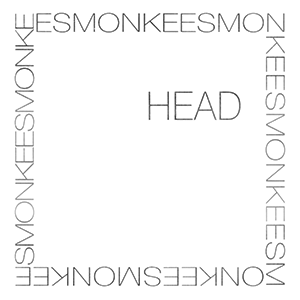
A head shop is a retail outlet specializing in drug paraphernalia, as well as counterculture art, magazines, music, clothing, and home decor.
Products available in these outlets typically include pipes; pipe screens; bongs (often called water pipes in countries with drug paraphernalia laws); roach clips; vaporizers; rolling papers; rolling machines; scales or balances; blacklight-responsive posters; incense; cigarette lighters; legal drugs such as whipped-cream chargers (which contain nitrous oxide) and Salvia divinorum (illegal in some countries and US states); and products such as the Whizzinator claiming to give false negative results for drug urinalysis tests.
read more »
Posted in Drugs, Money |
Leave a Comment »
February 13, 2013

A breastaurant is a restaurant that has sexual undertones, most commonly in the form of large-breasted, skimpily dressed waitresses and barmaids. The term dates from at least the early 1990s and has since been applied to other restaurants that offer similar services, such as Tilted Kilt (dubbed ‘Hooters goes to Scotland’), Mugs N Jugs, Twin Peaks, Bikinis Sports Bar and Grill, Heart Attack Grill, and the much older Hooters.
The restaurants often offer specific themes, both in decoration and menu, and the operators of the restaurants hope that customers will come just for the food, or that for the customer the sexual nature is secondary to the good food. The restaurants offer numerous perks for customers, including alcohol and flirty servers.
Posted in Food, Money, Sex |
Leave a Comment »
February 11, 2013

The term Experience Economy was first described in an article published in 1998 by B. Joseph Pine II and James H. Gilmore. In it they described the experience economy as the next economy following the agrarian economy, the industrial economy, and the most recent service economy. This concept had been previously researched by many other authors.
Pine and Gilmore argue that businesses must orchestrate memorable events for their customers, and that memory itself becomes the product – the ‘experience.’ More advanced experience businesses can begin charging for the value of the ‘transformation’ that an experience offers, e.g., as education offerings might do if they were able to participate in the value that is created by the educated individual. This, they argue, is a natural progression in the value added by the business over and above its inputs.
read more »
Posted in Money, Technology |
Leave a Comment »
February 11, 2013
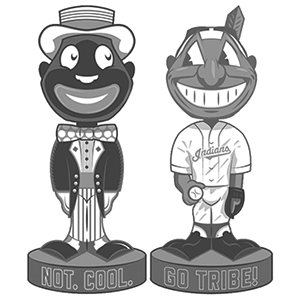
Commodification (or commoditization) is the transformation of goods, ideas, or other entities that may not normally be regarded as goods into a commodity. American author and feminist bell hooks refers to cultural commodification [kuh-mod-uh-fi-key-shuhn] as ‘eating the other.’ By this she means that cultural expressions, revolutionary, or post modern, can be sold to the dominant culture. Any messages of social change are not marketed for their messages but used as a mechanism to acquire a piece of the ‘primitive.’ Any interests in past historical culture almost always have a modern twist.
According to Mariana Torgovnick, ‘What is clear now is that the West’s fascination with the primitive has to do with its own crises in identity, with its own need to clearly demarcate subject and object even while flirting with other ways of experiencing the universe.’ Hooks states that marginalized groups are seduced by this concept because of ‘the promise of recognition and reconciliation.’ ‘When the dominant culture demands that the Other be offered as sign that progressive political change is taking place, that the American Dream can indeed be inclusive of difference, it invites a resurgence of essentialist cultural nationalism.’
read more »
Posted in Money, Politics, World |
1 Comment »
February 7, 2013
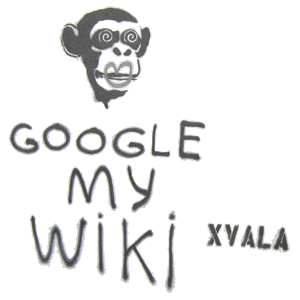
XVALA is an art project created by Jeff Hamilton (b. 1970). XVALA typically focuses on pieces that address celebrity and popular culture and he refers to this as ‘Tabloid Art.’ XVALA collaborated with sculptor Daniel Edwards on ‘The Brangelina,’ a house located in Oklahoma. In 2010, Jeff Hamilton walked away from his art and the name XVALA. Hamilton passed the name on to unnamed, upcoming artist.
‘Fear Google’ is the first street art sticker designed for the Post-PC era and was launched in 2010, the same year as Apple’s iPad and other Post-PC devices. The stickers fear message shows society’s growing inability to disconnect from the internet. First distributed by friends of the artist and some Apple Store employees the first stickers appeared on the California city streets.
read more »
Posted in Art, Money, Politics |
Leave a Comment »
February 6, 2013

Marc Quinn (b. 1964) is a British artist and one of a loose group known as the Young British Artists. He is known for ‘Alison Lapper Pregnant’ (a sculpture of Alison Lapper, an English artist who was born without arms) and ‘Self’ (a sculpture of his head made with his own frozen blood). Quinn has used blood, ice, and faeces to make sculptures; his work sometimes refers to scientific developments.
Quinn’s oeuvre displays a preoccupation with the mutability of the body and the dualisms that define human life: spiritual and physical, surface and depth, cerebral and sexual. Quinn’s sculpture, paintings and drawings often deal with the distanced relationship we have with our bodies, highlighting how the conflict between the ‘natural’ and ‘cultural’ has a grip on the contemporary psyche. In 1999, Quinn began a series of marble sculptures of amputees as a way of re-reading the aspirations of Greek and Roman statuary and their depictions of an idealized whole.
read more »
Posted in Art, Money, Philosophy |
Leave a Comment »
February 6, 2013
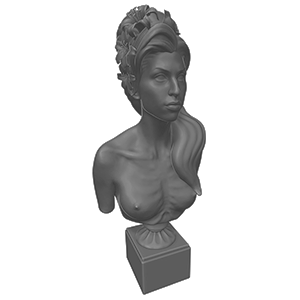
Daniel Edwards (born 1965) is a contemporary artist whose pieces address celebrity and popular culture in ways that have often stirred controversy. His work is generally accompanied by press releases. He includes the idea of promotion and associative fame in his own marketing of his art. His work includes a sculpture of the disembodied head of Ted Williams, a life-sized statue of Britney Spears giving birth while nude on her hands and knees on a bearskin rug (Edwards titled the piece ‘Monument to Pro-Life: The Birth of Sean Preston,’ explaining that it symbolized Spears’ decision to put childbirth ahead of her career; Britney Spears actually had a caesarean section), a bust of Senator Hillary Clinton, and a 25-foot (7.6 m) bust of Fidel Castro.
In an Associated Press interview, Edwards asserted that he incorporates celebrity stories because: ‘You’re bombarded with these stories. And there’s a thread that winds back to the art. That’s not a bad thing. People are interested in sex, and it works for art as well.’
Posted in Art, Money, Sex |
Leave a Comment »
February 6, 2013
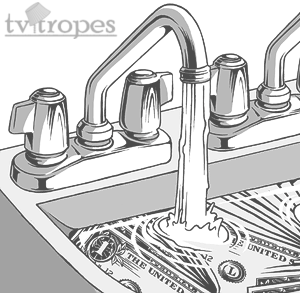
Gold sinks are economic processes by which a video game’s ingame currency (‘gold’), or any item that can be valued against it, is removed. Excess currency leads to inflation of player driven prices. Game designers must balance between scarcity of currency and ease of acquiring currency. This process is comparable to financial repression (measures that governments employ to channel funds to themselves, that, in a deregulated market, would go elsewhere). Most commonly the genres are role-playing game or massively multiplayer online game.
The term is comparable to timesink (an activity that consumes significant time), but usually used in reference to game design and balance, commonly to reduce inflation when commodities and wealth are continually fed to players through sources such as quests, looting monsters, or minigames. Gold sinks are commonly called drains or gold drains. They can also be associated with item drains. The intent of a sink is to remove added value from the overall economy. For example, in ‘Ultima Online,’ items that were placed on the ground would be gathered by the server. This form is referred to as decay or garbage collection.
read more »
Posted in Games, Money, Technology |
Leave a Comment »
February 6, 2013
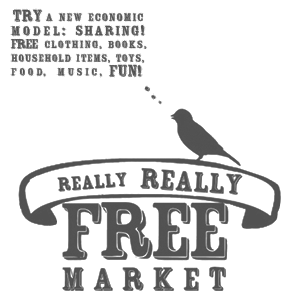
Give-away shops, swap shops, freeshops, or free stores are stores where all goods are free. They are similar to charity shops, with mostly second-hand items—only everything is available at no cost. Whether it is a book, a piece of furniture, a garment or a household item, it is all freely given away, although some operate a one-in, one-out–type policy (swap shops).
The free store is a form of constructive direct action that provides a shopping alternative to a monetary framework, allowing people to exchange goods and services outside of a money-based economy.
read more »
Posted in Money, Politics |
Leave a Comment »


 The Daily Omnivore