December 4, 2012
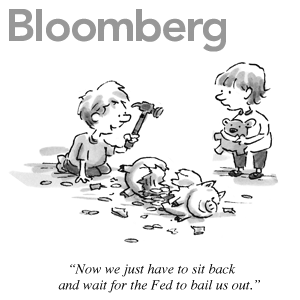
In economic theory, a moral hazard is a situation where the costs that could incur from a decision will not be felt by the party taking the risk. Knowing that the potential costs and/or burdens of taking such risk will be borne, in whole or in part, by others creates a moral hazard and invites high risk behavior.
For example, with respect to the originators of subprime loans, many may have suspected that the borrowers would not be able to maintain payments and that, for this reason, the loans were not, in the long run, going to be worth much. Still, because there were many buyers of these loans (or of pools of these loans) willing to take on that risk, the originators did not concern themselves with the potential long-term consequences of making these loans.
read more »
Posted in Money, Politics, World |
Leave a Comment »
December 4, 2012
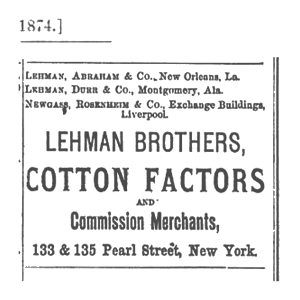
‘Too big to fail‘ describes financial institutions that are so large and so interconnected that their failure is widely held to be disastrous to the economy, and which therefore must be supported by government when they face difficulty. The term was popularized by Congressman Stewart McKinney in a 1984 hearing discussing the FDIC’s intervention with a failing bank, Continental Illinois.
Proponents of this theory believe that the importance of some institutions means they should become recipients of beneficial financial and economic policies from governments or central banks. One of the problems that arises is moral hazard (where costs that could incur will not be felt by the party taking the risk), in this case companies insulated by protective policies will seek to profit by it, and take positions that are high-risk high-return, as they are able to leverage these risks based on the policy preference they receive.
read more »
Posted in Money, Politics |
Leave a Comment »
December 4, 2012
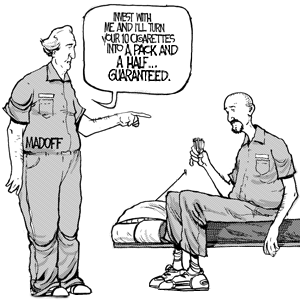
Commodity money is money whose value comes from a commodity of which it is made (e.g. precious metals, cigarettes). Unlike representative money (a certificate or token which can be exchanged for the underlying commodity) or fiat currency (money backed only by an assurance from the issuing government), commodity money consists of objects that have value in themselves as well as value in their use as money.
Examples of commodities that have been used as mediums of exchange include gold, silver, copper, peppercorns, Rai stones (large, circular stone disks carved out of limestone), decorated belts (wampum belts), shells, cigarettes, barley, laundry detergent, etc.
read more »
Posted in Money, Politics |
Leave a Comment »
November 30, 2012
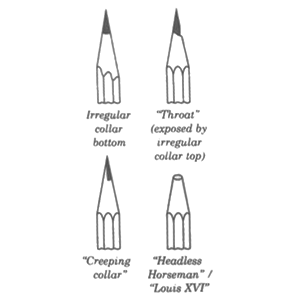
David Rees (b. 1972) is a cartoonist and humorist whose best-known work combines bland clip art with outrageous ‘trash talk’ to incongruous effect. The comic strips have achieved wide popularity and some controversy.
Rees grew up in Chapel Hill, North Carolina and was an avid reader of ‘Rex Morgan, M.D.’ comics. He is a graduate of Oberlin College, and drew comics for the school’s newspaper. His office-cubicle humor is partly inspired by his experience working in a basement for Citicorp; he was later a part time fact-checker for ‘Maxim’ magazine and ‘Martha Stewart Weddings’ magazine, until he was laid off. Rees’s best-known and most controversial comic is ‘Get Your War On.’
read more »
Posted in Humor, Language, Money |
Leave a Comment »
November 30, 2012

The South Butt, LLC was a clothing and accessories company founded in 2007 by Jimmy Winkelmann, a then 16-year-old student at Chaminade College Preparatory School. The company dissolved in 2011.
Winkelmann claimed the company was a parody of the The North Face, an American outdoor product company.
read more »
Posted in Humor, Money, Politics |
Leave a Comment »
November 29, 2012
The tragedy of the anticommons is a type of coordination breakdown, in which a single resource has numerous rightsholders who prevent others from using it, frustrating what would be a socially desirable outcome. It is a mirror-image of the older concept of tragedy of the commons, in which numerous rightsholders’ combined use exceeds the capacity of a resource and depletes or destroys it.
The concept covers a range of coordination failures including patent thickets, submarine patents, and nail houses. Overcoming these breakdowns can be difficult, but there are assorted means, including eminent domain, laches, patent pools, or other licensing organizations.
read more »
Posted in Money, Politics, Technology |
Leave a Comment »
November 29, 2012

In economics, the tragedy of the commons is the depletion of a shared resource by individuals, acting independently and rationally according to each one’s self-interest, despite their understanding that depleting the common resource is contrary to their long-term best interests.
In 1968, ecologist Garrett Hardin explored this social dilemma in ‘The Tragedy of the Commons,’ published in the journal ‘Science.’ Central to Hardin’s article is an example (first sketched in an 1833 pamphlet by William Forster Lloyd) involving medieval land tenure in Europe, of herders sharing a common parcel of land, on which they are each entitled to let their cows graze.
read more »
Posted in Money, Politics, World |
Leave a Comment »
November 28, 2012

Game Boy Micro is a handheld game console developed and manufactured by Nintendo. It was first released in 2005. The system is the last console of the Game Boy line. The Game Boy Micro is the size of a typical Nintendo Entertainment System controller and a typical Famicom controller. The console retains some of the functionality of the Game Boy Advance SP, but with an updated form factor. It is unable to play original Game Boy and Game Boy Color games due to design changes. Even though it still has the required Z80 processor and graphics hardware necessary to run the old games, it is missing other circuitry necessary to be compatible with the old Game Boy cartridges.
It is officially incompatible with the Nintendo e-Reader and some other peripherals due to design issues. Additionally, it features a backlit screen with the ability to adjust the brightness so as to adapt to lighting. The Game Boy Micro features a removable face plate that allows consumers to purchase alternative designs. This device can play MP3 and digital video files from SD cards. The system retailed for US$99, compared to US$79 for the Game Boy Advance SP. Generally, the Game Boy Micro did not sell well, and failed to reach the company’s aim of units sold.
Posted in Games, Money, Technology |
Leave a Comment »
November 28, 2012

Plex is a partially open-source freeware media player software with a 10-foot user interface (optimized for use with a TV), with a matching closed source media server (Plex Media Server) software, which is available for Windows, Mac, and Linux. Its media player source code was initially forked from XBMC, a free media player, in 2008. Plex’s front end media player, Plex Media Center, allows the user to manage and playback video, photos, music, and podcasts from a local or remote computer running Plex Media Server.
In addition, the integrated Plex Online service provides the user with a growing list of community-driven plugins for online content including Hulu, Netflix, and CNN video. Plex began as a freeware hobby project but since 2010 has evolved into a commercial software business that is owned and developed by a single for-profit startup company, (Plex, Inc.).
read more »
Posted in Money, Technology |
Leave a Comment »
November 28, 2012

SIGGRAPH (short for Special Interest Group on GRAPHics and Interactive Techniques) is the name of the annual conference on computer graphics started in 1974. The conference is attended by tens of thousands of computer professionals. Some highlights of the conference are its Animation Theater and Electronic Theater presentations, where recently created CG films are played. There is a large exhibition floor, where several hundred companies set up elaborate booths and compete for attention and recruits. Most of the companies are in the engineering, graphics, motion picture, or video game industries.
There are also many booths for schools which specialize in computer graphics or interactivity. Dozens of research papers are presented each year, and SIGGRAPH is widely considered the most prestigious forum for the publication of computer graphics research. In 1984, under LucasFilm Computer Group, John Lasseter’s first computer animated short, ‘The Adventures of André & Wally B.,’ premiered at SIGGRAPH. Pixar’s first computer animated short, ‘Luxo, Jr.’ debuted in 1986, and Pixar has debuted numerous shorts at the conference since. Since 2008, a second yearly SIGGRAPH conference has been held in Asia. The first SIGGRAPH Asia conference was held in Singapore; the second one in Yokohama, Japan in the period in 2009; and the third in Seoul, Korea in 2010.
Posted in Art, Money, Technology |
Leave a Comment »
November 21, 2012
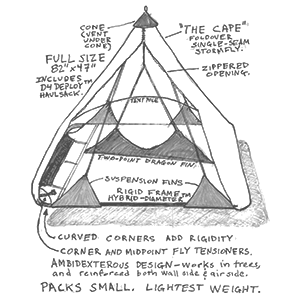
A portaledge is a deployable hanging tent system designed for rock climbers who spend multiple days and nights on a big wall climb. An assembled portaledge is a fabric-covered platform surrounded by a metal frame that hangs from a single point and has adjustable suspension straps. A separate cover, called a ‘stormfly,’ covers the entire system in the event of bad weather.
The first portaledges used in Yosemite were non-collapsible cots purloined from Housekeeping Camp, a Yosemite Valley campground that featured primitive metal framed bunks for the campers. These heavy cots were used on multi-day climbs on granite monoliths like El Capitan, and then sometimes tossed off the summit for later retrieval.
read more »
Posted in Games, Money, Technology |
Leave a Comment »
November 20, 2012

In Karl Marx’s critique of capitalism, commodity fetishism is theory that objects are imagined to dictate the social activities that produce them. When the social relationships among people are expressed with objectified economic relationships, the subjective, abstract aspects of economic value are transformed into objective, real things that people believe have intrinsic value (reification).
In a capitalist society, social relations between people—who makes what, who works for whom, the production-time for a commodity, et cetera—are perceived as economic relations among objects, that is, how valuable a given commodity is when compared to another commodity. Therefore, the market exchange of commodities masks the true economic character of the human relations of production, between the worker and the capitalist.
read more »
Posted in Money, Philosophy |
3 Comments »


 The Daily Omnivore
