June 6, 2012

The Neo Geo is an arcade system board and home video game console released in 1990 by Japanese game company SNK. The MVS (Multi Video System), as the Neo Geo was known to the coin-operated arcade game industry, offered arcade operators the ability to put up to six different arcade titles into a single cabinet, a key economic consideration for operators with limited floorspace.
With its games stored on self-contained cartridges, a game-cabinet could be exchanged for a different game-title by swapping the game’s ROM-cartridge and cabinet artwork. Several popular franchise-series, including ‘Fatal Fury,’ ‘The King of Fighters,’ ‘Metal Slug,’ and ‘Samurai Shodown,’ were released for the platform. The Neo Geo system was also marketed as a very costly home console, commonly referred to today as the AES (Advanced Entertainment System).
read more »
Posted in Games, Money, Technology |
Leave a Comment »
June 6, 2012

Sanwa Denshi (‘Three Harmonies Electronics Company’) is a general electronics manufacturer, but is best known internationally as a leading manufacturer of arcade parts; i.e. joysticks, buttons, coin feeds etc.
Its parts are commonly used in Japanese arcade machines and held in high regard by custom builders (especially in the fighting game community).
read more »
Posted in Games, Money, Technology |
Leave a Comment »
June 5, 2012

Matt Mullican (b. 1951) is a American artist and son of abstract painter Lee Mullican. He received his BFA from CalArts in 1974, and rose to prominence as a member of the ‘Pictures Generation,’ a group of artists know for their appropriation of images from the consumer and media saturated age in which they grew to maturity.
Mullican’s work is concerned with systems of knowledge, meaning, language, and signification. Mullican also works with the relationship between perception and reality, between the ability to see something and the ability to represent it. Mullican has taught and lectured at Columbia University, The Rijksakademie (Amsterdam), The London Institute, Chelsea College of Art and Design, and The School of Visual Arts (NY).
Posted in Art, Money |
Leave a Comment »
June 5, 2012
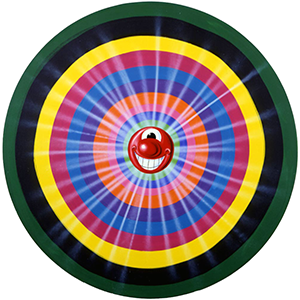
Kenny Scharf (b. 1958) is an American painter who lives in Brooklyn, whose works consist of popular culture based art with made up science-related backgrounds.
Scharf came to prominence in the 80s interdisciplinary art scene making sparkly, pop-ed, and monstrous paintings and installations.
read more »
Posted in Art, Humor, Money |
Leave a Comment »
June 4, 2012

The Family Trade is the first book of a British writer of science fiction and fantasy writer Charles Stross’ alternate history series ‘The Merchant Princes.’
The first novel introduces us to journalist Miriam Beckstein, who finds herself in a parallel world in which her extended family holds power.
read more »
Posted in Language, Money, Technology |
Leave a Comment »
June 4, 2012

‘The Theory of Interstellar Trade‘ is a paper written in 1978 by economist Paul Krugman. The paper was first published in 2010 in the journal ‘Economic Inquiry.’ He described the paper as something he wrote to cheer himself up when he was an oppressed assistant professor, caught up in the academic rat race.
Krugman analyzed the question of how interest rates on goods in transit should be computed when the goods travel at close to the speed of light. This is a problem because the time taken in transit will appear less to an observer traveling with the goods than to a stationary observer.
read more »
Posted in Humor, Money, Technology |
1 Comment »
May 30, 2012

Doritos is a brand of seasoned tortilla chips founded by Arch West and produced since 1964 by Frito-Lay (a division of PepsiCo). The original product was made at the Casa de Fritos location at Disneyland in Anaheim. Using unused tortillas, the company-owned restaurant cut them up and fried them and added basic seasoning. Arch West was the Vice President of Marketing of Frito-Lay at the time, and noticed the popularity.
He made a deal with Alex Foods in 1964, the provider of many items for Casa de Fritos at Disneyland, and produced the chips for a short time regionally, before it was overwhelmed by the volume, and Frito-Lay moved the production in-house to its Tulsa plant. ‘Doritos’ were first available in 1966, the first tortilla chip to be launched nationally in the United States.
read more »
Posted in Food, Money |
2 Comments »
May 29, 2012

Record Store Day is an internationally celebrated day observed the third Saturday of April each year. Its purpose, as conceived by independent record store employee Chris Brown, is to celebrate the art of music. The day brings together fans, artists, and thousands of independent record stores across the world.
Record Store Day was officially founded in 2007 by Eric Levin, Michael Kurtz, Carrie Colliton, Amy Dorfman, Don Van Cleave, and Brian Poehner and is now celebrated globally with hundreds of recording and other artists participating in the day by making special appearances, performances, meet and greets with their fans, the holding of art exhibits, and the issuing of special vinyl and CD releases, along with other promotional products to mark the occasion. Past Record Store Day ‘Ambassadors’ include: Metallica (2008), Jesse Hughes of Eagles of Death Metal (2009), Josh Homme of Queens of the Stone Age (2010), Ozzy Osbourne (2011), and Iggy Pop (2012).
Posted in Art, Money |
Leave a Comment »
May 29, 2012
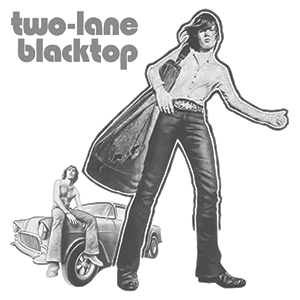
The Gumball 3000 is an annual British 3,000-mile international road rally which takes place on public roads, with a different route around the world each year. Founded in 1999 by British entrepreneur Maximillion Cooper, it sees an annual entry of 120 cars, which are mostly exotic and powerful sports cars. However, more unusual entries (such as police cars and camper-vans) have been seen.
The Rally is not a serious race in the traditional sense of rally races – there are no prizes for being fastest or official timekeeping of any sort. Organizers emphasize that it is a road trip adventure and not a race. The accolade of ‘Spirit of the Gumball’ Trophy is awarded to the driver(s) each year that embody the fun freedom of spirit and adventure that the event strives for. It is often awarded to the drivers of the vehicle that has perhaps been regarded as an ‘underdog’ (such as the Citroen 2CV, a Ford Transit ice-cream van, or 1963 VW Campervan) – or to the participants that have completed the 3000 miles against all odds, such as fixing their broken vehicle, or getting lost en route.
read more »
Posted in Games, Humor, Money |
Leave a Comment »
May 27, 2012

A paperclip is an instrument used to hold sheets of paper together, usually made of steel wire bent to a looped shape. Most paper clips are variations of the Gem type introduced in the 1890s or earlier, characterized by the almost two full loops made by the wire. Common to paper clips proper is their utilization of torsion and elasticity in the wire, and friction between wire and paper.
When a moderate number of sheets are inserted between the two ‘tongues’ of the clip, the tongues will be forced apart and cause torsion in the bend of the wire to grip the sheets together. Too many sheets will cause the elastic limit of the material to be exceeded, resulting in permanent deformation. Paper clips usually have an oblong shape with straight sides, but may also be triangular or circular, or have more elaborate shapes. The most common material is steel, but molded plastic is also used. Some other kinds of paper clip use a two-piece clamping system. Recent innovations include multi-colored plastic-coated paper clips and spring-fastened binder clips.
read more »
Posted in Money, Technology, World |
Leave a Comment »
May 27, 2012

PAL-V Europe is a Dutch company who are developing a flying car, the PAL-V One, an autogyro or gyrocopter, with a pusher propeller at the rear of the fuselage providing forward thrust and a free-spinning rotor providing lift. Directional stability is provided by twin boom-mounted tailfins.
It has a tricycle undercarriage with relatively large wheels. On the ground, the propeller and rotor are stopped and power is diverted to the wheels, allowing it to travel as a three-wheeled car. Unusually, it leans into turns like a motorcycle, a solution pioneered by the Carver vehicle, also produced by a Dutch company.
Posted in Money, Technology |
Leave a Comment »
May 24, 2012

3DMark is a computer benchmarking tool created and developed by Futuremark Corporation to determine the performance of a computer’s 3D graphic rendering and CPU workload processing capabilities. Running the application produces a 3DMark score, with higher numbers indicating better performance.
The 3DMark measurement unit is intended to give a normalized mean for comparing different PC hardware configurations (mostly graphics processing units and central processing units), which proponents such as gamers and overclocking enthusiasts assert is indicative of end-user performance capabilities. Founded in 1997 as ‘Futuremark’ by members of the former demoscene group ‘Future Crew,’ the company is the leading producer of computer benchmark applications in the world.
Posted in Money, Technology |
Leave a Comment »


 The Daily Omnivore