July 8, 2011

Beatnik [beet-nik] was a media stereotype of the 1950s and early 1960s that displayed the more superficial aspects of the Beat Generation literary movement of the 1950s and violent film images, along with a cartoonish misrepresentation of the real-life people and the spirituality found in Jack Kerouac’s autobiographical fiction. Kerouac spoke out against this detour from his original concept.
Kerouac introduced the phrase ‘Beat Generation’ in 1948, generalizing from his social circle to characterize the underground, anti-conformist youth gathering in New York at that time. The name came up in conversation with the novelist John Clellon Holmes who published an early Beat Generation novel, ‘Go’ (1952), along with a manifesto in The New York Times Magazine: ‘This Is the Beat Generation.’
read more »
Posted in Language, Money, Politics |
Leave a Comment »
July 7, 2011

A skeleton watch is a mechanical watch (although occasionally quartz), in which all of the moving parts are visible through either the front of the watch, the back of the watch or a small cut outlining the dial.
Many watchmakers have skeleton watches, but Rolex has rarely made them (apart from the 1930s and early 1940s) and never made tourbillon skeletons. For this reason, one should exercise caution when buying a skeleton watch marked as a Rolex as it is likely a counterfeit.
Posted in Money, Technology |
Leave a Comment »
July 7, 2011

Audemars [awe-de-marr] Piguet [pee-gay] (AP) is a manufacturer of prestige Swiss watches which compete with Patek Philippe and Vacheron Constantin. The roots of the company date back to 1874, when the 23-year-old Jules-Louis Audemars met Edward-Auguste Piguet, then only 21, at Vallée de Joux, in western Switzerland, which is considered to be the cradle of prestige watch-making. Thus Audemars started producing component parts for movements and Piguet got the job of a repasseur, whose job it was to make the final regulation of the timepiece.
In 1875 they founded a firm later known as Audemars, Piguet et Cie, and since 1882, members of the Audemars and Piguet families have always been on the board of directors. Between 1894 and 1899 the company produced about 1,200 timepieces, including some very complex watches. When Audemars and Piguet died, in 1918 and 1919 respectively, the company was already quite famous. As the success of the company’s business was rising its customers became Tiffany & Co, Cartier and Bulgari, who rebranded and sold Audemars Piguet watches under their own house names. Today these watches are only identifiable as Audemars Piguet products by their serial numbers.
read more »
Posted in Money, Technology |
Leave a Comment »
July 7, 2011

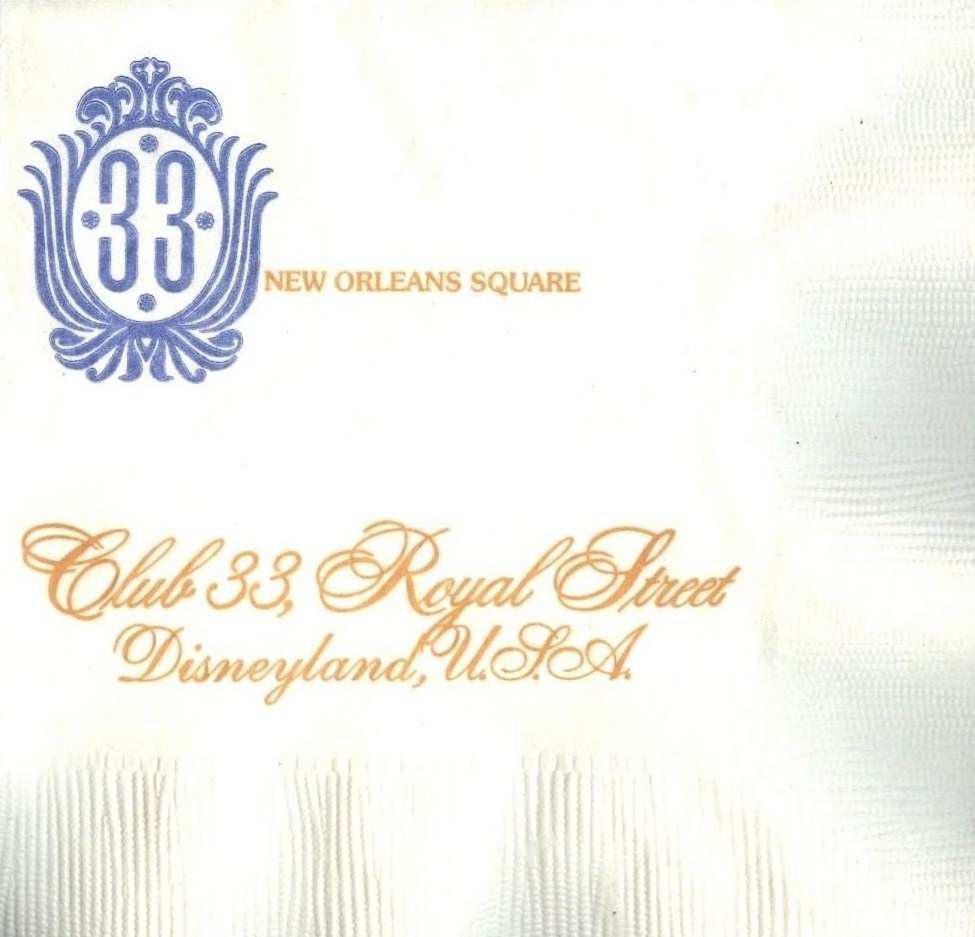
Club 33 is a private club located in the heart of the New Orleans Square section of Disneyland. Officially maintained as a secret feature of the theme park, the entrance of the club is located next to the Blue Bayou Restaurant at ’33 Royal Street’ with the entrance recognizable by an ornate address plate with the number 33 engraved on it. Club 33 members and their guests have exclusive access to the club’s restaurant, and the premises are not open to the public at large. It is the only location within Disneyland to offer alcoholic beverages.
Members get free access to both Disney parks whenever they are open, plus early park admission several days each week. In addition, members are provided with valet parking to the overall Disney resort and access to Lilly Belle, the presidential caboose car on the Disneyland Railroad.
read more »
Posted in Food, Money |
Leave a Comment »
July 5, 2011

Granny Takes a Trip was a boutique opened in 1966 in Chelsea, London. The shop remained open until the mid-70s and has been called the ‘first psychedelic boutique in the ‘Swinging London’ in the 1960s.” It was also the name of a Purple Gang song of the 1960s named after the store and banned by the BBC.
The boutique was the brainchild of two young Londoners, Nigel Waymouth and Sheila Cohen, who were looking for an outlet for Cohen’s ever-increasing collection of antique clothes. By the spring of 1966 the shop had achieved worldwide renown. They paved the way for many of the designer boutiques that followed, such as Mr. Freedom, Alkasura, Let It Rock, and later the more ambitious enterprises of Malcolm McLaren and Vivienne Westwood and Paul Smith.
read more »
Posted in Art, Money, World |
Leave a Comment »
July 5, 2011

Polara Golf is brand for a line of golf balls that correct hooks and slices, based on the physics of their design. The new design, released August 2010, utilizes state-of-the-art aerodynamics and a principle axis of inertia. The ball has shallow truncated dimples around its equator and has deep spherical and small spherical dimples on each of the ball’s poles. Officially sanctioned balls are designed to be as symmetrical as possible.
This symmetry is the result of a dispute that stemmed from the original Polara, that had six rows of normal dimples on its equator but very shallow dimples elsewhere. This asymmetrical design helped the ball self-adjust its spin-axis during the flight. The United States Golf Association refused to sanction it for tournament play and, in 1981, changed the rules to ban aerodynamic asymmetrical balls.
Posted in Games, Money, Technology |
Leave a Comment »
July 5, 2011

Lulz Security, commonly abbreviated as LulzSec, was a computer hacker group that claimed responsibility for several high profile attacks, including the compromise of user accounts from Sony Pictures in 2011. The group has been described as a ‘cyber terrorism group’ by the Arizona Department of Public Safety after their systems were compromised and information leaked.
It has gained attention due to its high profile targets and the sarcastic messages it has posted in the aftermath of its attacks. LulzSec released a statement claiming to to disband on June 26, 2011. The ’50 days of lulz’ statement, which they claimed to be their final release, confirming that LulzSec consisted of six members, and that their website is to be taken down.
read more »
Posted in Money, Politics, Technology |
Leave a Comment »
July 4, 2011

The Noid was an advertising character for Domino’s Pizza in the 1980s. He was a villainous red-suited imp, with red rabbit ears who attempted to ruin Domino’s pizza but was constantly thwarted. Commercials that featured the character used the slogan ‘Avoid the Noid!’ As part of the advertising campaign, a computer game was released in 1989 called Avoid the Noid. The object of the game is to deliver a pizza within a half-hour time limit, in an apartment building swarming with Noids. In 1990, Capcom released a different video game, Yo! Noid, for the NES.
In early 1989, Kenneth Lamar Noid, a mentally ill customer who thought the ads were a personal attack on him, held two employees of an Atlanta Domino’s restaurant hostage for over five hours. After forcing them to make him a pizza and making demands for $100,000, getaway transportation, and a copy of ‘The Widow’s Son,’ a conspiracy theory novel by Robert Anton Wilson. Noid surrendered to the police. After the incident had ended, police Chief Reed Miller offered a memorable assessment to reporters: ‘He’s paranoid.’ Noid was charged with kidnapping, aggravated assault, extortion, and possession of a firearm during a crime. He was found not guilty by reason of insanity.
Posted in Food, Humor, Money |
Leave a Comment »
July 4, 2011


‘Keeping up with the Joneses’ is an idiom in many parts of the English-speaking world referring to the comparison to one’s neighbor as a benchmark for social caste or the accumulation of material goods. To fail to ‘keep up with the Joneses’ is perceived as demonstrating socio-economic or cultural inferiority. The phrase was popularized when a comic strip of the same name was created by cartoonist Arthur R. ‘Pop’ Momand. The strip debuted in 1913, and ran in American newspapers for 26 years, and was eventually adapted into books, films, and musical comedies. The ‘Joneses’ of the title were neighbors of the strip’s main characters, and were unseen characters spoken of but never actually seen in person.
The philosophy of ‘keeping up with the Joneses’ has widespread effects on some societies. According to this philosophy, conspicuous consumption occurs when people care about their standard of living in relation to their peers. The term was re-coined or re-introduced into US narrative in 1976 when a small article was written about current parenting style. Social status once depended on one’s family name; however, the rise of consumerism in the United States gave rise to social mobility. With the increasing availability of goods, people became more inclined to define themselves by what they possessed and the subtle quest for higher status accelerated. The upward mobility over the past few decades in America is due in part to the large number of women joining the labor force.
Posted in Language, Money |
Leave a Comment »
July 4, 2011


Subvertising is a portmanteau of subvert and advertising. It refers to the practice of making spoofs or parodies of corporate and political advertisements. Subvertisements may take the form of a new image or an alteration to an existing image or icon, often in a satirical manner. A subvertisement can also be referred to as a meme hack and can be a part of social hacking or culture jamming.
According to AdBusters, a Canadian magazine and a proponent of counter-culture and subvertising, ‘A well produced ‘subvert’ mimics the look and feel of the targeted ad, promoting the classic ‘double-take’ as viewers suddenly realize they have been duped. Subverts create cognitive dissonance. It cuts through the hype and glitz of our mediated reality and, momentarily, reveals a deeper truth within.’
Posted in Humor, Money, Politics |
2 Comments »
July 4, 2011

Indie electronic (also called indietronica) is a music genre that combines indie, electronica, rock and pop music. Typical instruments used in indietronica music are electronic keyboard, synthesizer, sampler and drum machine.
Indie electronic began in the early ’90s with bands like Stereolab and Disco Inferno, took off in the new millennium as the new digital technology developed, with acts including Broadcast from the UK, Justice from France, Lali Puna from Germany and The Postal Service, and Ratatat from the US, mixing a variety of indie sounds with electronic music, largely produced on small independent labels.
Posted in Art, Money, Technology |
Leave a Comment »
July 3, 2011

Ted McCarty (1910 – 2001) was a pioneer of electric guitar design and production. This began when he was chosen as vice president of the of Gibson Guitar Corporation in 1949, then later as president from 1950 to 1966. This period became known as Gibson’s golden age of electric guitars. During his tenure, Les Paul’s electric guitar design, the first solid-body guitar produced by Gibson, came to fruition. The Gibson Les Paul later became the company’s flagship solid body.
Never satisfied, McCarty sought to create a hybrid design that would combine the sustain of a solid-body electric with the mellow warmth of a hollow-body. The ES-335 was created as a ‘semi-hollow,’ with both a central block running the length of the guitar and hollow wings. McCarty was also responsible for the development of the Tune-o-matic bridge system, the humbucking pickup, and the Explorer, Flying V, Moderne, SG and Firebird guitars. Like Leo Fender, McCarty never played the guitar. He instead talked with every guitarist he could in order to find out what guitar players were interested in.
Posted in Art, Money, Technology |
Leave a Comment »




 The Daily Omnivore