July 3, 2011

An Aerobie is a flying ring used in a manner similar to a flying disc (Frisbee) for recreational catches between two or more individuals. An Aerobie is lighter, and is more stable in flight than a Frisbee. It can be bent to tune it for straighter flight. Designed in 1984 by Stanford engineering lecturer Alan Adler, the Aerobie has a polycarbonate core with soft rubber bumpers molded onto the inner and outer rims. The outer rim has a spoiler designed to impart stability.
In the 1970s, Adler began attempting to improve the flying disc, considering its design characteristics. He tried streamlining the shape to reduce drag, but this resulted in a disc that was more unstable in flight. Eventually, he turned his attention to the ring shape. This led to the development of the predecessor of the Aerobie, which was called the ‘Skyro.’ About a million of this model were sold. In 1980, it was used to set a Guiness World Record throw of 261 meters. It lacked the spoiler rim of the Aerobie. It had low drag, but was only stable at a certain speed. The later introduction of the spoiler, which balanced the lift, made the ring stable ‘over a wide range of speeds.’
Posted in Games, Money |
Leave a Comment »
July 3, 2011

‘Eminence Front‘ is a song written and sung by Pete Townshend of The Who. It appears as the sixth track on the group’s 1982 studio album, ‘It’s Hard.’ It is the only song from the album that the band has opted to play live after the initial post-release tours. Lead singer Roger Daltrey, vocally critical of the album, described ‘Eminence Front’ as the only song on it that he felt was worthy of being released.
In the song, Townshend sings about the delusions and drug use of the wealthy and hedonistic. The lyrics describe a party in which people hide from their problems behind a facade. Townshend has introduced the song in live performances with: ‘This song is about what happens when you take too much white powder; it’s called Eminence Front.’
Posted in Art, Drugs, Money |
1 Comment »
July 3, 2011

The Subservient Chicken is a 2004 advertising campaign created to promote international fast food restaurant chain Burger King’s TenderCrisp chicken sandwich and their ‘Have it Your Way’ campaign. On its website, a man in a chicken costume performs a wide range of actions based on a user’s input, showing pre-recorded footage and appearing like an interactive webcam. The site takes literally the advertising slogan ‘Get chicken just the way you like it.’
There are more than three hundred commands that the Subservient Chicken will respond to, including: Moonwalk, Riverdance, and pick your nose. When told to perform sex acts, take off his mask, or do anything the Subservient Chicken considers offensive, the chicken walks up to the camera and shakes a scolding chicken finger in disappointment.
Posted in Food, Humor, Money |
Leave a Comment »
July 3, 2011

Almost 30 years after its release, the plot for the movie ‘Trading Places’ was part of the inspiration for new regulations on the financial markets. In March of 2010 Commodity Futures Trading Commission chief Gary Gensler stated, in testimony he gave to the 111th Congress, ‘We have recommended banning using misappropriated government information to trade in the commodity markets. In the movie, starring Eddie Murphy, the Duke brothers intended to profit from trades in frozen concentrated orange juice futures contracts using an illicitly obtained and not yet public Department of Agriculture orange crop report.
The ‘Eddie Murphy Rule,’ as it came to be known, later came into effect as part of the Wall Street Transparency and Accountability Act of the Dodd-Frank Wall Street Reform and Consumer Protection Act, which dealt with insider trading.
Posted in Humor, Money, Politics |
Leave a Comment »
June 30, 2011
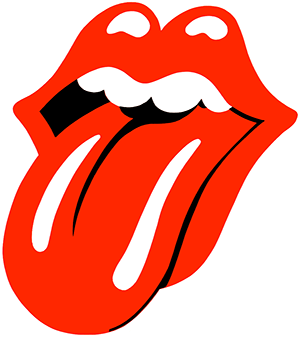
John Pasche is an art designer, most famous for designing the ‘Tongue and Lip Design’ logo for the popular band The Rolling Stones. He designed four tour posters for the Rolling Stones between 1970 and 1974, and also worked for other reputed artists, such as Paul McCartney, The Who, The Stranglers and Dr Feelgood. He works as a freelance designer in Surrey, UK, and he still remains a fan of the band.
Pasche designed the ‘Tongue and Lip Design’ logo in 1971, which was originally reproduced on the ‘Sticky Fingers’ album. In what was perhaps one of the first cases of rock brand marketing, Jagger reportedly approached the Royal College of Art in 1969 looking to commission images for the band. Pasche designed the logo and ended up working for the Stones. ‘Face to face with him, the first thing you were aware of was the size of his lips and his mouth,’ Pasche said.
Posted in Art, Money |
Leave a Comment »
June 30, 2011


The Royal Society for the encouragement of Arts, Manufactures and Commerce (RSA) is a British multi-disciplinary institution, based in London. The name Royal Society of Arts is frequently used for brevity. It was founded in 1754 and was granted a Royal Charter in 1847. Notable members have included Benjamin Franklin, Karl Marx, Adam Smith, Stephen Hawking and Charles Dickens. Its founding charter expressed the purpose of the society as being to ’embolden enterprise, enlarge science, refine art, improve our manufactures and extend our commerce,’ but also of the need to alleviate poverty and secure full employment.
In its early years, the Society offered prizes — which it called ‘premiums’ — for people who could successfully achieve one of a number of published challenges. Captain William Bligh suffered the ‘Mutiny on the Bounty’ while attempting to win a premium for shipping breadfruit from the East to the West Indies. He subsequently repeated the voyage and this time succeeded, and the Society awarded him the prize. The Society offered premiums for a very wide range of challenges including devising new forms of machinery and agricultural improvements (which included seeking ways to improve the cultivation of opium poppies).
Posted in Art, Money, World |
Leave a Comment »
June 30, 2011

‘100,000,000 Guinea Pigs: Dangers in Everyday Foods, Drugs, and Cosmetics’ is a book written by Arthur Kallet and F.J. Schlink first released in 1933. Its central argument propounds that the American population is being used as guinea pigs in a giant experiment undertaken by the American producers of food stuffs and patent medicines and the like. Kallet and Schlink premise the book as being ‘written in the interest of the consumer, who does not yet realize that he is being used as a guinea pig…’
The book’s key proposition is that a great deal of products sold to the public – particularly pharmaceuticals and food products – are released with little regard or knowledge of how these products adversely impact the consumer. Corporations, often knowingly, release products which either do not do what they purport to, or have dangerous side effects or defects. Furthermore, many officials and government departments, namely the U.S. Food and Drug Administration, have fallen victim to regulatory capture (control by industry it is charged with regulating).
read more »
Posted in Health, Money, Politics |
Leave a Comment »
June 29, 2011
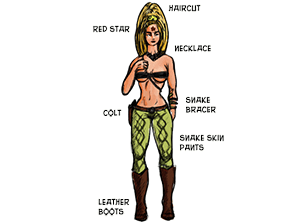
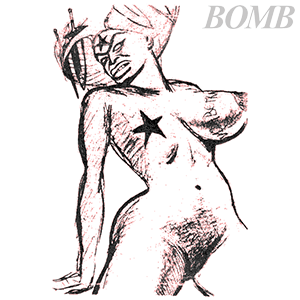
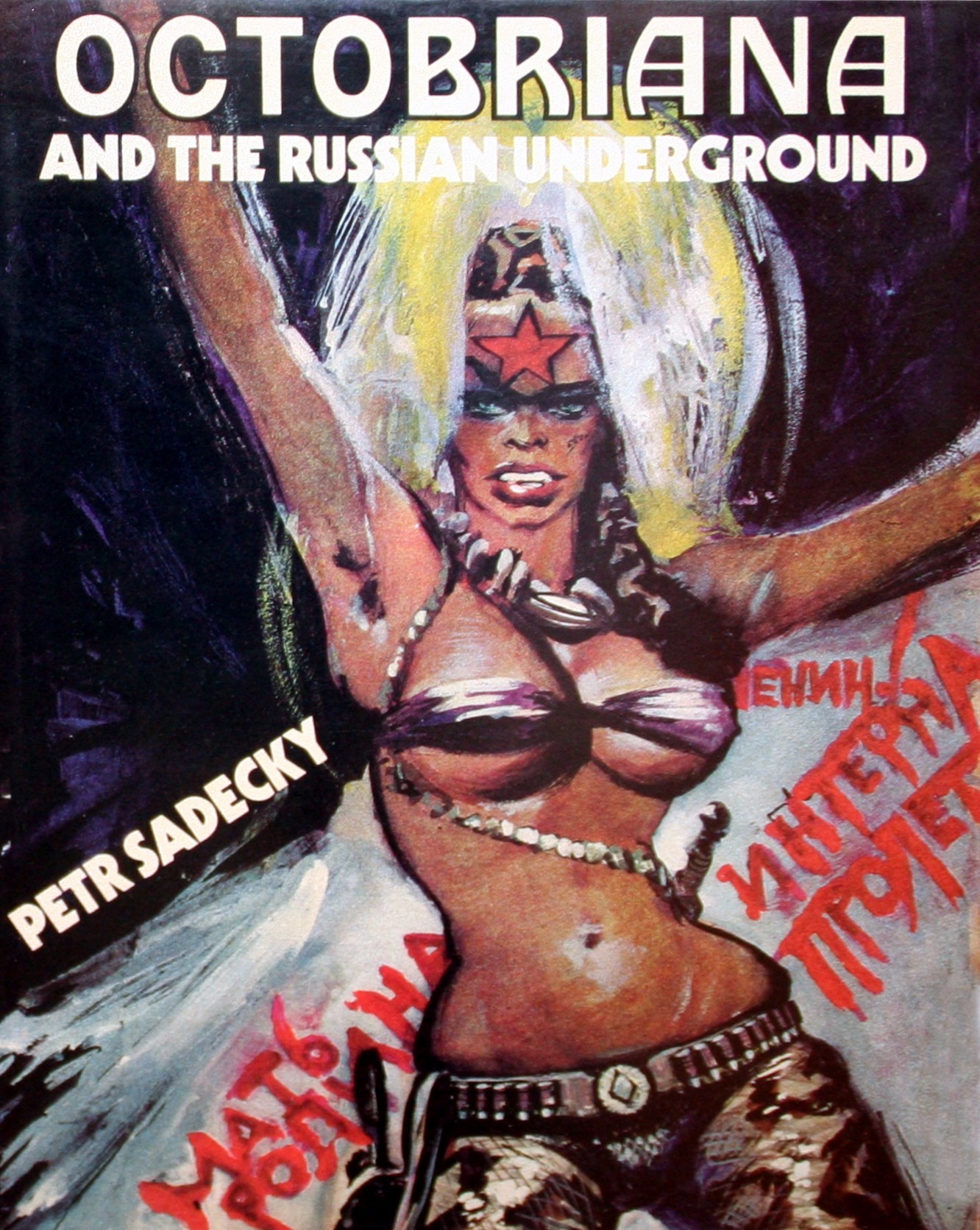
Octobriana is a comic superheroine originating from literary hoax by Czech artist Petr Sadecký. Sadecký wrote ‘Octobriana and the Russian Underground,’ a book that told the story of Octobriana, purported to be the creation of a group of Russian dissident artists calling themselves Progressive Political Pornography (PPP) in the 1960s. Octobriana was actually Sadecký’s own creation. While still in Prague, he enlisted the help of two Czech artists, Bohumil Konečný and Zdeněk Burian, in creating a comic centering around the character of ‘Amazona.’ Sadecký told the two that he had a buyer interested in the comic, and they worked together on writing and illustrating it.
However, Sadecký betrayed his friends by stealing the artwork and escaping to the West, where, in his efforts to market the Amazona comic, he changed the dialog, drew a red star on the character’s forehead, changed her name to Octobriana, and gave her a fake political backstory. Burian and Konečný sued Sadecký in a West German court, winning the case but never recovering all their stolen artwork. Since Octobriana is still widely thought to be the product of dissident cells within the U.S.S.R., she is not copyrighted, and has appeared in a variety of artistic incarnations.
Posted in Art, Money, World |
Leave a Comment »
June 29, 2011

Musopen is an online music library of copyright-free (public domain) music. Musopen’s mission is to record or obtain recordings that have no copyrights so that its visitors may listen, re-use, or in any way enjoy music, and ‘to set music free.’ In 2008, Musopen released newly-commissioned recordings of the 32 Beethoven piano sonatas into the public domain.
In 2010, the site organized a fundraiser via Kickstarter to commission recordings of a larger repertoire. Musopen is a nonprofit charity, operating out of Palo Alto, California, created by Aaron Dunn in 2005.
Posted in Art, Money, Politics |
Leave a Comment »
June 28, 2011
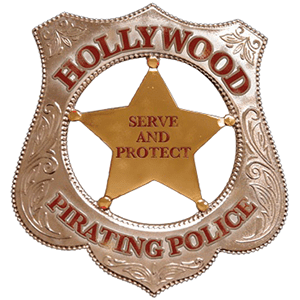
The Digital Millennium Copyright Act (DMCA) is a US copyright law that implements two 1996 treaties of the World Intellectual Property Organization. It criminalizes production and dissemination of technology, devices, or services intended to circumvent measures (commonly known as digital rights management or DRM) that control access to copyrighted works. It also criminalizes the act of circumventing an access control, whether or not there is actual infringement of copyright itself. In addition, the DMCA heightens the penalties for copyright infringement on the Internet.
Passed in 1998 by a unanimous vote in the United States Senate and signed into law by President Bill Clinton, the DMCA amended Title 17 of the United States Code to extend the reach of copyright, while limiting the liability of the providers of on-line services for copyright infringement by their users. The law is currently unsettled with regard to websites that contain links to infringing material; however, there have been a few lower-court decisions which have ruled against linking in some narrowly prescribed circumstances. One is when the owner of a website has already been issued an injunction against posting infringing material on their website and then links to the same material in an attempt to circumvent the injunction.
Posted in Money, Politics, Technology |
Leave a Comment »
June 28, 2011

In typography, rivers, or rivers of white, are gaps appearing to run down a paragraph of text, due to a coincidental alignment of spaces. They can occur regardless of the spacing settings, but are most noticeable with wide inter-word spaces caused by full text justification or monospaced fonts.
Typographers try to minimize or eliminate the river effect. They can test for rivers by turning a proof sheet upside down (top to bottom) to examine the text. From this perspective, the eye is less likely to recognize words and the type can be viewed more readily as an overall pattern. Other related terms are ‘lakes’ and ‘holes,’ which refer to a cluster of adjacent or intertwined rivers that create a lighter area within a block of type.
Posted in Language, Money, Technology |
Leave a Comment »
June 27, 2011

Zombie Nation is a German techno and electro project of the Munich based DJ and producer Florian Senfter (also known as John Starlight). The first Zombie Nation five track EP was released in the spring of 1999 on DJ Hell’s label, International DeeJay Gigolo Records.
A remix of the song ‘Kernkraft 400’ on this debut release landed in high chart-positions all over the world, including number 2 in the U.K. ‘Kernkraft 400’ was a 1:1 melody copy from the Commodore C64 computer game ‘Lazy Jones.’
read more »
Posted in Art, Money, Technology |
Leave a Comment »


 The Daily Omnivore