September 27, 2012

An Internet kill switch is the cybercrime and countermeasures concept of activating a single shut off mechanism for all Internet traffic. The theory behind a kill switch is creation of a single point of control for one authority or another to control in order to ‘shut down the internet to protect it’ from unspecified assailants. The prospect of cyberwarfare over the 2000s has prompted the drafting of legislation by US officials, but worldwide the implications of actually of ‘killing’ the Internet has prompted criticism of the idea in the United States.
During the 2010–2011 Middle East and North Africa protests in Tunisia, Egypt, and Libya access to the Internet was denied in an effort to limit peer networking to facilitate organization. The Communications Act of 1934 established the United States’ Federal regulation of electronic communications. In this act, created by the Franklin D. Roosevelt Administration enabled the president powers of control over the media under certain circumstances such as during wartime or a national emergency.
read more »
Posted in Politics, Technology, War |
Leave a Comment »
September 26, 2012

Lafayette Ronald Hubbard (1911 – 1986), better known as L. Ron Hubbard and often referred to by his initials, LRH, was an American pulp fiction author and the founder of the Church of Scientology. After establishing a career as a writer, becoming best known for his science fiction and fantasy stories, he developed a self-help system called ‘Dianetics’ which was first published in 1950. He subsequently developed his ideas into a wide-ranging set of doctrines and rituals as part of a new religious movement that he called Scientology. His writings became the guiding texts for the Church of Scientology and a number of affiliated organizations that address such diverse topics as business administration, literacy, and drug rehabilitation.
The Church of Scientology describes Hubbard in hagiographic terms, and he portrayed himself as a pioneering explorer, world traveler, and nuclear physicist, with expertise in a wide range of disciplines, including photography, art, poetry, and philosophy. His critics have characterized him as a liar, a charlatan, and mentally unstable. Though many of his autobiographical statements have been proven to be fictitious, the Church rejects any suggestion that its account of Hubbard’s life is not historical fact.
read more »
Posted in Philosophy, Politics, World |
Leave a Comment »
September 25, 2012


Deaf culture describes the communities that are affected by deafness and which use sign languages as the main means of communication. When used as a cultural label, the word deaf is often written with a capital ‘D,’ and referred to as ‘big D Deaf’ in speech and sign. When used as a label for the audiological condition, it is written with a lower case ‘d.’ Members of the Deaf community tend to view deafness as a difference in human experience rather than a disability, preferring to be called ‘Deaf’ or ‘Hard of Hearing’ than ‘Hearing Impaired,’ which most people think is the most acceptable term today.
The community may include family members of deaf people and sign-language interpreters who identify with Deaf culture and does not automatically include all people who are hard of hearing. According to sign-language interpreter Anna Mindess, ‘it is not the extent of hearing loss that defines a member of the Deaf community but the individual’s own sense of identity and resultant actions.’ As with all social groups that a person chooses to belong to, a person is a member of the Deaf community if he or she ‘identifies him/herself as a member of the Deaf community, and other members accept that person as a part of the community.’
read more »
Posted in Health, Language, Politics |
Leave a Comment »
September 18, 2012

Discrimination against atheists (sometimes called atheophobia) includes the persecution and discrimination faced by atheists and those labeled as atheists in the past and in the current era. Differing definitions of atheism historically and culturally mean those discriminated against might not be considered truly atheist by modern Western standards. In constitutional democracies, legal discrimination against atheists is uncommon, but some atheists and atheist groups, particularly those in the United States, have protested laws, regulations and institutions they view as being discriminatory.
In some Islamic countries, atheists face discrimination including lack of legal status or even a death sentence in the case of apostasy. Atheism in its modern sense did not exist before the end of the seventeenth century. However, as governmental authority rested on the notion of divine right, it was threatened by those who denied the existence of the local god. Philosophers such as Plato argued that atheism (as we understand it today) was a danger to society and should be punished as a crime. Those labeled as atheist, which included early Christians and Muslims, were as a result targeted for legal persecution.
read more »
Posted in Philosophy, Politics, World |
Leave a Comment »
September 18, 2012

Cultural bias is the phenomenon of interpreting and judging phenomena by standards inherent to one’s own culture. The phenomenon is sometimes considered a problem central to social and human sciences, such as economics, psychology, anthropology, and sociology.
Some practitioners of the aforementioned fields have attempted to develop methods and theories to compensate for or a culture make assumptions about conventions, including conventions of language, notation, proof and evidence. They are then accused of mistaking these assumptions for laws of logic or nature. Numerous such biases exist, concerning cultural norms for color, location of body parts, mate selection, concepts of justice, linguistic and logical validity, acceptability of evidence, and taboos.
read more »
Posted in Philosophy, Politics, World |
Leave a Comment »
September 18, 2012
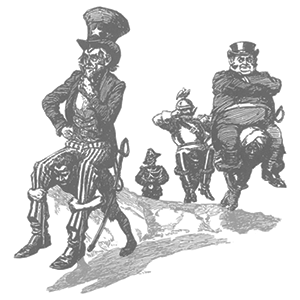
Supremacism [suh-prem-uh-siz-uhm] is the belief that a particular race, species, ethnic group, religion, gender, sexual orientation, class, belief system or culture is superior to others and entitles those who identify with it to dominate, control or rule those who do not. Many anthropologists consider male supremacism, also known as ‘male dominance’ or ‘patriarchy,’ to exist in all cultures throughout human history. Under it special rights or status is granted to men, i.e. ‘male privilege.’
Such supremacy is enforced through a variety of cultural, political and interpersonal strategies. Others note that this often has been balanced by various forms of female authority. Since the 19th century there have been a number of feminist movements opposed to male supremacism and working for equal legal rights and protections for women in all cultural, political and interpersonal relations.
read more »
Posted in Philosophy, Politics, World |
Leave a Comment »
September 17, 2012


Opportunity cost is the value of the next best thing after making a decision; the utility of the decision has to outweigh the opportunity cost for it to be a good choice.
For example, opportunity cost describes leisure time given up to work, because leisure and income are both valued. Going to work implies more income but less leisure.
read more »
Posted in Money, Politics |
Leave a Comment »
September 16, 2012

Puffery [puhf-uh-ree] as a legal term refers to promotional statements and claims that express subjective rather than objective views, which no ‘reasonable person’ would take literally. Puffery serves to ‘puff up’ an exaggerated image of what is being described and is especially featured in testimonials. In a legal context, the term originated in the English Court of Appeal case, which centered on whether a monetary reimbursement should be paid when an influenza preventive device failed to work.
The manufacturers had paid for advertising stating that £100 would be paid in such circumstances then failed to follow through. Part of their defense was that such a statement was ‘mere puff’ and not meant to be taken seriously. While the defense ultimately lost the case the principle was confirmed that certain statements made by advertisers, that were obviously not made in a serious manner, could be exempt from usual rules relating to promises in open contracts.
read more »
Posted in Language, Money, Politics |
Leave a Comment »
September 15, 2012


A knowledge market is a mechanism for distributing knowledge resources. There are two views on knowledge and how knowledge markets can function. One view uses a legal construct of intellectual property to make knowledge a typical scarce resource, so the traditional commodity market mechanism can be applied directly to distribute it.
An alternative model is based on treating knowledge as a public good and hence encouraging free sharing of knowledge. This is often referred to as attention economy. Currently there is no consensus among researchers on relative merits of these two approaches.
read more »
Posted in Money, Politics, Technology |
Leave a Comment »
September 15, 2012

Innocence of Muslims is an anti-Muslim amateur 2012 film produced by Nakoula Basseley Nakoula. Months after it was shown one time in a Hollywood theater, two film trailers were released on YouTube, in 2012. The trailers were dubbed into Arabic, and then spread by Egyptian American blogger and Coptic Christian Morris Sadek.
A two-minute excerpt from the film was broadcast an Egyptian Islamist television station. Violent protests against the film broke out on September 11. The protests spread to Libya, Yemen, and other Arab and Muslim nations over the following days, included the 2012 diplomatic missions attacks, incorporating an attack on the U.S. consulate in Libya, that resulted the deaths of U.S. Ambassador Christopher Stevens and three other Americans.
read more »
Posted in Philosophy, Politics, World |
1 Comment »
September 15, 2012

Blasphemy Day International is a holiday in which individuals and groups are encouraged to openly express their criticism of, or even disdain for, religion.
It was founded in 2009 by the Center for Inquiry (CFI, a US non-profit educational organization whose primary mission is to encourage evidence-based inquiry into paranormal and fringe science claims, alternative medicine and mental health practices, religion, secular ethics, and society).
read more »
Posted in Philosophy, Politics, World |
Leave a Comment »
September 14, 2012

A Millwall brick is an improvised weapon made of a manipulated newspaper. It was named for supporters of Millwall F.C., who had a stereotyped reputation for football hooliganism.
The Millwall brick was allegedly used as a stealth weapon at football matches in England during the 1960s and 1970s.
read more »
Posted in Games, Politics, World |
Leave a Comment »



 The Daily Omnivore