December 12, 2012

Allometry [uh-lom-i-tree] is the study of the relationship of body size to shape. In particular, it refers to the rate of growth of one part of the body compared to other parts. In most cases, the relative size of body parts changes as the body grows. Most allometric relationships are adaptive.
For example, organs which depend on their surface area (such as the intestine) grow faster as the body weight increases. Also, there are changes in allometry in the evolution of a clade (branches on the tree of life).
read more »
Posted in Science |
Leave a Comment »
December 12, 2012

Male pregnancy is the incubation of one or more embryos or fetuses by male members of any species. In nearly all sexually reproducing animal species, offspring are ordinarily carried by the female until birth, but in fish of the Syngnathidae family (pipefish and seahorses), males perform this function. They may possess a brood pouch on the trunk or tail (in other species, the eggs are merely attached to the male’s trunk or tail when the female lays them).
Fertilization may take place in the pouch or in the water before implantation, but in either case, syngnathids’ male pregnancy ensures them complete confidence of paternity. After implantation in or on the brood pouch or brood patch, the male incubates the eggs. Many species osmoregulate the brood pouch fluid to maintain proper pH for the developing embryos.
read more »
Posted in Health, Science, Sex |
1 Comment »
December 11, 2012
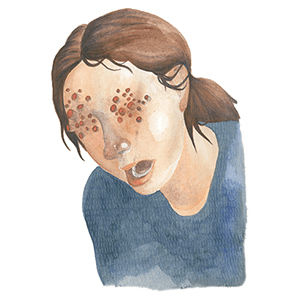
Trypophobia [try-poe-phobia] (sometimes called repetitive pattern phobia) is fear of or revulsion from clustered geometric shapes, especially small holes. It is not recognized in the Diagnostic and Statistical Manual of Mental Disorders, however thousands of people claim to be fearful of objects with small holes, such as beehives, ant holes, and lotus seed heads.
Research is limited and Arnold Wilkins and Geoff Cole, who claim to be the first to scientifically investigate, believe the reaction to be based on a biological revulsion, rather than a learned cultural fear. The term was coined in 2005, a combination of the Greek ‘trypo’ (punching, drilling or boring holes) and phobia.
Posted in Health, Science |
4 Comments »
December 6, 2012

Cannabinoids [kuh-nab-uh-noid] are a class of diverse chemical compounds that activate cannabinoid receptors (molecules on the surface of a cells in the brain and throughout the body, which receive chemical signals). After the receptor is engaged, multiple intracellular signal pathways are activated; researchers are still unraveling the precise mechanism at work.
Cannabinoid receptors are activated by endocannabinoids (produced naturally in the body), phytocannabinoids (found in plants), and synthetic cannabinoids (produced chemically in a lab). The most notable cannabinoid is the phytocannabinoid tetrahydrocannabinol (THC), the primary psychoactive compound of cannabis. However, there are known to exist dozens of other cannabinoids with varied effects. Before the 1980s, it was often speculated that cannabinoids produced their physiological and behavioral effects via nonspecific interaction with cell membranes, instead of interacting with specific membrane-bound receptors.
read more »
Posted in Drugs, Health, Science |
Leave a Comment »
December 4, 2012
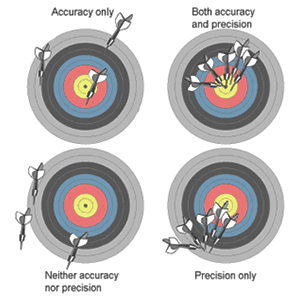
The accuracy of a measurement system is the degree of closeness of measurements of a quantity to that quantity’s actual value. The precision of a measurement system, also called reproducibility or repeatability, is the degree to which repeated measurements under unchanged conditions show the same results. Although the two words reproducibility and repeatability can be synonymous in colloquial use, they are deliberately contrasted in the context of the scientific method.
A measurement system can be accurate but not precise, precise but not accurate, neither, or both. For example, if an experiment contains a systematic error, then increasing the sample size generally increases precision but does not improve accuracy. The result would be a consistent yet inaccurate string of results from the flawed experiment. Eliminating the systematic error improves accuracy but does not change precision.
Posted in Language, Science |
Leave a Comment »
December 4, 2012
David Doubilet (b. 1946) is a well known underwater photographer published frequently in ‘National Geographic Magazine.’ He was born in New York and started taking photos underwater at the young age of 12. He started with a Brownie Hawkeye in a rubber anesthesiologist’s bag. During his summer holidays, he spent his time along the New Jersey coast. He later worked as a diver and photographer for the Sandy Hook Marine Laboratories in New Jersey. He also spent much time in the Caribbean. While a dive instructor in the Bahamas he found his motivation to capture the beauty of the sea and everything in it.
His goal as a photographer is to ‘redefine photographic boundaries’ every time he enters the water. The main obstacle in underwater photography is the impossibility of changing lenses or film underwater, thus Doubilet invented the split lens camera. This allowed him to take pictures above and below water simultaneously; there is a separate focus point on the top half and bottom half of the scene. When the picture is taken, it is recorded onto the same negative. He is well known for his reports on the sea and has written many books in recent years, one of which includes ‘Australia’s Great Barrier Reef’ by National Geographic.
Posted in Art, Science |
Leave a Comment »
November 15, 2012
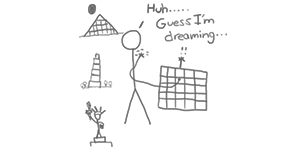
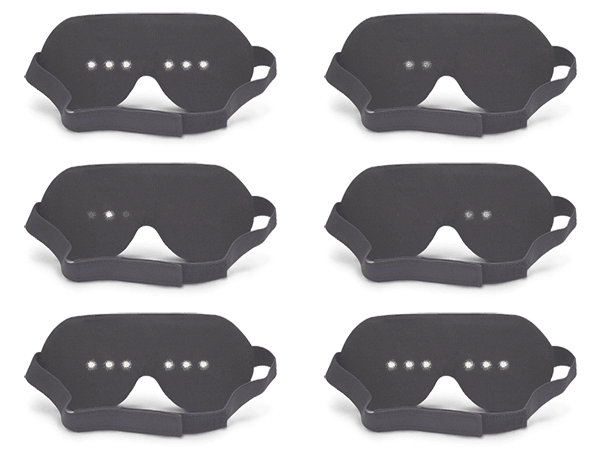
A lucid dream is any dream in which one is aware that one is dreaming. The term was coined by the Dutch psychiatrist and writer Frederik van Eeden (1860–1932). In a lucid dream, the dreamer may be able to exert some degree of control over their participation within the dream or be able to manipulate their imaginary experiences in the dream environment. Lucid dreams can be realistic and vivid.
It is shown that there are higher amounts of beta waves (normally associated with waking consciousness) experienced by lucid dreamers, hence there is an increased amount of activity in the parietal lobes making lucid dreaming a conscious process.
read more »
Posted in Philosophy, Science |
Leave a Comment »
November 14, 2012

Homeopathy [hoh-mee-op-uh-thee] is a system of alternative medicine originated in 1796 by German physicist Samuel Hahnemann, based on the doctrine of ‘similia similibus curentur’ (‘like cures like’), according to which a substance that causes the symptoms of a disease in healthy people will cure that disease in sick people.
Scientific research has found homeopathic remedies ineffective and their postulated mechanisms of action implausible.
read more »
Posted in Health, Science |
Leave a Comment »
November 14, 2012
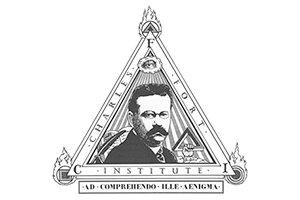

Charles Fort (1874 – 1932) was an American writer and researcher into anomalous phenomena (e.g. UFOs, ghosts, telepathy).
Today, the terms Fortean and Forteana are used to characterize various such phenomena.
read more »
Posted in Humor, Philosophy, Science |
Leave a Comment »
November 13, 2012
Out-of-place artifact (OOPArt) is a term coined by American naturalist and cryptozoologist Ivan T. Sanderson for an object of historical, archaeological, or paleontological interest found in a very unusual or seemingly impossible context that could challenge conventional historical chronology.
The term ‘out-of-place artifact’ is rarely used by mainstream historians or scientists. Its use is largely confined to cryptozoologists (who study big foot, the loch ness monster, and other cryptids), proponents of ancient astronaut theories, Young Earth creationists, and paranormal enthusiasts.
read more »
Posted in Philosophy, Science, Technology |
Leave a Comment »
November 13, 2012

According to ancient astronaut theories, intelligent extraterrestrial beings visited Earth during the origins or development of human cultures, technologies, and/or religions. Some of these theories propose that deities from most – if not all – religions are actually extraterrestrials, and their technologies were taken as evidence of their divine status. Ancient astronaut theories have been widely used as a plot device in science fiction (e.g. ‘2001: A Space Odyssey,’ ‘Stargate’).
Such theories have not received support within the scientific community, and have received little or no attention in peer reviewed studies from scientific journals.
read more »
Posted in Art, Philosophy, Science |
Leave a Comment »
November 13, 2012

Mechanitis is a genus of tigerwing (ithomiine) butterflies, named by Danish zoologist Johan Christian Fabricius in 1807.
They are in the brush-footed butterfly family, Nymphalidae. It has gained fame due to the metallic appearance of the cocoons of certain phenotypes.
Posted in Science |
Leave a Comment »



