February 16, 2011

Wiley Wiggins (b. 1976) is an American film actor and visual effects artist. A native of Austin, Texas, he is the nephew of Lanny Wiggins, who was a member of Janis Joplin’s early band, The Waller Creek Boys. Wiggins starred in Richard Linklater’s films ‘Dazed and Confused’ (at the age of 16) and ‘Waking Life’ (at the age of 25), for which he also served as an animator for.
He was involved in early ’90s cyberculture, and wrote occasionally for such magazines as FringeWare Review, Mondo 2000, and Boing Boing. His current weblog, ‘It’s Not For Everyone,’ focuses on film, art, technology and free culture.
Posted in Art, Technology |
Leave a Comment »
February 14, 2011

The ‘Amen break‘ was a brief drum solo performed in 1969 by G. C. Coleman in the song ‘Amen, Brother’ performed by the 1960s funk and soul outfit The Winstons. It gained fame from the 1980s onwards when four bars (5.2 seconds) sampled from the drum-solo (or imitations thereof) became very widely used as sampled drum loops in hip hop and other music. The full song is an up-tempo instrumental rendition of Jester Hairston’s ‘Amen,’ which he wrote for the Sidney Poitier film Lilies of the Field (1963) and which was subsequently popularized by The Impressions in 1964.
The Winstons’ version was released as a B-side of the 45 RPM 7-inch vinyl single ‘Color Him Father’ in 1969 on Metromedia. The Amen Break was used extensively in early hiphop and sample-based music, and became the basis for drum-and-bass and jungle music—’a six-second clip that spawned several entire subcultures.’
Posted in Art, Money, Technology |
Leave a Comment »
February 14, 2011

Weathering steel, also known as COR-TEN steel, is a group of steel alloys which were developed to obviate the need for painting, and form a stable rust-like appearance if exposed to the weather for several years. Weathering steel is popularly used in outdoor sculptures and as exterior facades, for its rustic antique appearance. It is very widely used in marine transportation, in the construction of Intermodal containers.
Using weathering steel in construction presents several challenges. Ensuring that weld-points weather at the same rate as the other materials may require special welding techniques or material. Weathering steel is not rustproof in itself. If water is allowed to accumulate in pockets, those areas will experience higher corrosion rates, so provision for drainage must be made. Weathering steel is sensitive to salt-laden air environments. In such environments, it is possible that the protective patina may not stabilize but instead continue to corrode.
Posted in Art, Money, Technology |
Leave a Comment »
February 14, 2011

Jaron Lanier [lah-neer] (b. 1960) is an American computer scientist and artist. In the early 1980s he popularized the term ‘Virtual Reality’ (VR) for a field in which he was a pioneer. At that time, he founded VPL Research, the first company to sell VR products. His current appointments include Interdisciplinary Scholar-in-Residence, CET, UC Berkeley. In what is probably his most famous paper ‘One-Half of a Manifesto’ (Wired, 2000) Lanier opposes the prospect of so called ‘cybernetic totalism,’ which is ‘a cataclysm brought on when computers become ultra-intelligent masters of matter and life.’
Lanier’s position is that humans may not be considered to be biological computers, i.e., they may not be compared to digital computers in any proper sense, and it is very unlikely that humans could be generally replaced by computers easily in few decades, even economically. While processor performance increases according to Moore’s law, overall performance rises only very slowly. This is because our productivity in developing software increases only slightly, and software becomes more bloated and remains as error-prone as it ever was. He warns that the biggest problem of any theory is not that it is false, ‘but when it claims to be the sole and utterly complete path to understanding life and reality.’
Posted in Philosophy, Politics, Technology |
Leave a Comment »
February 14, 2011

Flaming, also known as bashing, is hostile and insulting interaction between Internet users. Flaming usually occurs in the social context of a Internet forum, Internet Relay Chat (IRC), Usenet, by e-mail, game servers such as Xbox Live or Playstation Network, and on video-sharing websites. It is frequently the result of the discussion of heated real-world issues such as politics, sports, religion, and philosophy, or of issues that polarise subpopulations, but can also be provoked by seemingly trivial differences. Deliberate flaming, as opposed to flaming as a result of emotional discussions, is carried out by individuals known as flamers, who are specifically motivated to incite flaming. These users specialize in flaming and target specific aspects of a controversial conversation, and are usually more subtle than their counterparts.
Their counterparts are known as trolls who write obvious and blunt remarks to incite a flame war, as opposed to the more subtle, yet precise flamers. Some websites even cater for flamers and trolls, by allowing them a free environment, such as Flame-Wars forum. Flamebait is a message posted to a public Internet discussion group, such as a forum, newsgroup or mailing list, with the intent of provoking an angry response (a ‘flame’) or argument over a topic the poster often has no real interest in. While flaming can occur as a result of legitimate debates or grievances, flamebait implies the intentional posting of inflammatory rhetoric or images.
Posted in Language, Technology |
Leave a Comment »
February 14, 2011
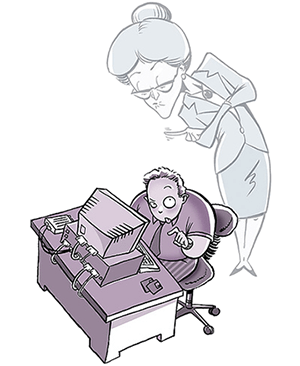
Netiquette is a set of social conventions that facilitate interaction over networks. The points most strongly emphasized about netiquette often include using simple electronic signatures, and avoiding multiposting, cross-posting, off-topic posting, hijacking a discussion thread, and other techniques used to minimize the effort required to read a post or a thread.
Netiquette guidelines posted by IBM for employees utilizing Second Life in an official capacity, however, focus on basic professionalism, amiable work environment, and protecting IBM’s intellectual property. Similarly, some guidelines call for use of unabbreviated English while users of online chat protocols like IRC and instant messaging protocols like SMS occasionally encourage just the opposite, bolstering use of SMS language. However, many other online communities frown upon this practice.
Posted in Language, Technology |
1 Comment »
February 13, 2011

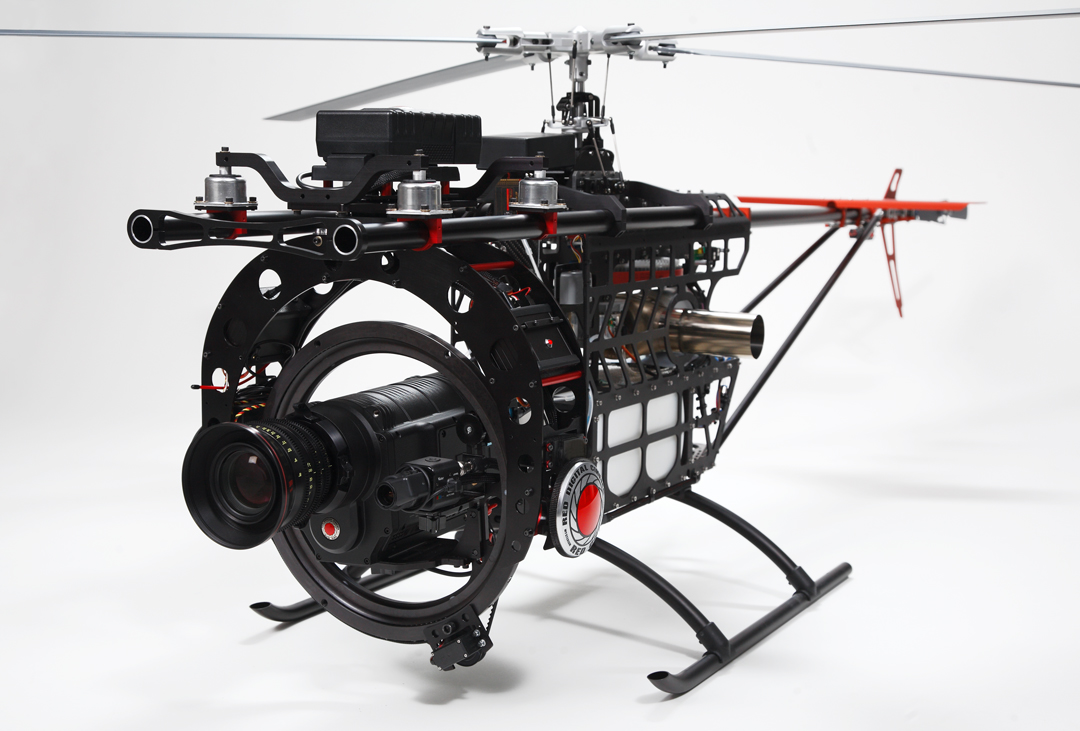
SkyReel is a Canadian company that builds and operates unmanned aerial vehicles (UAV) outfitted with camera systems for the motion picture industry.
Posted in Art, Money, Technology |
Leave a Comment »
February 13, 2011
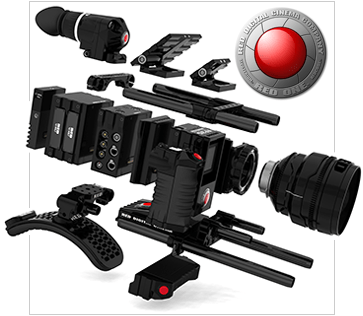
The Red Digital Cinema Camera Company manufactures digital cinematography cameras and accessories for professional and cinematic use. The company was created and financed by Oakley founder Jim Jannard with the publicly expressed intent to reinvent the camera industry. The company’s main product is the Red One, which can record at resolutions up to 4,096 horizontal by 2,304 vertical pixels, directly to flash or hard disk storage. It features a single Super 35-sized CMOS sensor and a cinematography industry standard PL mount.
Posted in Art, Money, Technology |
Leave a Comment »
February 13, 2011

A skeuomorph [skyoo-uh-mawrf] is a derivative object that retains ornamental design cues to a structure that was necessary in the original. They may be deliberately employed to make the new look comfortably old and familiar, such as copper cladding on zinc pennies or computer printed postage with circular town name and cancellation lines. Historically, high-status items, such as metal tableware, were often recreated for the mass market using ceramics, which were a cheaper material. In certain cases, efforts were made to recreate the rivets in the metal originals by adding pellets of clay to the pottery version.
In the modern era, cheaper plastic items often attempt to mimic more expensive wooden and metal products though they are only skeuomorphic if new ornamentation references original functionality, such as molded screw heads in molded plastic items. Blue jeans have authentic-looking brass rivet caps covering the functional steel rivet beneath, and a pocket watch pocket; digital cameras play a recorded audio clip of a conventional SLR camera mirror slap and shutter opening and closing. Such ornamentation is not necessarily non-functional: the watch pocket is now used for coins, and the camera shutter sound is used to indicate to subject and photographer when the taking of the picture is complete.
Posted in Language, Money, Technology |
Leave a Comment »
February 12, 2011

A neti pot is a device used for irrigating the nasal passages. Typically it has a spout attached near the bottom, sometimes with a handle on the opposite side. Neti pots flush out the nasal cavities by using gravity to draw the flow of saline. Some modern variants available from pharmacies are made of flexible plastic and can be compressed to exert additional pressure. In recent years alternative strategies have been developed, including bulb syringes in which the flow is created by squeezing a bulb and more advanced ‘pulsatile devices’ which mechanically pump the saline.
The use of a neti pot requires mixing up a saline solution that will be poured through the nasal passages. A typical saline solution is a mixture of around 500 ml of water with 5 g of salt. Sodium bicarbonate is sometimes added. The neti pot used with a saline solution has been shown to be an effective treatment for hay fever, sinusitis, and other nasal conditions. The origins of nasal irrigation are understood to be in the ancient Hindu practice of Ayurveda whose roots are traced to the Vedas.
Posted in Health, Technology |
Leave a Comment »
February 12, 2011

Magnetic implants are an experimental process in which small magnets are placed under the skin, allowing objects to be magnetically attached to the body, and also enables the wearer to sense electromagnetic fields. They have been used for several years in dentistry and re-constructive surgery, but their use by the body modification community is recent. Having magnets implanted under the skin allows the wearer to attach magnetic items to the outside of the skin, and also enables the wearer to sense electromagnetic fields.
Samppa, a a body modification artist, implanted magnets in himself and close friends in the late 1990’s, but they weren’t very strong and were only capable of picking up small items. Jesse Jarrell and Steve Haworth developed small and powerful neodymium magnets encapsulated in silicone. The procedure is still experimental, and complications are common, including rupturing of the silicone shell.
Posted in Art, Health, Technology |
Leave a Comment »
February 12, 2011

The Geneva drive is a gear mechanism that translates a continuous rotation into an intermittent rotary motion. The rotating drive wheel has a pin that reaches into a slot of the driven wheel advancing it by one step. The drive wheel also has a raised circular blocking disc that locks the driven wheel in position between steps. The name derives from the device’s earliest application in mechanical watches, Switzerland and Geneva being an important center of watchmaking. The geneva drive is also commonly called a Maltese cross mechanism due to the visual resemblance.
Posted in Language, Technology |
Leave a Comment »