August 9, 2010
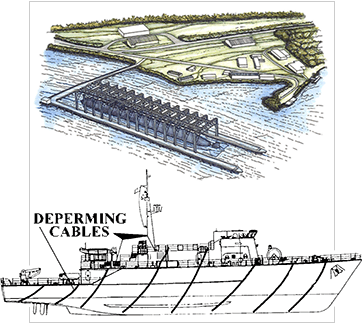
Deperming [dee-purm-ing] is a procedure for erasing the permanent magnetism from ships and submarines to camouflage them against magnetic detection vessels and enemy marine mines. A sea-going metal-hulled ship or submarine, by its very nature, develops a magnetic signature as it travels due to a magneto-mechanical interaction with the Earth’s magnetic field. This signature can be exploited by magnetic mines, or facilitate the detection of a submarine by ships or aircraft with magnetic anomaly detection (MAD) equipment.
Specialized deperming facilities, such as the United States Navy’s Lambert’s Point Deperming Station are used to perform the procedure. Heavy gauge copper cables are wrapped around the hull and superstructure of the vessel, and very high electrical currents (as high as 4000 amps) are pulsed through the cables. This has the effect of ‘resetting’ the ship’s magnetic signature. It is also possible to assign a specific signature that is best suited to the particular area of the world in which the ship will operate. Over time the deperm will begin to degrade and the procedure must be redone periodically to maintain the desired effect.
Posted in Technology, War |
Leave a Comment »
August 9, 2010

In electronic financial markets, algorithmic trading or automated trading, also known as algo trading, black-box trading or robo trading, is the use of computer programs for entering trading orders with the computer algorithm deciding on aspects of the order such as the timing, price, or quantity of the order, or in many cases initiating the order without human intervention. Investment decisions and implementation may be augmented at any stage with algorithmic support or may operate completely automatically (‘on auto-pilot’).
Algorithmic Trading is widely used by pension funds, mutual funds, and other buy side (investor driven) institutional traders, to divide large trades into several smaller trades in order to manage market impact, and risk. Sell side traders, such as market makers and some hedge funds, provide liquidity to the market, generating and executing orders automatically. A special class of algorithmic trading is ‘high-frequency trading’ (HFT), in which computers make elaborate decisions to initiate orders based on information that is received electronically, before human traders are capable of processing the information.
Posted in Money, Technology |
1 Comment »
August 5, 2010

A silent disco is a disco where people dance to music listened to on headphones. Rather using than a speaker system, music is broadcast via an FM transmitter with the signal being picked up by wireless headphone receivers worn by the partygoers. Those without the headphones hear no music, giving the effect of a room full of people dancing to nothing. Often two DJs compete for listeners. Silent discos and silent gigs are popular at music festivals as they allow dancing to continue past noise curfews. Similar events are ‘mobile clubbing’ gatherings, where a group of people meet up, often on short notice, to dance to the music on their personal music players.
Posted in Art, Technology |
1 Comment »
August 4, 2010
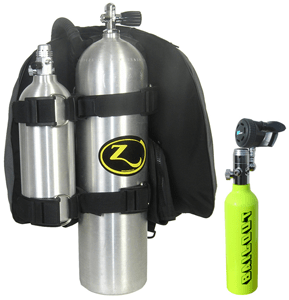
A pony bottle is a small diving cylinder, often of only a few litres capacity, which is filled from a main tank before a dive and fitted with its own independent regulator. In an emergency, such as exhaustion of the diver’s main air supply, it can be used as an alternate air source in place of a controlled emergency swimming ascent. By comparison a bailout bottle, which serves a similar purpose, is both smaller and has a regulator integrated into the cylinder. Since their introduction in the 1980s, bailout bottles have been the subject of debate within the diving community.
The argument against bailout bottles is that they do not have sufficient capacity to get a diver in many emergency situations back to the surface safely, and thus cause divers to feel a false sense of safety. A review carried out by Scuba Diving magazine attempted to give a sense of from what depth bailout bottles of various capacities could get divers to the surface under maximum safe ascent rates. The review found that a 1.7 cubic foot bottle had sufficient air to get the reviewing diver from 45 feet to the surface; a 3 cubic foot bottle from a depth of 70 feet; and a 6 cubic foot bottle from the maximum reviewed depth of 132 feet.
Posted in Health, Technology |
Leave a Comment »
August 3, 2010

Tilt-shift photography refers to the use of camera movements on small- and medium-format cameras, and sometimes specifically refers to the use of tilt for selective focus, often for simulating a miniature scene. Sometimes the term is used when the shallow depth of field is simulated with digital post processing; the name may derive from the tilt-shift lens normally required when the effect is produced optically.
Nikon introduced a lens providing shift movements for their 35 mm SLR cameras in the mid 1960s, and Canon introduced a lens that provided both tilt and shift movements in 1973. Canon and Nikon each currently offer several lenses that provide both movements. Such lenses are frequently used in architectural photography to control perspective, and in landscape photography to get an entire scene sharp.
Posted in Art, Technology |
Leave a Comment »
August 2, 2010

BigDog is a dynamically stable quadruped robot created in 2005 by Boston Dynamics with Foster-Miller, the NASA Jet Propulsion Laboratory, and the Harvard University Concord Field Station. BigDog is 3 feet long, stands 2.5 feet tall, and weighs 240 pounds, about the size of a small mule. It is capable of traversing difficult terrain at 4 miles per hour, carrying 340 pounds, and climbing a 35 degree incline. Locomotion is controlled by an onboard computer that receives input from the robot’s various sensors. Navigation and balance are also managed by the control system.
Posted in Technology |
Leave a Comment »
August 1, 2010

The Macondo Prospect (Mississippi Canyon Block 252, abbreviated MC252) is an oil and gas prospect in the United States Exclusive Economic Zone of the Gulf of Mexico, off the coast of Louisiana. The prospect was the site of the Deepwater Horizon drilling rig explosion in April 2010 that led to a major oil spill in the region.
The name Macondo is the same name as the fictitious cursed town in the novel ‘One Hundred Years of Solitude’ by Colombian nobel-prize winning writer Gabriel Garcia Marquez. Oil companies routinely assign code names to offshore prospects early in the exploration effort. This practice helps ensure secrecy during the confidential pre-sale phase, and later provides convenient names for casual reference rather than the often similar-sounding official lease names. Names in a given year or area might follow a theme such as beverages (e.g., Cognac), heavenly bodies (e.g., Mars), or even cartoon characters (e.g., Bullwinkle), but usually have no geological or geographical significance to the prospect itself.
Posted in Money, Technology |
Leave a Comment »
August 1, 2010
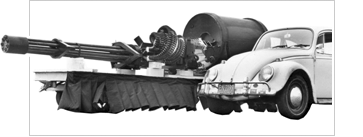
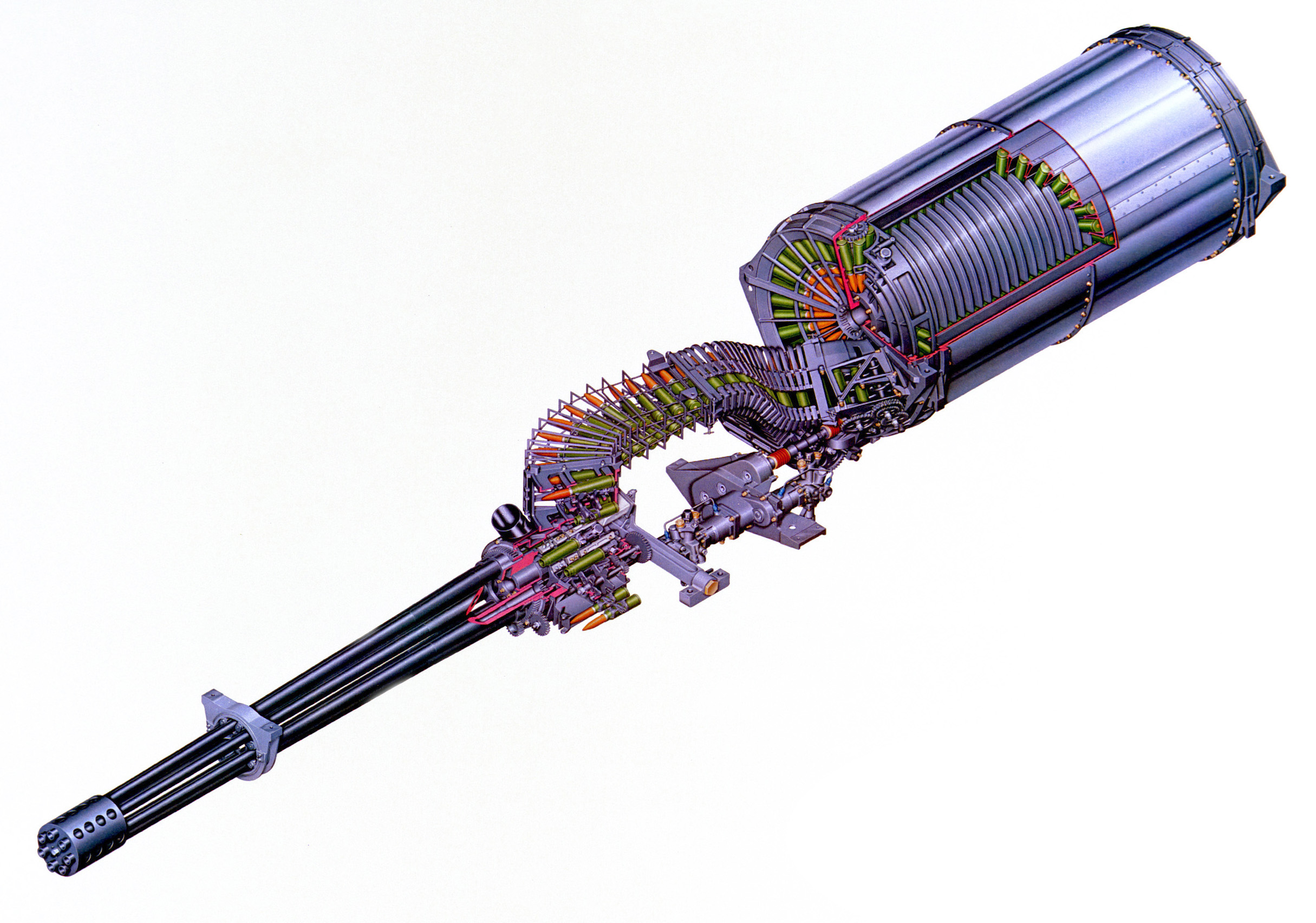
The General Electric GAU-8/A Avenger is a 30 mm, hydraulically-driven seven-barrel Gatling-type rotary cannon that is mounted on the United States Air Force’s A-10 Thunderbolt II. It is among the largest, heaviest and most powerful aircraft cannons in the United States military. Designed specifically for the anti-tank role, the Avenger delivers very powerful rounds at a high rate of fire, 3900 rounds per minute.
It was designed for the A-10 ‘Warthog’ ground attack aircraft. The entire GAU-8 assembly represents about 16% of the A-10 aircraft’s unladen weight. The recoil force of the gun is 10,000 pounds-force, which is slightly more than the output of one of the A-10’s two engines. While this recoil force is significant, in practice cannon fire only slows the aircraft a few miles per hour.
Posted in Technology, War |
Leave a Comment »
August 1, 2010

Happy Farm is a social network game, or massively multiplayer online game, based on farm management simulation. It is played predominantly by users in Mainland China and Taiwan, and is the most popular MMOG in terms of players. At the height of its popularity, there were 23 million daily active users, logging on to the game at least every day. Happy Farm was developed by Chinese social game developer 5 Minutes in 2008. It allows players to grow crops, trade with others, sell produce, and steal from neighbors. The game was influenced by the Japanese RPG series, ‘Harvest Moon.’ The game peaked during the end of the 2000s, and in the following years, experienced a sharp decline in players. As of 2012, it had practically vanished.
‘Happy Farm’ went on to inspire many more farming social network games, including ‘FarmVille,’ as well as parodies such as ‘Jungle Extreme’ and ‘Farm Villain.’ In 2009, ‘Harvest Moon’ developers Marvellous Entertainment eventually released their own farming social network game, ‘Bokujo Monogatari,’ for the Japanese site Mixi.’
Posted in Games, Technology, World |
Leave a Comment »
July 20, 2010
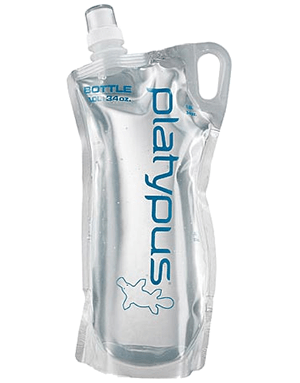
Platypus is a brand of water bottles made by Cascade Designs. Compared to a hard bottle of equal volume, they weigh 80% less and take up a mere one fifth of the space when empty. The bottles can be frozen and used as ice packs or boiled to sterilize their contents.
Posted in Food, Technology |
Leave a Comment »
July 20, 2010

SIGG is a Swiss manufacturing company that sells aluminum and stainless steel water bottles. The disadvantage of thin aluminum is that it does not offer much insulation, which means that condensation can build on the outside of the bottle when cold drinks are transported, and hot drinks will result in a bottle which can not be comfortably touched. SIGG sells insulating sleeves that protect the bottle from dents, help insulate the beverages inside them and eliminate the condensation issue. The interior of the bottles is coated with a food-compatible stove enamel. The bottle is part of the permanent design collection of the NY Museum of Modern Art.
Posted in Money, Technology |
Leave a Comment »
July 12, 2010

Polypropylene breast implants, also known as string implants, are a form of breast implant using polypropylene developed by Dr. Gerald W. Johnson. Due to a number of medical complications, the device has been banned in the European Union and United States. The polypropylene, which is yarn-like, causes irritation to the implant pocket which causes the production of serum which fills the implant pocket on a continual basis. This causes continuous expansion of the breast after surgery. Growth can only be alleviated by removal of serum by syringe.
Problems can also arise if the breasts enlarge at different rates. Continual breast growth eventually results in extreme, almost cartoonish breast sizes. String implants were only available for a very short time before being removed from the market by the FDA around 2001.
Posted in Health, Sex, Technology |
Leave a Comment »